
Dovekie
Alle alle
The smallest North Atlantic auk, a plump black-and-white seabird that breeds in huge Arctic cliff colonies and winters at sea, often near pack ice.
- Size
- 19-21 cm (7.5-8 in) long, 40-48 cm wingspan
- Habitat
- high Arctic cliffs and boulder fields, North Atlantic pack ice and open ocean in winter
- Type
- seabird
Spotted a bird like this?
Identify any bird from a photo, free.
Overview
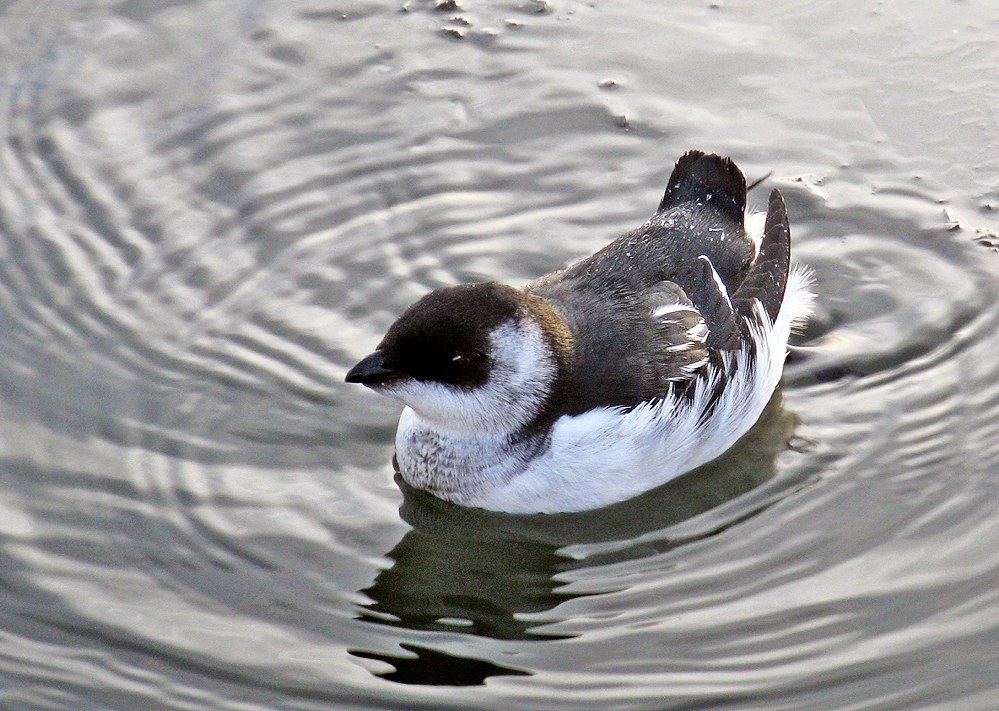
The Dovekie, known in Europe as the Little Auk, is a tiny, plump seabird of the high Arctic, notable for being the smallest auk in the North Atlantic. Its compact, round body, short neck, and stubby bill give it a distinctly chubby, almost bumblebee-like appearance in flight, with fast, whirring wingbeats. Breeding adults are black above and on the throat and upper breast, with white underparts, while winter birds show a white throat and face.
Despite its diminutive size, the Dovekie is one of the most numerous seabirds in the world, with colonies in Greenland and Svalbard sometimes numbering in the millions of pairs, forming some of the most spectacular wildlife gatherings in the Arctic.
How to identify it
Key field marks
- Very small size, plump rounded body
- Short, stubby black bill
- Black upperparts and throat in breeding plumage, white underparts
- Fast, direct, whirring flight low over water
Similar species
- Common Murre and Thick-billed Murre are considerably larger with longer bills and more elongated bodies.
- Black Guillemot shows a large white wing patch that Dovekies lack.
- Non-breeding Dovekies show white extending onto the throat and face, but their tiny size and stubby bill remain distinctive year-round.
Habitat & range
Dovekies breed in enormous colonies on scree slopes and boulder fields at the base of cliffs across the high Arctic, including Greenland, Svalbard, Franz Josef Land, and Novaya Zemlya. Outside the breeding season, they disperse widely over the North Atlantic, often congregating near the edge of pack ice, and many winter well offshore, occasionally driven closer to coastlines, including the northeastern United States, by severe winter storms.
The species is closely tied to cold, productive Arctic and subarctic waters year-round, rarely straying far from areas with abundant zooplankton.
Behavior & voice
Behavior
Dovekies form dense, swirling flocks around their breeding colonies, and their sheer numbers make colony sites among the most impressive wildlife spectacles in the Arctic; they dive and swim underwater to capture tiny prey.
Voice
A high-pitched, chattering trill is given at breeding colonies, often as part of a rolling chorus from thousands of birds simultaneously.
Feeding
Zooplankton, especially copepods, along with other small crustaceans, make up nearly the entire diet, gathered by pursuit-diving in cold Arctic waters.
Nesting and breeding
A single egg is laid in a crevice among boulders or scree, without nest material; both parents share incubation and chick-feeding duties, carrying zooplankton back to the chick in a specialized throat pouch.
Frequently asked questions
What is the smallest auk in the North Atlantic?
The Dovekie, also called the Little Auk, is the smallest auk species in the North Atlantic region.
Where do Dovekies breed?
In enormous colonies on scree and boulder slopes across the high Arctic, including Greenland, Svalbard, and other Arctic archipelagos.
What do Dovekies eat?
Mostly tiny zooplankton such as copepods, caught by diving and swimming underwater in cold Arctic waters.
How many Dovekies can be in a single colony?
Some Arctic colonies, particularly in Greenland, number in the millions of breeding pairs, making them among the largest seabird gatherings on Earth.
Why might Dovekies appear along the US East Coast in winter?
Severe winter storms can occasionally push wintering Dovekies from offshore Atlantic waters closer to or onto the coastline, sometimes leading to 'wrecks' of exhausted birds.
Dovekie guides
In-depth guides for identifying, finding, and understanding Dovekie.
Other birds you may enjoy
Peruvian Pelican
137-152 cm (54-60 in) long, up to 228 cm wingspan
Bonaparte's Gull
28-33 cm (11-13 in) long, 76-84 cm wingspan
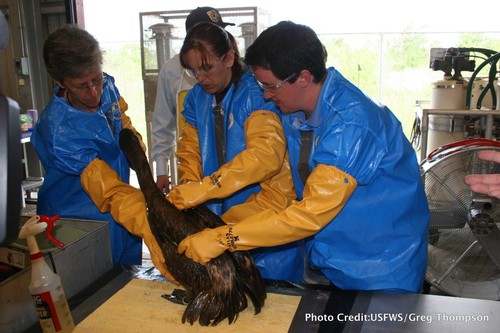
Brown Pelican
106-137 cm (42-54 in) long, 200-230 cm wingspan
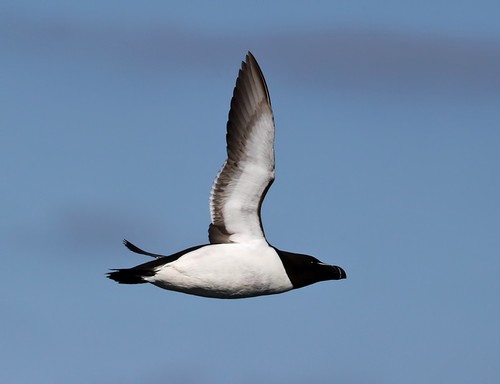
Razorbill
37-39 cm (15-15.5 in) long, 63-68 cm wingspan
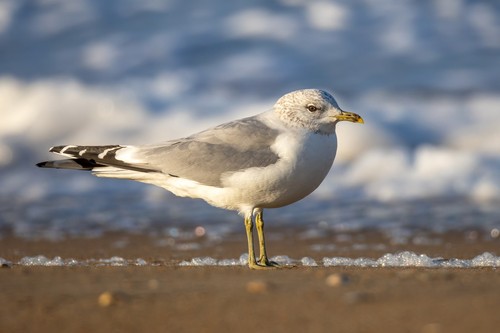
Common Gull
40-46 cm (16-18 in) long, 110-130 cm wingspan
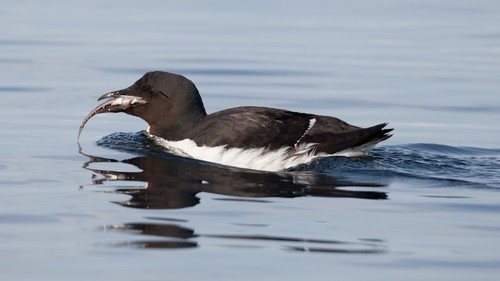
Thick-billed Murre
40-48 cm (16-19 in) long, 65-75 cm wingspan
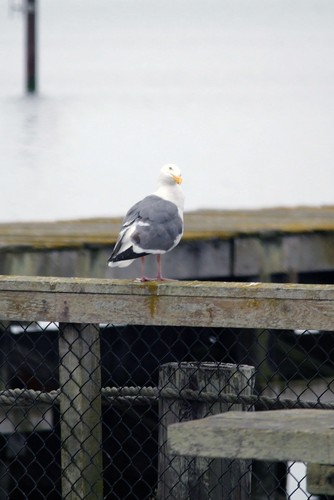
Western Gull
55-68 cm (22-27 in) long, 130-144 cm wingspan
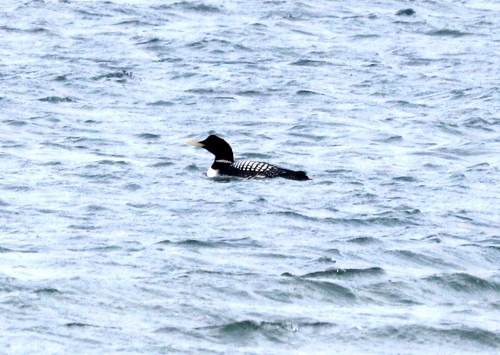
Yellow-billed Loon
76-97 cm (30-38 in) long, 135-152 cm wingspan
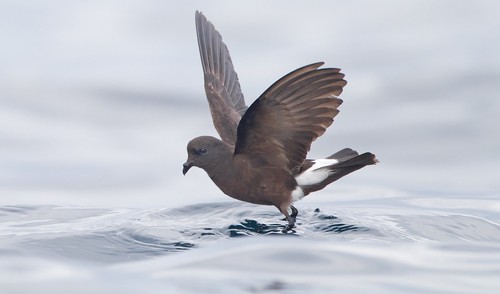
Wilson's Storm-Petrel
15-19 cm (6-7.5 in) long, wingspan 38-42 cm (15-16.5 in)
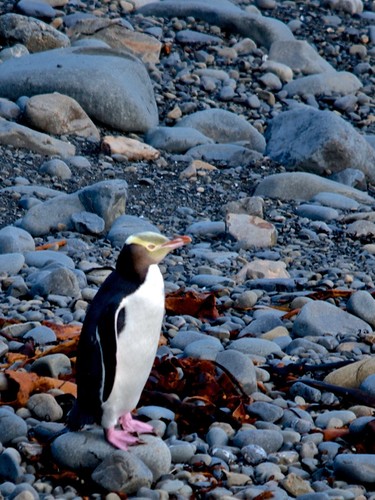
Yellow-eyed Penguin
62-79 cm (24-31 in) tall, 3-8.5 kg (6.6-18.7 lb)
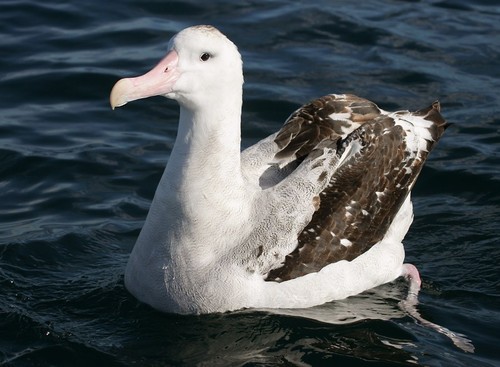
Wandering Albatross
107-135 cm (42-53 in) long, wingspan up to 3.5 m (11.5 ft)
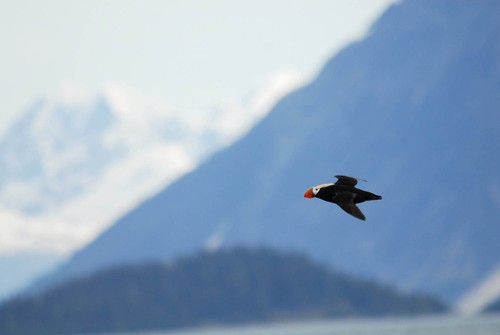
Tufted Puffin
35-41 cm (14-16 in) long, about 63-70 cm wingspan