
Dovekie Identification Guide
The smallest auk in the North Atlantic, a tiny, chunky black-and-white seabird with a stubby bill, whirring flight, and a habit of appearing far south of its Arctic range during winter storms.
Read the full Dovekie encyclopedia entry →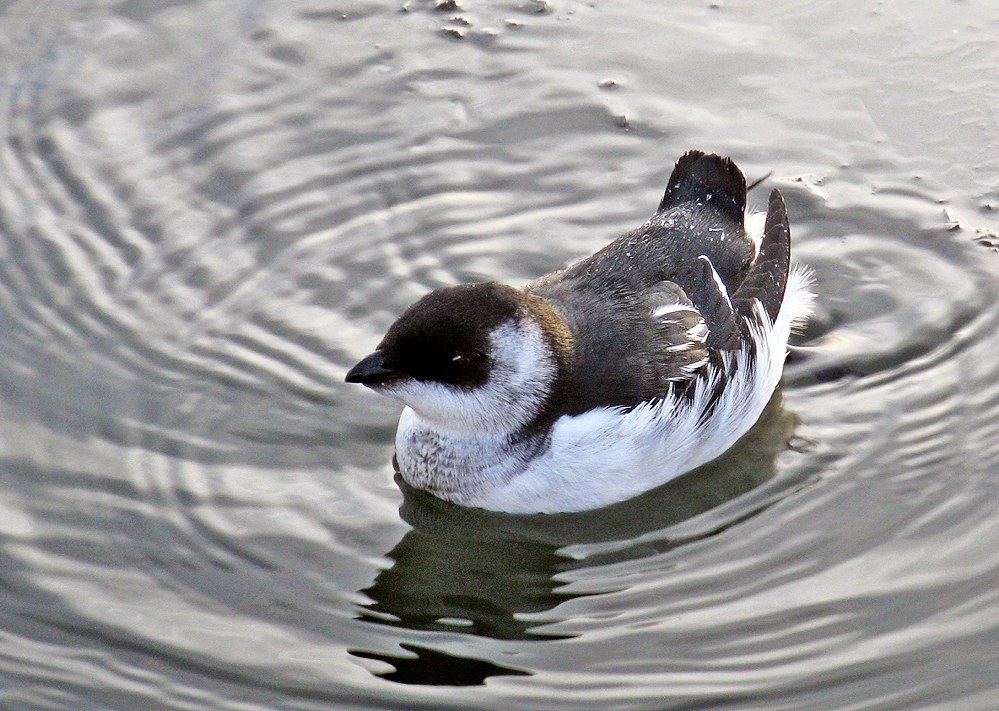
Key Field Marks
- Size & shape: Very small and chunky for an auk, about 8 in (20 cm) long, with a short neck, rounded body, and a notably stubby, thick black bill — much shorter than in any other North Atlantic alcid.
- Breeding plumage: Black head, throat, and upperparts contrasting with clean white underparts; a small white crescent above the eye and fine white streaking on the scapulars (shoulder feathers).
- Nonbreeding/winter plumage: White extends up onto the lower face, chin, and foreneck, leaving a dark cap and partial dark collar rather than the fully black head/throat of summer.
- Flight: Fast, whirring wingbeats on short wings, typically low over the water in loose flocks.
Separating It From Similar Species
- Other small alcids (Ancient Murrelet, murrelets in general): All are noticeably larger with longer, more slender bills and grayer backs; the Dovekie's combination of tiny size and very short, stubby bill is essentially unmistakable once seen well.
- Black Guillemot: Larger, with all-black plumage (breeding) showing a bold white wing patch, and bright red legs and feet — quite different from the compact black-and-white winter Dovekie.
Habitat, Range & Season
Dovekies breed in immense colonies on rocky scree slopes in the high Arctic (Greenland, Svalbard, and other Arctic islands) and spend the rest of the year far out at sea in the North Atlantic. In the United States, they are most likely seen from pelagic boat trips or coastal seawatches off New England and the mid-Atlantic in late fall and winter; strong onshore storms occasionally drive exhausted birds inland or wash them up on beaches far from open water, an event birders call a Dovekie "wreck."
Voice
At breeding colonies, Dovekies give high chattering trills and twittering calls; they are essentially silent away from the colony, including during their winter presence in US waters.
Frequently asked questions
What is the best field mark for identifying a Dovekie?
Its combination of very small size and a very short, stubby black bill — no other North Atlantic auk is both this tiny and this short-billed.
When and where might I see a Dovekie in the US?
Mainly late fall through winter, from pelagic boat trips or seawatches off New England and the mid-Atlantic coast, since the species breeds far north in the Arctic and only winters at sea to the south.
What causes a Dovekie 'wreck'?
Powerful onshore winter storms can drive these small seabirds inland or strand them on beaches far from open ocean, since they are poorly equipped to fly or walk on land.
How does a Dovekie's winter plumage differ from its summer plumage?
In winter, white extends up onto the lower face, chin, and foreneck, leaving a dark cap and partial collar, whereas in breeding plumage the entire head and throat are solid black.