
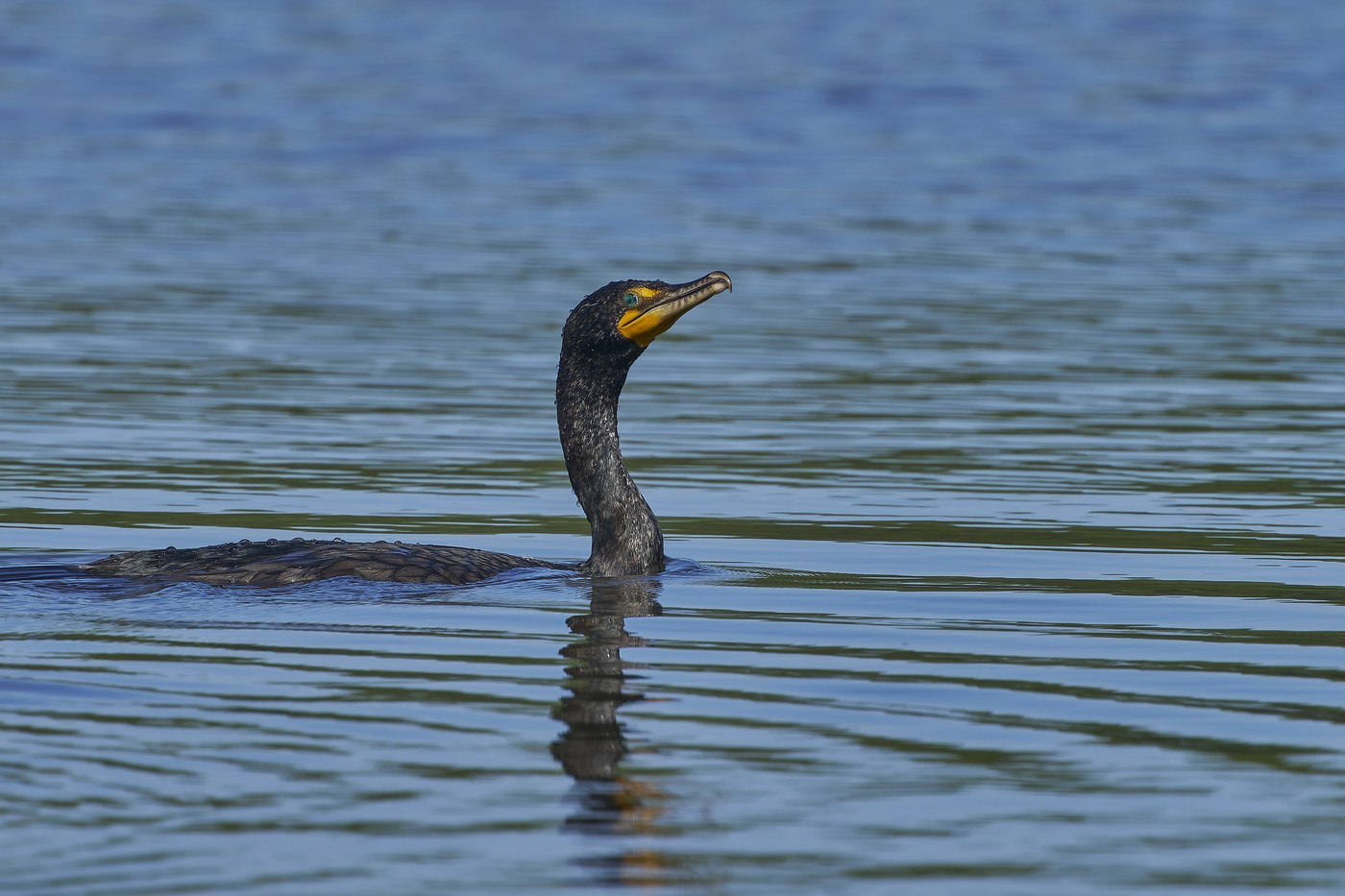
Double-crested Cormorant
Nannopterum auritum
A widespread North American waterbird often seen perched with wings held out to dry, identified by its dark plumage, hooked bill, and orange throat pouch.
- Size
- 70-90 cm (28-35 in) long, 114-123 cm wingspan
- Habitat
- lakes, rivers, and coastal waters across North America
- Type
- seabird
Spotted a bird like this?
Identify any bird from a photo, free.
Overview
The Double-crested Cormorant is the most widespread and familiar cormorant in North America, found on lakes, rivers, and coastlines across the continent. It is well known for its habit of perching upright with wings spread wide to dry after diving.
Appearance
Adults are almost entirely black with a slight glossy sheen, a long hooked bill, and bright orange-yellow facial skin and throat pouch. Breeding adults grow small tufts of feathers on the head that give the species its name, though these "double crests" are often inconspicuous or absent-looking in the field.
How to identify it
Key field marks
- All-black body plumage with a glossy sheen
- Long, thin, hooked bill
- Bright orange-yellow facial skin and throat pouch
- Bright turquoise eyes, visible at close range
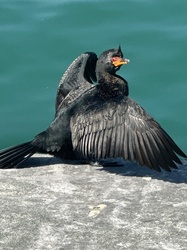
- Habit of perching with wings spread open to dry
Similar species
It can be confused with other cormorant species where ranges overlap, such as the Neotropic Cormorant, but the Double-crested Cormorant is generally larger with more extensive orange facial skin forming a distinct angular patch behind the bill, compared to the thinner white-bordered patch of the Neotropic Cormorant.
Habitat & range
Habitat and range
Double-crested Cormorants are found across a huge range of freshwater and coastal habitats throughout North America, from lakes and rivers well inland to coastal bays and estuaries. They breed colonially and are found from Alaska and Canada south through the United States to Mexico.
Northern populations are migratory, moving south in winter, while populations in milder coastal regions may be resident year-round.
Behavior & voice
Behavior
Double-crested Cormorants forage by diving from the water's surface and pursuing fish underwater using powerful webbed feet for propulsion. Because their feathers are not fully waterproof, they must regularly perch with wings outstretched to dry, a highly characteristic posture.
Voice
They are generally silent away from colonies, but give low grunting or pig-like croaking calls near nests.
Nesting and breeding
They nest colonially in trees, on cliffs, or on the ground on islands, building stick nests, and typically lay three to four eggs. Colonies are often shared with herons, egrets, or other waterbirds.
Frequently asked questions
Why do Double-crested Cormorants spread their wings out?
Their feathers are not fully waterproof, so after diving they perch with wings spread to help dry them out.
What are the 'double crests' in the name?
Breeding adults grow small tufts of feathers on the head, though these are often subtle and can be hard to see in the field.
How do Double-crested Cormorants catch fish?
They dive from the surface and chase fish underwater, propelled by their strong webbed feet.
Where are Double-crested Cormorants found?
Across a wide range of lakes, rivers, and coastal waters throughout North America, from Alaska and Canada south to Mexico.
Double-crested Cormorant guides
In-depth guides for identifying, finding, and understanding Double-crested Cormorant.
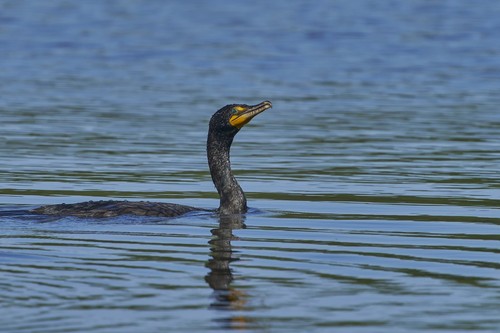
Double-crested Cormorant identified by the community
Real birds identified with Bird Identifier.
Other birds you may enjoy
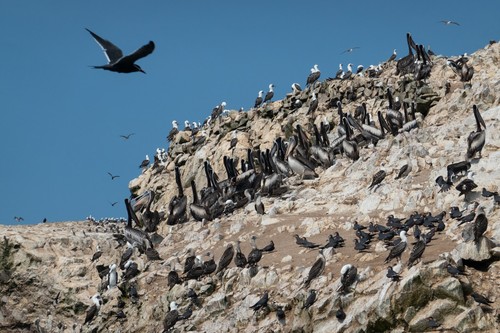
Peruvian Pelican
137-152 cm (54-60 in) long, up to 228 cm wingspan
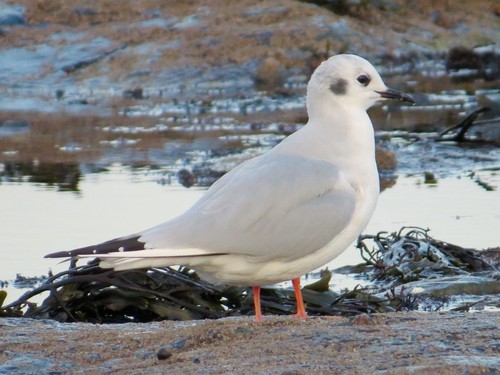
Bonaparte's Gull
28-33 cm (11-13 in) long, 76-84 cm wingspan
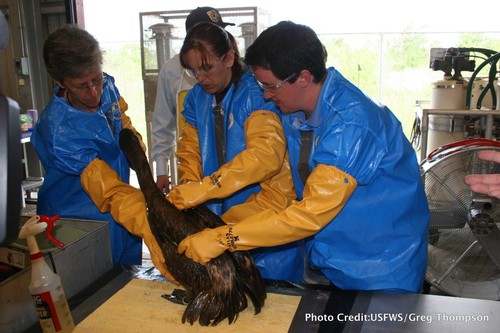
Brown Pelican
106-137 cm (42-54 in) long, 200-230 cm wingspan
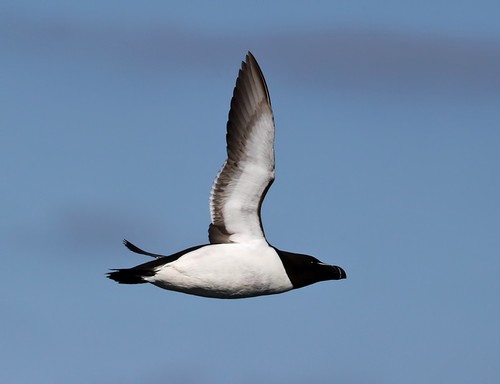
Razorbill
37-39 cm (15-15.5 in) long, 63-68 cm wingspan
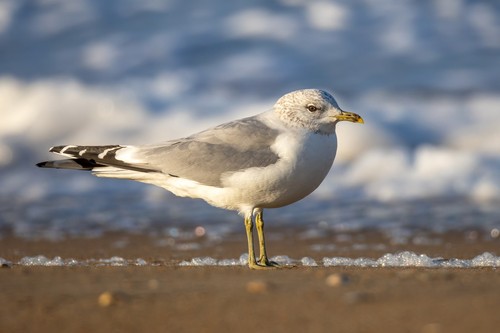
Common Gull
40-46 cm (16-18 in) long, 110-130 cm wingspan
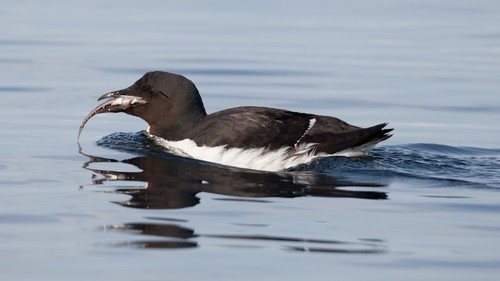
Thick-billed Murre
40-48 cm (16-19 in) long, 65-75 cm wingspan
Western Gull
55-68 cm (22-27 in) long, 130-144 cm wingspan
Yellow-billed Loon
76-97 cm (30-38 in) long, 135-152 cm wingspan
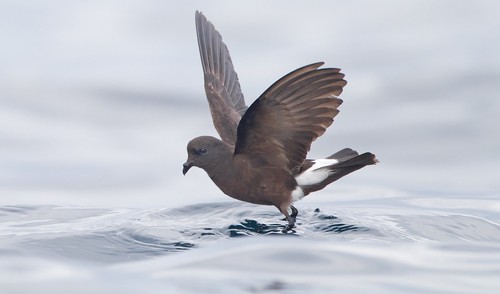
Wilson's Storm-Petrel
15-19 cm (6-7.5 in) long, wingspan 38-42 cm (15-16.5 in)
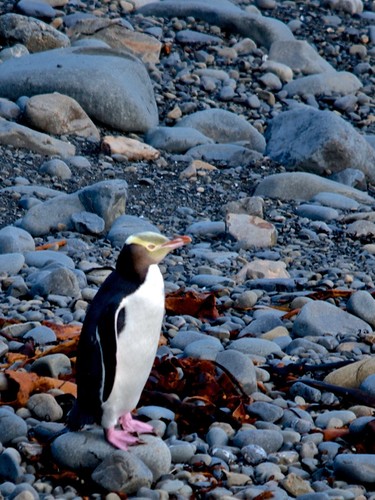
Yellow-eyed Penguin
62-79 cm (24-31 in) tall, 3-8.5 kg (6.6-18.7 lb)
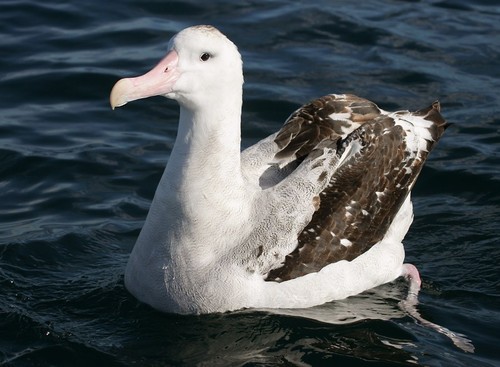
Wandering Albatross
107-135 cm (42-53 in) long, wingspan up to 3.5 m (11.5 ft)
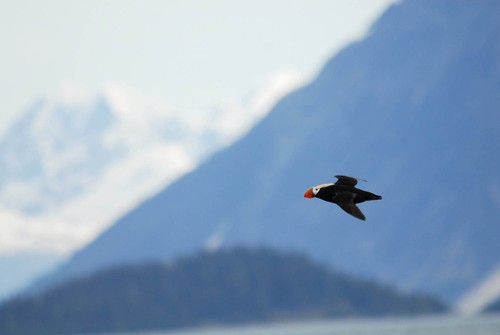
Tufted Puffin
35-41 cm (14-16 in) long, about 63-70 cm wingspan