
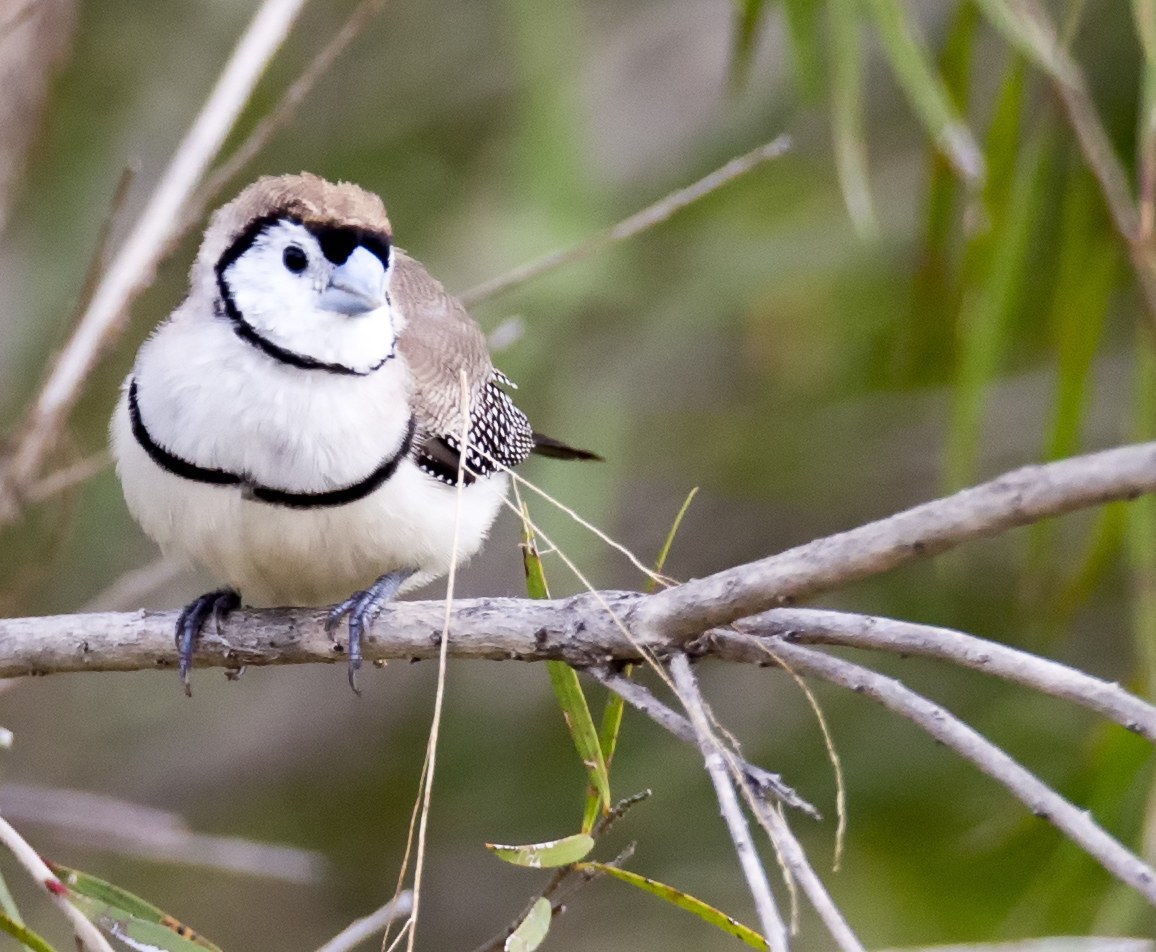
Double-barred Finch
Taeniopygia bichenovii
A small, round, white-faced finch marked with two bold black breast bars, often called the 'owl finch' for its facial pattern.
- Size
- 10-11 cm (4-4.5 in) long
- Habitat
- grassy woodlands, scrub, and farmland across northern and eastern Australia
- Type
- songbird
Spotted a bird like this?
Identify any bird from a photo, free.
Overview
The Double-barred Finch is a small, plump estrildid finch, easily identified by its distinctive white face bordered by a black band around the crown and through the eye, which gives rise to its alternative common name of 'owl finch' owing to the resemblance to a small owl's facial disc. The body is soft grey-brown above with fine white spotting, and two bold black bars cross the white breast and belly, giving the species its main common name.
Sexes look alike, and the species typically occurs in small to large flocks that move together through grassy and lightly wooded habitats, foraging on the ground and among grass seed heads. Its neat, contrasting pattern makes it one of the most readily recognisable of Australia's grass finches.
Two recognised subspecies show slight regional variation, with the eastern form having a black rump and the more northern and inland form showing a white rump, but both share the same overall pattern of white face, black bars, and sociable flocking habits.
How to identify it
Key field marks
- White face bordered by a black band around the crown and eye, resembling an owl's facial disc
- Two bold black bars crossing the white breast and belly
- Grey-brown upperparts finely spotted with white
- Rump colour varies by subspecies: black in eastern birds, white in more northern/inland birds
Similar species
No other Australian finch shares the Double-barred Finch's distinctive owl-like facial pattern combined with double black breast bars, making it one of the easiest grass finches to identify. The Zebra Finch has fine barring on the throat and orange cheek patches in males, quite different from the plain white face of the Double-barred Finch.
Habitat & range
Habitat
Double-barred Finches favour grassy woodlands, open scrub, farmland, and grassy areas near water, generally avoiding dense forest and the most arid desert regions.
Range
The species is widespread across northern and eastern Australia, from the Kimberley region of Western Australia across the Top End and through Queensland, New South Wales, and into northeastern Victoria.
Migration
Most populations are sedentary or locally nomadic, though flocks may move in response to seed and water availability, particularly following rainfall or drought.
Behavior & voice
Behavior
Double-barred Finches are highly social, usually seen in flocks that forage together on the ground and among grass seed heads, and often perch closely together in rows on fences, wires, or dead branches.
Voice
Its call is a nasal, buzzy 'tee-tee' or similar short note, often given as flock members keep contact while foraging or in flight.
Feeding
It feeds mainly on grass seeds, taken from the ground or directly from seed heads, with some insects also consumed, particularly when raising young.
Nesting and breeding
The nest is a bulky, domed grass structure with a short entrance tunnel, built in a shrub, tree, or grass tussock, and often a second unused 'cock nest' is built nearby; both parents share incubation and feeding, and pairs may breed opportunistically after rain.
Frequently asked questions
Why is the Double-barred Finch called the 'owl finch'?
Its white face bordered by a black band around the crown and eye resembles the facial disc of a small owl, giving rise to this nickname.
How can I identify a Double-barred Finch?
Look for its white owl-like face and the two bold black bars crossing its white breast and belly.
Where do Double-barred Finches live?
They occur in grassy woodlands, scrub, and farmland across northern and eastern Australia.
What do Double-barred Finches eat?
Mainly grass seeds, along with some insects, especially when breeding.
Do Double-barred Finches flock together?
Yes, they are highly social and are usually seen in flocks, often perched closely together on fences or branches.
Double-barred Finch guides
In-depth guides for identifying, finding, and understanding Double-barred Finch.
Other birds you may enjoy
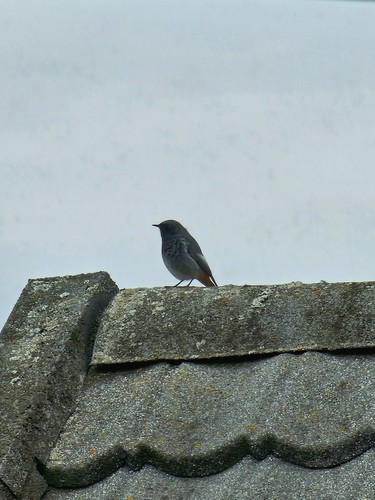
Black Redstart
13-14.5 cm (5.1-5.7 in) long, 23-26 cm wingspan
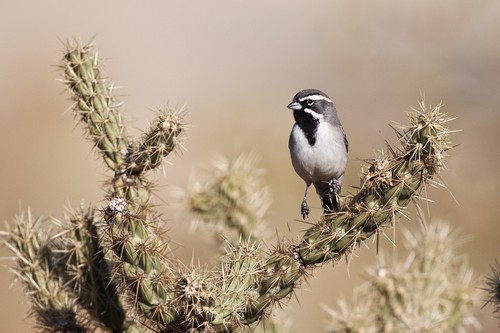
Black-throated Sparrow
12-14 cm (4.7-5.5 in) long, about 19-20 cm (7.5-8 in) wingspan
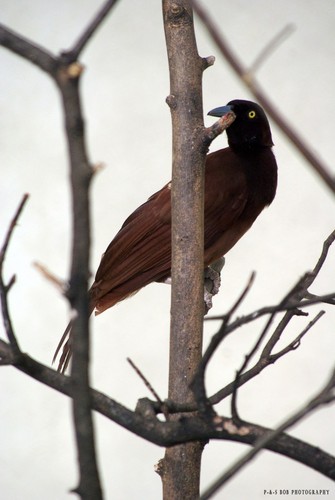
Greater Bird-of-paradise
Body about 43 cm; males with additional flank plumes up to 50 cm and long tail wires
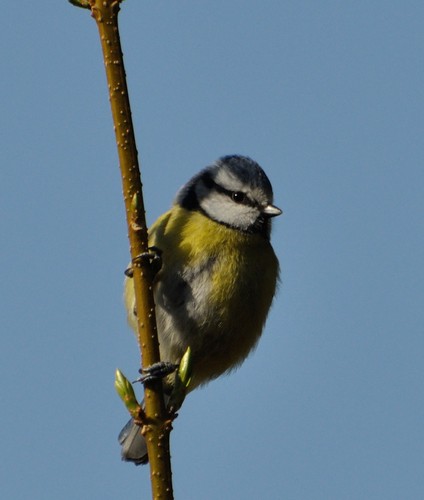
Blue Tit
11-12 cm (4.3-4.7 in) long, 17-20 cm wingspan
Red-billed Quelea
11.5–13 cm long, wingspan about 20–22 cm
White-plumed Antbird
13-14 cm (5-5.5 in) long
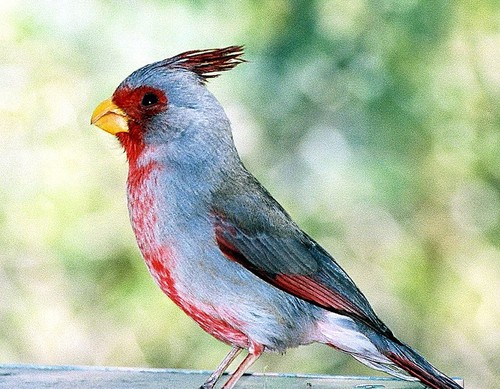
Pyrrhuloxia
19-22 cm (7.5-8.7 in) long, 30 cm wingspan
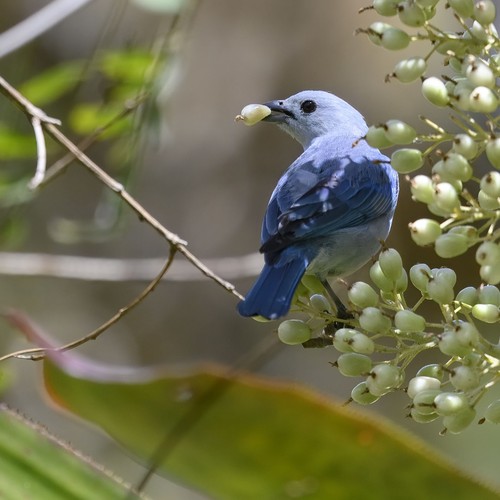
Blue-gray Tanager
16-18 cm (6-7 in) long
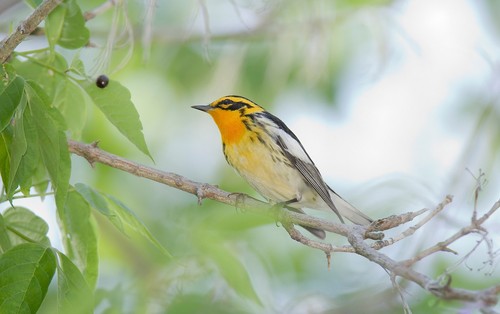
Blackburnian Warbler
11-13 cm (4.3-5.1 in) long, 20-22 cm wingspan
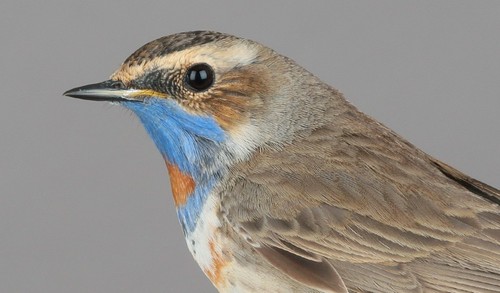
Bluethroat
13-14 cm (5.1-5.5 in) long, 20-22 cm wingspan
Eurasian Nuthatch
12-14.5 cm (4.7-5.7 in) long, 22.5-27 cm wingspan
Wood Thrush
19-21 cm (7.5-8.3 in) long, about 33 cm (13 in) wingspan