
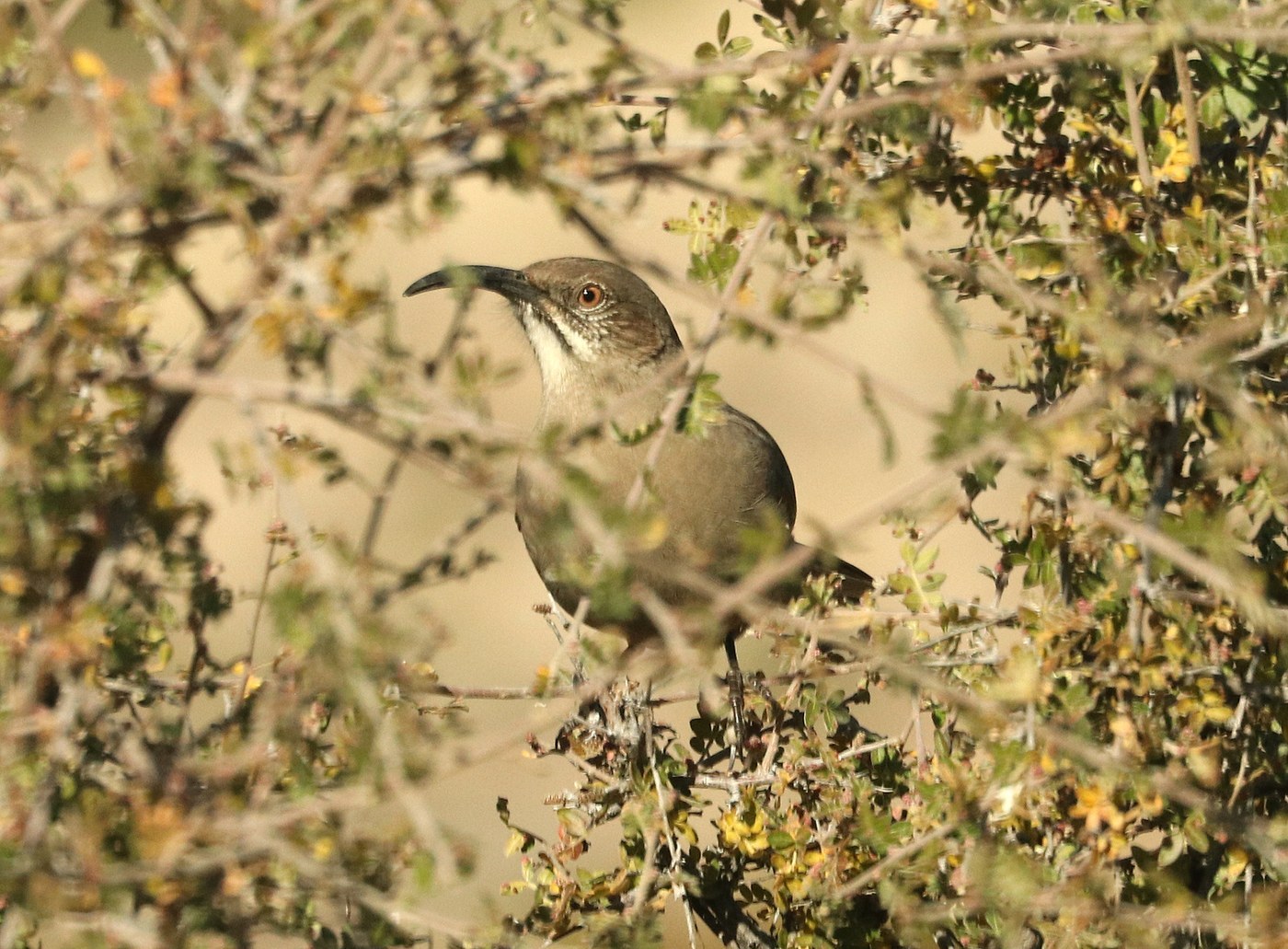
Crissal Thrasher
Toxostoma crissale
A secretive, unstreaked desert thrasher named for its chestnut undertail patch, usually detected by voice rather than sight.
- Size
- 28-31 cm (11-12 in) long
- Habitat
- dense mesquite thickets, riparian scrub, and desert washes
- Type
- songbird
Spotted a bird like this?
Identify any bird from a photo, free.
Overview
The Crissal Thrasher is one of the most secretive members of its family, spending most of its time skulking low within dense mesquite thickets and riparian scrub of the southwestern deserts. Its name refers to the chestnut-colored patch of feathers under the tail, called the crissum, which is the bird's most distinctive field mark.
Overall the plumage is a uniform gray-brown, with unmarked underparts (unlike Curve-billed or Bendire's Thrashers, which show breast spotting), a dark malar stripe, and a very long, strongly downcurved bill.
How to identify it
Key field marks
- Uniform gray-brown upperparts and unstreaked underparts
- Chestnut (reddish-brown) undertail coverts (the "crissum")
- Long, strongly downcurved bill
- Dark malar stripe
- Dark eyes
Similar species
California Thrasher is similarly unstreaked but occurs in coastal chaparral rather than desert wash habitat and lacks the reddish undertail patch. Curve-billed and Bendire's Thrashers both show breast spotting that Crissal lacks entirely, making the plain underparts combined with the chestnut crissum diagnostic.
Habitat & range
Habitat
Crissal Thrashers favor dense, thorny riparian scrub, mesquite bosques, and desert wash vegetation, requiring thick cover to remain hidden.
Range
The species occurs across the desert Southwest, including Arizona, New Mexico, southern Nevada, southeastern California, and west Texas, extending into northern Mexico.
Migration
Crissal Thrashers are non-migratory residents, remaining within their dense scrub territories throughout the year.
Behavior & voice
Behavior
Crissal Thrashers are extremely secretive, foraging low within dense vegetation and rarely venturing into the open, using their long bills to probe soil and leaf litter for insects and other invertebrates, and also eating berries.
Voice
The song is a rich, varied series of musical phrases, often repeated in pairs or triplets, delivered occasionally from a slightly more exposed perch; the call is a distinctive, liquid "chideery" or similar phrase.
Nesting
Nests are built low and well hidden within dense thorny shrubs or mesquite, constructed as a bulky cup. Females lay 2-3 pale blue-green eggs.
Frequently asked questions
What is distinctive about the Crissal Thrasher?
It has plain, unstreaked underparts and a chestnut-colored patch of feathers under the tail (the crissum), for which it is named, along with a very long downcurved bill.
Why is the Crissal Thrasher hard to see?
It is extremely secretive, staying low within dense mesquite thickets and riparian scrub and rarely coming into the open, so it is usually detected by its distinctive call or song.
Where does the Crissal Thrasher live?
It lives in dense mesquite thickets, riparian scrub, and desert washes across the southwestern United States and northern Mexico.
Does the Crissal Thrasher migrate?
No, it is a non-migratory resident that stays on territory year-round.
Crissal Thrasher guides
In-depth guides for identifying, finding, and understanding Crissal Thrasher.
Other birds you may enjoy
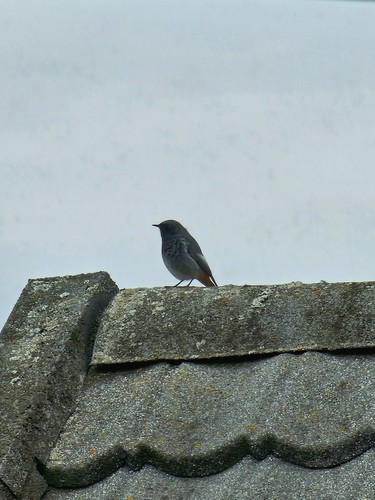
Black Redstart
13-14.5 cm (5.1-5.7 in) long, 23-26 cm wingspan
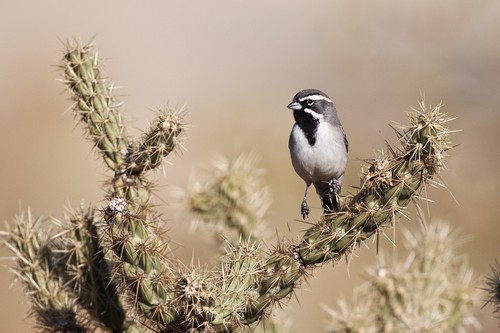
Black-throated Sparrow
12-14 cm (4.7-5.5 in) long, about 19-20 cm (7.5-8 in) wingspan
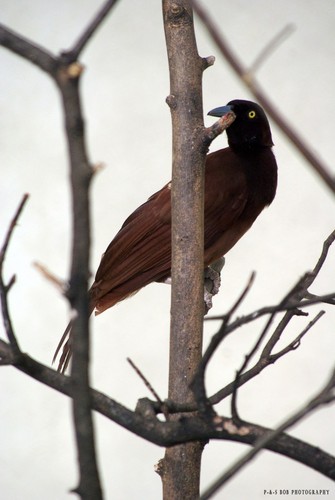
Greater Bird-of-paradise
Body about 43 cm; males with additional flank plumes up to 50 cm and long tail wires
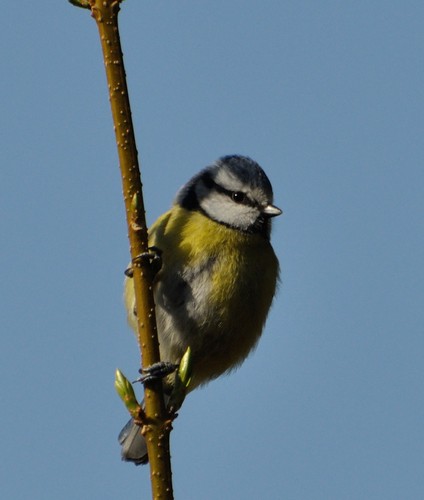
Blue Tit
11-12 cm (4.3-4.7 in) long, 17-20 cm wingspan
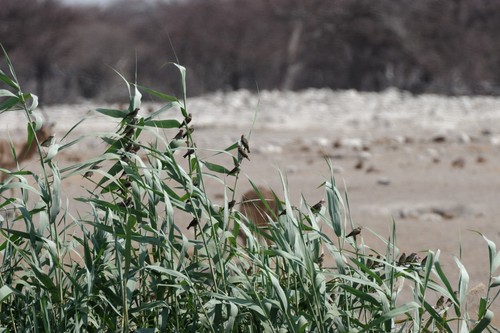
Red-billed Quelea
11.5–13 cm long, wingspan about 20–22 cm
White-plumed Antbird
13-14 cm (5-5.5 in) long
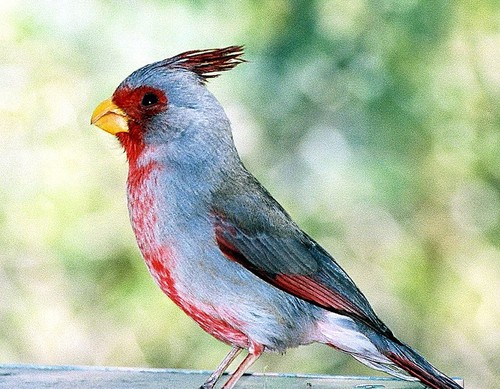
Pyrrhuloxia
19-22 cm (7.5-8.7 in) long, 30 cm wingspan
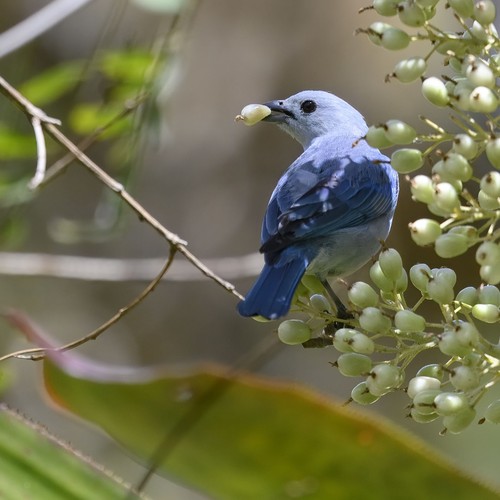
Blue-gray Tanager
16-18 cm (6-7 in) long
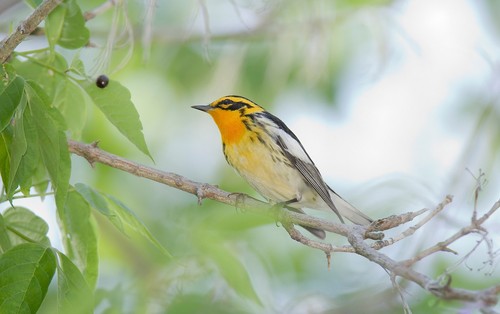
Blackburnian Warbler
11-13 cm (4.3-5.1 in) long, 20-22 cm wingspan
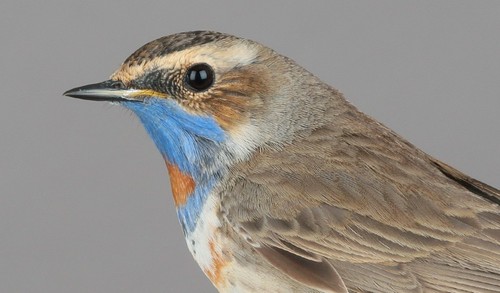
Bluethroat
13-14 cm (5.1-5.5 in) long, 20-22 cm wingspan
Eurasian Nuthatch
12-14.5 cm (4.7-5.7 in) long, 22.5-27 cm wingspan
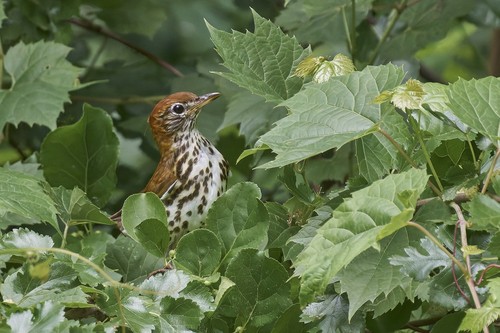
Wood Thrush
19-21 cm (7.5-8.3 in) long, about 33 cm (13 in) wingspan