
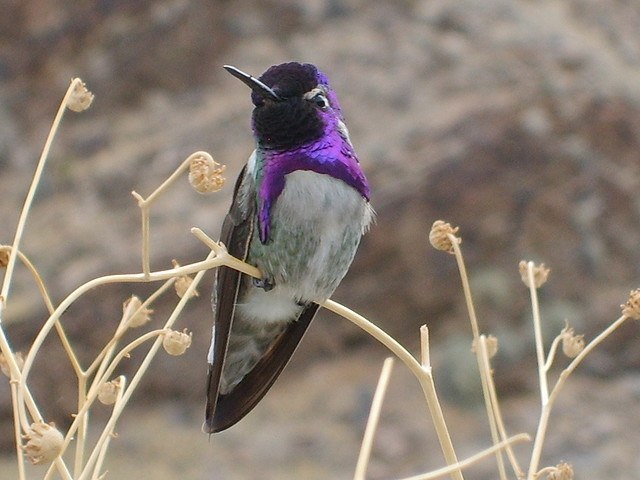
Costa's Hummingbird
Calypte costae
A desert-dwelling hummingbird whose male sports a vivid violet-purple crown and gorget extended into flared mustache-like streamers.
- Size
- 7.5-9 cm (3-3.5 in) long, 11 cm wingspan
- Habitat
- desert scrub, chaparral, and dry washes
- Type
- hummingbird
Spotted a bird like this?
Identify any bird from a photo, free.
Overview
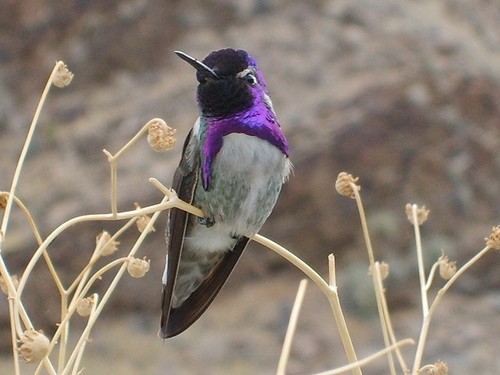
The Costa's Hummingbird is a small, heat-tolerant hummingbird well adapted to the arid deserts of the southwestern United States and Baja California. Adult males are striking, with an iridescent violet-purple crown and throat, the gorget feathers extending outward past the neck in elongated, flared streamers that give the face a distinctive mustached appearance. Females are much plainer, with a green back, whitish underparts, and no gorget, closely resembling several other female desert hummingbirds.
Costa's Hummingbirds are well suited to some of the hottest, driest habitats used by any North American hummingbird, timing their breeding to coincide with the brief desert wildflower bloom.
How to identify it
Key Field Marks
- Male: brilliant violet-purple crown and throat, gorget feathers extend outward in pointed streamers past the sides of the neck
- Female: green back, pale underparts, small size, subtle grayish face
- Relatively short tail and stocky build compared to some desert relatives
Similar Species
- Black-chinned Hummingbird males have a black throat with only a narrow purple band, not an all-purple crown and gorget.
- Anna's Hummingbird males have a rose-pink to magenta (not violet-purple) crown and throat and are notably larger.
- Female Costa's are best distinguished from other female hummingbirds by small size, short tail, and desert habitat.
Habitat & range
Habitat
This species is a desert specialist, favoring desert scrub, chaparral, dry washes, and increasingly, desert gardens and parks with suitable flowering plants.
Range
It breeds across the deserts of the southwestern United States, including California, Arizona, and Nevada, and through Baja California and Sonora, Mexico.
Migration
Many Costa's Hummingbirds are short-distance migrants or partial migrants, moving to slightly cooler or moister areas outside the breeding season, while some remain resident year-round in milder parts of their range.
Behavior & voice
Behavior
Males perform high, U-shaped display dives accompanied by a high-pitched whistling sound produced as air passes over their tail feathers, often timed to breeding activity that begins very early in the year to match the desert bloom.
Voice
The male's dive produces a distinctive thin, high whistle; calls include sharp, high-pitched chips.
Feeding
Costa's Hummingbirds feed on nectar from desert-adapted plants such as ocotillo, chuparosa, and desert honeysuckle, and take small insects to supplement their diet.
Nesting
Females build a small cup nest low in a shrub or cactus, often beginning nesting as early as midwinter to take advantage of the desert's brief spring bloom.
Frequently asked questions
What does the male Costa's Hummingbird's display sound like?
During his diving display, air rushing over his tail feathers produces a distinctive high-pitched whistle that is quite different from the buzzy dive sounds of many other hummingbirds.
How is a male Costa's Hummingbird different from a male Anna's Hummingbird?
Costa's has a violet-purple crown and throat with elongated pointed streamers, while Anna's has a rose-pink to magenta crown and throat without those extended streamers, and Anna's is noticeably larger.
Why do Costa's Hummingbirds breed so early in the year?
They time nesting to coincide with the brief flush of desert wildflowers that follows winter rains, providing enough nectar to raise young.
Do Costa's Hummingbirds migrate?
Many populations make short-distance movements to track flowering plants, while some individuals remain resident year-round in milder desert areas.
Costa's Hummingbird guides
In-depth guides for identifying, finding, and understanding Costa's Hummingbird.
Other birds you may enjoy
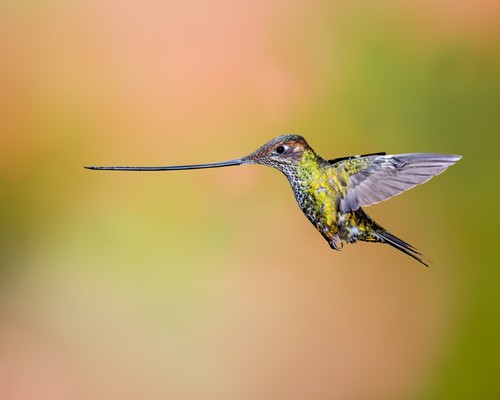
Sword-billed Hummingbird
Body about 13-15 cm (5-6 in) including a bill up to 10 cm long, the longest bill relative to body size of any bird
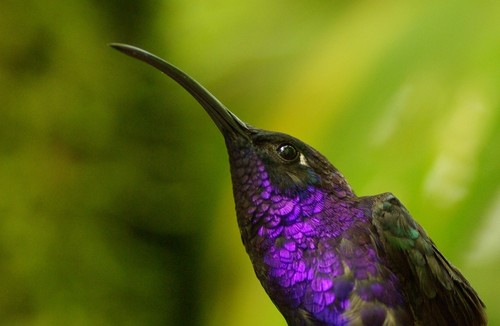
Violet Sabrewing
14-15 cm (5.5-6 in) long
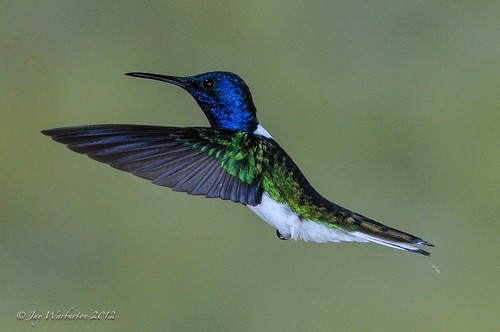
White-necked Jacobin
11-12 cm (4.3-4.7 in) long
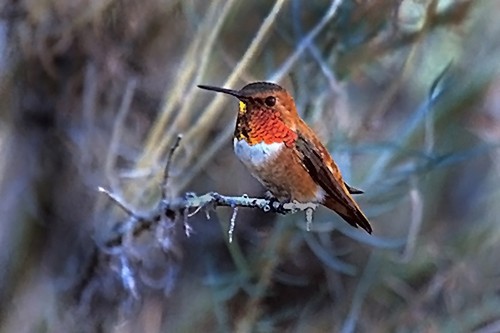
Rufous Hummingbird
8-9 cm (3-3.5 in) long, 11 cm wingspan
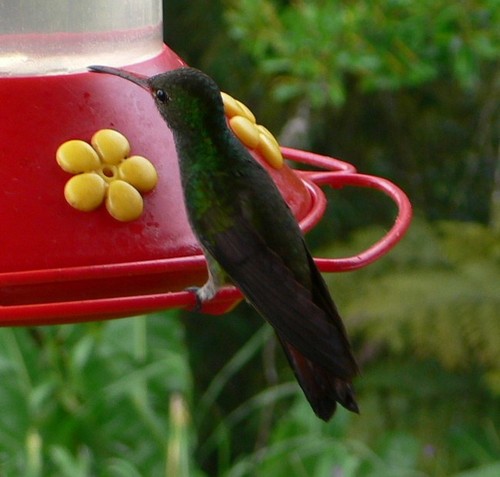
Rufous-tailed Hummingbird
10-11.5 cm (4-4.5 in) long
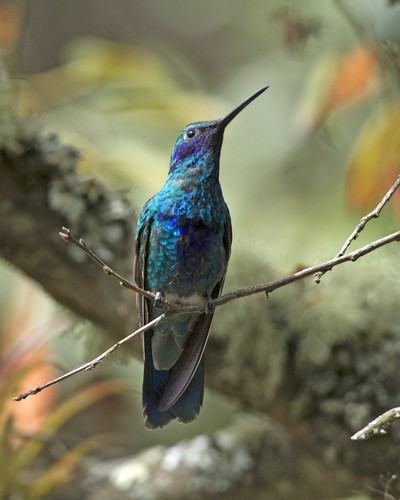
Sparkling Violetear
13-14 cm (5-5.5 in) long including bill
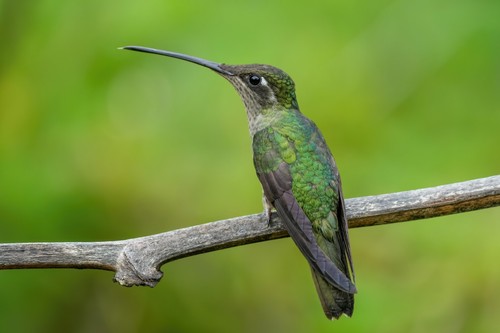
Rivoli's Hummingbird
11-14 cm (4.5-5.5 in) long, 17-18 cm wingspan
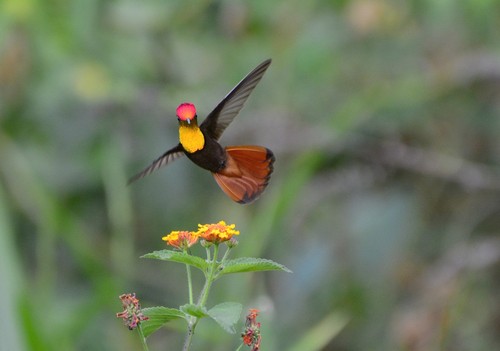
Ruby-topaz Hummingbird
7.5-9 cm (3-3.5 in) long
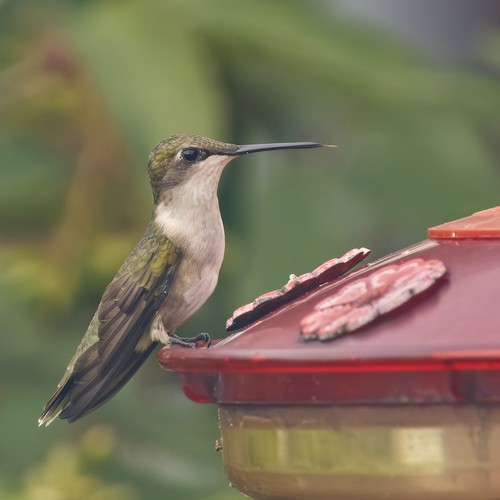
Ruby-throated Hummingbird
7-9 cm (3-3.5 in) long, 8-11 cm wingspan
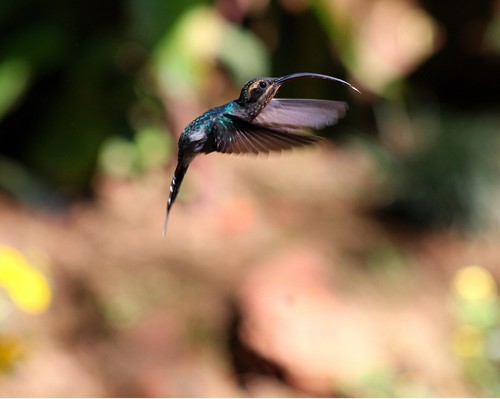
Green Hermit
15-16 cm (6-6.3 in) long including elongated central tail feathers
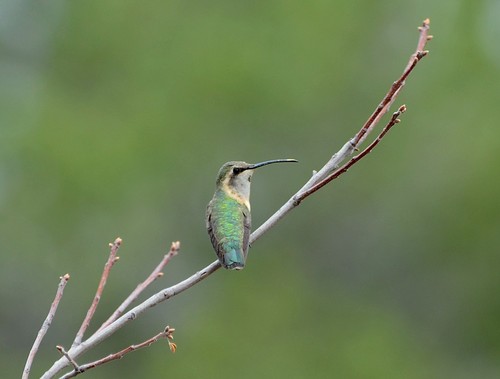
Lucifer Hummingbird
8.5-9.5 cm (3.5 in) long, 11 cm wingspan
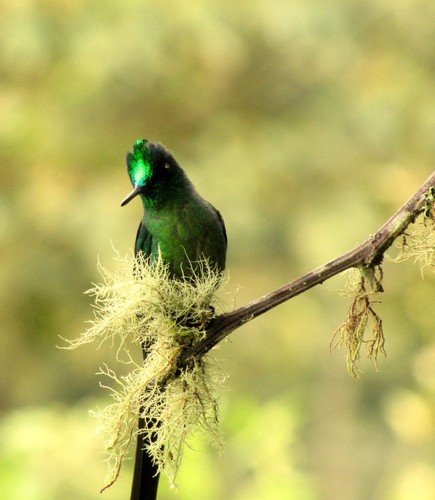
Long-tailed Sylph
males 18-19 cm (7-7.5 in) including tail; females 9-10 cm (3.5-4 in)