
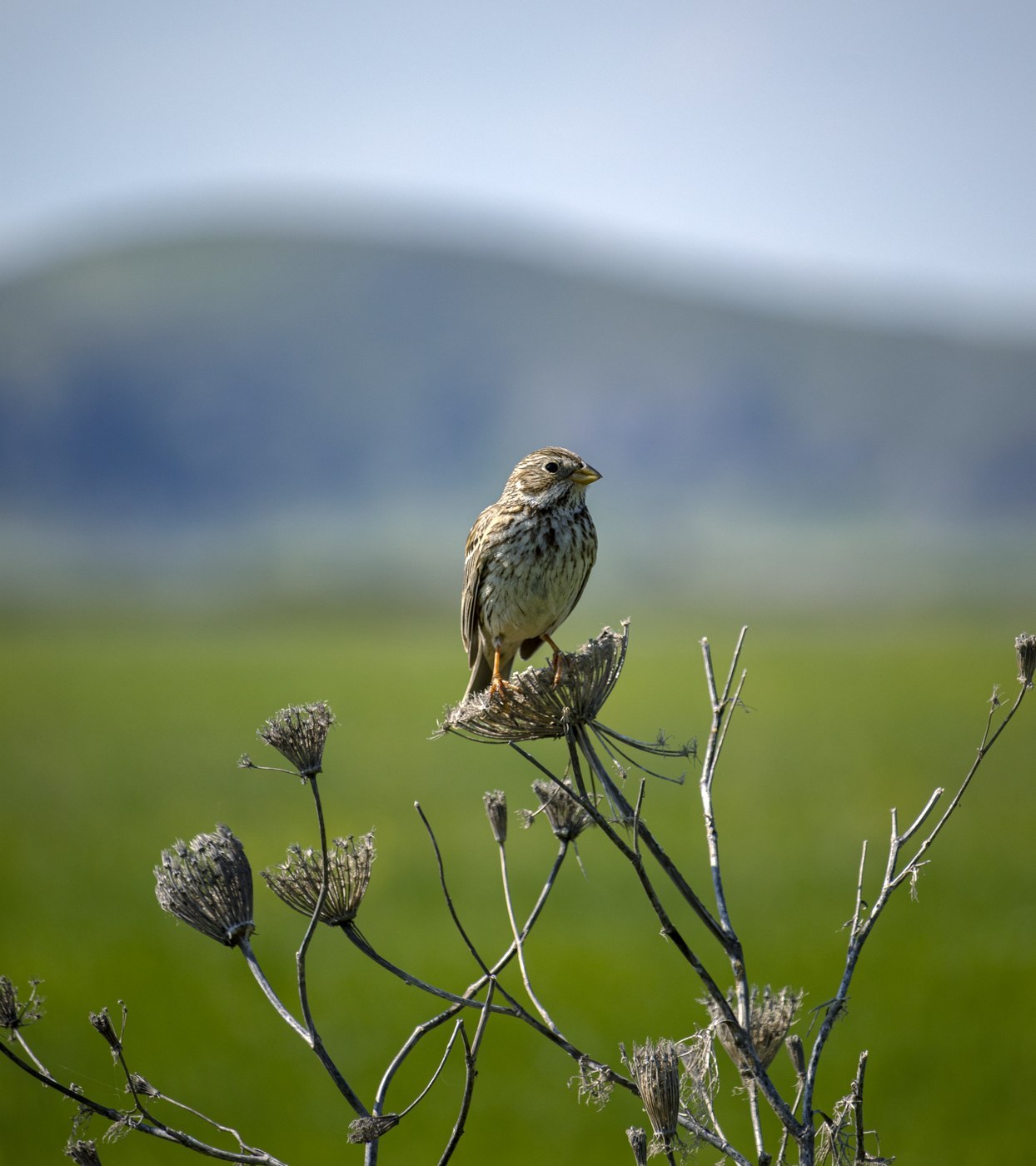
Corn Bunting
Emberiza calandra
A large, chunky, streaky-brown bunting of open farmland, best known for its jangling song likened to a bunch of keys.
- Size
- 16-19 cm (6.3-7.5 in) long, 26-32 cm wingspan
- Habitat
- open arable farmland, grassland, and cereal fields
- Type
- songbird
Spotted a bird like this?
Identify any bird from a photo, free.
Overview
The Corn Bunting is the largest and bulkiest of the European buntings, a plain, streaky brown bird lacking the bold plumage patterns of most of its relatives, but distinctive for its heavy build and its unmistakable song delivered from wires and fence posts across open farmland.
Appearance
Sexes look alike — both are streaky, warm brown above and pale, streaked buff below, with a stout, pale conical bill and no strong head pattern. The overall impression is of an oversized, chunky, rather nondescript sparrow-like bird, often looking somewhat lark-like in flight due to its dangling legs.
How to identify it
Key Field Marks
- Large, bulky build, noticeably bigger than other European buntings
- Plain streaky brown plumage, sexes alike, with no obvious head pattern
- Thick, pale conical bill
- Often dangles legs in flight
- Distinctive jangling song from wires and posts
Similar Species
Female Yellowhammer and Reed Bunting are smaller and slimmer with more defined head patterns (pale supercilium, darker crown stripes) and white in the outer tail feathers, which the Corn Bunting lacks. The Corn Bunting's larger size, heavier bill, and plainer face are the best distinguishing features.
Habitat & range
Habitat
Corn Buntings are birds of open, largely treeless arable and pastoral farmland, favoring cereal fields, rough grassland, and hedgerow-free or sparsely hedged agricultural landscapes, often in traditional, less intensively farmed areas.
Range and Migration
The species is widespread across much of Europe, North Africa, and western Asia, though it has declined severely — and disappeared entirely from some regions — due to agricultural intensification. Most populations are resident or make only local movements, sometimes gathering into large post-breeding and winter flocks on stubble fields.
Behavior & voice
Behavior
Males are often polygynous, with a single male sometimes mating with several females within his territory — unusual among European songbirds. Outside the breeding season, Corn Buntings can form large, loose flocks that forage together on stubble and weedy fields.
Voice
The song, delivered from a wire, fence post, or low bush, is a distinctive dry, jangling rattle, often compared to the sound of a bunch of keys being shaken or jangled — quite unlike the songs of other buntings.
Nesting and Breeding
The nest is built on or near the ground, hidden in grass or a low crop, a bulky cup of grass and stems lined with finer material. The female lays 3-5 eggs with dark scrawled markings and incubates them alone for about 12-14 days.
Frequently asked questions
What does the Corn Bunting's song sound like?
A dry, jangling rattle often compared to a bunch of keys being jingled, given repeatedly from wires, fence posts, or low perches.
Why have Corn Bunting populations declined so much?
Intensification of farming, including loss of stubble fields, hedgerows, and traditional mixed cropping, has removed much of the nesting cover and winter seed food the species relies on.
How is the Corn Bunting different from other buntings?
It is notably larger and bulkier, with plainer, less patterned plumage than species like the Yellowhammer or Reed Bunting, and both sexes look alike.
Do male Corn Buntings mate with more than one female?
Yes, the species shows a relatively unusual mating system among songbirds in which some males are polygynous, holding territories that overlap with multiple breeding females.
Corn Bunting guides
In-depth guides for identifying, finding, and understanding Corn Bunting.
Other birds you may enjoy
Black Redstart
13-14.5 cm (5.1-5.7 in) long, 23-26 cm wingspan
Black-throated Sparrow
12-14 cm (4.7-5.5 in) long, about 19-20 cm (7.5-8 in) wingspan
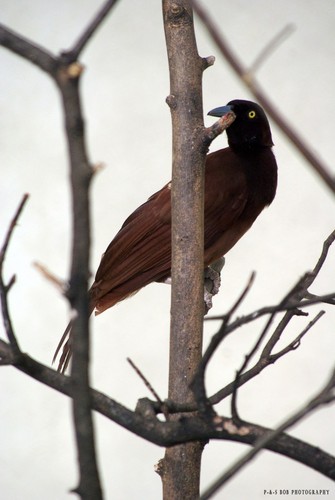
Greater Bird-of-paradise
Body about 43 cm; males with additional flank plumes up to 50 cm and long tail wires
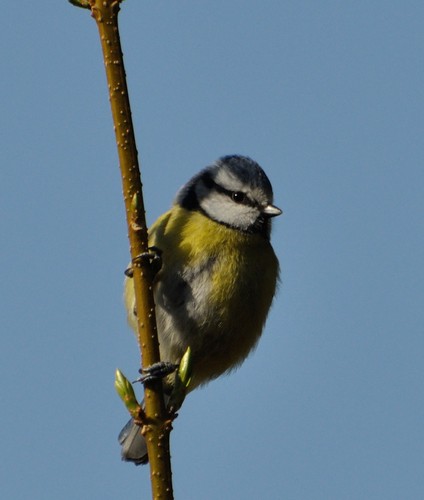
Blue Tit
11-12 cm (4.3-4.7 in) long, 17-20 cm wingspan
Red-billed Quelea
11.5–13 cm long, wingspan about 20–22 cm
White-plumed Antbird
13-14 cm (5-5.5 in) long
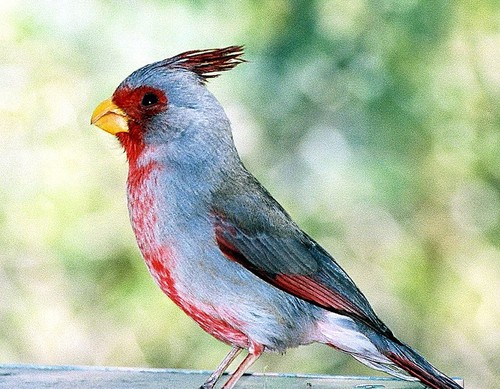
Pyrrhuloxia
19-22 cm (7.5-8.7 in) long, 30 cm wingspan
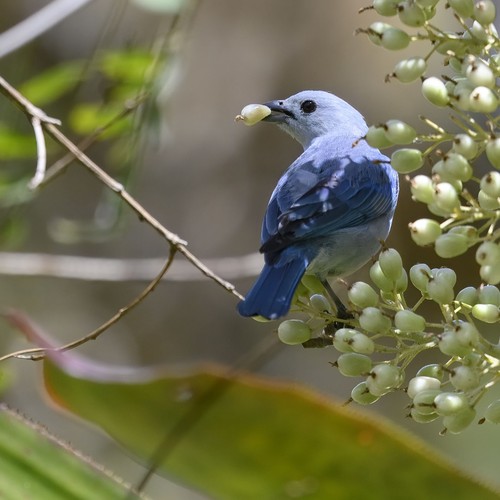
Blue-gray Tanager
16-18 cm (6-7 in) long
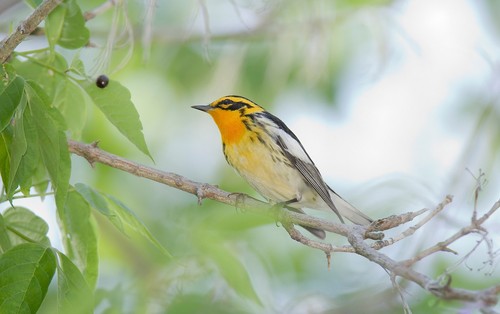
Blackburnian Warbler
11-13 cm (4.3-5.1 in) long, 20-22 cm wingspan
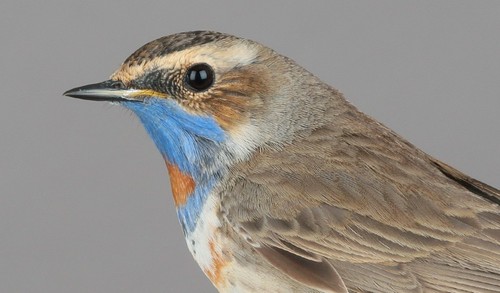
Bluethroat
13-14 cm (5.1-5.5 in) long, 20-22 cm wingspan
Eurasian Nuthatch
12-14.5 cm (4.7-5.7 in) long, 22.5-27 cm wingspan
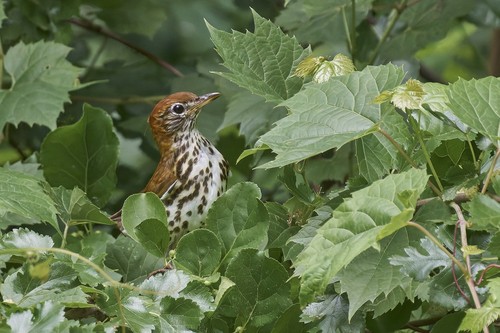
Wood Thrush
19-21 cm (7.5-8.3 in) long, about 33 cm (13 in) wingspan