
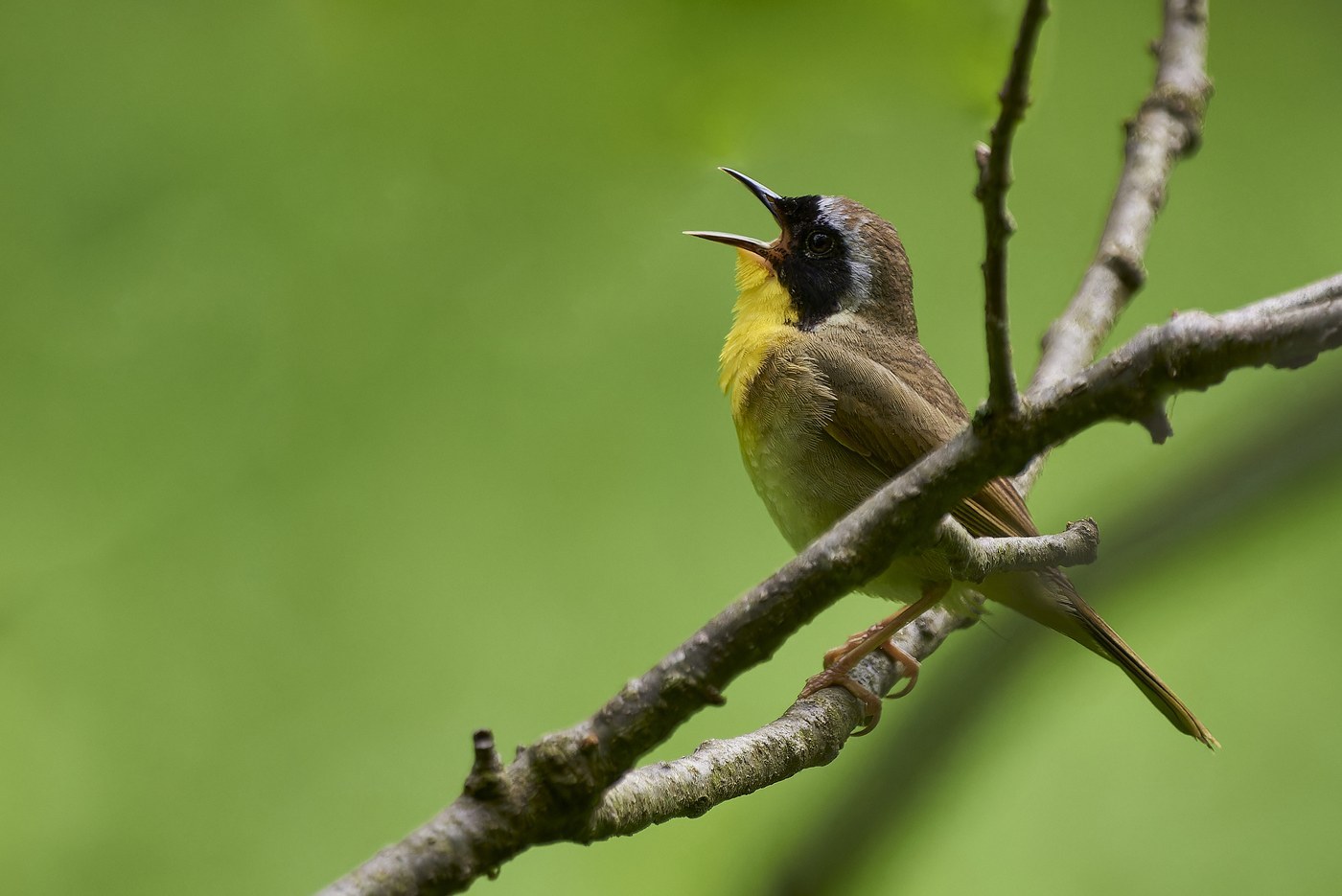
Common Yellowthroat
Geothlypis trichas
A skulking marsh warbler with a bright yellow throat, best known for the male's bold black facial mask and witchety-witchety-witchety song.
- Size
- 11-13 cm (4.3-5.1 in) long, 15-19 cm wingspan
- Habitat
- marshes, wet meadows, and dense low, brushy vegetation near water
- Type
- songbird
Spotted a bird like this?
Identify any bird from a photo, free.
Overview
The Common Yellowthroat is a small, energetic warbler of marshes and dense low cover, more often heard than seen as it skulks through cattails, sedges, and tangled shrubs. Males are unmistakable, with a bold black mask across the face bordered above by a pale gray-white band, a bright yellow throat and breast, and an olive-brown back.
Females lack the black mask entirely, appearing plain olive-brown above with a yellow throat and paler belly, making them considerably less conspicuous than males. Unlike most warblers that forage high in the canopy, the Common Yellowthroat stays low, close to the ground in dense wetland vegetation, and its rolling, rhythmic song is one of the most familiar sounds of marshy habitat across North America.
How to identify it
Key Field Marks
- Male: bold black facial mask bordered above by a pale gray or whitish band
- Bright yellow throat and upper breast in both sexes
- Olive-brown upperparts, paler or whitish belly
- Female and immature: plain face lacking the mask, yellow throat still present but duller
- Short, rounded wings and a habit of cocking the tail while skulking low in vegetation
Similar Species
Mourning Warbler and MacGillivray's Warbler both show gray hoods on the head and breast without a black mask, and lack the yellowthroat's contrasting pale border above the mask. Kentucky Warbler has yellow spectacles rather than a full black mask and a more uniformly yellow underside. The male Common Yellowthroat's black mask is unique among regularly occurring North American warblers.
Habitat & range
Habitat
Common Yellowthroats favor marshes, wet meadows, swamp edges, and other habitats with dense, low, moisture-loving vegetation such as cattails, sedges, and brambles, though they also use drier brushy fields in some regions.
Range
This species breeds very broadly across nearly all of North America, from Alaska and Canada south through most of the United States and into Mexico, wherever suitable wetland or brushy habitat exists. It winters from the southern United States south through Mexico and Central America.
Migration
Northern populations are medium- to long-distance migrants, while birds in the mildest southern parts of the range, including much of the southeastern and southwestern United States, may remain resident year-round.
Behavior & voice
Behavior
Common Yellowthroats are active but secretive, staying low and often hidden within dense marsh vegetation, occasionally popping up briefly onto an exposed perch to sing or scold intruders.
Voice
The song is a distinctive, rolling, rhythmic 'witchety-witchety-witchety-witch.' The call is a husky, raspy 'tchep' or 'chuck.'
Feeding
It gleans insects and spiders from low vegetation, stems, and leaf litter close to the ground, rarely foraging high in trees.
Nesting & Breeding
The female builds a bulky, well-hidden cup nest low in dense marsh or shrub vegetation, sometimes nearly at ground level. She lays 3-5 eggs, and the species is a frequent host of Brown-headed Cowbird parasitism.
Frequently asked questions
What does a male Common Yellowthroat look like?
Males have a bold black mask across the face bordered above by a pale gray-white band, with a bright yellow throat and olive-brown upperparts.
How can you identify a female Common Yellowthroat?
Females lack the black mask, appearing plain olive-brown above with a yellow throat, making them much less conspicuous and easily overlooked in dense cover.
What does a Common Yellowthroat sound like?
Its song is a distinctive rolling, rhythmic 'witchety-witchety-witchety-witch,' a common sound in marshes and wet brushy habitat.
Where do Common Yellowthroats live?
They inhabit marshes, wet meadows, and dense brushy vegetation near water across nearly all of North America.
What does a Common Yellowthroat eat?
It eats insects and spiders gleaned from low vegetation close to the ground.
Common Yellowthroat guides
In-depth guides for identifying, finding, and understanding Common Yellowthroat.
Other birds you may enjoy
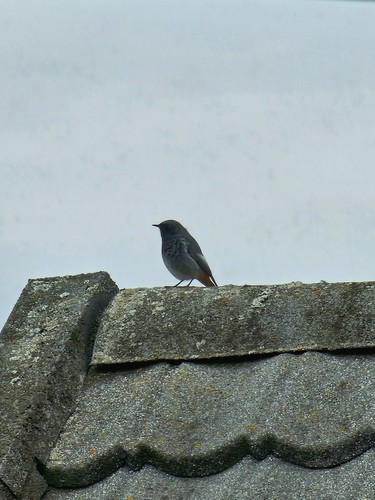
Black Redstart
13-14.5 cm (5.1-5.7 in) long, 23-26 cm wingspan
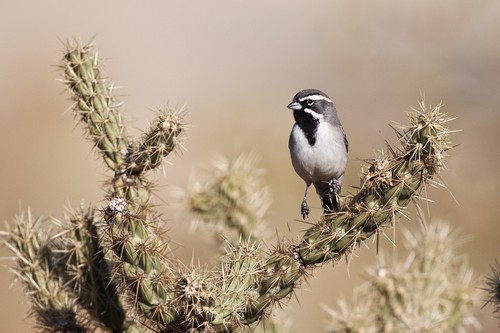
Black-throated Sparrow
12-14 cm (4.7-5.5 in) long, about 19-20 cm (7.5-8 in) wingspan
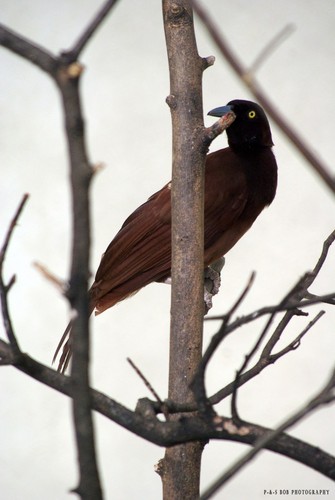
Greater Bird-of-paradise
Body about 43 cm; males with additional flank plumes up to 50 cm and long tail wires
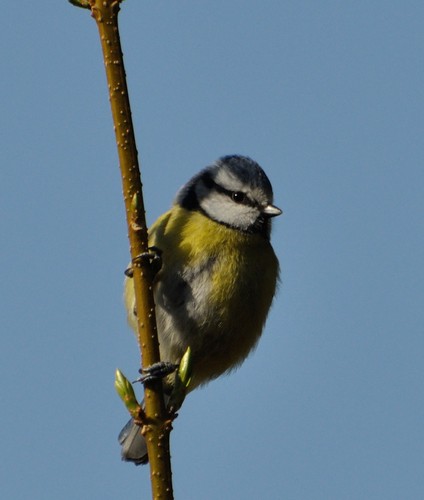
Blue Tit
11-12 cm (4.3-4.7 in) long, 17-20 cm wingspan
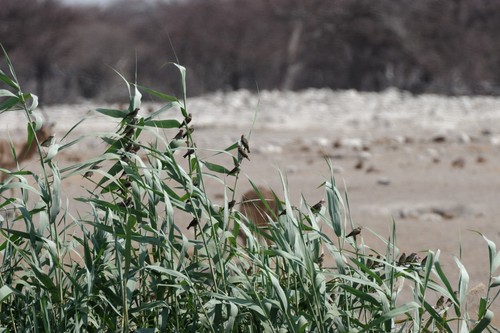
Red-billed Quelea
11.5–13 cm long, wingspan about 20–22 cm
White-plumed Antbird
13-14 cm (5-5.5 in) long
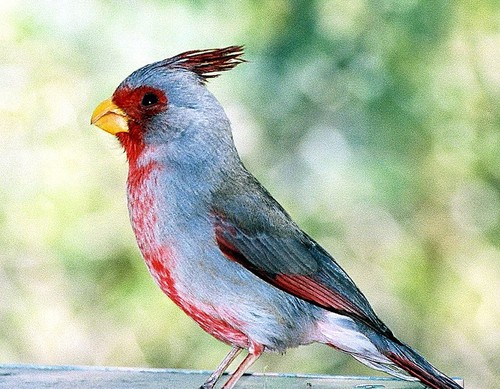
Pyrrhuloxia
19-22 cm (7.5-8.7 in) long, 30 cm wingspan
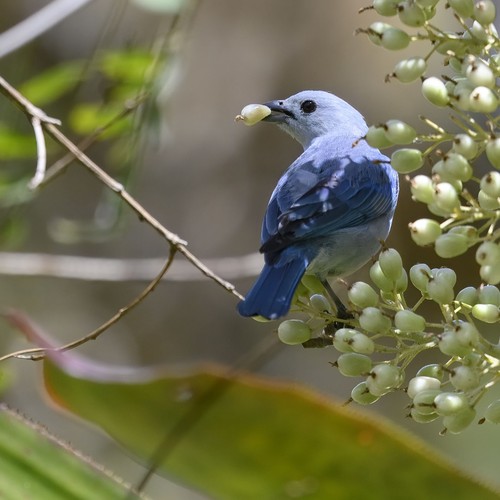
Blue-gray Tanager
16-18 cm (6-7 in) long
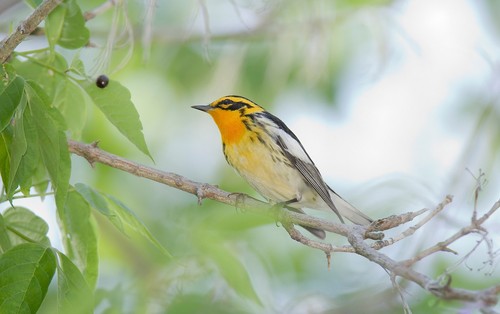
Blackburnian Warbler
11-13 cm (4.3-5.1 in) long, 20-22 cm wingspan
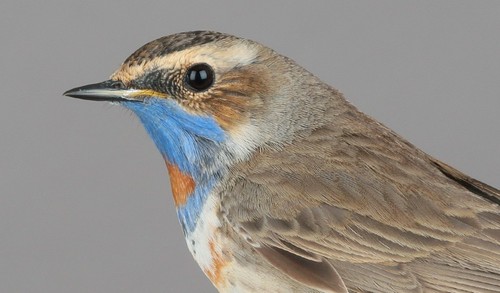
Bluethroat
13-14 cm (5.1-5.5 in) long, 20-22 cm wingspan
Eurasian Nuthatch
12-14.5 cm (4.7-5.7 in) long, 22.5-27 cm wingspan
Wood Thrush
19-21 cm (7.5-8.3 in) long, about 33 cm (13 in) wingspan