
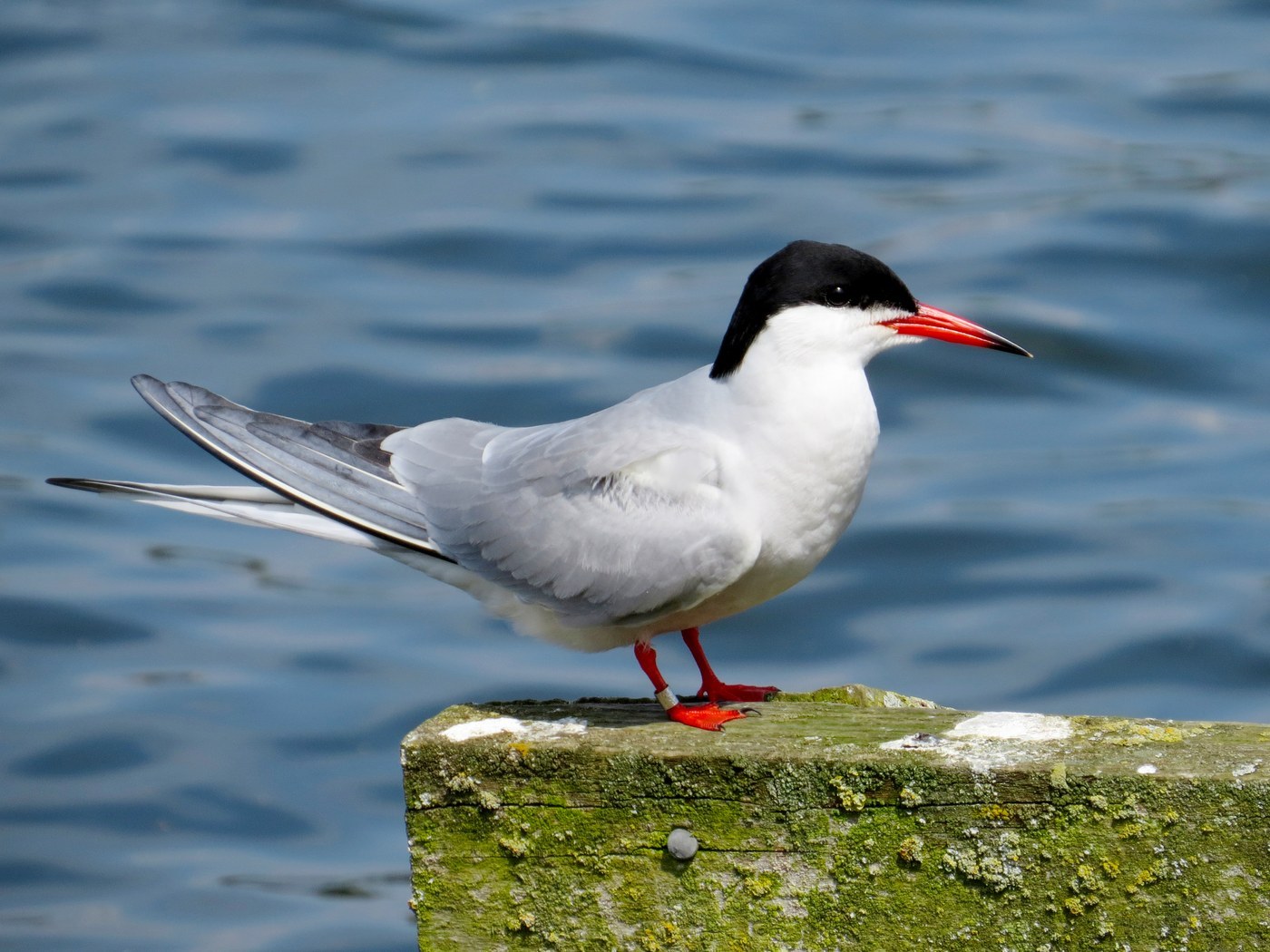
Common Tern
Sterna hirundo
A widespread, medium-sized tern found across North America, Europe, and Asia, with a black cap, red-orange bill, and deeply forked tail typical of the group.
- Size
- 31-35 cm (12-14 in) long, 77-98 cm wingspan
- Habitat
- coastal beaches, islands, and lakes
- Type
- seabird
Spotted a bird like this?
Identify any bird from a photo, free.
Overview
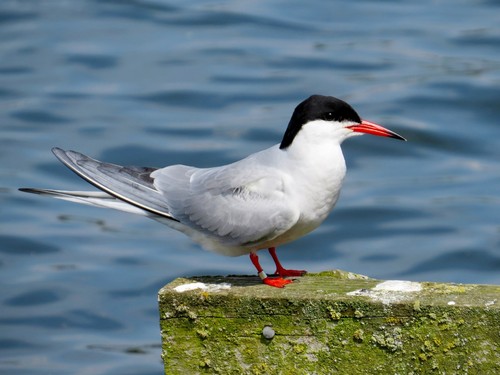
The Common Tern is a graceful, medium-sized tern that breeds widely across the Northern Hemisphere, familiar along coasts, lakes, and rivers. Breeding adults show a crisp black cap, pale gray upperparts, whitish underparts, and a red-orange bill tipped with black, along with red legs.
The tail is deeply forked, giving rise to the old nickname "sea swallow," and the wings show a dark wedge on the outer primaries that becomes more pronounced as the summer progresses due to feather wear. In non-breeding plumage, the forehead turns white and the bill darkens.
Common Terns nest in colonies on sandy or gravelly beaches, islands, and sometimes specially constructed nesting platforms, and are strongly migratory, wintering along tropical and subtropical coasts far to the south.
How to identify it
Key field marks
- Black cap in breeding plumage
- Red-orange bill with a black tip
- Red legs
- Deeply forked tail ("sea swallow")
- Dark wedge on the outer primaries visible in flight
Similar species
- Arctic Tern: shorter legs, all-red bill without a black tip in breeding plumage, longer tail streamers, and grayer underparts.
- Forster's Tern: paler, silvery primaries rather than a dark wedge, and orange legs.
- Roseate Tern: paler overall with a mostly black bill and very long tail streamers.
Habitat & range
Habitat
Breeds on sandy or gravelly beaches, offshore islands, salt marsh islands, and inland lakes and rivers; forages over open water near the coast or on large lakes.
Range and migration
Breeds across a broad swath of North America, Europe, and Asia. A strongly migratory species, wintering along tropical and subtropical coasts of Central and South America, Africa, and southern Asia, undertaking long transoceanic journeys.
Behavior & voice
Behavior
Common Terns forage by hovering over water and plunge-diving for fish, and are highly social, nesting in dense colonies and mobbing predators and intruders that approach the nesting area.
Voice
Calls include a harsh, grating "kee-arrr" and a sharper "kip" note, given frequently at colonies and while foraging.
Feeding
Feeds mainly on small fish caught by plunge-diving from several meters above the water, supplemented by crustaceans and other invertebrates.
Nesting and breeding
Nests colonially on open sand, gravel, or rock, building a simple scrape sometimes lined with vegetation or debris. Clutches typically contain two to three eggs, incubated by both parents for about three weeks; chicks are cared for by both parents until fledging.
Frequently asked questions
How do you tell a Common Tern from an Arctic Tern?
Common Tern has longer legs and a bill that is red-orange with a black tip, while Arctic Tern has shorter legs and an all-red bill without a black tip, plus longer tail streamers.
Why is the Common Tern called a 'sea swallow'?
Its deeply forked tail and graceful, buoyant flight resemble that of a swallow, earning it this old nickname.
What does the Common Tern eat?
Mainly small fish caught by hovering and plunge-diving, along with some crustaceans and other invertebrates.
Where does the Common Tern spend the winter?
It migrates long distances to winter along tropical and subtropical coasts of Central and South America, Africa, and southern Asia.
Common Tern guides
In-depth guides for identifying, finding, and understanding Common Tern.
Other birds you may enjoy
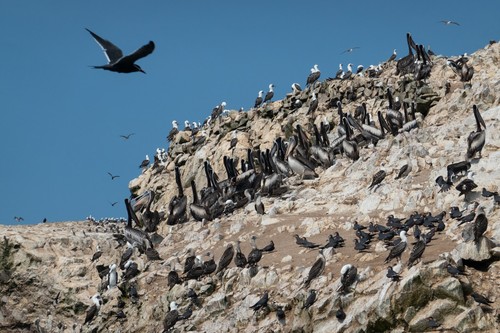
Peruvian Pelican
137-152 cm (54-60 in) long, up to 228 cm wingspan
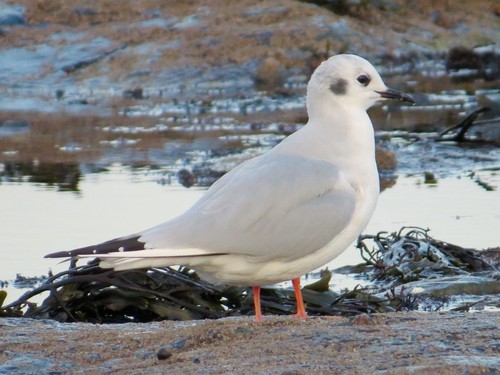
Bonaparte's Gull
28-33 cm (11-13 in) long, 76-84 cm wingspan
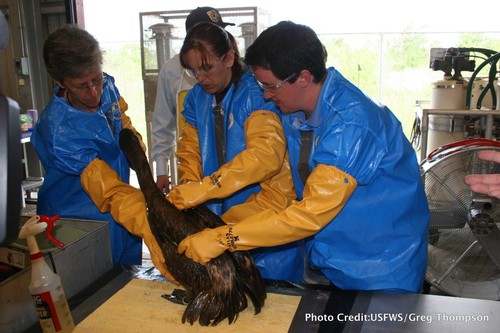
Brown Pelican
106-137 cm (42-54 in) long, 200-230 cm wingspan
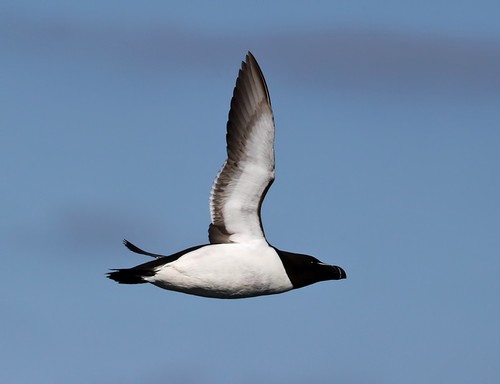
Razorbill
37-39 cm (15-15.5 in) long, 63-68 cm wingspan
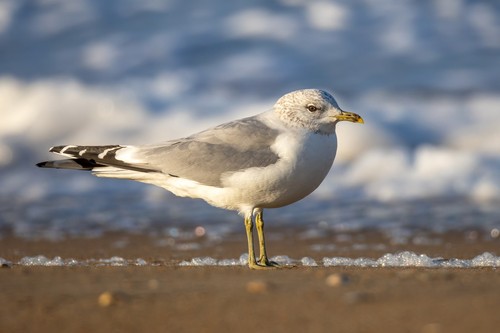
Common Gull
40-46 cm (16-18 in) long, 110-130 cm wingspan
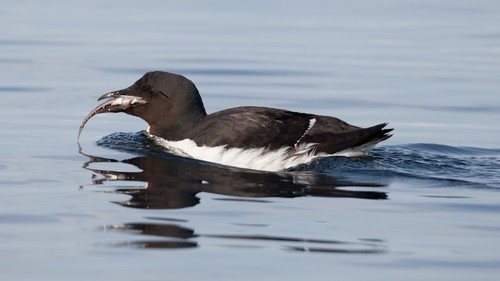
Thick-billed Murre
40-48 cm (16-19 in) long, 65-75 cm wingspan
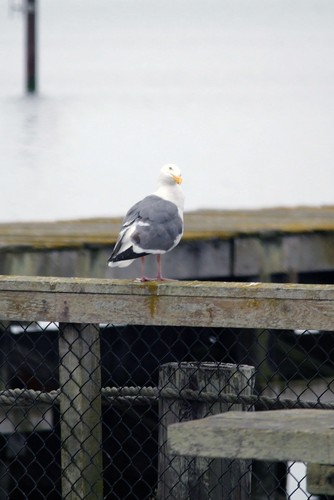
Western Gull
55-68 cm (22-27 in) long, 130-144 cm wingspan
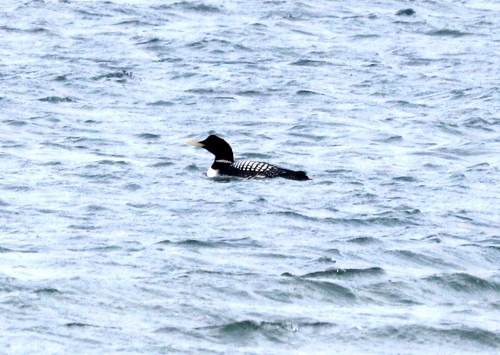
Yellow-billed Loon
76-97 cm (30-38 in) long, 135-152 cm wingspan
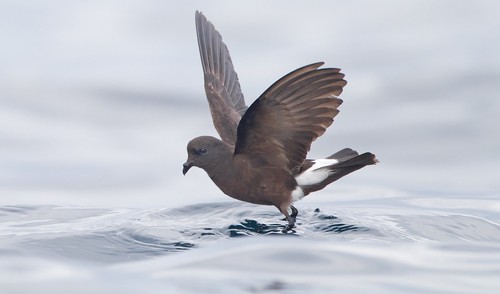
Wilson's Storm-Petrel
15-19 cm (6-7.5 in) long, wingspan 38-42 cm (15-16.5 in)
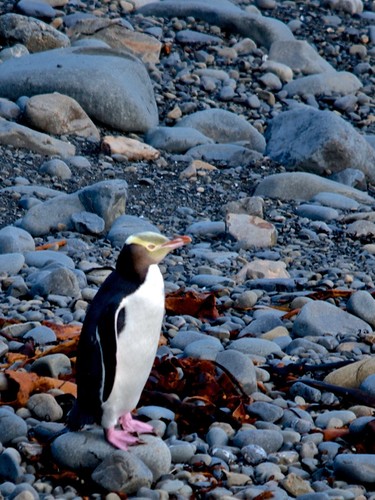
Yellow-eyed Penguin
62-79 cm (24-31 in) tall, 3-8.5 kg (6.6-18.7 lb)
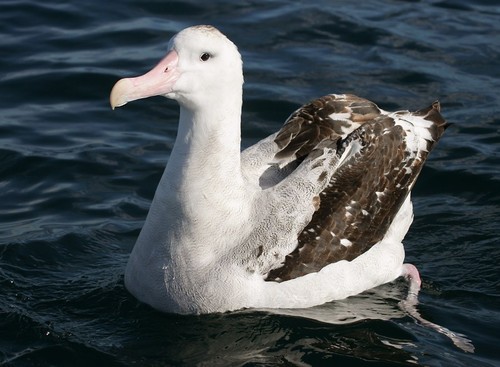
Wandering Albatross
107-135 cm (42-53 in) long, wingspan up to 3.5 m (11.5 ft)
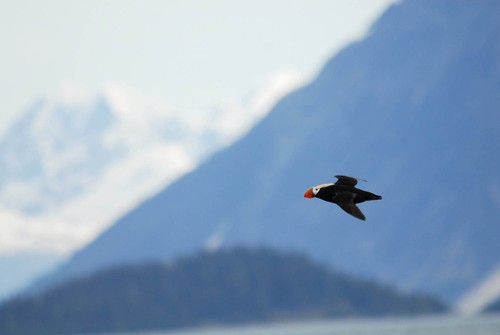
Tufted Puffin
35-41 cm (14-16 in) long, about 63-70 cm wingspan