
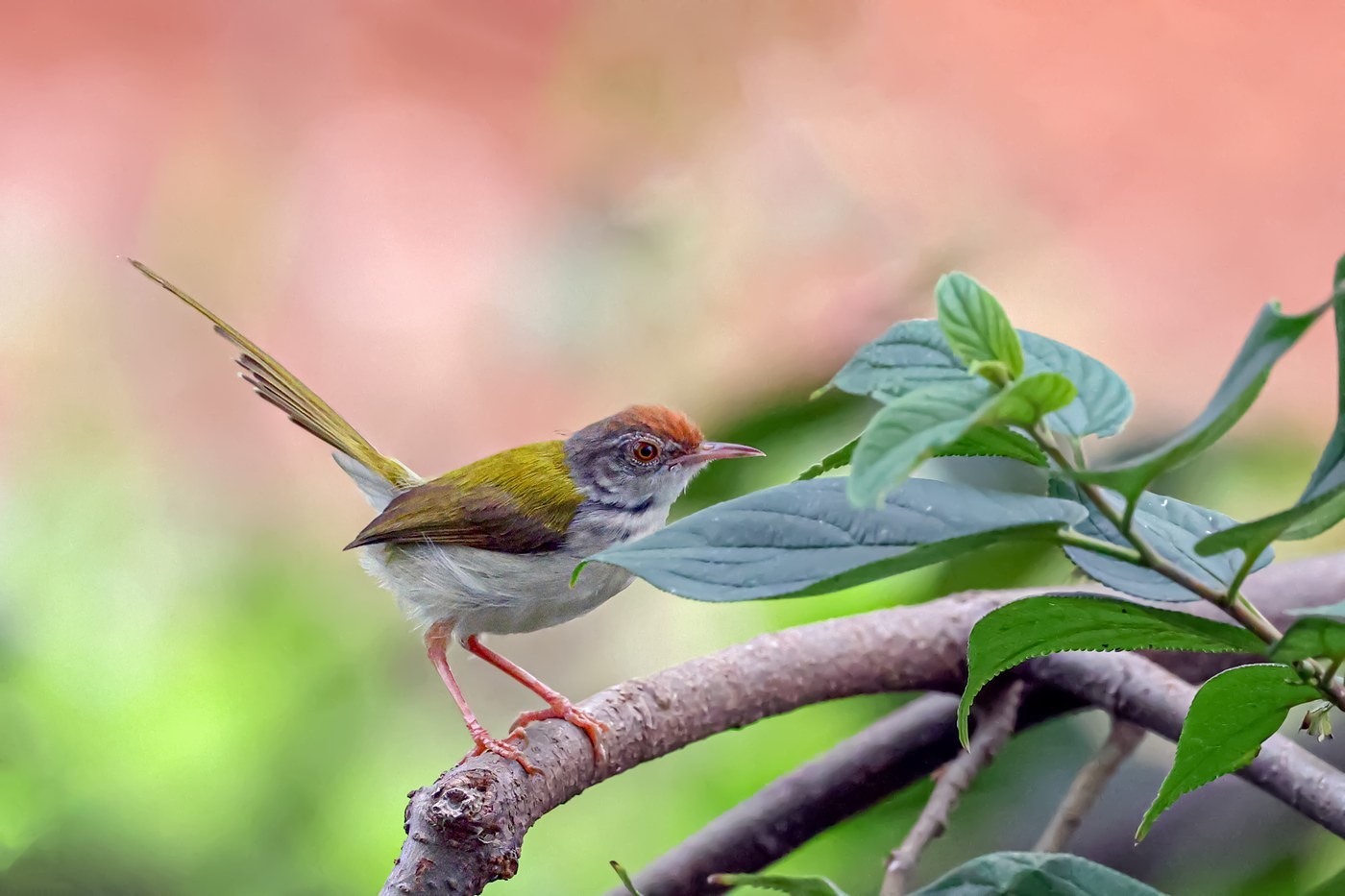
Common Tailorbird
Orthotomus sutorius
A tiny, olive-green warbler-relative famous for stitching leaves together with plant fiber to build its remarkable nest.
- Size
- 10-14 cm (4-5.5 in) long including tail
- Habitat
- gardens, scrub, forest edge, and cultivated land across South and Southeast Asia
- Type
- songbird
Spotted a bird like this?
Identify any bird from a photo, free.
Overview
The Common Tailorbird is a small, energetic songbird well known across South and Southeast Asian gardens for both its loud voice and its extraordinary nest-building technique, from which it gets its common name. It has bright olive-green upperparts, whitish underparts, a rufous-chestnut cap, and a long, often distinctly cocked tail, especially prominent in breeding males, which grow slightly elongated central tail feathers.
Despite its diminutive size, the Common Tailorbird is bold and vocal, frequently heard well before it is seen as it forages actively through dense low vegetation in gardens, hedges, and forest edges.
How to identify it
Key field marks
- Small size, bright olive-green upperparts, whitish underparts
- Rufous-chestnut cap on the crown
- Long tail, often cocked upward, especially in males
- Constant, restless movement through low, dense vegetation
Similar species
Other small warblers in the region generally lack the combination of rufous cap and strongly cocked tail. The Common Tailorbird's loud, repetitive voice and characteristic tail posture make it fairly distinctive once learned, even though the bird itself can be hard to see clearly in dense cover.
Habitat & range
Common Tailorbirds are found across the Indian subcontinent, Sri Lanka, Bangladesh, and Southeast Asia into southern China and Indonesia. They favor gardens, scrub, hedgerows, forest edges, and cultivated land with dense low vegetation, and adapt readily to human-altered habitats including urban parks.
The species is non-migratory, remaining resident within fairly small home territories year-round.
Behavior & voice
Voice
A loud, repetitive, sharp "chee-chee-chee" or "pretty-pretty-pretty" call, surprisingly loud for such a small bird and often the first clue to its presence in dense cover.
Feeding
Common Tailorbirds glean small insects and spiders from leaves and stems, foraging actively and continuously through low shrubs and hedges.
Nesting and breeding
The species is named for its remarkable nest construction technique: it pierces the edges of one or more large leaves and "sews" them together using plant fiber or spider silk to form a cradle, then builds a soft cup nest of grass and fibers inside this leafy pouch, providing excellent camouflage and protection for the eggs and chicks.
Frequently asked questions
Why is it called a tailorbird?
It stitches the edges of leaves together with plant fiber or spider silk to form a hidden pouch in which it builds its nest, resembling a tailor's sewing technique.
How can I identify a Common Tailorbird?
Look for a tiny olive-green bird with a rufous cap, whitish underparts, and a long tail that is often held cocked upward.
What does the Common Tailorbird's call sound like?
A loud, sharp, repetitive 'chee-chee-chee' call that carries surprisingly far for such a small bird.
What does a Common Tailorbird eat?
Mainly small insects and spiders gleaned from leaves and stems in dense low vegetation.
Common Tailorbird guides
In-depth guides for identifying, finding, and understanding Common Tailorbird.
Other birds you may enjoy
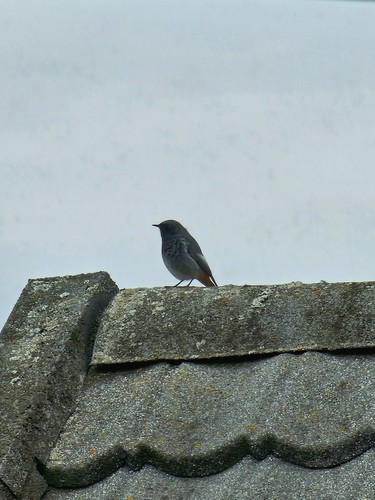
Black Redstart
13-14.5 cm (5.1-5.7 in) long, 23-26 cm wingspan
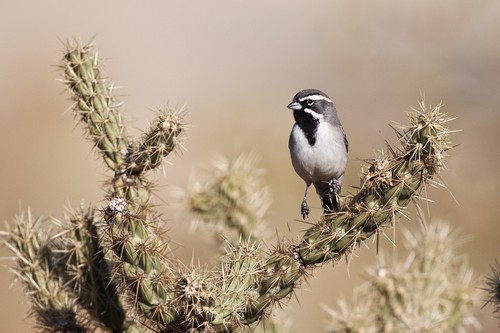
Black-throated Sparrow
12-14 cm (4.7-5.5 in) long, about 19-20 cm (7.5-8 in) wingspan
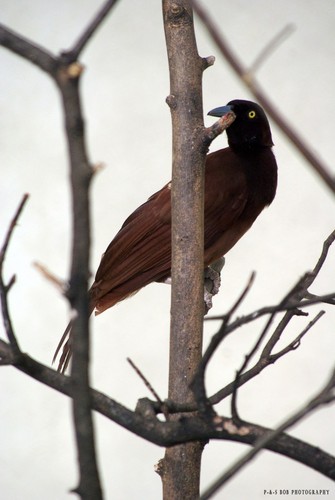
Greater Bird-of-paradise
Body about 43 cm; males with additional flank plumes up to 50 cm and long tail wires
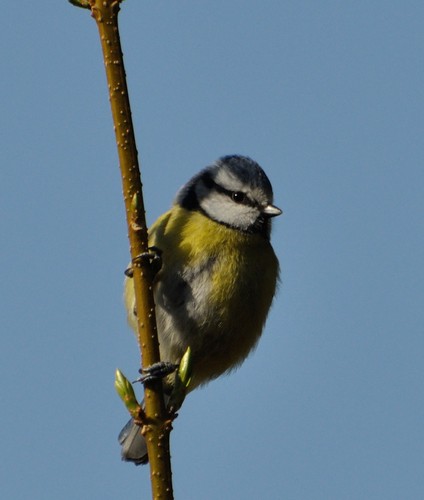
Blue Tit
11-12 cm (4.3-4.7 in) long, 17-20 cm wingspan
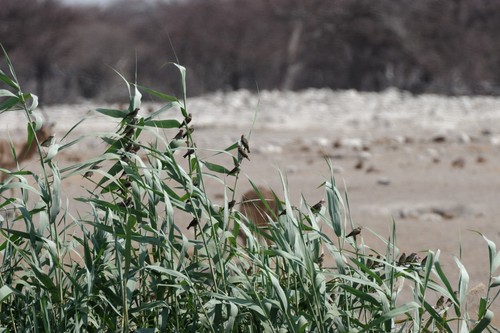
Red-billed Quelea
11.5–13 cm long, wingspan about 20–22 cm
White-plumed Antbird
13-14 cm (5-5.5 in) long
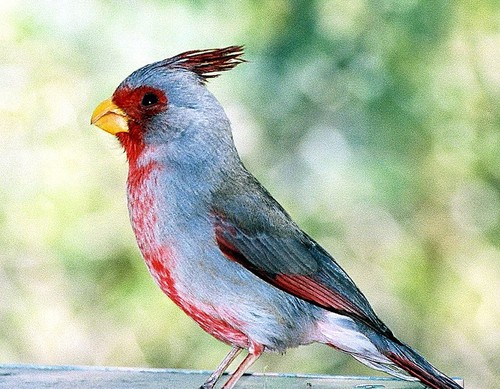
Pyrrhuloxia
19-22 cm (7.5-8.7 in) long, 30 cm wingspan
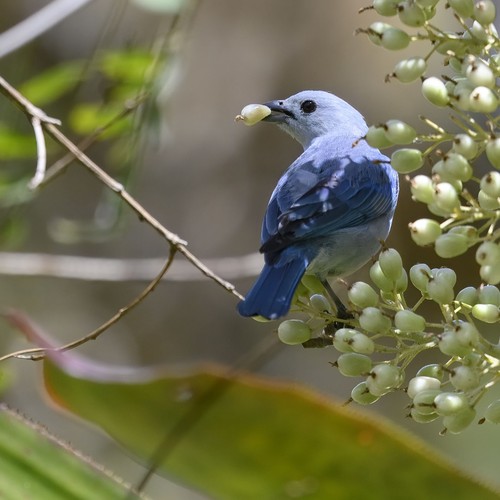
Blue-gray Tanager
16-18 cm (6-7 in) long
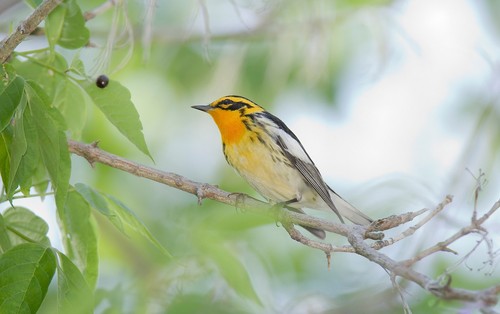
Blackburnian Warbler
11-13 cm (4.3-5.1 in) long, 20-22 cm wingspan
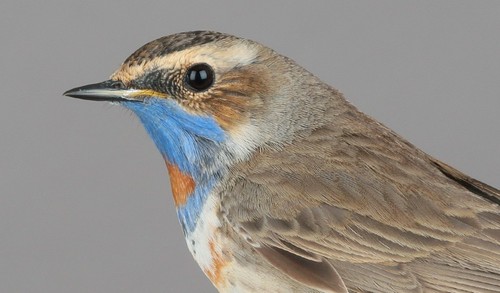
Bluethroat
13-14 cm (5.1-5.5 in) long, 20-22 cm wingspan
Eurasian Nuthatch
12-14.5 cm (4.7-5.7 in) long, 22.5-27 cm wingspan
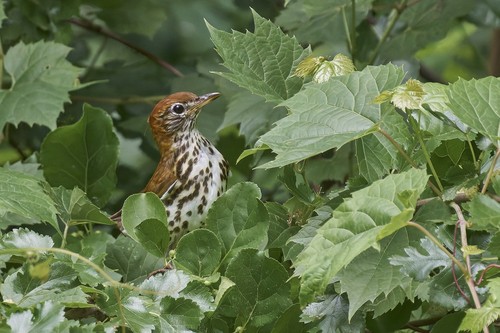
Wood Thrush
19-21 cm (7.5-8.3 in) long, about 33 cm (13 in) wingspan