
Common Tailorbird Identification Guide
A small, vocal warbler of South and Southeast Asian gardens, easily known by its rusty cap, olive body, and habit of holding its tail cocked up like a wren.
Read the full Common Tailorbird encyclopedia entry →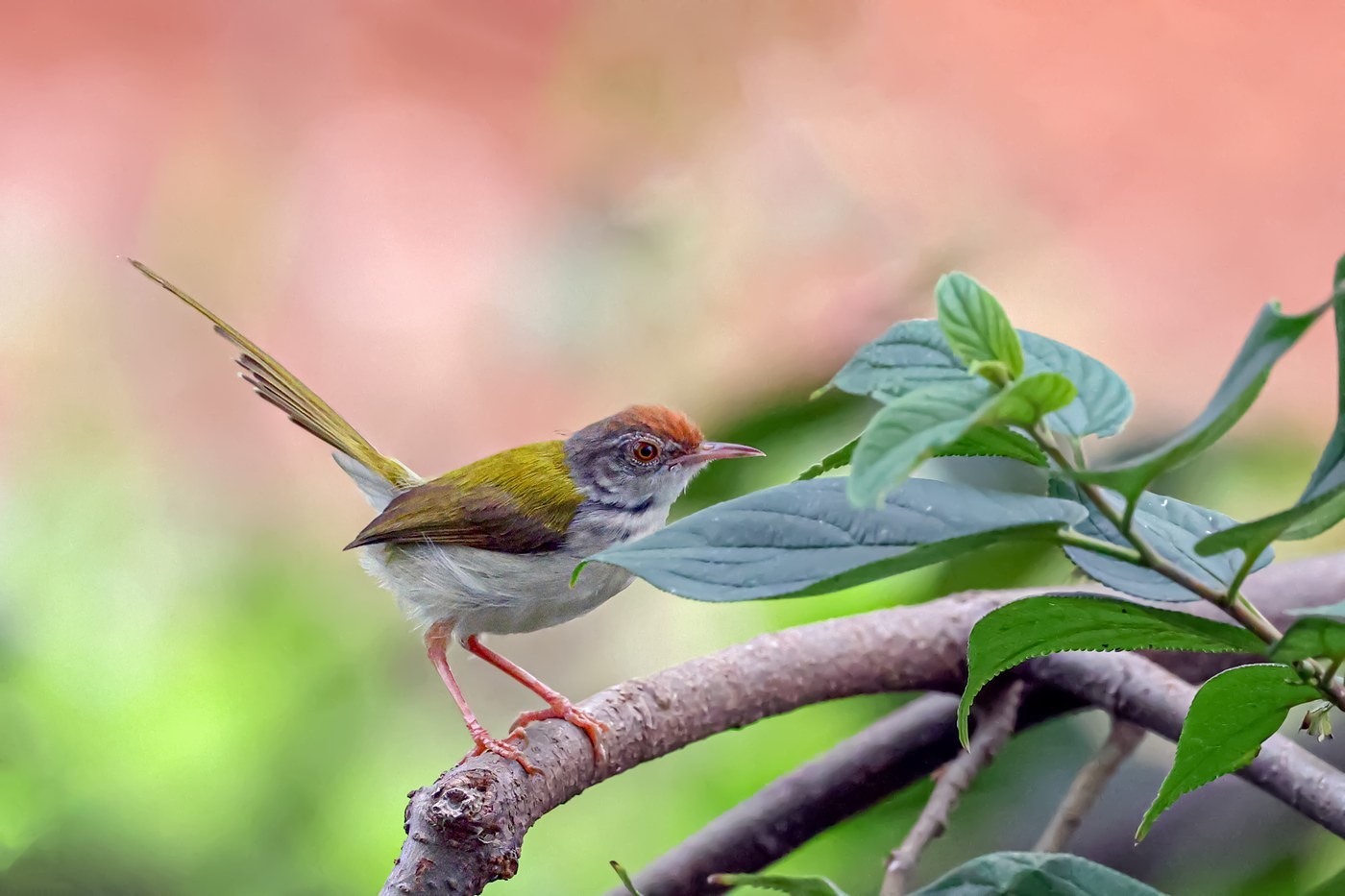
Key Field Marks
- Small warbler, about 12–14 cm including the tail and fine bill, with a slim body and thin, slightly downcurved bill.
- Olive-green upperparts and whitish to pale grey underparts, with a rufous-chestnut cap confined to the forehead and crown.
- Long tail frequently held cocked upright, wren-like, especially when the bird is alert or singing.
- Sexes look similar, though breeding males may grow noticeably elongated central tail feathers.
- Often detected first by its persistent, loud calls from dense low cover before it is seen.
Separating It From Similar Species
- Dark-necked Tailorbird: shows a dark grey or blackish patch on the sides of the neck, which Common Tailorbird lacks; ranges overlap in parts of Southeast Asia, so neck pattern is the key distinguishing feature.
- Other small Asian warblers/prinias: Common Tailorbird is set apart by the combination of a rufous cap restricted to the forecrown, plain olive back, whitish underparts, and the persistently cocked tail — prinias typically lack the rufous cap and have different tail and wing patterns.
- Its distinctive, far-carrying, repetitive call is often the quickest way to confirm identification even before the bird is seen clearly.
Where and When to See One
- A common resident (non-migratory) species found in gardens, scrub, forest edge, hedgerows, and urban parks across the Indian subcontinent and much of Southeast Asia.
- Present year-round wherever suitable low, dense vegetation is available, including in cities and suburban gardens.
- Named for its remarkable nest-building technique: it stitches the edges of one or more large leaves together using plant fiber or spider silk to form a cradle, inside which the actual nest is built.
Voice
- Extremely vocal, giving loud, sharp, repetitive calls often rendered as "chip-chip-chip" or "towit-towit," repeated persistently from cover.
- Frequently heard calling far more often than it is seen, as it tends to skulk in dense low vegetation.
Frequently asked questions
Why is it called the tailorbird?
It gets its name from its remarkable nest-building behavior: it pierces the edges of a large leaf (or leaves) and stitches them together with plant fiber or spider silk to form a pouch that cradles its nest.
How do you identify a Common Tailorbird?
Look for a small olive-green bird with a rufous-chestnut cap restricted to the forehead and crown, whitish underparts, and a tail that is frequently held cocked upright, wren-like.
How is Common Tailorbird different from Dark-necked Tailorbird?
Dark-necked Tailorbird shows a dark patch on the sides of the neck that Common Tailorbird lacks; otherwise the two species are similar in size, shape, and behavior.
Is the Common Tailorbird migratory?
No, it is a non-migratory resident species, present year-round throughout its range across South and Southeast Asia.