
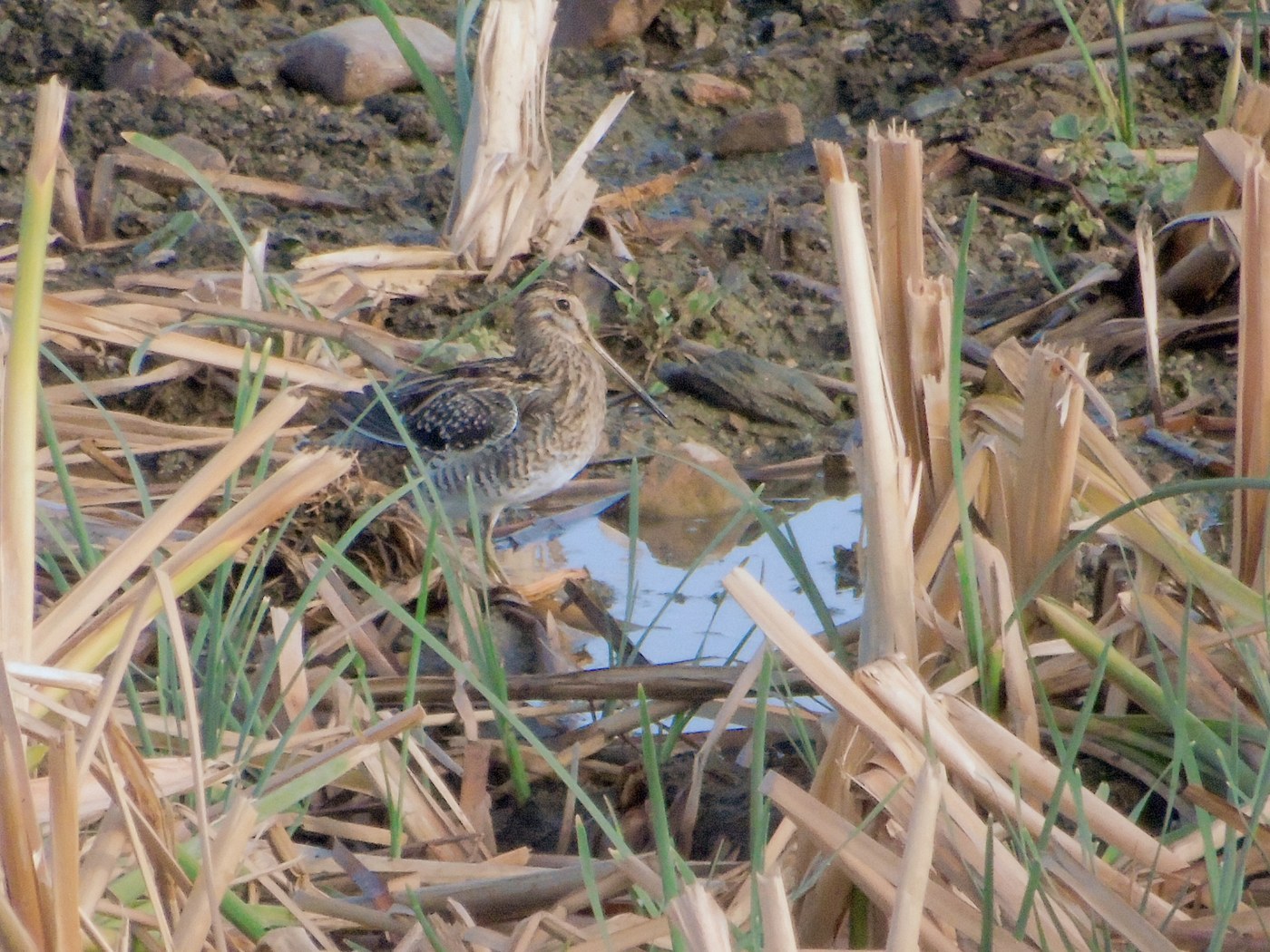
Common Snipe
Gallinago gallinago
The Eurasian counterpart to Wilson's Snipe, a cryptically striped marsh bird with a very long bill, famed for the winnowing sound of its aerial display.
- Size
- 25-27 cm (10-11 in) long, 37-43 cm wingspan
- Habitat
- wet meadows, marshes, and bogs
- Type
- shorebird
Spotted a bird like this?
Identify any bird from a photo, free.
Overview
The Common Snipe is a stocky, superbly camouflaged shorebird found across the wetlands of Europe and Asia, closely resembling the closely related Wilson's Snipe of North America, with which it was once considered a single species.
Its plumage is a complex pattern of buff, brown, and black stripes running the length of the body, providing near-perfect camouflage in reedy marsh vegetation. The bill is extremely long relative to the body, straight, and used for deep probing, while the legs are short and the body compact and rounded.
How to identify it
Key field marks
- Very long, straight bill relative to body size
- Bold buff and dark brown longitudinal stripes over the head and back
- Short legs and a compact, stocky body
- Large eyes set far back on the head for wide-angle vision
- Fast, zigzagging escape flight when flushed
Similar species
- Wilson's Snipe: nearly identical in appearance; found in North America rather than Eurasia, with subtle differences in underwing and tail pattern and a slightly different-pitched winnowing sound in display flight.
- Jack Snipe: smaller, shorter-billed, with a distinctive bouncing gait and a more direct, less erratic flush flight.
- Great Snipe: bulkier, with more barring on the flanks and a slower, more direct flush flight.
Habitat & range
Habitat
Common Snipe inhabit wet meadows, marshes, bogs, and the muddy fringes of ponds and rivers, relying on dense low cover for concealment.
Range and migration
They breed across a broad swath of northern Europe and Asia, in wetland and boggy habitats. Many populations are migratory, wintering in southern Europe, Africa, and southern Asia, while some populations in milder climates remain resident year-round.
Behavior & voice
Behavior
Like its North American counterpart, the Common Snipe performs a dramatic "winnowing" display during the breeding season: males fly high, then dive steeply, with air passing through modified outer tail feathers producing a distinctive, eerie, drumming sound.
Voice
The flushed flight call is a harsh, rasping note, and males also give a rhythmic "chip-per, chip-per" song from prominent perches during the breeding season, in addition to the mechanical winnowing sound.
Feeding
Common Snipe probe deeply into soft, wet ground with their long, flexible-tipped bill, feeling for earthworms, insect larvae, and other invertebrates largely by touch.
Nesting and breeding
The female builds a well-concealed nest on the ground amid dense marsh vegetation, laying a clutch of typically four eggs; the young are precocial and leave the nest shortly after hatching, with care often divided between the parents.
Frequently asked questions
How is the Common Snipe different from Wilson's Snipe?
They are extremely similar and were once treated as one species; Common Snipe occurs across Eurasia while Wilson's Snipe occurs in North America, and they differ subtly in wing and tail pattern and in the pitch of their winnowing display sound.
What is the winnowing sound of a Common Snipe?
A distinctive, eerie, drumming or humming sound produced mechanically by air passing through the male's outer tail feathers during steep display dives, not a vocalization.
What does a Common Snipe eat?
Mainly earthworms, insect larvae, and other soil invertebrates, probed from soft wet ground with its long bill.
Where does the Common Snipe breed?
Across wetlands and boggy habitats of northern Europe and Asia, with many populations migrating south to winter in Africa and southern Asia.
Why is the Common Snipe so hard to see?
Its intricately striped buff-and-brown plumage provides excellent camouflage against reedy marsh vegetation, and it typically remains motionless until flushed at close range.
Common Snipe guides
In-depth guides for identifying, finding, and understanding Common Snipe.
Other birds you may enjoy
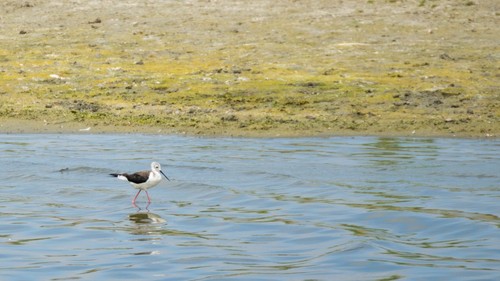
Black-winged Stilt
33-36 cm (13-14 in) long, wingspan 67-83 cm
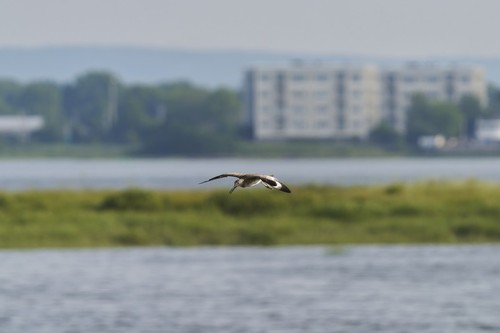
Willet
33-41 cm (13-16 in) long, 65-70 cm wingspan
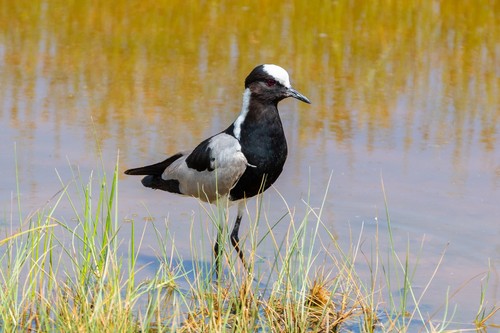
Blacksmith Lapwing
Body length about 30 cm; wingspan 55-65 cm
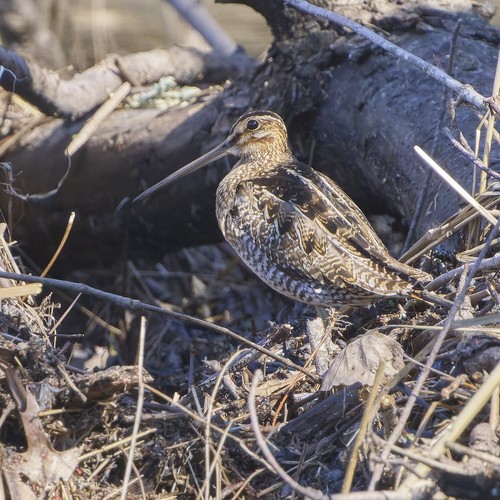
Wilson's Snipe
25-30 cm (10-12 in) long, 39-45 cm wingspan
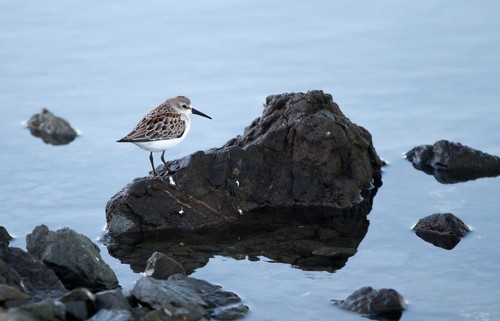
Western Sandpiper
14-17 cm (5.5-6.7 in) long, 28-37 cm wingspan
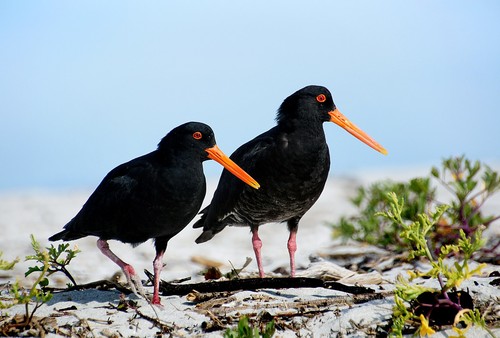
Variable Oystercatcher
46-49 cm (18-19 in) long
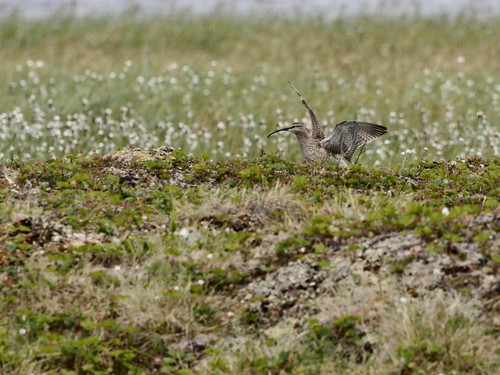
Whimbrel
40-46 cm (16-18 in) long, 76-89 cm wingspan
Wilson's Phalarope
22-24 cm (8.5-9.5 in) long, 37-43 cm wingspan
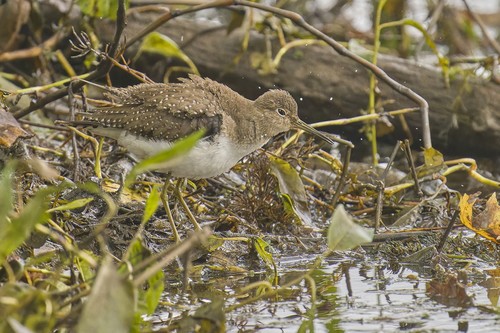
Solitary Sandpiper
19-23 cm (7.5-9 in) long, 50-56 cm wingspan
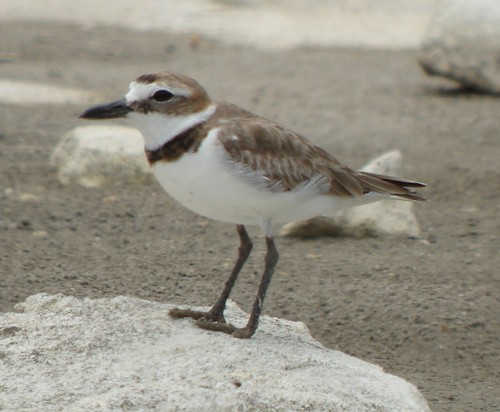
Wilson's Plover
17-19 cm (6.7-7.5 in) long, 45-50 cm wingspan
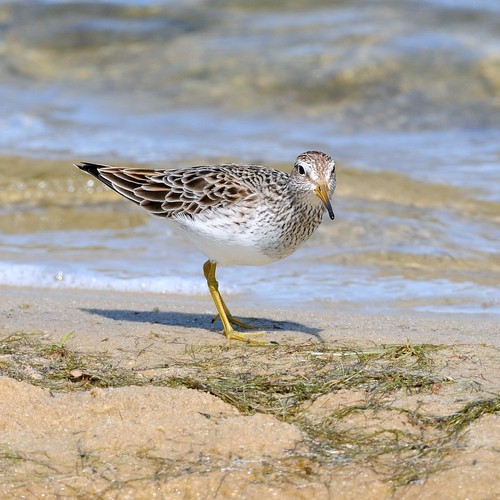
Pectoral Sandpiper
19-23 cm (7.5-9 in) long, 43-49 cm wingspan
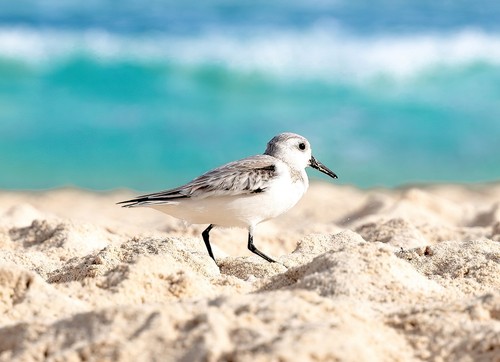
Sanderling
18-20 cm (7-8 in) long, 40-43 cm wingspan