
Common Snipe Identification Guide
A superbly camouflaged marsh wader with an extremely long straight bill, best known for its explosive zigzag flush and eerie winnowing display sound.
Read the full Common Snipe encyclopedia entry →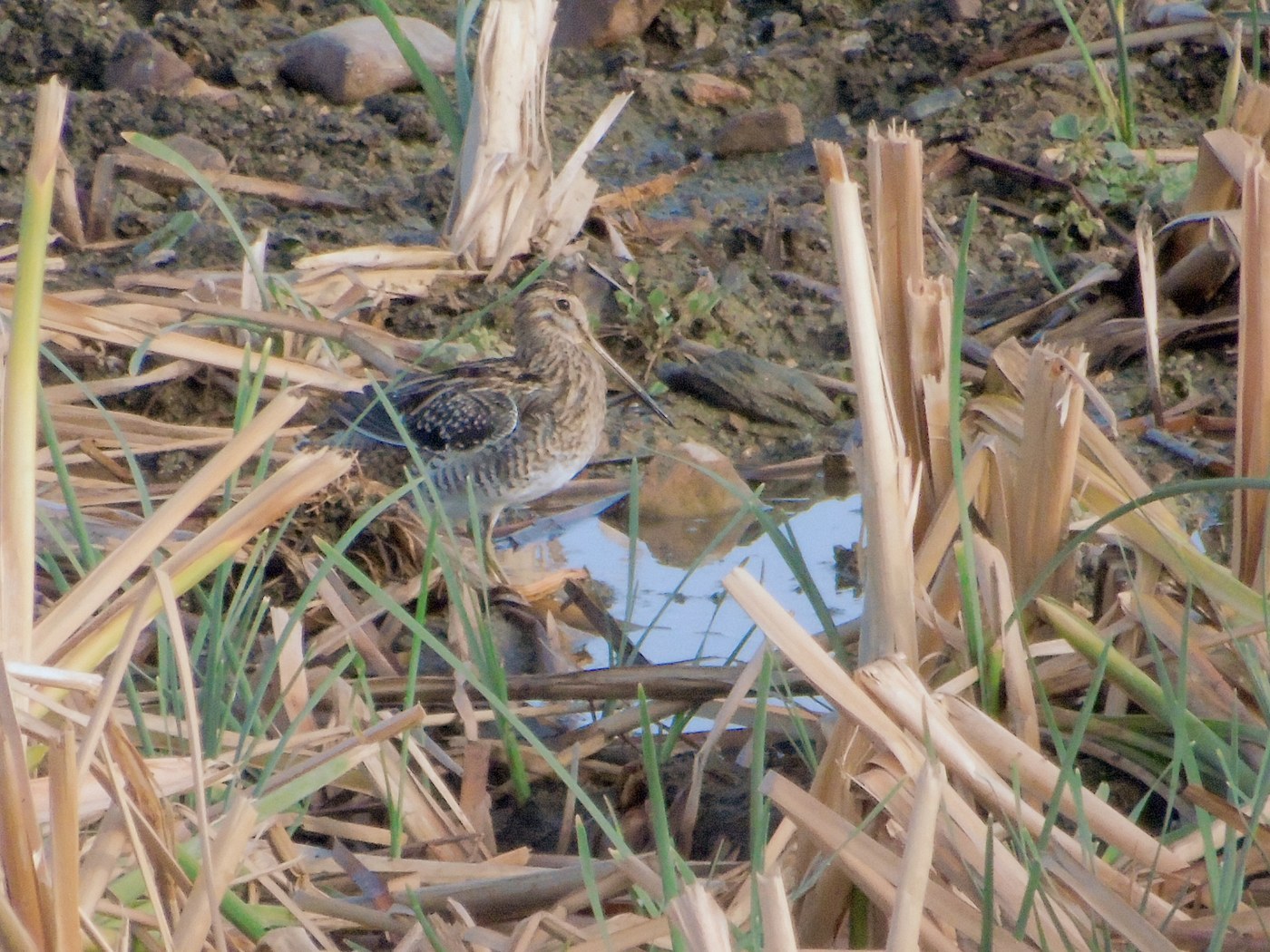
Key Field Marks
- Medium-sized, stocky wader, 25–27 cm long, with an extraordinarily long, straight bill — proportionally one of the longest of any common wader.
- Intricately patterned brown, black, and buff plumage with bold pale cream stripes ('braces') running down the back, heavily barred flanks, and a dark stripe through the eye.
- Short greenish-grey legs and a crouched, hunched posture that helps it stay hidden in dense vegetation.
- When flushed, explodes upward with a harsh call and flies off in a fast, erratic zigzag pattern before leveling out.
- During display flight, produces a distinctive vibrating, bleating 'drumming' sound created by air rushing over spread outer tail feathers during shallow dives — not a vocal sound.
Separating It From Similar Species
- Jack Snipe: noticeably smaller, with a shorter bill, and lacks the pale central crown stripe (instead shows a split, forked pale supercilium pattern); flushes silently with a low, direct, bouncing flight rather than a loud zigzag escape.
- Great Snipe: bulkier and heavier-billed, with more extensively barred underparts and flanks, obvious white in the outer tail feathers visible in flight, and a slower, more direct flush flight without the sharp zigzagging of Common Snipe.
- Woodcock: much larger and rounder-bodied, with a different, more owl-like head pattern (dark bars across the crown rather than through the eye) and a slower, more fluttering flight typically in woodland rather than open marsh.
Where and When to See One
- Breeds in wet grasslands, bogs, marshes, and wet upland moorland across the Northern Hemisphere.
- Northern populations are migratory, moving south in autumn to winter in milder wetlands, while some populations are resident year-round where conditions stay wet and unfrozen.
- Best located by walking wet grassland or marsh edges, where birds typically remain hidden until flushed at close range.
Voice
- The eerie 'drumming' or winnowing sound produced mechanically during display flights, especially at dawn and dusk in the breeding season, is one of the most evocative sounds of wetland habitats.
- Flush call is a harsh, rasping "skaap" or "scaap."
- Song from a perch is a repetitive "chip-per, chip-per, chip-per."
Frequently asked questions
What makes the Common Snipe's drumming sound?
It is not a vocal call but a mechanical sound produced when air vibrates through the spread outer tail feathers as the bird performs shallow dives during its display flight.
How do you tell Common Snipe from Jack Snipe?
Common Snipe is larger with a longer bill, a pale central crown stripe, and flushes loudly in a zigzag flight, while Jack Snipe is smaller, lacks the central crown stripe, and flushes silently with a low, direct flight.
Why is Common Snipe so hard to see?
Its intricately barred and striped brown plumage blends almost perfectly with the dead grass and vegetation of the wet meadows and marshes it inhabits, and it typically stays motionless until closely approached.
Where is the best place to look for Common Snipe?
Wet grasslands, bogs, and marsh edges, especially where there is a mix of open mud and dense low vegetation for cover.