
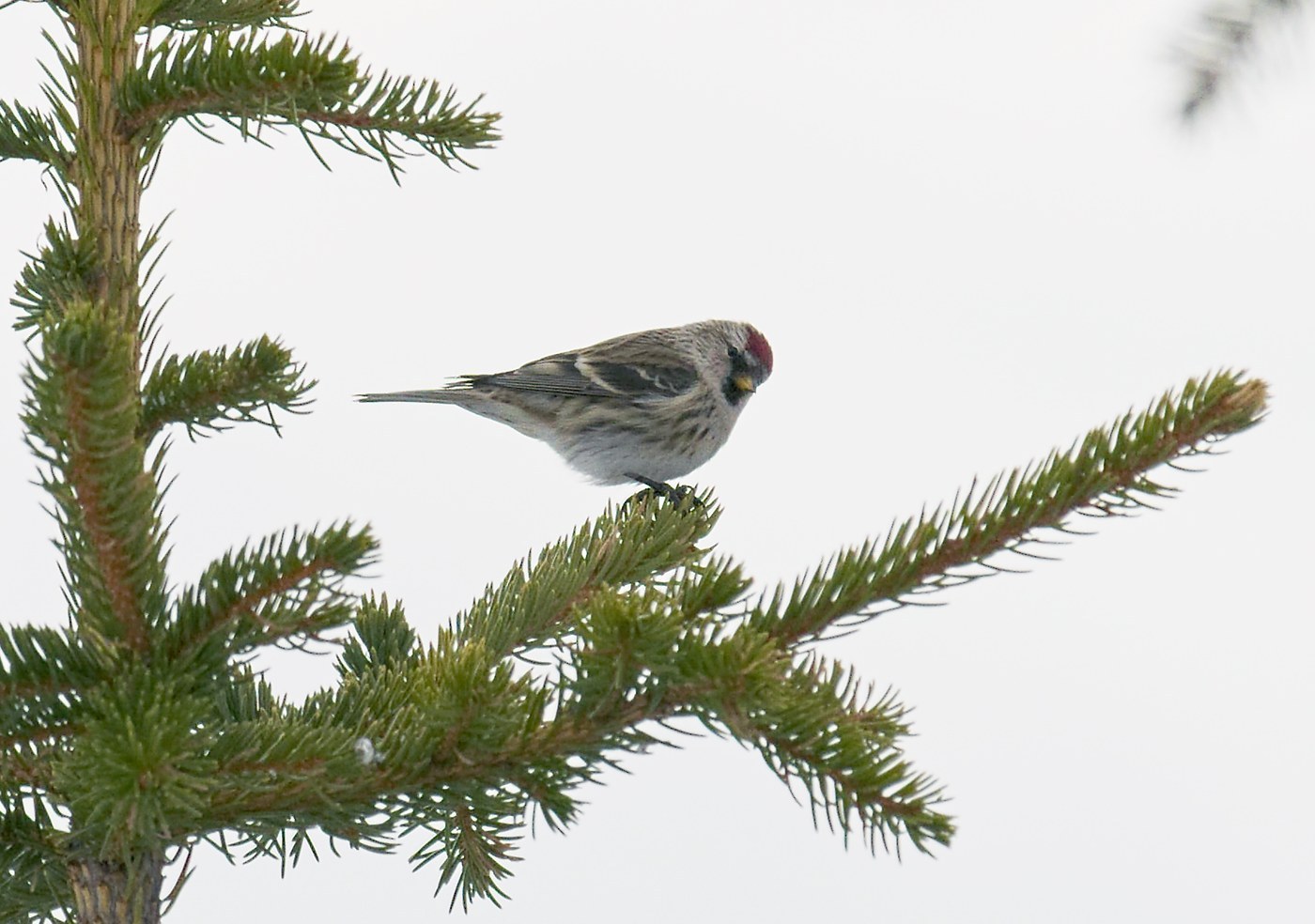
Common Redpoll
Acanthis flammea
A tiny, hardy arctic finch with a red cap and black chin that irrupts south to feeders in some winters.
- Size
- 11.5-14 cm (4.5-5.5 in) long, 20-22 cm wingspan
- Habitat
- arctic and subarctic tundra scrub, birch and willow thickets; weedy fields and feeders in winter
- Type
- songbird
Spotted a bird like this?
Identify any bird from a photo, free.
Overview
The Common Redpoll is a small, energetic finch of the far north, easily recognized by its bright red cap ("poll"), small black chin patch, and streaky brown-and-white body. Males often show a rosy wash on the breast, while females and immatures are more heavily streaked without the pink tones. Despite its tiny size, this species is remarkably cold-hardy, able to survive extreme arctic winter temperatures thanks to physiological adaptations including the ability to store extra seeds in an esophageal pouch for digestion overnight.
Common Redpolls breed across the circumpolar arctic and subarctic and are famous for irruptive winter movements, appearing in large, active flocks at feeders across the northern and sometimes central United States in years when birch and alder seed crops fail farther north.
How to identify it
Key Field Marks
- Small, streaky brown-and-white finch
- Bright red cap on forehead
- Small black chin patch
- Males often show pink wash on breast; females lack it
- Notched tail, small conical yellowish bill
Similar Species
- Hoary Redpoll: paler and "frostier" overall, with a smaller bill, less streaking on the flanks, and an unstreaked or lightly streaked white rump; identification can be difficult and the two may represent ends of a continuum.
- Pine Siskin: lacks the red cap and black chin, and shows yellow in the wings and tail.
- House Finch: lacks the black chin and streaky white underparts pattern of the redpoll.
Habitat & range
Habitat
Common Redpolls breed in arctic and subarctic tundra scrub, especially dwarf birch and willow thickets, and in winter frequent weedy fields, alder and birch stands, and backyard feeders offering nyjer or small seeds.
Range
The species breeds across the circumpolar north, including northern Canada, Alaska, Greenland, Scandinavia, and Siberia.
Migration
Common Redpolls are classic irruptive migrants, with populations moving unpredictably southward roughly every other winter when seed crops fail in the boreal and arctic zones, sometimes arriving in large, conspicuous flocks far south of the typical range.
Behavior & voice
Behavior
Highly social, redpolls travel and feed in active, twittering flocks that move quickly between feeding sites, often hanging acrobatically from birch catkins and weed seed heads.
Voice
Calls include a dry rattling "chit-chit-chit" and a rising "swee-eet"; the song combines trills and buzzy notes, often given in flight.
Feeding
Diet is dominated by small seeds, especially birch and alder catkins and weedy annuals, with insects added during the brief arctic summer; redpolls can cache seeds in a throat pouch to eat later in sheltered roosts.
Nesting
Nests are built low in shrubs or on the ground, insulated cups of grass, twigs, and feathers. Females lay 4-7 eggs, and can raise young quickly to take advantage of the short arctic breeding season.
Frequently asked questions
Why do Common Redpolls suddenly appear at feeders some winters?
They are irruptive migrants that move south in large numbers when birch and alder seed crops fail in their arctic and subarctic breeding range, a pattern that often recurs roughly every other year.
How do redpolls survive such cold temperatures?
They have several adaptations including dense plumage, a throat pouch for storing extra seeds to digest overnight, and the ability to rapidly boost metabolic heat production in extreme cold.
How do I tell a Common Redpoll from a Hoary Redpoll?
Hoary Redpolls look paler and frostier overall with less flank streaking and a smaller bill, but the distinction can be subtle and the two species may overlap in appearance.
What do Common Redpolls eat at feeders?
They favor small seeds such as nyjer (thistle) and fine sunflower chips, similar to what attracts siskins and goldfinches.
Where do Common Redpolls breed?
They nest across arctic and subarctic tundra and scrub habitat, including northern Canada, Alaska, and similar latitudes in Eurasia.
Common Redpoll guides
In-depth guides for identifying, finding, and understanding Common Redpoll.
Other birds you may enjoy
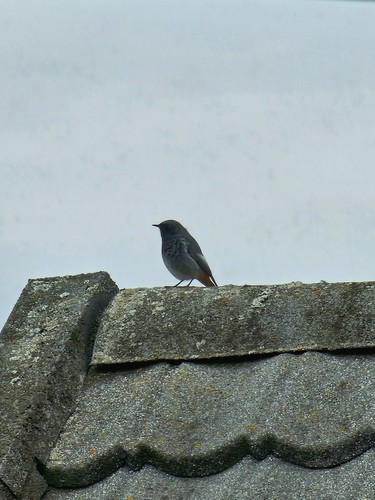
Black Redstart
13-14.5 cm (5.1-5.7 in) long, 23-26 cm wingspan
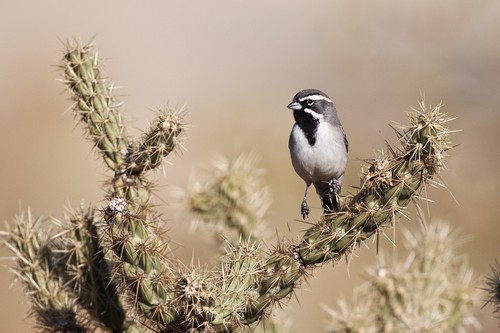
Black-throated Sparrow
12-14 cm (4.7-5.5 in) long, about 19-20 cm (7.5-8 in) wingspan
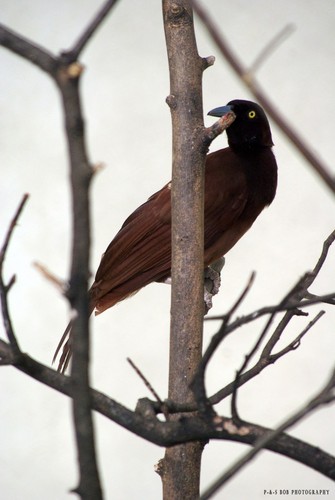
Greater Bird-of-paradise
Body about 43 cm; males with additional flank plumes up to 50 cm and long tail wires
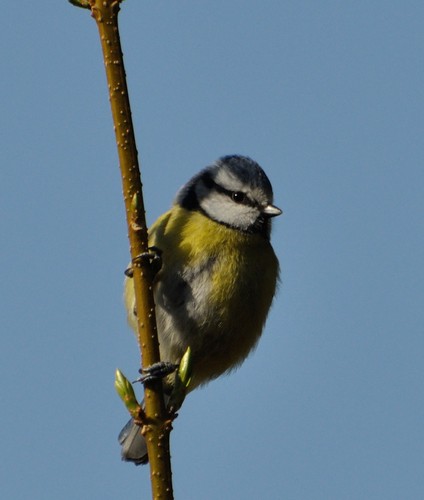
Blue Tit
11-12 cm (4.3-4.7 in) long, 17-20 cm wingspan
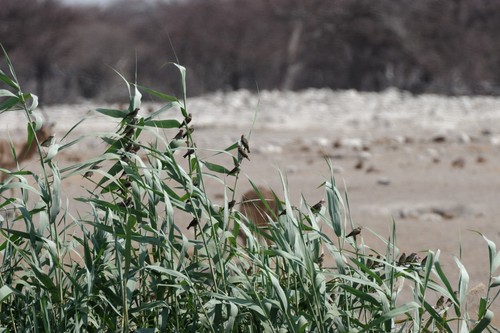
Red-billed Quelea
11.5–13 cm long, wingspan about 20–22 cm
White-plumed Antbird
13-14 cm (5-5.5 in) long
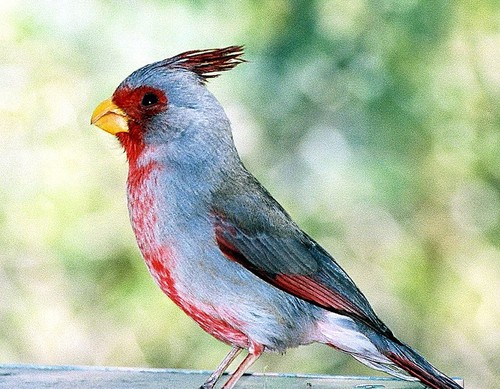
Pyrrhuloxia
19-22 cm (7.5-8.7 in) long, 30 cm wingspan
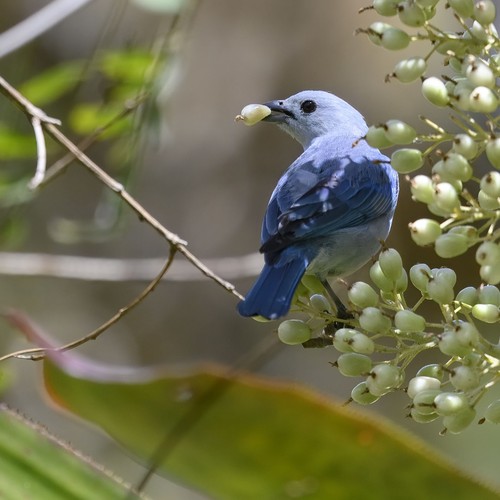
Blue-gray Tanager
16-18 cm (6-7 in) long
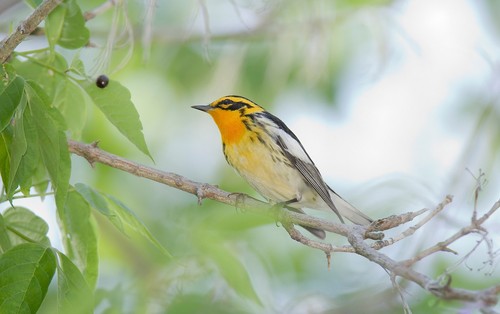
Blackburnian Warbler
11-13 cm (4.3-5.1 in) long, 20-22 cm wingspan
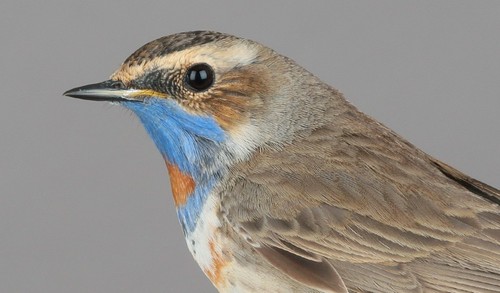
Bluethroat
13-14 cm (5.1-5.5 in) long, 20-22 cm wingspan
Eurasian Nuthatch
12-14.5 cm (4.7-5.7 in) long, 22.5-27 cm wingspan
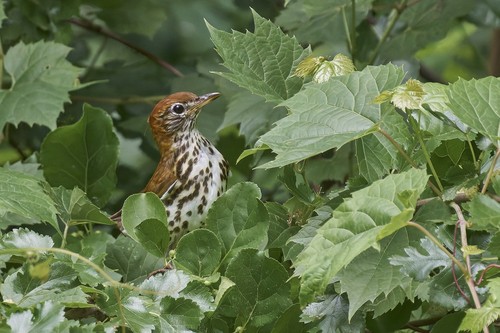
Wood Thrush
19-21 cm (7.5-8.3 in) long, about 33 cm (13 in) wingspan