
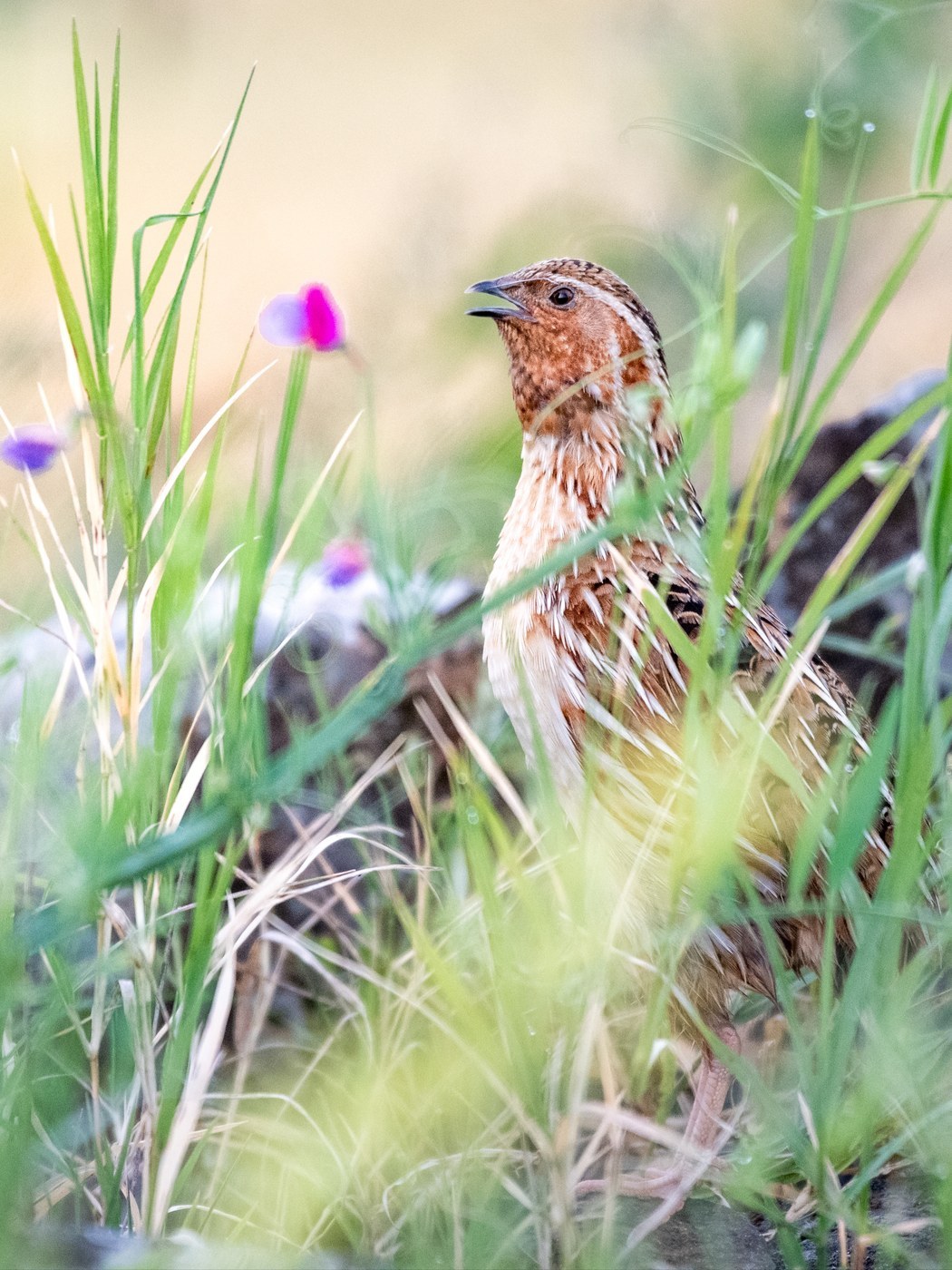
Common Quail
Coturnix coturnix
Europe's smallest gamebird, a secretive, migratory quail far more often heard than seen, giving a distinctive "wet-my-lips" call.
- Size
- 16-18 cm (6-7 in) long, 32-35 cm wingspan
- Habitat
- grassland, cereal fields, and open farmland with dense low cover
- Type
- gamebird
Spotted a bird like this?
Identify any bird from a photo, free.
Overview
The Common Quail is a tiny, plump, cryptically patterned gamebird, streaked buff and brown to blend seamlessly with grass and cereal crops. It is extremely secretive, spending nearly all its time hidden in dense vegetation and only rarely taking flight, so most people know it by sound rather than sight.
Unusually among European gamebirds, it is a genuine long-distance migrant, breeding across Europe in summer and wintering in sub-Saharan Africa, with numbers and distribution varying considerably between years.
How to identify it
Key field marks
- Tiny size, smaller than any other European gamebird
- Buff-brown, heavily streaked plumage for camouflage
- Pale supercilium (eyebrow stripe)
- Short, rounded wings; flushes explosively and flies low and fast when disturbed
- Distinctive rhythmic "wet-my-lips" ("whit-whit-wit") call, given mainly at night
Similar species
- Juvenile or female Grey Partridge and Red-legged Partridge are both considerably larger with different face patterns.
The Common Quail's tiny size and highly secretive habits mean it is almost always identified by its distinctive call rather than a visual sighting.
Habitat & range
Habitat
Inhabits open grassland, hay meadows, and cereal fields, particularly where vegetation is dense enough at ground level to provide cover.
Range
Breeds widely across Europe, North Africa, and western Asia; a long-distance migrant wintering mainly in sub-Saharan Africa, with some birds also wintering around the Mediterranean.
Migration
A true migrant, arriving on breeding grounds in late spring and departing in autumn; breeding numbers fluctuate greatly year to year depending on conditions.
Behavior & voice
Behavior
Extremely secretive and reluctant to fly, preferring to run and hide within dense cover; when flushed it flies low, fast, and briefly before dropping back into cover.
Voice
The male's territorial call, given mainly at dusk and through the night, is a distinctive rhythmic three-syllable "whit whit-wit", commonly rendered as "wet-my-lips".
Feeding
Forages on the ground for seeds and insects, moving through cover largely unseen.
Nesting and breeding
Nests in a shallow scrape hidden in grass or cereal crops. Females lay 7-12 eggs and incubate alone for about 17-20 days, with precocial chicks able to leave the nest almost immediately.
Frequently asked questions
What does the Common Quail sound like?
Males give a distinctive rhythmic three-note call often described as "wet-my-lips", heard mainly at dusk and at night.
Is the Common Quail hard to see?
Yes, it is extremely secretive and rarely leaves dense grass or crop cover, so it is usually detected by call rather than sight.
Does the Common Quail migrate?
Yes, unlike most European gamebirds it is a genuine long-distance migrant, wintering mainly in sub-Saharan Africa.
What is the smallest gamebird in Europe?
The Common Quail, at only about 16-18 cm long, is the smallest European gamebird.
Common Quail guides
In-depth guides for identifying, finding, and understanding Common Quail.
Other birds you may enjoy
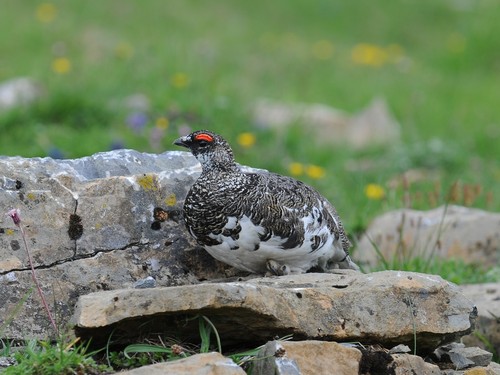
Rock Ptarmigan
34-36 cm (13-14 in) long
Congo Peafowl
Males about 64-70 cm long; females slightly smaller; no elaborate train
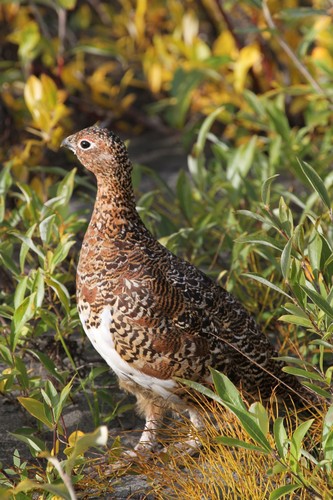
Willow Ptarmigan
37-42 cm (15-16.5 in) long
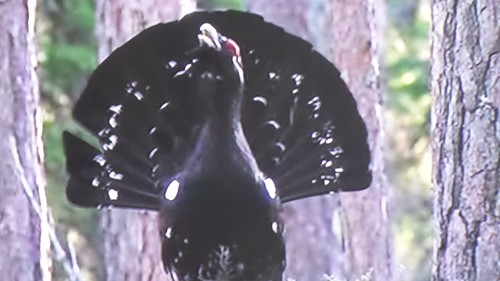
Western Capercaillie
male 74-90 cm (29-35 in), female 54-64 cm; male wingspan up to 125-130 cm
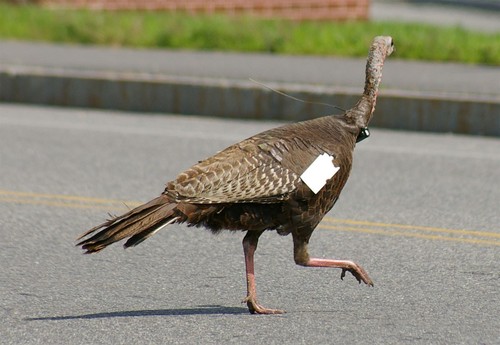
Wild Turkey
males 100-125 cm (39-49 in) long; females smaller, around 76-95 cm (30-37 in)
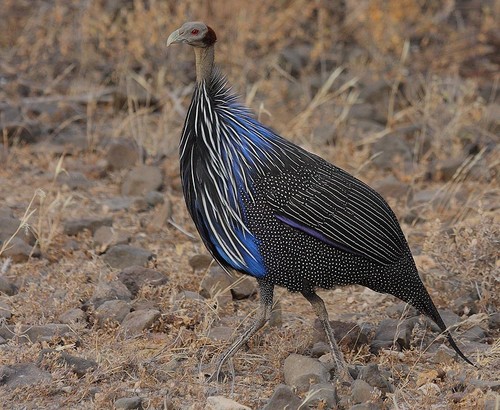
Vulturine Guineafowl
Length 61-71 cm, the largest guineafowl species, with a notably long neck and tail
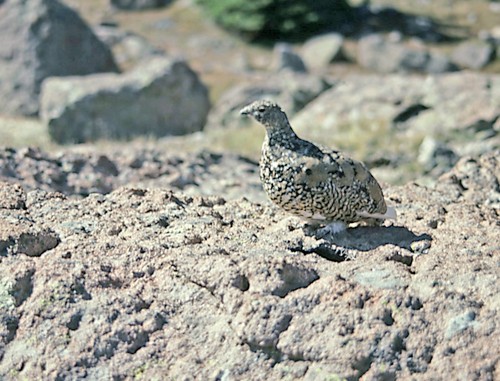
White-tailed Ptarmigan
30-33 cm (12-13 in) long; the smallest ptarmigan species
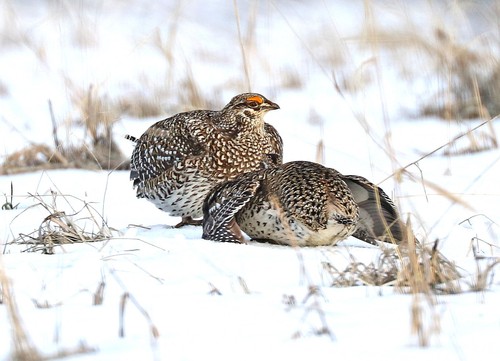
Sharp-tailed Grouse
38-48 cm (15-19 in) long
Ring-necked Pheasant
males 76-90 cm (30-35 in) long including a long tail; females smaller, 55-65 cm (22-26 in)
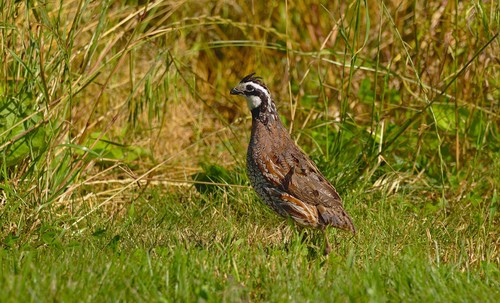
Northern Bobwhite
24-28 cm (9.5-11 in) long, 33-38 cm wingspan
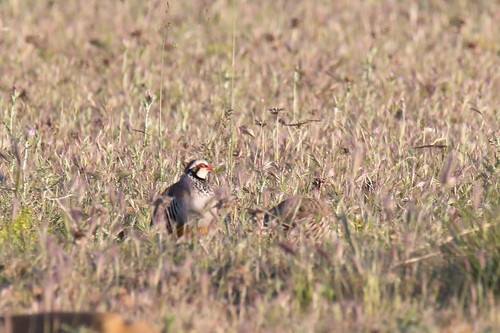
Red-legged Partridge
32-34 cm (13 in) long, 47-50 cm wingspan
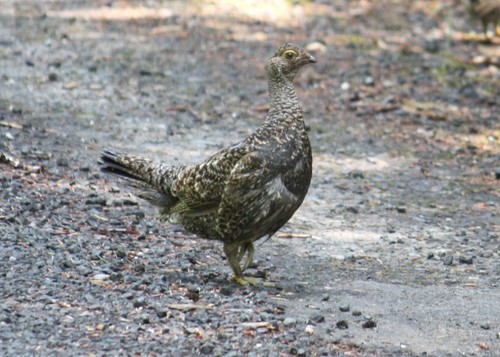
Sooty Grouse
43-48 cm (17-19 in) long; males larger than females