
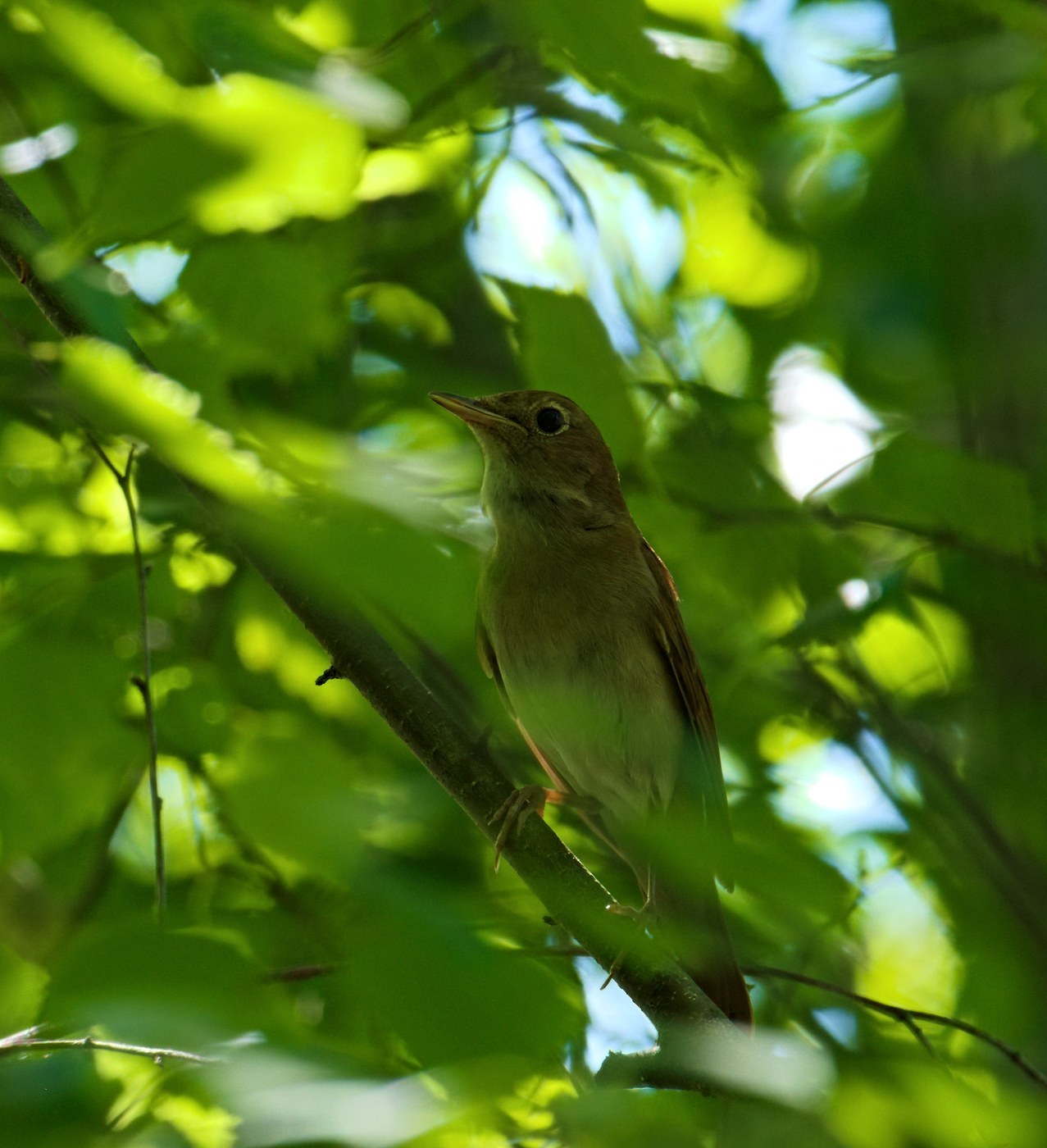
Common Nightingale
Luscinia megarhynchos
A plain brown bird famed above all for its powerful, richly varied song, often delivered at night as well as by day from dense scrub cover.
- Size
- 15-16.5 cm (5.9-6.5 in) long, 23-26 cm wingspan
- Habitat
- dense scrub, thickets, and coppiced woodland with thick undergrowth
- Type
- songbird
Spotted a bird like this?
Identify any bird from a photo, free.
Overview
The Common Nightingale is one of the most celebrated songbirds in European culture, renowned far beyond its unremarkable plumage for a song of extraordinary richness, power, and variety, sung both day and night during the breeding season.
Appearance
Despite its legendary voice, the Nightingale is visually a plain, unassuming bird: warm brown above, paler buffy-grey below, with a distinctly rufous-chestnut tail that it often flicks and cocks. It has large, dark eyes and a fairly upright, robin-like posture, but no bold plumage patterns.
How to identify it
Key Field Marks
- Plain warm brown upperparts, paler buff-grey underparts
- Rufous-chestnut tail, often cocked and flicked
- Large dark eye, faint pale eye-ring
- Skulking habits — more often heard than seen
Similar Species
Common Redstart females and Robin share some brownish tones but lack the strongly contrasting rufous tail combined with plain unstreaked underparts of the Nightingale. Thrush Nightingale, a close eastern relative, is very similar in plumage but slightly greyer-brown with a less contrastingly rufous tail, and their ranges overlap only in a narrow zone; song differences are the most reliable way to separate the two where ranges meet.
Habitat & range
Habitat
Nightingales require dense, low, scrubby vegetation with thick undergrowth — coppiced woodland, overgrown hedgerows, and scrubby thickets — providing good ground cover for the largely ground-foraging, skulking birds.
Range and Migration
The species breeds across southern and central Europe, North Africa, and into western Asia, becoming scarcer toward the northern edge of its range (including in Britain, where it is now restricted mainly to parts of southeast England). It is a long-distance migrant, wintering in sub-Saharan Africa, and returns to European breeding grounds relatively late in spring.
Behavior & voice
Behavior
Nightingales are notoriously skulking, spending much of their time low in dense cover and foraging on the ground for insects among leaf litter, making them far easier to hear than to see well.
Voice
The song is loud, rich, and extraordinarily varied, combining fluty whistles, trills, rapid chattering phrases, and a distinctive crescendoing series of repeated, throbbing notes — widely regarded as one of the most beautiful bird songs in the world. Unusually among European songbirds, males sing readily at night as well as during the day, which has made the species a powerful cultural symbol.
Nesting and Breeding
The nest is built low, often directly on or very close to the ground, hidden within dense scrub or bramble, a cup of dead leaves and grass. The female lays 4-5 eggs and incubates them for about 13-14 days, with the male continuing to sing, including at night, throughout much of the incubation period.
Frequently asked questions
Why is the Nightingale famous for singing at night?
Unmated male Nightingales sing both day and night during the breeding season, likely to advertise territory and attract migrating females around the clock, a habit unusual among European songbirds that has made the species a lasting cultural symbol.
What does a Nightingale look like?
It is a plain warm brown bird with paler underparts and a distinctive rufous-chestnut tail, lacking any bold or colorful plumage markings.
Why are Nightingales hard to see even when singing nearby?
They are highly skulking birds that favor dense, low scrub cover and spend much of their time hidden within thickets, foraging on the ground.
Where do Nightingales spend the winter?
They migrate long distances to winter in sub-Saharan Africa, returning to European and western Asian breeding grounds in mid-to-late spring.
Common Nightingale guides
In-depth guides for identifying, finding, and understanding Common Nightingale.
Other birds you may enjoy
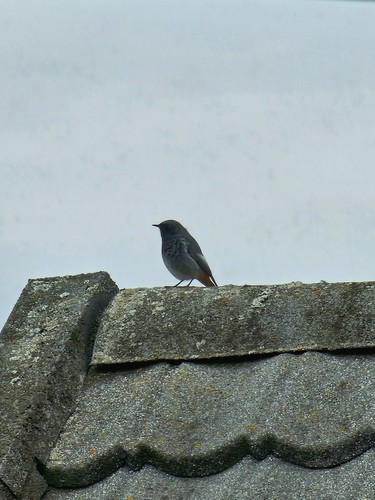
Black Redstart
13-14.5 cm (5.1-5.7 in) long, 23-26 cm wingspan
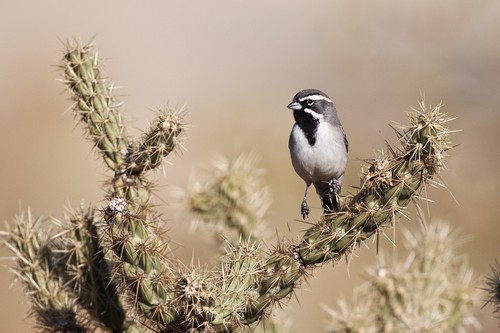
Black-throated Sparrow
12-14 cm (4.7-5.5 in) long, about 19-20 cm (7.5-8 in) wingspan
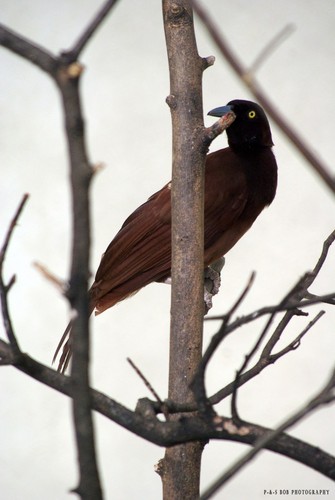
Greater Bird-of-paradise
Body about 43 cm; males with additional flank plumes up to 50 cm and long tail wires
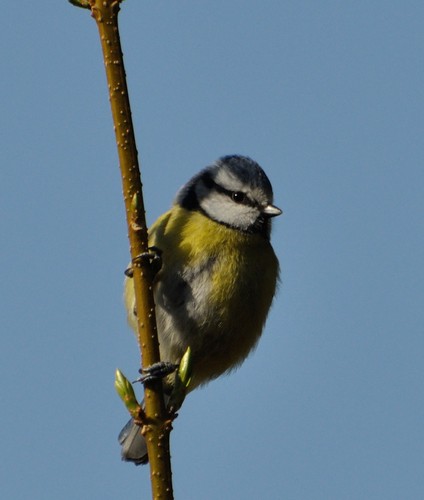
Blue Tit
11-12 cm (4.3-4.7 in) long, 17-20 cm wingspan
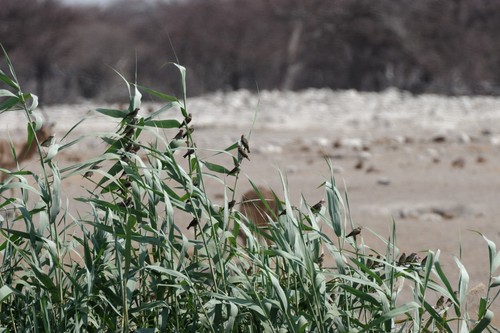
Red-billed Quelea
11.5–13 cm long, wingspan about 20–22 cm
White-plumed Antbird
13-14 cm (5-5.5 in) long
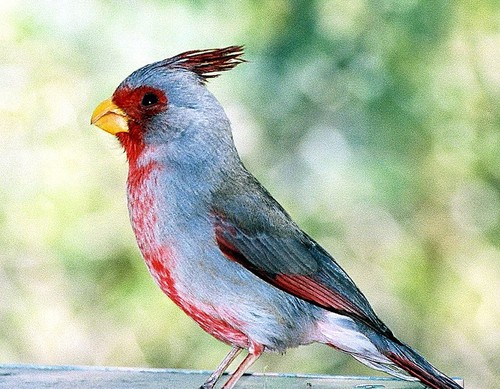
Pyrrhuloxia
19-22 cm (7.5-8.7 in) long, 30 cm wingspan
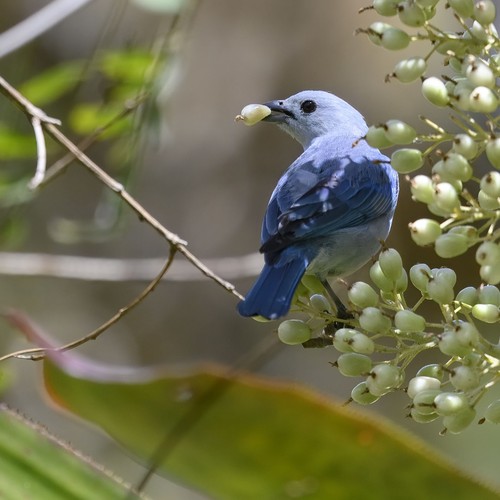
Blue-gray Tanager
16-18 cm (6-7 in) long
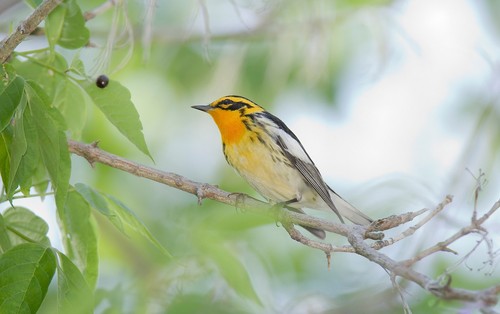
Blackburnian Warbler
11-13 cm (4.3-5.1 in) long, 20-22 cm wingspan
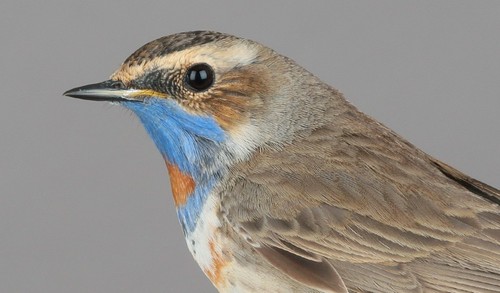
Bluethroat
13-14 cm (5.1-5.5 in) long, 20-22 cm wingspan
Eurasian Nuthatch
12-14.5 cm (4.7-5.7 in) long, 22.5-27 cm wingspan
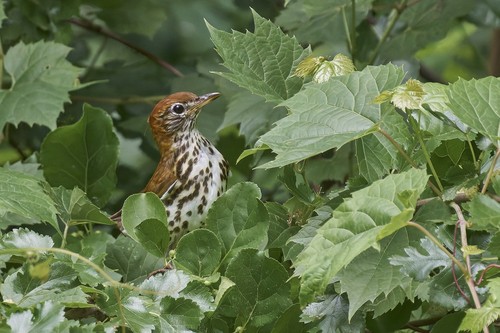
Wood Thrush
19-21 cm (7.5-8.3 in) long, about 33 cm (13 in) wingspan