
Common Nightingale Identification Guide
A plain brown, secretive songbird famed far beyond its modest looks for one of the richest and most powerful songs in the bird world.
Read the full Common Nightingale encyclopedia entry →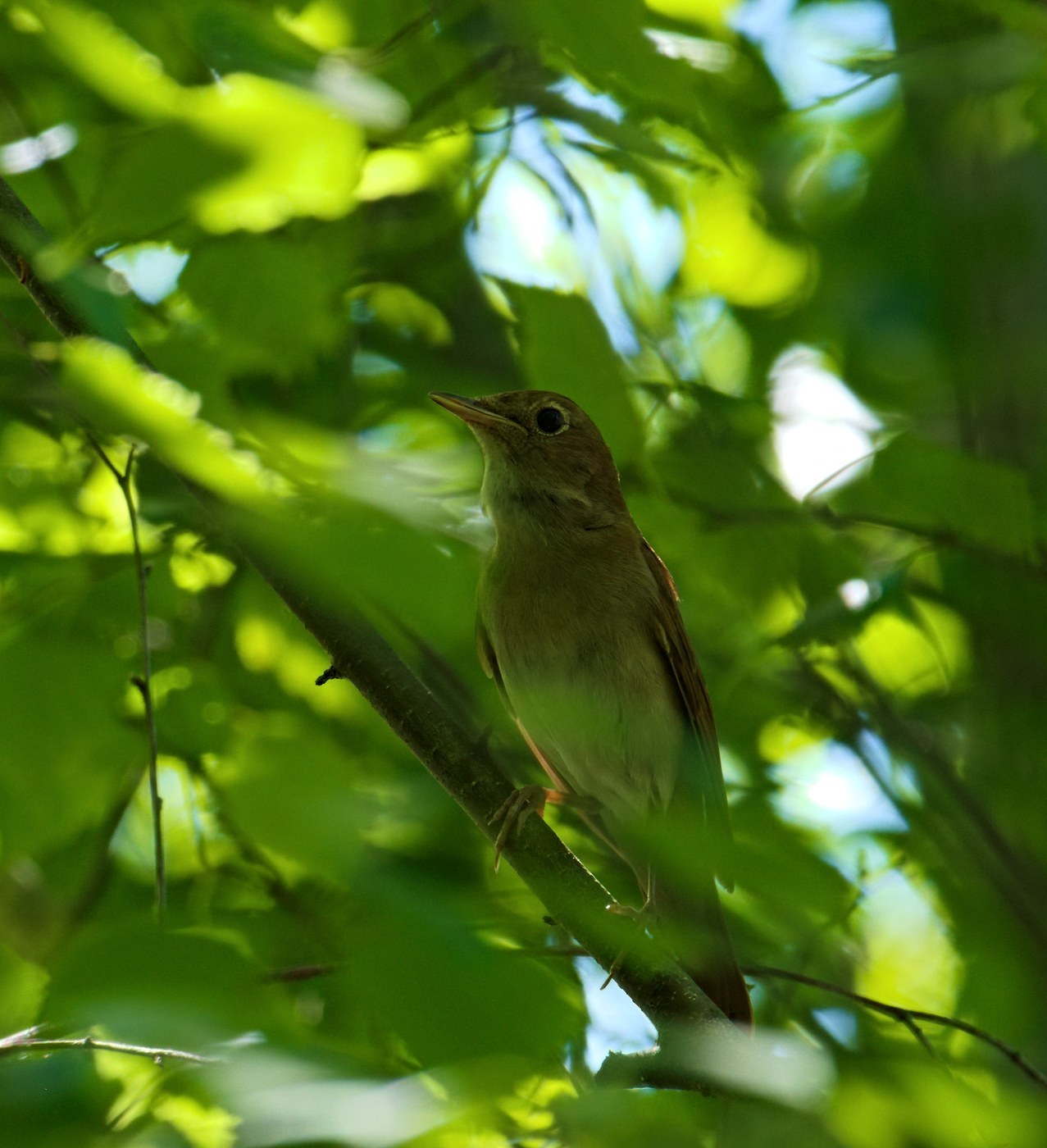
Key Field Marks
Size & Shape
- Small, robin-sized songbird, about 15–16.5 cm long
- Fairly plump body with a rounded head and a relatively long tail, often held slightly cocked or fanned
- Sturdy pinkish-brown legs adapted for hopping and foraging on the ground
Plumage
- Plain warm brown upperparts with no strong markings
- Rufous-chestnut tail that contrasts noticeably with the duller brown back — one of the best visual clues
- Pale buffy-white underparts, unmarked or only faintly washed
- Large dark eye set in a plain face, sometimes with a faint pale eye-ring
Behavior
- Extremely skulking and secretive; spends most of its time low in dense cover and is heard far more often than seen
- Forages on the ground for insects and other invertebrates, often flicking its tail and wings
- Males sing persistently from within thick vegetation, including at night as well as during the day
Similar Species
- Thrush Nightingale: very similar in shape and behavior but slightly darker and colder brown above, with a less rufous tail and faint mottling across the breast; ranges overlap only narrowly in parts of central/eastern Europe, and the two are most reliably separated by song — Thrush Nightingale's song is harsher and includes a mechanical "tok-tok-tok" motif absent from Common Nightingale
- European Robin: shares similar habitat and ground-foraging habits but has a bright orange face and breast, easily ruling out confusion
- Female Common Redstart: also brownish but shows a rufous-orange tail combined with grayer body tones and more nervous tail-quivering; smaller overall
Habitat & Range
- Breeds in dense scrub, thickets, coppice, and woodland edges with thick undergrowth across southern, central, and eastern Europe and into western Asia
- A long-distance migrant, wintering in sub-Saharan Africa
- Present on breeding grounds roughly April through August; most vocal activity is in late spring when males are establishing territories and attracting mates
Voice & Song
- Renowned for an extraordinarily rich, varied song combining fluty whistles, rapid trills, sudden crescendos, clicking notes, and a rising "chooee" phrase
- Unusual among songbirds for singing at night as readily as during the day, which is the origin of its poetic reputation
- Calls include a harsh, frog-like "croak" and a soft "whit" contact note
Frequently asked questions
Why is the Common Nightingale famous if it looks so plain?
Its reputation rests entirely on its song — an unusually loud, rich, and varied performance that includes night singing, which is rare among songbirds and made it a symbol in poetry and folklore.
How do I tell Common Nightingale from Thrush Nightingale?
Plumage differences are subtle (Thrush Nightingale is slightly duller with a less rufous tail and faint breast mottling), so song is the most reliable clue: Thrush Nightingale's song is harsher with a distinctive mechanical "tok-tok-tok" section.
Where is the best place to see a Common Nightingale?
Because it stays hidden in dense scrub and thickets, listening near suitable habitat at dawn, dusk, or night during the breeding season is far more productive than trying to spot one visually.
Does the Common Nightingale sing all year?
No, singing peaks in spring when males are unmated and establishing territories; song largely stops once a mate is secured and eggs are laid.
What is the most reliable visual field mark?
The contrast between the plain brown back and the noticeably warmer rufous-chestnut tail is the best plumage clue when a bird is briefly glimpsed.