
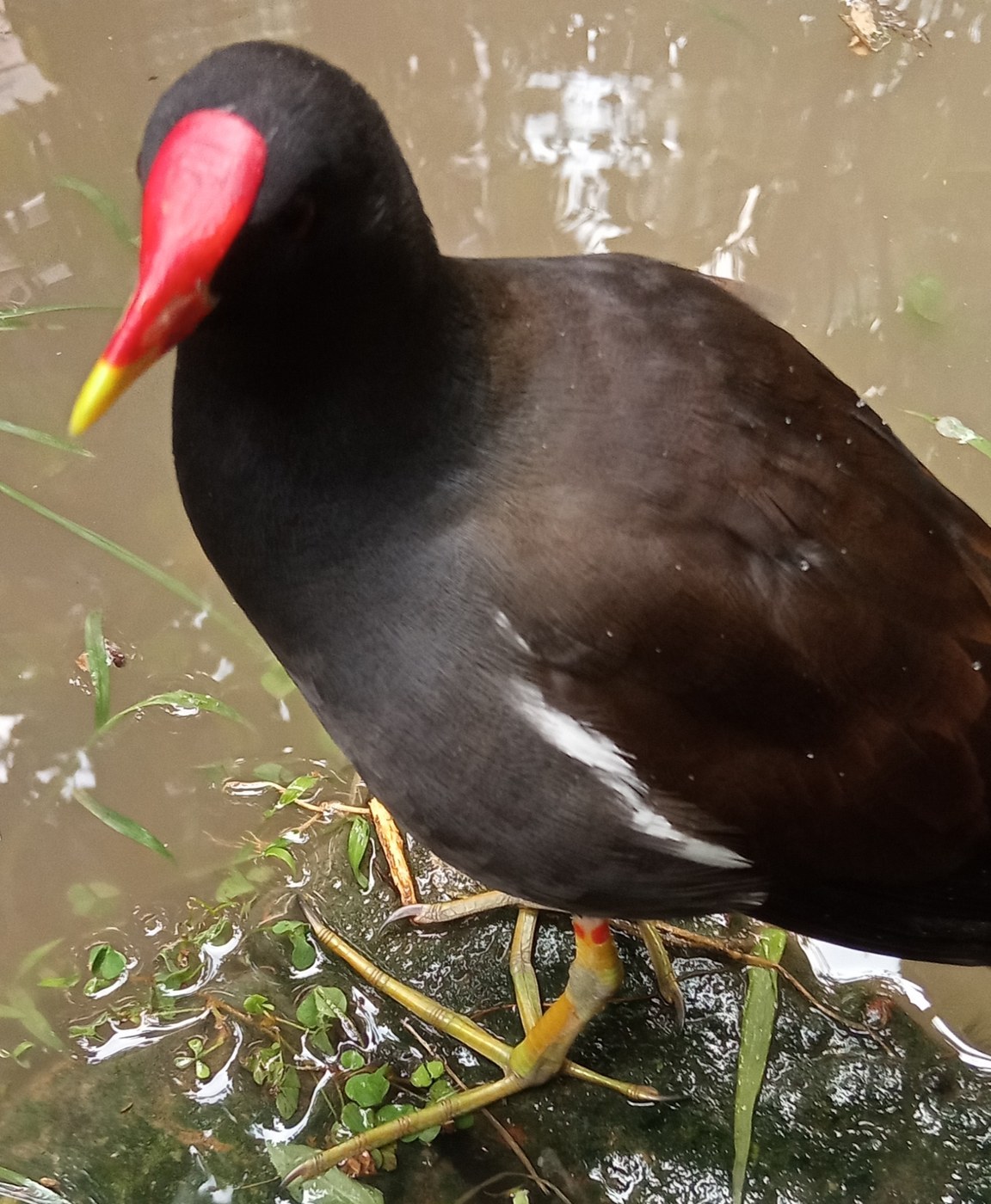
Common Moorhen
Gallinula chloropus
A dark waterbird with a red-and-yellow bill and a white flank stripe, often seen jerking its head and flicking its tail while swimming.
- Size
- 30-38 cm (12-15 in) long, wingspan 50-62 cm
- Habitat
- marshes, ponds, canals, and vegetated waterways across Europe, Asia, and Africa
- Type
- wading-bird
Spotted a bird like this?
Identify any bird from a photo, free.
Overview
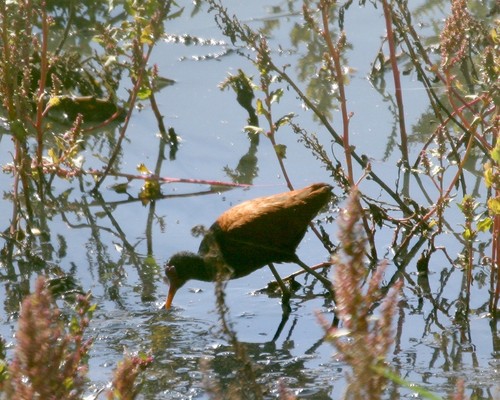
The Common Moorhen is a medium-sized, blackish-brown to slate-grey waterbird with a bright red bill tipped in yellow and a matching red frontal shield on the forehead. A crisp white line runs along each flank, and white undertail coverts are flicked conspicuously as the bird swims or walks.
Widespread and adaptable, the Common Moorhen occurs across Europe, Asia, and Africa in a huge range of wetland habitats, from wild marshes to ornamental ponds. Its close North American relative, the Common Gallinule, was split off as a separate species in 2011.
How to identify it
Key field marks
- Bright red bill tipped with yellow, matched by a red frontal shield
- Blackish-brown to slate-grey body
- White line along the flanks
- White undertail patches, split by a dark central line, flicked while swimming
- Greenish-yellow legs with long toes
Similar species
Coots have an all-white bill and shield and lack the flank stripe. The Purple Swamphen and gallinules are larger and much more vividly colored than the duller Common Moorhen.
Habitat & range
Habitat
Prefers freshwater marshes, ponds, canals, and slow rivers with dense waterside vegetation for cover, though it readily uses smaller ornamental waters too.
Range and migration
Found across Europe, Asia, and Africa. Northern populations migrate south for winter, while many populations in milder climates are resident year-round. The American form is now treated as the separate Common Gallinule.
Behavior & voice
Behavior
Somewhat secretive but adaptable, often seen swimming close to reed cover, pumping its head forward with each stroke, and readily walking on land and floating vegetation using its long toes.
Voice
A loud, harsh 'kurrk' call and various sharp clucking notes.
Feeding
An omnivorous diet of aquatic plants, seeds, insects, snails, and worms gathered while swimming, wading, or walking on land.
Nesting and breeding
Builds a nest of woven vegetation among reeds or overhanging branches at the water's edge. In some populations, older offspring help feed younger chicks from later broods.
Frequently asked questions
What's the difference between a Moorhen and a Coot?
Moorhens have a red-and-yellow bill and a white stripe along the flanks, while Coots have an all-white bill and shield with no flank stripe.
Why does a Moorhen flick its tail?
Tail-flicking displays the white undertail patches, likely used to signal alertness or communicate with rivals and mates.
Can Moorhens fly?
Yes, though they favor swimming or walking over vegetation, often pattering across the water before becoming airborne.
Where do Common Moorhens live?
Wetlands across Europe, Asia, and Africa; a near-identical species, the Common Gallinule, replaces it in the Americas.
What do Moorhen chicks look like?
Downy black chicks with a bald reddish crown, able to swim within hours of hatching.
Common Moorhen guides
In-depth guides for identifying, finding, and understanding Common Moorhen.
Other birds you may enjoy
Demoiselle Crane
85-100 cm (33-39 in) long, 155-180 cm wingspan
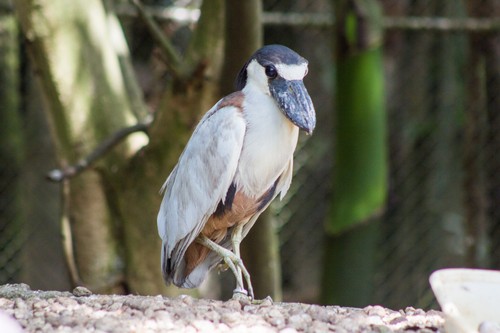
Boat-billed Heron
41-56 cm (16-22 in) long
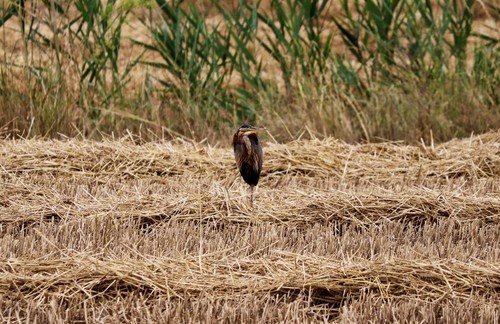
Purple Heron
78-90 cm (31-35 in) long, 120-152 cm wingspan
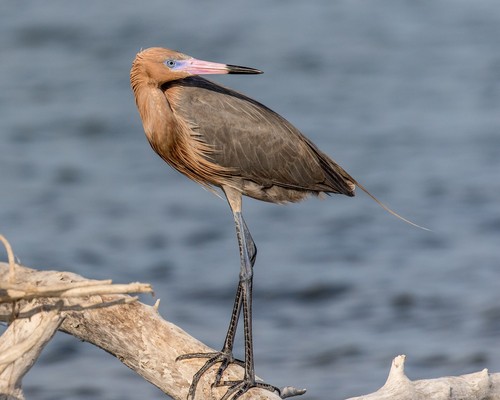
Reddish Egret
68-82 cm (27-32 in) long, 116-125 cm wingspan
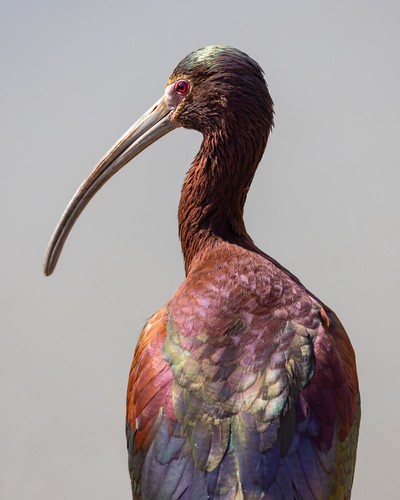
White-faced Ibis
46-56 cm (18-22 in) long, 88-93 cm wingspan
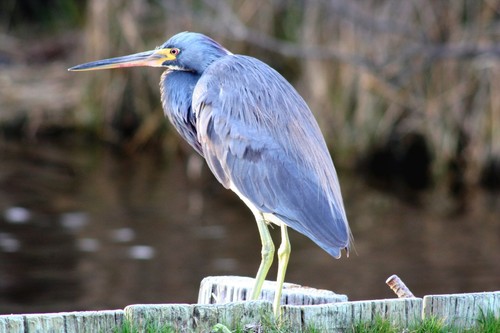
Tricolored Heron
61-76 cm (24-30 in) long, about 96 cm wingspan
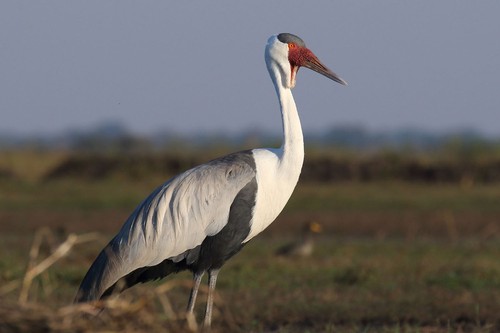
Wattled Crane
120-175 cm (47-69 in) tall, one of the tallest cranes, wingspan up to about 230 cm (7.5 ft)
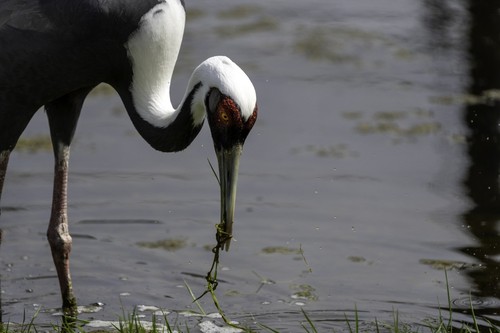
White-naped Crane
112-125 cm (44-49 in) long, 195-210 cm wingspan
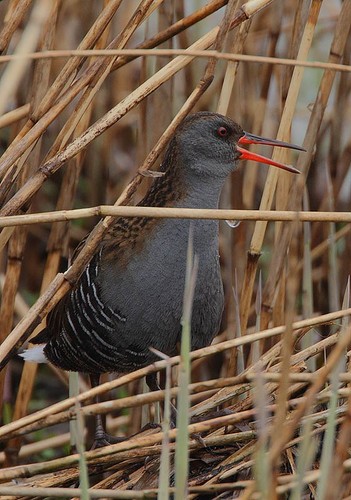
Water Rail
23-28 cm (9-11 in) long, wingspan 38-45 cm
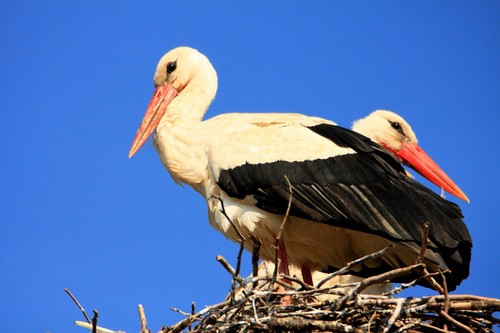
White Stork
100-125 cm (39-49 in) long, 155-215 cm wingspan
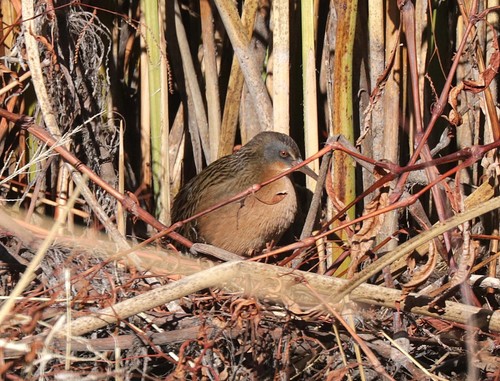
Virginia Rail
20-27 cm (8-11 in) long, wingspan 32-38 cm
Wattled Jacana
17-23 cm (7-9 in) long