
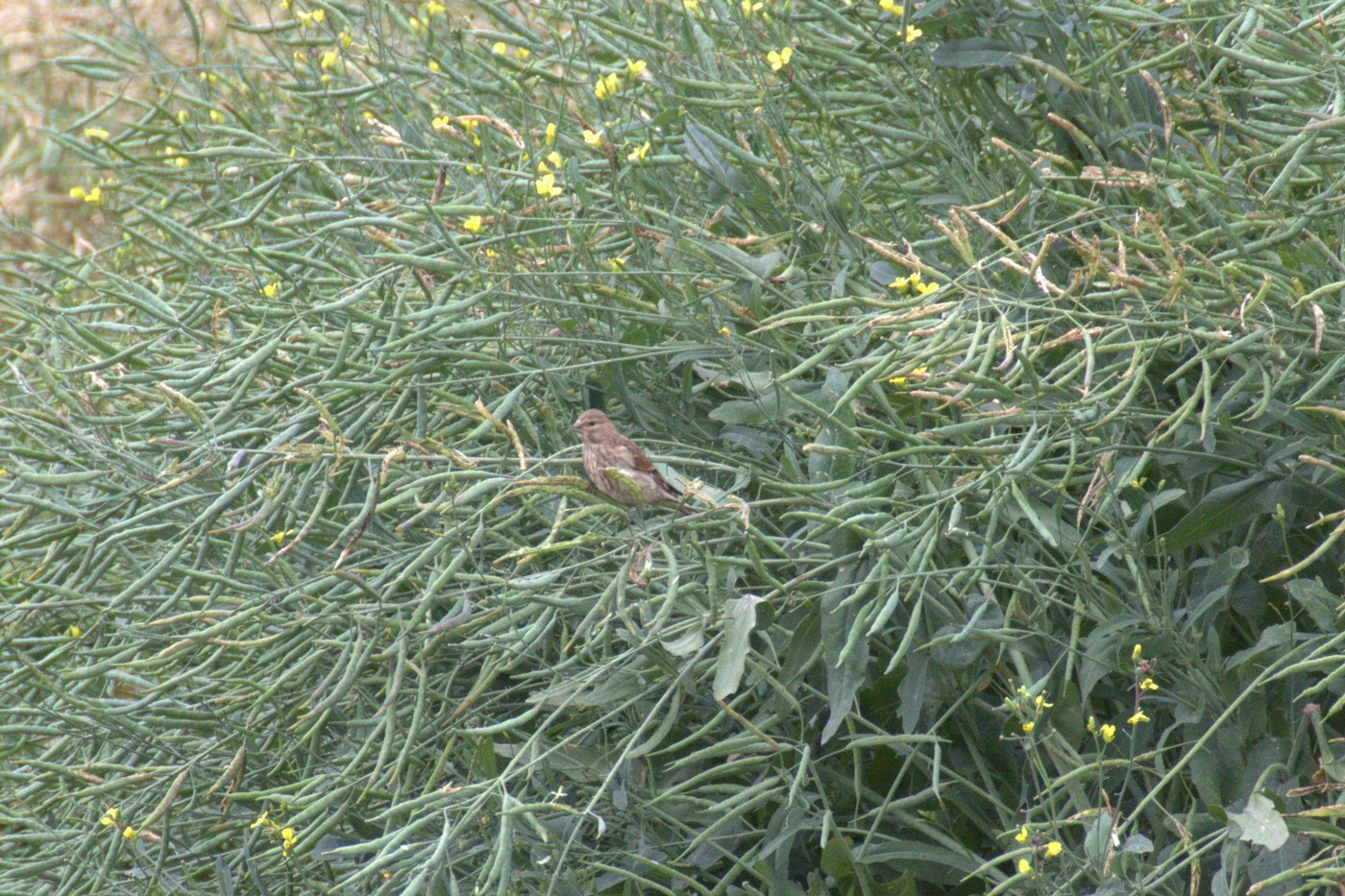
Common Linnet
Linaria cannabina
A small, sociable finch of farmland and heathland, with breeding males showing a rosy-crimson flush on the forehead and breast.
- Size
- 13-14 cm (5-5.5 in) long, 21-25.5 cm wingspan
- Habitat
- farmland, heathland, gorse scrub, hedgerows, and coastal commons
- Type
- songbird
Spotted a bird like this?
Identify any bird from a photo, free.
Overview
The Common Linnet is a slim, small-billed finch closely associated with open farmland, heaths, and scrubby coastal habitats across Europe, North Africa, and western Asia. It is a highly social species, breeding in loose colonies and gathering in large, twittering flocks outside the breeding season.
Appearance
Breeding males are among the most colorful of Europe's "brown" finches: a soft grey head contrasts with a chestnut-brown back and a striking crimson-red flush across the forehead and breast. Females and non-breeding males are much duller, showing warm brown, heavily streaked plumage above and below, lacking any red. In flight, all linnets show a pale panel along the folded wing and white edges to the tail.
How to identify it
Key Field Marks
- Small, slender finch with a short, grey, conical bill
- Breeding male: grey head, chestnut back, crimson-red forehead and breast patch
- Female/winter male: streaky warm brown overall, no red
- White flashes in wings and tail visible in flight
- Forked tail with white edges
Similar Species
Twite (Linaria flavirostris) is very similar to female/winter Linnets but has a yellowish (not grey) bill and lacks any red, with buffier, more uniformly streaked underparts and a pinkish rump in males. Common Redpoll and Lesser Redpoll are smaller, greyer-brown, and show a small red cap on the crown rather than the forehead/breast blush of the Linnet, plus a black chin patch.
Habitat & range
Habitat
Linnets favor open, sunny country with scattered thorny scrub — gorse-covered heaths, hedgerows bordering arable fields, coastal dunes, and rough grassland. They avoid dense woodland and are typical birds of traditional farmland mosaics.
Range and Migration
The species breeds widely across Europe, North Africa, and into western Asia. Northern and eastern populations are migratory, moving south and west to winter around the Mediterranean, while birds in milder western Europe are largely resident or make only short-distance movements. Outside the breeding season, Linnets gather into large, mobile flocks that forage together across stubble fields and weedy ground.
Behavior & voice
Behavior
Linnets are gregarious for much of the year, feeding, roosting, and migrating in flocks that can number in the hundreds. They forage mainly on the ground and low in vegetation, stripping seed heads from weeds and low shrubs, especially gorse and thistles.
Voice
The song is a rambling, musical twitter of trills, chirrups, and warbling notes, often delivered from an exposed perch atop a bush. The flight call is a soft, distinctive "tsooeet" or twittering chatter, often given by flocks in flight.
Nesting and Breeding
Nests are built low in dense gorse, bramble, or hedgerow scrub, constructed by the female from twigs, grass, and moss and lined with hair and wool. Clutches of 4-6 pale blue, lightly spotted eggs are incubated by the female for about 10-12 days, and pairs may raise two or three broods in a season.
Frequently asked questions
Why are male Linnets red in the breeding season but not in winter?
The crimson coloring comes largely from carotenoid pigments in the diet and is most vivid during the breeding season; it fades or is obscured by fresh, browner feather tips after the autumn molt.
How can I tell a Linnet from a Twite?
Look at the bill and rump: Linnets have a grey bill and lack pink on the rump, while Twites have a yellowish bill (especially in winter) and males show a pink rump.
Where do Linnets nest?
They build low nests in dense, thorny scrub such as gorse, bramble, or thick hedgerows, usually less than two meters off the ground.
Are Linnets found in gardens?
They visit large gardens with weedy areas or hedges occasionally, but they are much more characteristic of open farmland, heathland, and scrub than of typical garden feeders.
Common Linnet guides
In-depth guides for identifying, finding, and understanding Common Linnet.
Other birds you may enjoy
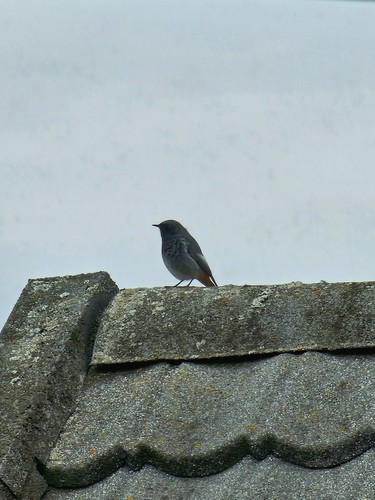
Black Redstart
13-14.5 cm (5.1-5.7 in) long, 23-26 cm wingspan
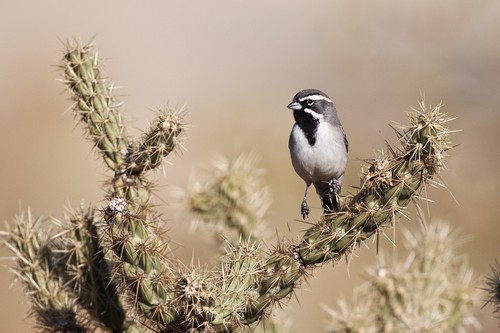
Black-throated Sparrow
12-14 cm (4.7-5.5 in) long, about 19-20 cm (7.5-8 in) wingspan
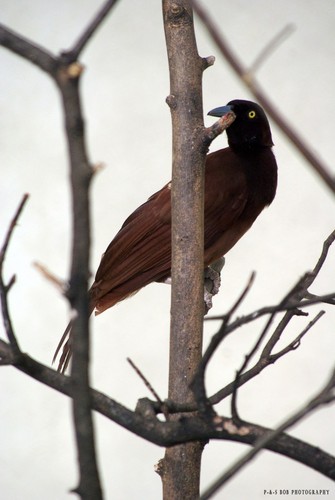
Greater Bird-of-paradise
Body about 43 cm; males with additional flank plumes up to 50 cm and long tail wires
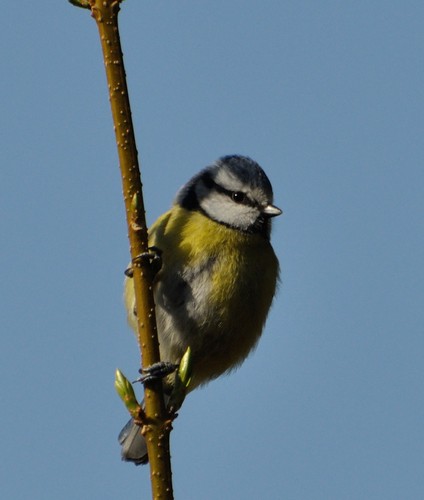
Blue Tit
11-12 cm (4.3-4.7 in) long, 17-20 cm wingspan
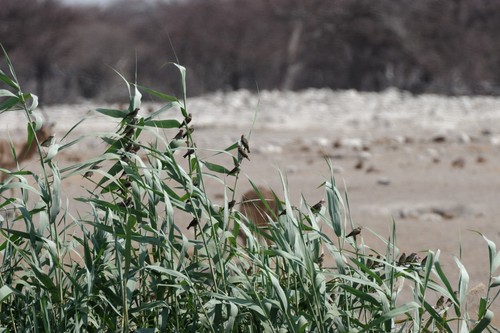
Red-billed Quelea
11.5–13 cm long, wingspan about 20–22 cm
White-plumed Antbird
13-14 cm (5-5.5 in) long
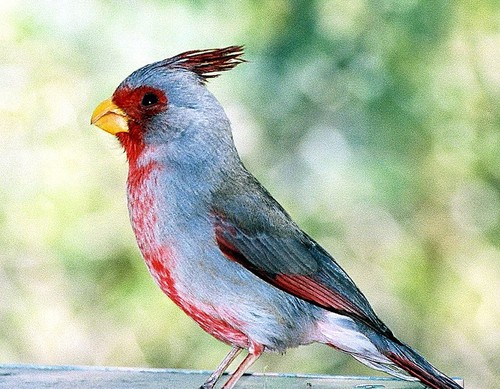
Pyrrhuloxia
19-22 cm (7.5-8.7 in) long, 30 cm wingspan
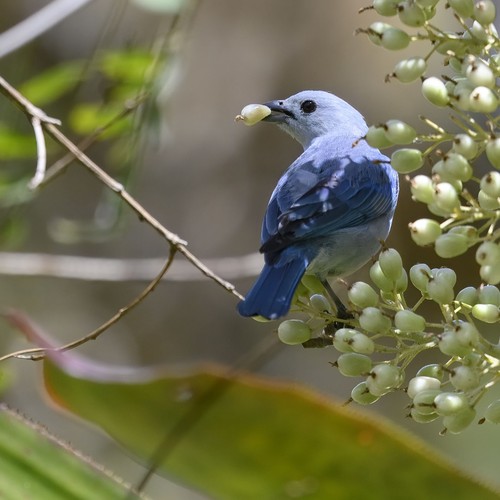
Blue-gray Tanager
16-18 cm (6-7 in) long
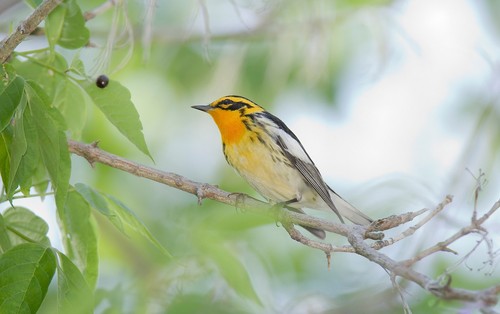
Blackburnian Warbler
11-13 cm (4.3-5.1 in) long, 20-22 cm wingspan
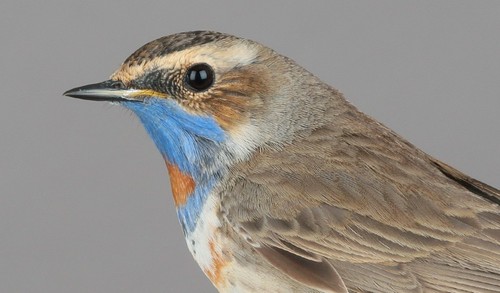
Bluethroat
13-14 cm (5.1-5.5 in) long, 20-22 cm wingspan
Eurasian Nuthatch
12-14.5 cm (4.7-5.7 in) long, 22.5-27 cm wingspan
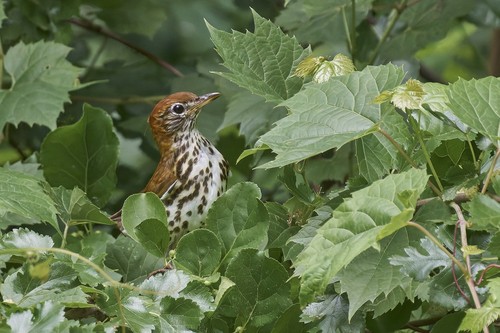
Wood Thrush
19-21 cm (7.5-8.3 in) long, about 33 cm (13 in) wingspan