
Common Linnet Identification Guide
A small, sociable Eurasian finch with a slim build, warm brown streaked plumage, and, in breeding males, a rosy-red crown and breast.
Read the full Common Linnet encyclopedia entry →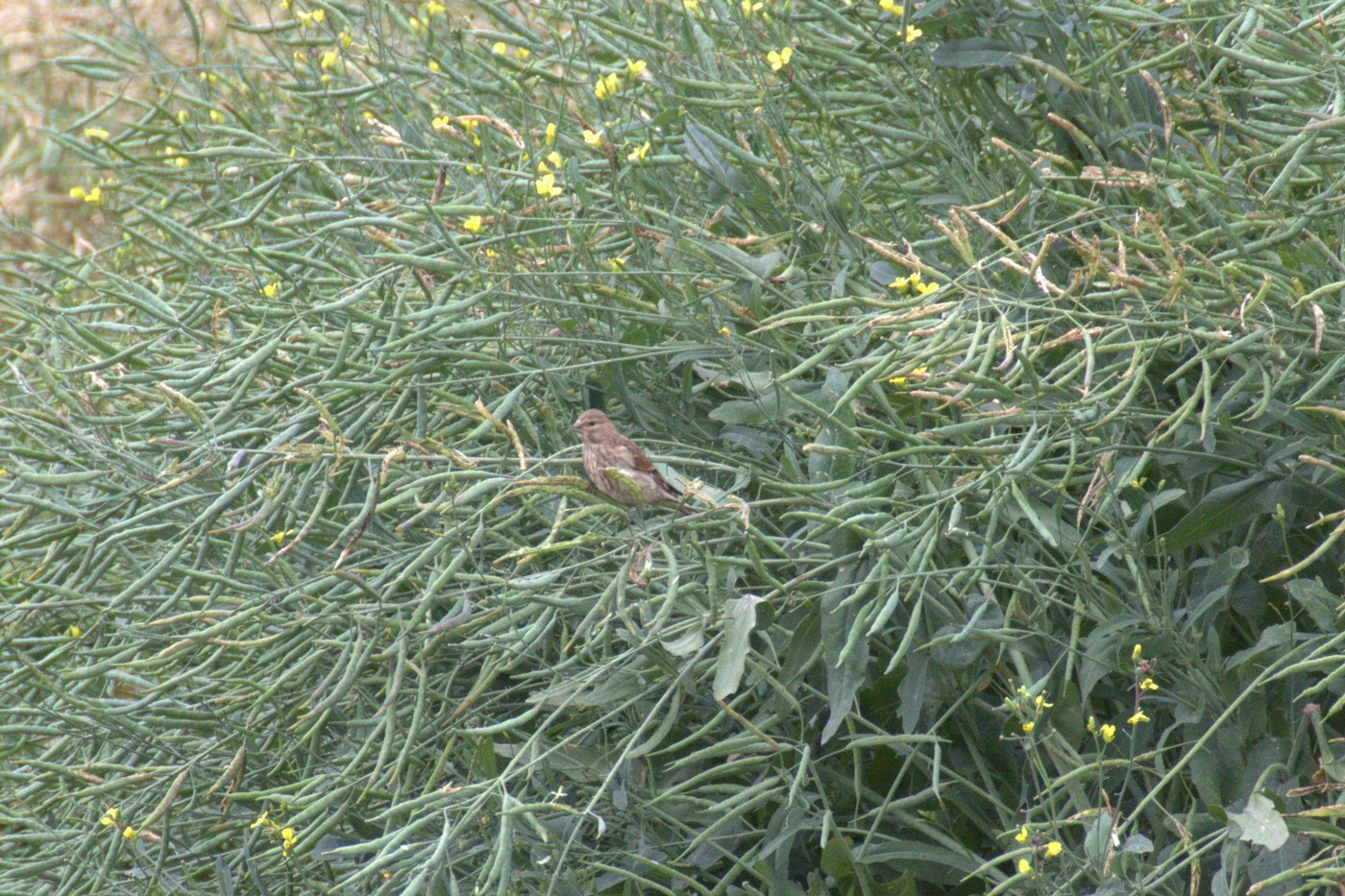
Key Field Marks
- Size & shape: A small, slim-bodied finch with a fairly short, conical bill, a slightly forked tail, and a neat, streamlined profile compared to bulkier finches.
- Plumage (breeding male): Grey-brown head, chestnut-brown back, and a rosy-crimson patch on the forehead/crown and breast, contrasting with whitish underparts.
- Plumage (female and non-breeding/winter male): Duller and more heavily streaked brown overall, lacking or showing only faint red, with a warm chestnut wash on the back and streaked flanks — best identified by structure, call, and flock behavior rather than color alone.
- Wings & tail: In flight, shows white edges on the flight feathers and outer tail feathers, creating flashes of white visible at a distance.
- Behavior: Highly social, forming flocks especially outside the breeding season; feeds mainly on the ground or low in vegetation on seeds, with a bouncing, undulating flight typical of finches.
Separating from Similar Species
- Twite: Very similar in shape and streaky brown plumage but lacks red on males (instead has a pink rump) and has a yellower, more pointed bill in winter; Twite favors more coastal/upland habitat and has a distinctive nasal "twite" call.
- Common Redpoll: Shows a small red/crimson cap restricted to the forecrown (not a broad crown-to-breast wash) and a black chin patch, plus buzzier calls; redpolls also look slightly more compact and streakier overall.
- House Sparrow (female/juvenile confusion): Bulkier, with a stouter bill and plainer face pattern; linnets are slimmer with a more delicate bill and obvious white in the wings and tail.
Where & When to See It
Common Linnets breed across Europe, North Africa, and western Asia in open country with scattered bushes and hedgerows — farmland, heathland, scrub, and gardens. Northern and eastern populations migrate south for winter, forming large flocks that forage on stubble fields, weedy ground, and coastal areas, while southern and western populations may be resident or only partially migratory.
Voice & Song Cues
The song is a pleasant, rambling twittering and chattering mix of trills and buzzy notes, often delivered from a prominent perch such as a hedge top or wire. Flight calls include a soft, twangy "tsooeet" or chattering "chichichit," useful for picking flocks out overhead.
Frequently asked questions
What does a male Common Linnet look like in breeding plumage?
It shows a rosy-crimson patch on the crown and breast, a grey-brown head, and a chestnut back, contrasting with whitish underparts.
How do you identify a female or winter Common Linnet?
Look for a slim, streaked brown finch with white flashes in the wings and tail, a short conical bill, and social flocking behavior; red is faint or absent, so structure and calls are key.
How is Common Linnet different from Twite?
Male Linnets show red on the crown and breast (absent in Twite, which has a pink rump instead), and Twite has a more yellow-based bill in winter with a distinctly nasal call.
What habitat do Common Linnets prefer?
Open country with scattered bushes and hedges, such as farmland, heathland, and scrubby field edges, where they feed on weed and grass seeds.
Are Common Linnets migratory?
Northern and eastern populations migrate south in winter and form large foraging flocks, while some southern and western populations are resident or only short-distance migrants.