
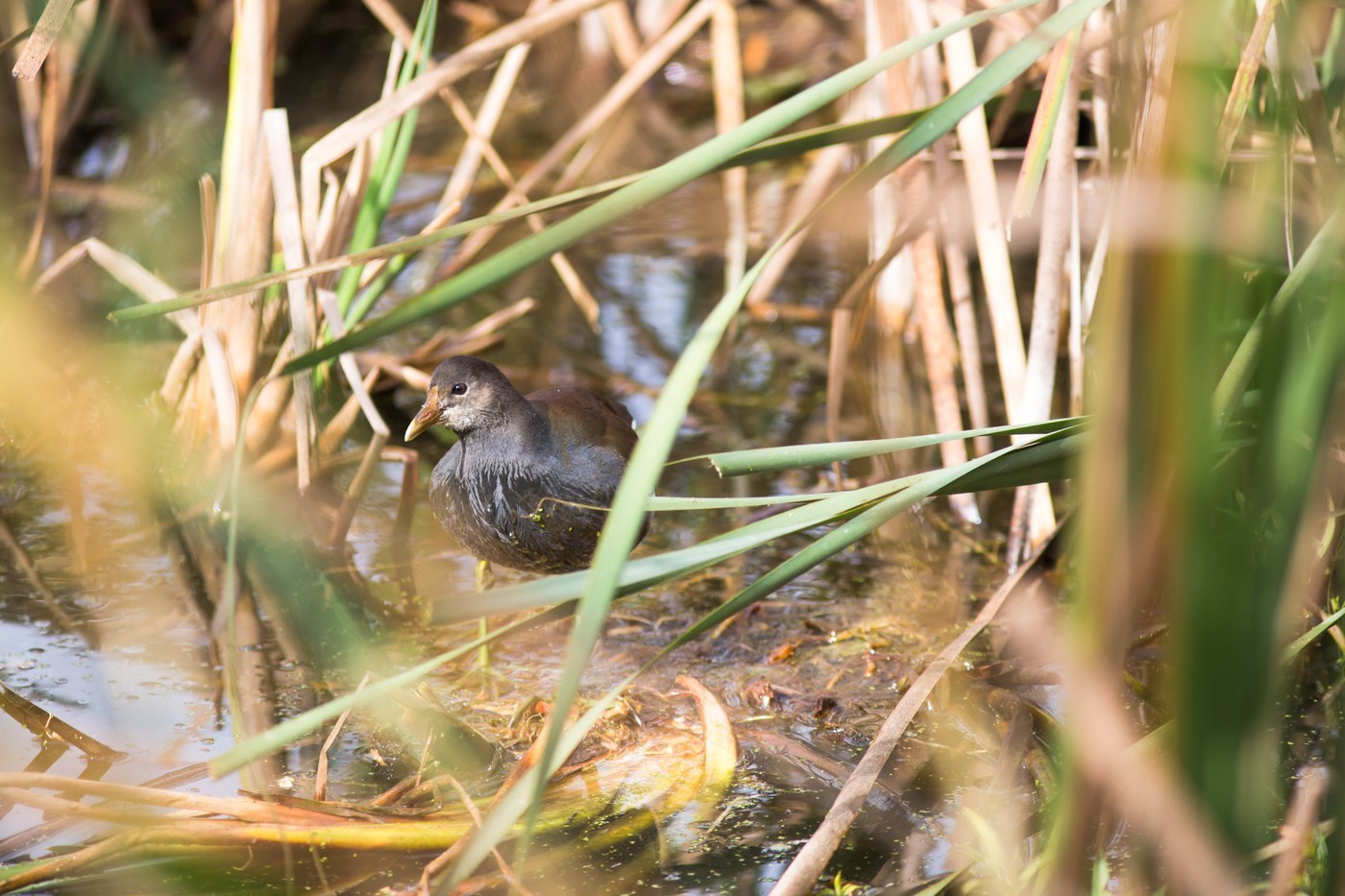
Common Gallinule
Gallinula galeata
The New World counterpart to the Common Moorhen, with the same red-and-yellow bill and a bold white flank stripe.
- Size
- 32-37 cm (13-15 in) long, wingspan 50-62 cm
- Habitat
- freshwater marshes, ponds, and vegetated wetlands across the Americas
- Type
- wading-bird
Spotted a bird like this?
Identify any bird from a photo, free.
Overview
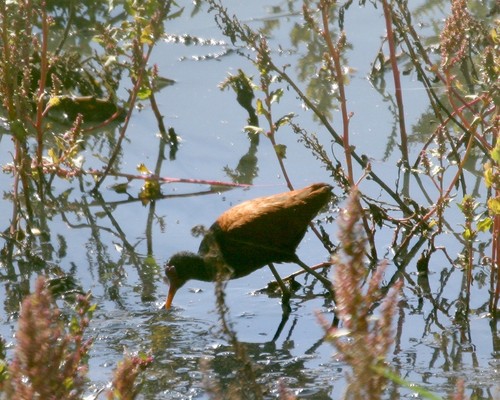
The Common Gallinule is a chicken-sized marsh bird nearly identical in appearance to the Old World Common Moorhen, from which it was formally split as a distinct species in 2011. It has slate-grey to blackish-brown plumage, a bright red bill tipped in yellow, a red frontal shield, and a crisp white line along each flank.
It is a common, widespread inhabitant of freshwater wetlands throughout much of the Americas, often seen swimming along reedy shorelines with a distinctive jerky head motion.
How to identify it
Key field marks
- Red bill tipped in yellow, with a matching red frontal shield
- Slate-grey to blackish-brown body
- White stripe along the flanks
- White undertail coverts, flicked while swimming
- Long greenish-yellow legs and toes
Similar species
The Purple Gallinule is far more colorful, with vivid purple-blue plumage and a pale blue frontal shield. The American Coot lacks the red bill, showing an all-white bill and shield instead.
Habitat & range
Habitat
Common Gallinules use freshwater marshes, pond and lake edges, and canals with emergent vegetation for cover and nesting.
Range and migration
Found from the northern United States and southern Canada south through Central America, the Caribbean, and much of South America. Northern populations migrate south for the winter, while tropical populations are largely resident.
Behavior & voice
Behavior
Swims with a characteristic jerky head-bobbing motion and walks readily on floating vegetation and mudflats, aided by its long toes.
Voice
Loud, harsh cackling and squawking calls.
Feeding
A varied diet of aquatic plants, seeds, insects, and small invertebrates gathered while swimming or walking.
Nesting and breeding
Builds a floating or emergent nest anchored in marsh vegetation. Pairs often raise multiple broods per season, and older siblings sometimes help feed younger chicks.
Frequently asked questions
Is the Common Gallinule the same as the Common Moorhen?
They were once considered one species; in 2011 the American population was split off as the Common Gallinule, while the Common Moorhen remains the Old World form.
How do you identify a Common Gallinule?
Look for a red bill with a yellow tip, a red frontal shield, dark grey plumage, and a white stripe along the flanks.
What's the difference between a Common Gallinule and a Purple Gallinule?
The Purple Gallinule has vivid purple-blue plumage and a pale blue frontal shield, while the Common Gallinule is dark slate-grey with a red shield.
Where do Common Gallinules live?
Freshwater wetlands throughout much of the Americas, from Canada to South America.
What do Common Gallinules eat?
A varied diet of aquatic plants, seeds, insects, and small invertebrates.
Common Gallinule guides
In-depth guides for identifying, finding, and understanding Common Gallinule.
Common Gallinule identified by the community
Real birds identified with Bird Identifier.

Other birds you may enjoy
Demoiselle Crane
85-100 cm (33-39 in) long, 155-180 cm wingspan
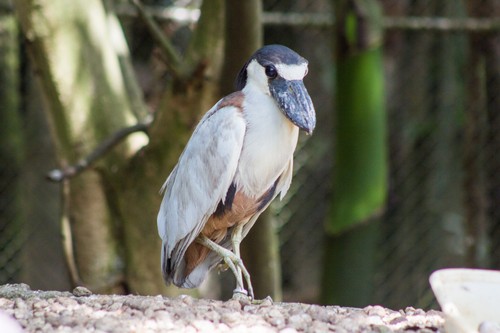
Boat-billed Heron
41-56 cm (16-22 in) long
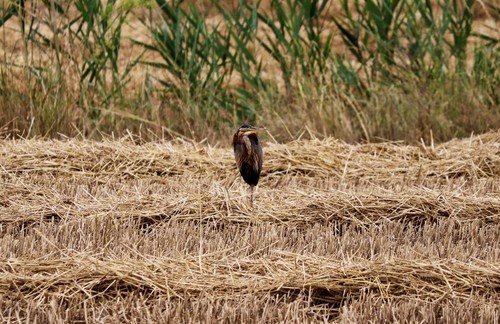
Purple Heron
78-90 cm (31-35 in) long, 120-152 cm wingspan
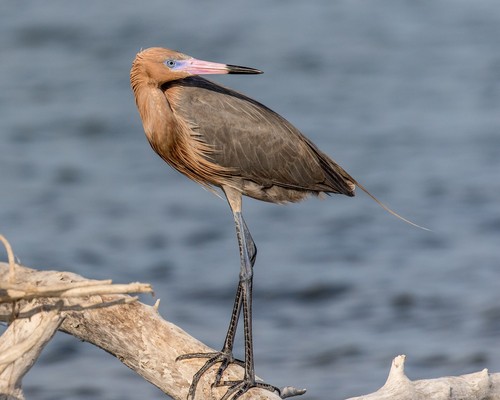
Reddish Egret
68-82 cm (27-32 in) long, 116-125 cm wingspan
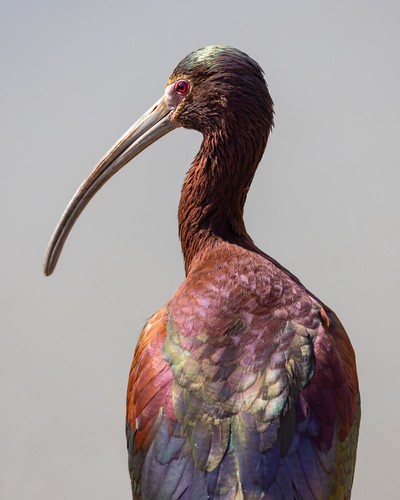
White-faced Ibis
46-56 cm (18-22 in) long, 88-93 cm wingspan
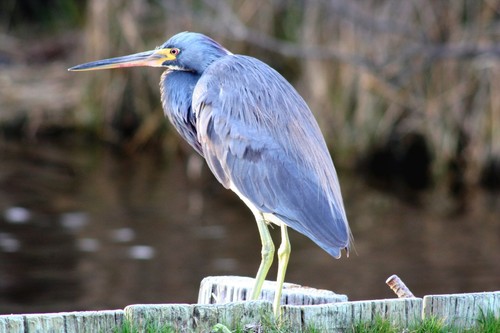
Tricolored Heron
61-76 cm (24-30 in) long, about 96 cm wingspan
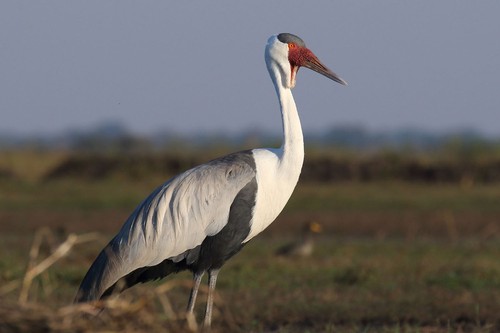
Wattled Crane
120-175 cm (47-69 in) tall, one of the tallest cranes, wingspan up to about 230 cm (7.5 ft)
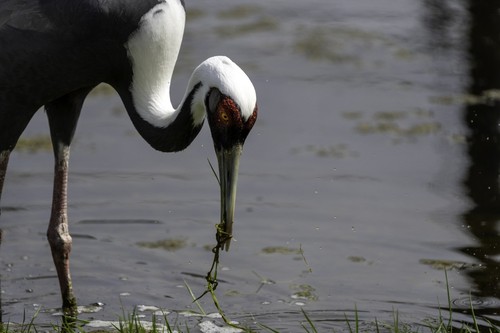
White-naped Crane
112-125 cm (44-49 in) long, 195-210 cm wingspan
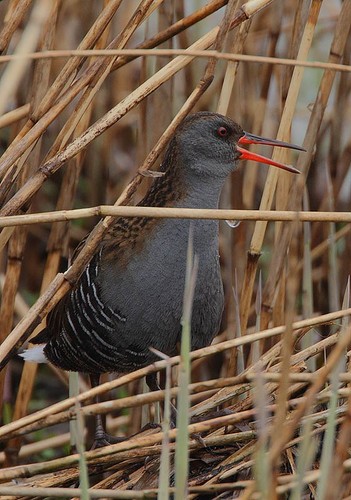
Water Rail
23-28 cm (9-11 in) long, wingspan 38-45 cm
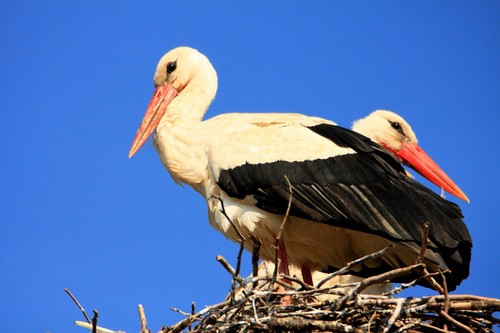
White Stork
100-125 cm (39-49 in) long, 155-215 cm wingspan
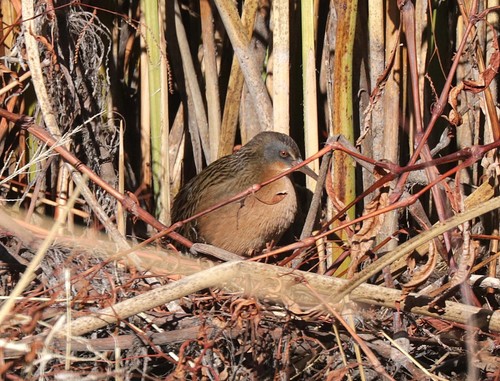
Virginia Rail
20-27 cm (8-11 in) long, wingspan 32-38 cm
Wattled Jacana
17-23 cm (7-9 in) long