
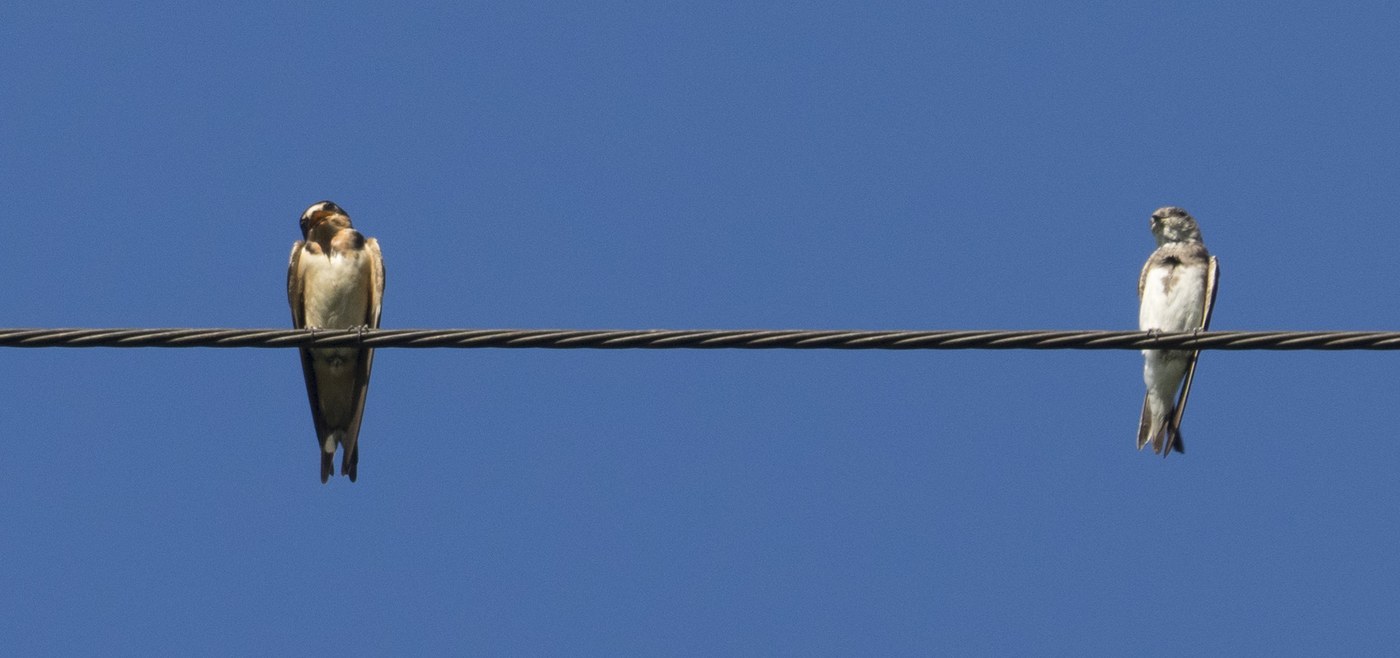
Cliff Swallow
Petrochelidon pyrrhonota
A colonial swallow famous for building gourd-shaped mud nests in dense clusters under bridges, eaves, and cliffs.
- Size
- 13-15 cm (5.1-5.9 in) long, 27-29 cm (10.6-11.4 in) wingspan
- Habitat
- open country near cliffs, canyons, or human structures with mud and water nearby
- Type
- songbird
Spotted a bird like this?
Identify any bird from a photo, free.
Overview
The Cliff Swallow is a highly social swallow best known for its enormous nesting colonies and its distinctive jug- or gourd-shaped mud nests. Adults show a dark chestnut throat and face, a pale buffy or whitish forehead patch, a steel-blue crown and back, and a warm buffy-orange rump that is especially conspicuous in flight.
Unlike Barn Swallow, the Cliff Swallow's tail is squared off rather than deeply forked, giving it a stockier, more compact silhouette in flight.
How to identify it
Key field marks
- Square (not forked) tail
- Buffy-orange rump patch, conspicuous in flight
- Dark chestnut throat and face
- Pale, whitish or cream forehead patch
- Steel-blue crown and back
Similar species
Barn Swallow has a deeply forked tail, dark (not pale) forehead, and lacks the buffy rump patch. Cave Swallow (limited range overlap in the southern U.S.) is similar but has a paler, buffier throat and a chestnut (not pale) forehead — range and forehead color are the key distinctions.
Habitat & range
Habitat
Nests colonially on vertical surfaces near open foraging habitat: natural cliff faces and canyon walls, and increasingly on human structures such as bridges, overpasses, dams, and building eaves, always with mud and water sources nearby for nest construction.
Range
Breeds across most of North America, from Alaska and Canada south through the United States into Mexico. A long-distance migrant, it winters in southern South America. Famously associated with Mission San Juan Capistrano in California, where colonies historically returned each spring, inspiring the phrase "when the swallows come back to Capistrano."
Behavior & voice
Behavior
One of the most colonial landbirds in North America, Cliff Swallow colonies can range from a handful of nests to several thousand tightly packed together on a single structure, offering protection from predators through sheer numbers and vigilance.
Voice
A constant low, squeaky, chattering babble rises from active colonies; individual calls include a soft, grating "churr."
Feeding and nesting
Feeds on flying insects, often foraging in loose flocks high over open country. Builds an enclosed, gourd-shaped nest entirely from hundreds of individually carried mud pellets, plastered to a vertical wall under an overhang, with a narrow tubular entrance — one of the most architecturally elaborate nests of any North American songbird.
Frequently asked questions
How do you tell a Cliff Swallow from a Barn Swallow?
Cliff Swallow has a square tail, pale forehead patch, and buffy-orange rump, while Barn Swallow has a deeply forked tail, dark forehead, and no rump patch.
What is special about Cliff Swallow nests?
They build enclosed, gourd-shaped nests entirely out of mud pellets, often in colonies of hundreds to thousands of nests packed tightly together on cliffs, bridges, or building eaves.
Why are Cliff Swallows associated with Capistrano?
Large colonies historically returned each spring to Mission San Juan Capistrano in California, a phenomenon that became famous in American folklore and popular song.
What do Cliff Swallows eat?
Flying insects, caught on the wing, often foraged in flocks well above the ground.
Where do Cliff Swallows migrate to in winter?
They undertake a long-distance migration to winter in southern South America, including Argentina and Brazil.
Cliff Swallow guides
In-depth guides for identifying, finding, and understanding Cliff Swallow.
Other birds you may enjoy
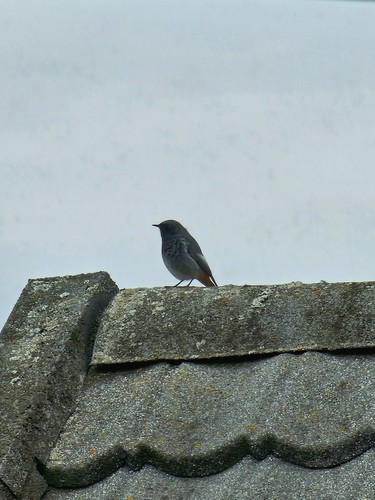
Black Redstart
13-14.5 cm (5.1-5.7 in) long, 23-26 cm wingspan
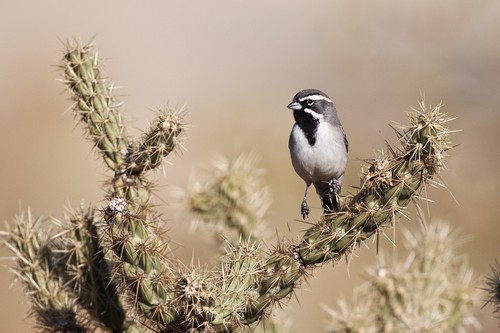
Black-throated Sparrow
12-14 cm (4.7-5.5 in) long, about 19-20 cm (7.5-8 in) wingspan
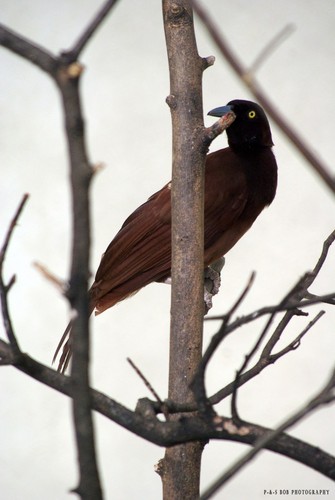
Greater Bird-of-paradise
Body about 43 cm; males with additional flank plumes up to 50 cm and long tail wires
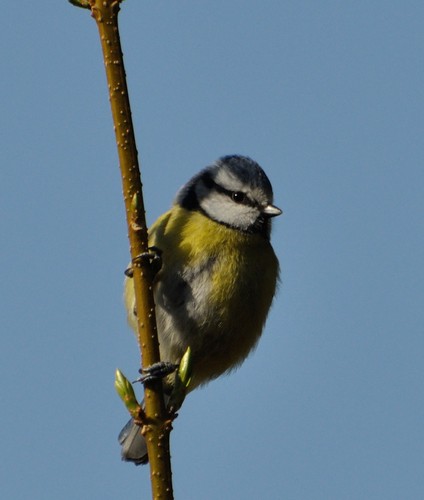
Blue Tit
11-12 cm (4.3-4.7 in) long, 17-20 cm wingspan

Red-billed Quelea
11.5–13 cm long, wingspan about 20–22 cm
White-plumed Antbird
13-14 cm (5-5.5 in) long
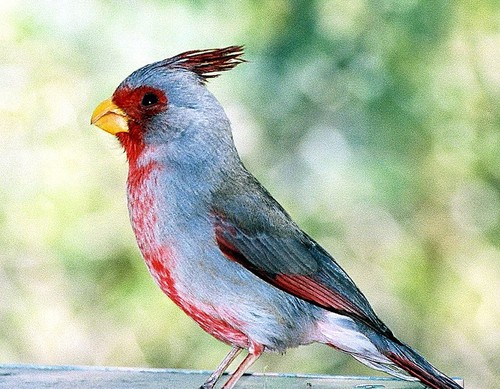
Pyrrhuloxia
19-22 cm (7.5-8.7 in) long, 30 cm wingspan
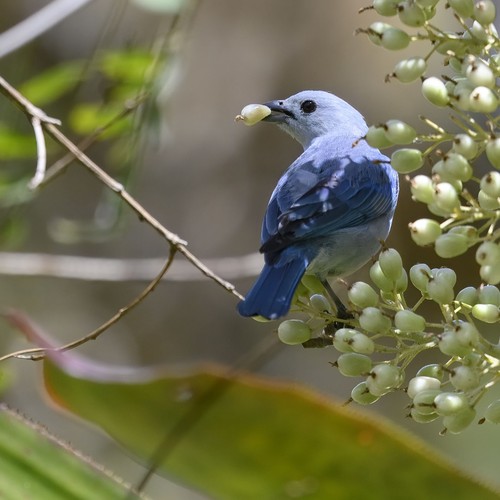
Blue-gray Tanager
16-18 cm (6-7 in) long
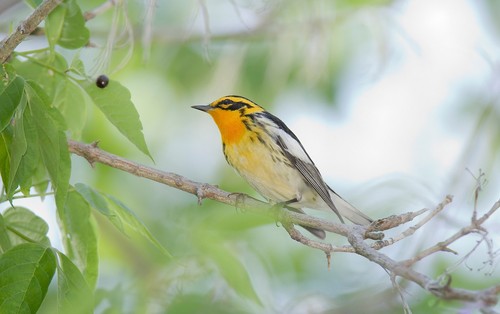
Blackburnian Warbler
11-13 cm (4.3-5.1 in) long, 20-22 cm wingspan
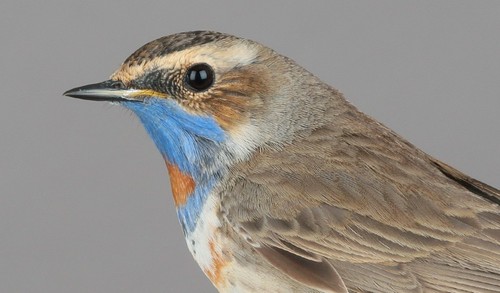
Bluethroat
13-14 cm (5.1-5.5 in) long, 20-22 cm wingspan
Eurasian Nuthatch
12-14.5 cm (4.7-5.7 in) long, 22.5-27 cm wingspan
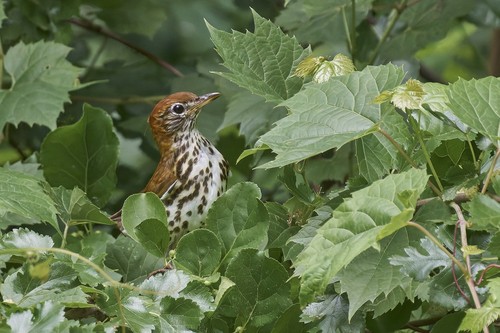
Wood Thrush
19-21 cm (7.5-8.3 in) long, about 33 cm (13 in) wingspan