
Cliff Swallow Identification Guide
A stocky, colonial swallow told by its square tail, pale buffy-orange rump, dark chestnut throat, and pale forehead patch, famous for building gourd-shaped mud nests under eaves and bridges.
Read the full Cliff Swallow encyclopedia entry →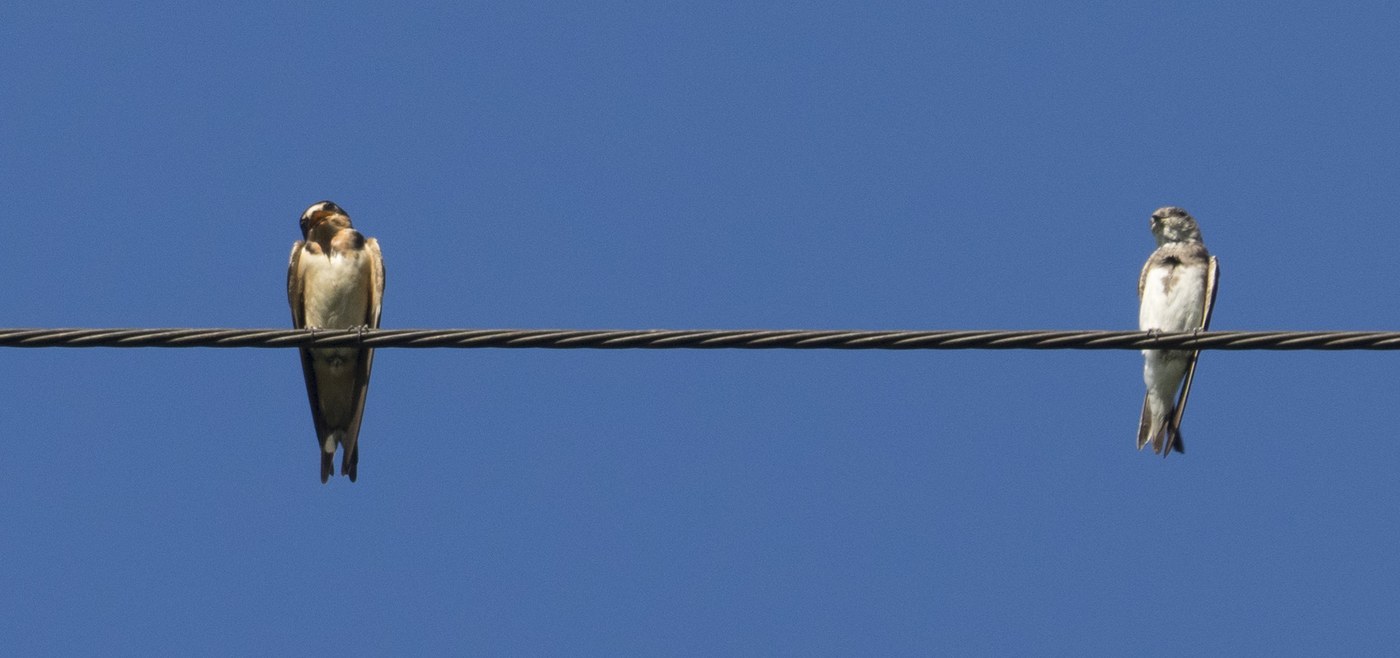
Key Field Marks
- Size & shape: A compact, thick-bodied swallow (12-15 cm) with a squared-off tail — the key structural difference from the deeply forked tail of Barn Swallow.
- Plumage: Glossy steel-blue crown and back, a pale buffy-orange to cinnamon rump that is very obvious in flight, a dark chestnut/rufous throat, and a small pale (whitish to buffy) patch on the forehead. Underparts are pale buffy-white.
- Behavior: Highly colonial and gregarious, nesting in dense clusters of gourd- or jug-shaped mud nests plastered under bridges, culverts, cliff overhangs, and building eaves; frequently seen gathering mud in bill-loads at puddle edges during nest building.
- Flight: Flies with a mix of flapping and gliding, often high overhead in twittering flocks foraging for flying insects.
Separating It From Similar Species
- Barn Swallow: Has a long, deeply forked "swallow tail" and a rufous forehead and throat, with no pale rump patch — the squared tail and pale rump of Cliff Swallow are the quickest distinctions.
- Cave Swallow: Very similar in shape and rump color, but Cave Swallow shows a paler, buffy-orange (not dark chestnut) throat and a more chestnut/rufous forehead patch instead of the pale forehead of Cliff Swallow; ranges overlap mainly in the southern U.S.
- Bank Swallow / Tree Swallow: Both lack the pale rump patch entirely; Bank Swallow shows a distinct brown breast band, and Tree Swallow is glossy blue-green above with clean white underparts and no rump patch.
Habitat, Range & Season
- Breeds across most of North America, from Alaska and Canada south through the U.S. into central Mexico, wherever suitable vertical surfaces (cliffs, bridges, culverts, buildings) are near open foraging habitat and a mud source.
- Highly colonial, with colonies ranging from a few pairs to many thousands of nests at large sites.
- A long-distance migrant, wintering mainly in southern South America; migrates through Central America and returns to North American colonies in spring, often to the same nest sites.
Voice
- A continuous stream of squeaky, chattering twitters and churring notes, given both in flight and at the nest colony; less musical than Barn Swallow's song.
Frequently asked questions
How can I tell a Cliff Swallow from a Barn Swallow at a distance?
Look at the tail: Cliff Swallow has a squared-off tail, while Barn Swallow has a long, deeply forked tail. Cliff Swallow also shows a pale buffy-orange rump patch that Barn Swallow lacks.
Why do Cliff Swallows nest in large colonies under bridges?
Colonial nesting on protected vertical surfaces near open foraging habitat and a mud source offers safety in numbers and easy access to nest-building material and flying insect prey.
How is Cliff Swallow different from Cave Swallow?
Cave Swallow has a paler, buffy-orange throat and a chestnut forehead patch, whereas Cliff Swallow has a dark chestnut throat and a pale (whitish) forehead patch; the two overlap mainly in the southern U.S.
What shape are Cliff Swallow nests?
Gourd- or jug-shaped nests built entirely of mud pellets, plastered in dense clusters under eaves, bridges, culverts, or cliff overhangs.