
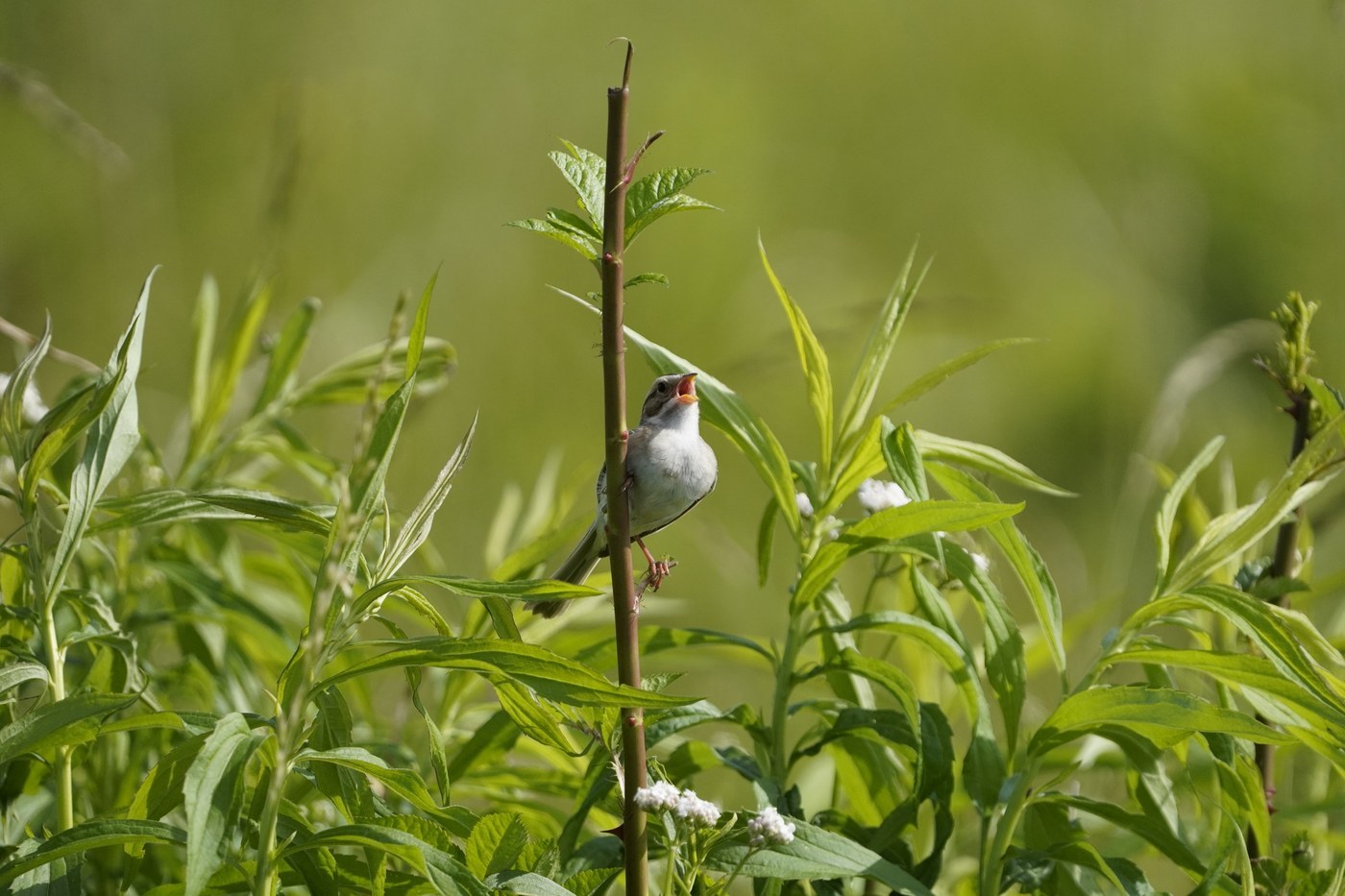
Clay-colored Sparrow
Spizella pallida
A pale, delicately patterned sparrow with a gray nape and brown-streaked crown, giving its distinctive buzzy insect-like song from prairie shrubs.
- Size
- 12-14 cm (4.7-5.5 in) long, 20 cm wingspan
- Habitat
- brushy prairie, shrubby grasslands, and regenerating fields of the north-central Great Plains and prairie provinces
- Type
- songbird
Spotted a bird like this?
Identify any bird from a photo, free.
Overview
The Clay-colored Sparrow is a small, pale, finely marked member of the genus Spizella, closely related to the Chipping Sparrow but generally paler and buffier overall, with a distinctive plain gray nape that contrasts against a brown-streaked crown and a subtly patterned buffy-brown face. A dark whisker (malar) stripe and a pale, unmarked breast complete a soft, understated look well suited to its prairie shrub habitat.
Immature and fall-plumage Chipping Sparrows can look quite similar, making the Clay-colored Sparrow one of the more frequently mis-identified sparrows, though a careful look at the plain gray nape usually settles the identification.
How to identify it
Key field marks
- Plain gray nape contrasting with a brown-streaked crown
- Buffy-brown face with a distinct dark whisker (malar) stripe
- Pale, unstreaked buffy-white breast
- Streaked brown back with a fairly plain, unmarked rump
Similar species
- Chipping Sparrow (especially in fall/immature plumage) is very similar but usually shows a grayer, less buffy face and a less contrasting gray nape, plus a grayish (not buffy) rump.
- Brewer's Sparrow, found farther west, is even plainer-faced, lacking the strong malar stripe and gray nape contrast of the Clay-colored Sparrow.
Habitat & range
Clay-colored Sparrows breed across the north-central United States and the Canadian prairie provinces, in brushy prairie, shrubby grassland, forest edges, and regenerating fields with scattered low shrubs, a habitat niche that has expanded somewhat with agricultural land-use changes in parts of its range.
The species winters chiefly in Mexico and the southern United States, in dry brushy and scrubby habitats, and is a medium- to long-distance migrant that can occur in small flocks, sometimes mixed with other Spizella sparrows, during migration.
Behavior & voice
Clay-colored Sparrows forage low in shrubs and on the ground for insects and seeds, often staying within or near dense shrub cover, and can be inconspicuous outside of the breeding season when not singing.
The song is a distinctive series of flat, low, insect-like buzzes, quite different from the more musical trills of many other sparrows, often described as sounding almost mechanical; the call is a thin "tsip." Diet includes insects during the breeding season and more seeds the rest of the year. Nests are built low in shrubs or occasionally on the ground, with typical clutches of three to five eggs.
Frequently asked questions
How do you identify a Clay-colored Sparrow?
Look for a small, pale sparrow with a plain gray nape contrasting against a brown-streaked crown, a buffy face with a dark whisker stripe, and an unstreaked buffy-white breast.
What is the difference between a Clay-colored Sparrow and a Chipping Sparrow?
The Clay-colored Sparrow has a plainer, buffier face with a more contrasting plain gray nape, while the Chipping Sparrow (especially breeding adults) shows a grayer face and a less contrasting, grayer nape and rump.
What does a Clay-colored Sparrow sound like?
A distinctive, flat, low, insect-like buzzy trill, often described as mechanical-sounding, quite unlike the more musical songs of many other sparrows.
Where do Clay-colored Sparrows live?
In brushy prairie and shrubby grasslands across the north-central US and Canadian prairie provinces in summer, wintering mainly in Mexico and the southern US.
Do Clay-colored Sparrows migrate?
Yes, they are medium- to long-distance migrants, moving from prairie breeding grounds to wintering areas in Mexico and the southern United States.
Clay-colored Sparrow guides
In-depth guides for identifying, finding, and understanding Clay-colored Sparrow.
Other birds you may enjoy
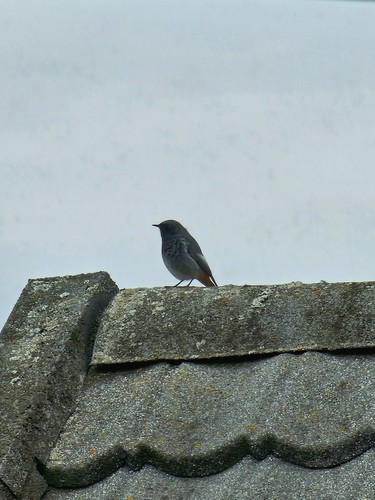
Black Redstart
13-14.5 cm (5.1-5.7 in) long, 23-26 cm wingspan
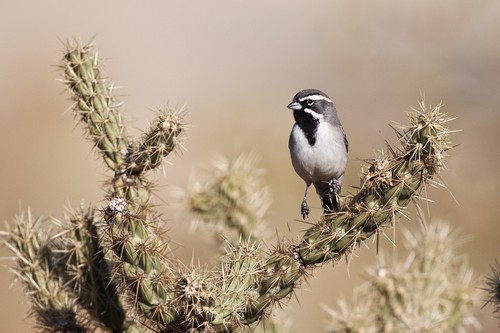
Black-throated Sparrow
12-14 cm (4.7-5.5 in) long, about 19-20 cm (7.5-8 in) wingspan
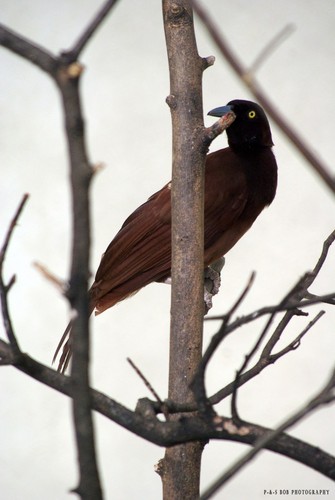
Greater Bird-of-paradise
Body about 43 cm; males with additional flank plumes up to 50 cm and long tail wires
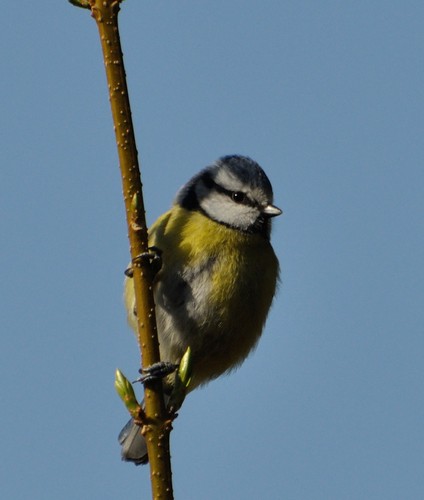
Blue Tit
11-12 cm (4.3-4.7 in) long, 17-20 cm wingspan
Red-billed Quelea
11.5–13 cm long, wingspan about 20–22 cm
White-plumed Antbird
13-14 cm (5-5.5 in) long
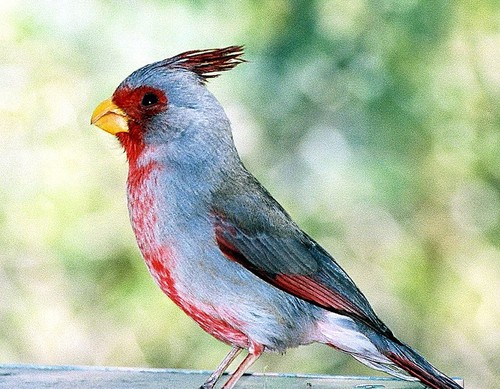
Pyrrhuloxia
19-22 cm (7.5-8.7 in) long, 30 cm wingspan
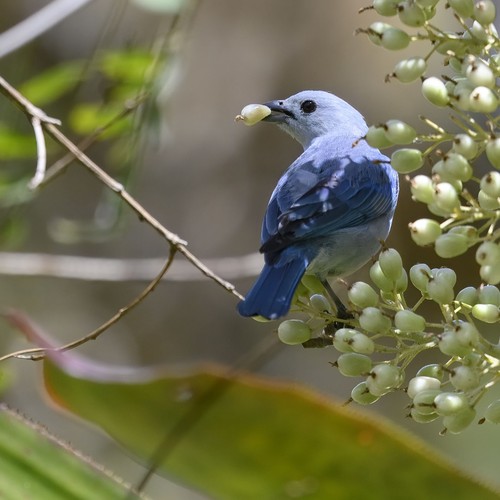
Blue-gray Tanager
16-18 cm (6-7 in) long
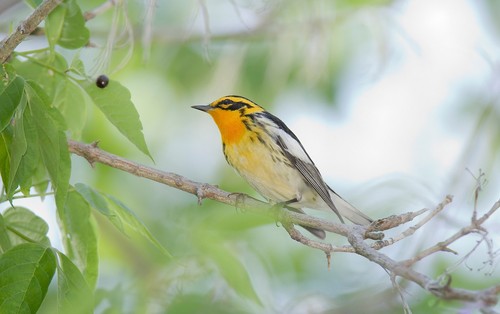
Blackburnian Warbler
11-13 cm (4.3-5.1 in) long, 20-22 cm wingspan
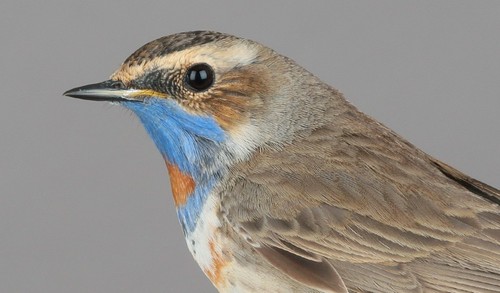
Bluethroat
13-14 cm (5.1-5.5 in) long, 20-22 cm wingspan
Eurasian Nuthatch
12-14.5 cm (4.7-5.7 in) long, 22.5-27 cm wingspan
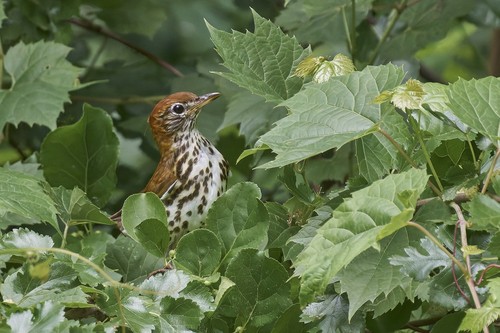
Wood Thrush
19-21 cm (7.5-8.3 in) long, about 33 cm (13 in) wingspan