
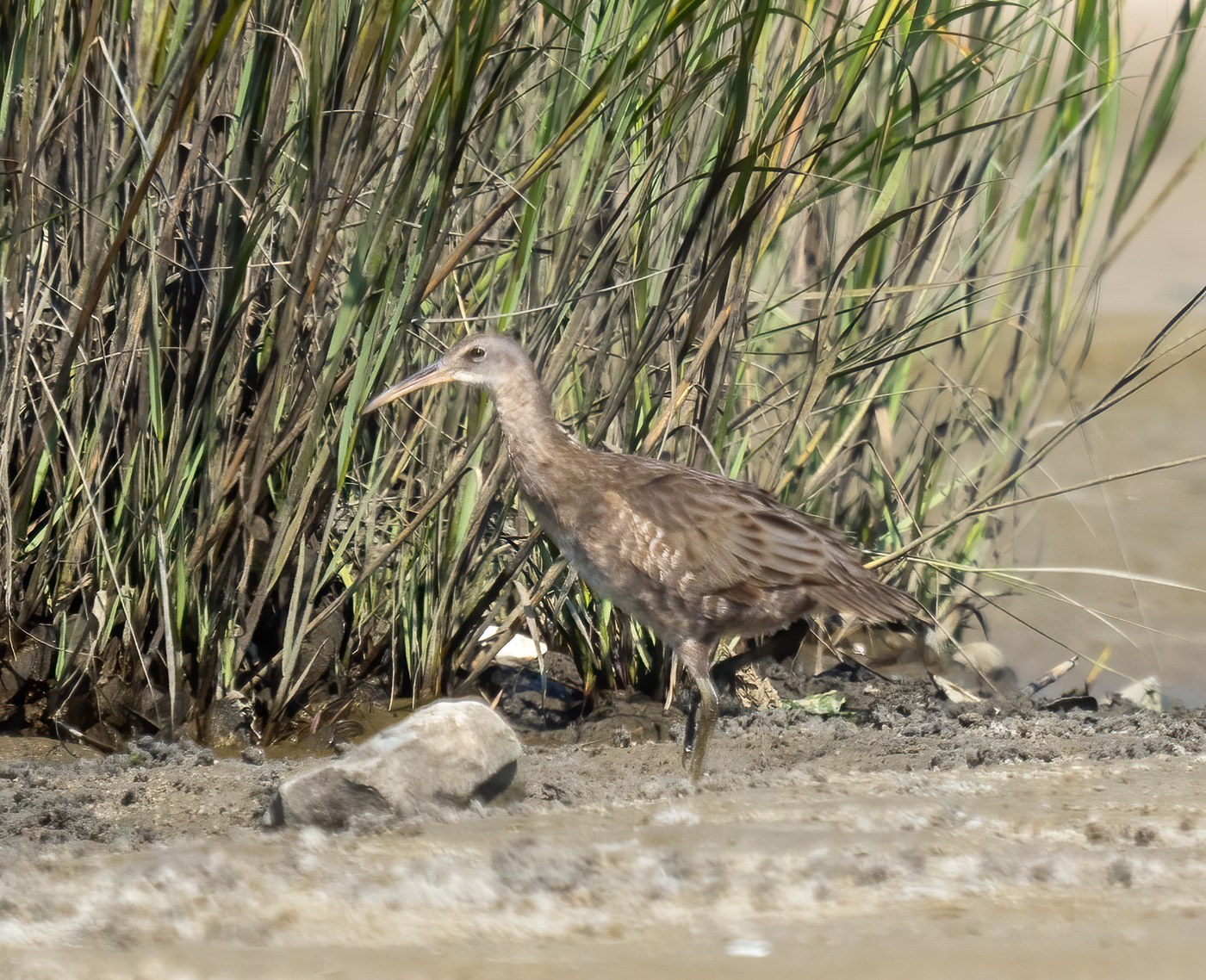
Clapper Rail
Rallus crepitans
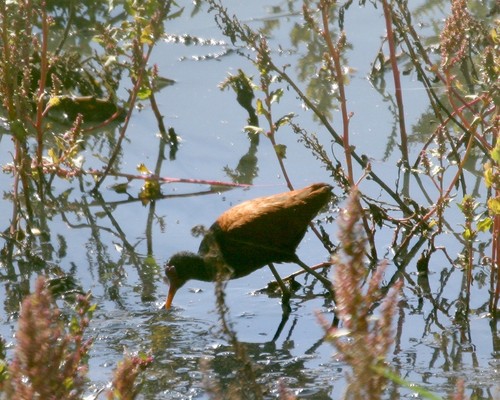
A large, drab gray-brown rail of Atlantic and Gulf Coast salt marshes, best known for its harsh clattering call.
- Size
- 32-41 cm (13-16 in) long, wingspan 46-50 cm
- Habitat
- coastal salt marshes along the Atlantic and Gulf coasts of North America
- Type
- wading-bird
Spotted a bird like this?
Identify any bird from a photo, free.
Overview
The Clapper Rail is a large, chicken-sized rail of coastal salt marshes, with grayish-brown to olive-brown upperparts, pale grayish or cinnamon-tinged underparts, and boldly barred black-and-white flanks. Its bill is long, slightly downcurved, and orange at the base.
Well camouflaged for life among dense cordgrass, it is more often heard than seen, its loud clattering call carrying across the marsh at dawn and dusk.
How to identify it
Key field marks
- Large size for a rail
- Long, slightly downcurved, orange-based bill
- Drab grayish-brown to olive-brown plumage
- Bold black-and-white barred flanks
Similar species
The King Rail is brighter rufous, especially on the breast, and prefers fresher marshes rather than the Clapper Rail's coastal salt marsh; the two species hybridize where their ranges meet in brackish habitat. The Virginia Rail is much smaller.
Habitat & range
Habitat
Coastal salt and brackish marshes dominated by cordgrass (Spartina).
Range and migration
Found along the Atlantic Coast from the northeastern United States through the Gulf Coast and into parts of the Caribbean and Central America. Largely non-migratory across most of its range, though northern populations may shift south during severe winters.
Behavior & voice
Behavior
Secretive but occasionally forages in the open along tidal creek edges, especially at low tide.
Voice
Famous for its loud, harsh, clattering 'kek-kek-kek' call, often given in a chorus, which gave rise to the name 'clapper.'
Feeding
Probes marsh mud for fiddler crabs and other invertebrates.
Nesting and breeding
Nests on the ground within dense cordgrass, timing breeding to avoid destruction of nests by extreme high tides.
Frequently asked questions
Why is it called a Clapper Rail?
For its loud, harsh, clattering call that sounds like a series of clapping notes.
What does a Clapper Rail eat?
Primarily fiddler crabs and other invertebrates found in salt marsh mud.
How is a Clapper Rail different from a King Rail?
The Clapper Rail is duller gray-brown and lives in salt marshes, while the King Rail is more richly rufous and prefers freshwater marshes.
Where do Clapper Rails live?
Coastal salt marshes along the Atlantic and Gulf coasts of North America.
Are Clapper Rails endangered?
The species overall is Least Concern, though some regional populations, such as California's Ridgway's Rail (once considered a Clapper Rail subspecies), are endangered.
Clapper Rail guides
In-depth guides for identifying, finding, and understanding Clapper Rail.
Other birds you may enjoy
Demoiselle Crane
85-100 cm (33-39 in) long, 155-180 cm wingspan
Boat-billed Heron
41-56 cm (16-22 in) long
Purple Heron
78-90 cm (31-35 in) long, 120-152 cm wingspan
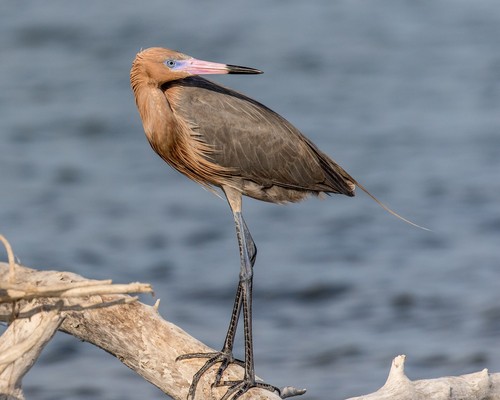
Reddish Egret
68-82 cm (27-32 in) long, 116-125 cm wingspan
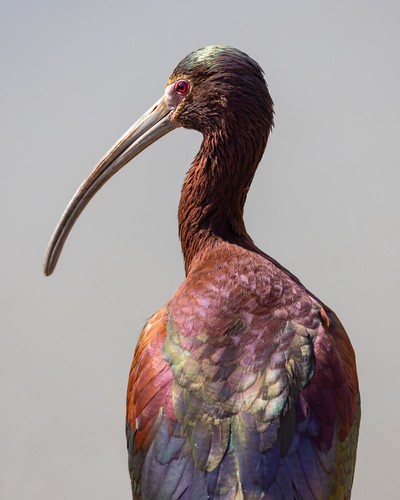
White-faced Ibis
46-56 cm (18-22 in) long, 88-93 cm wingspan
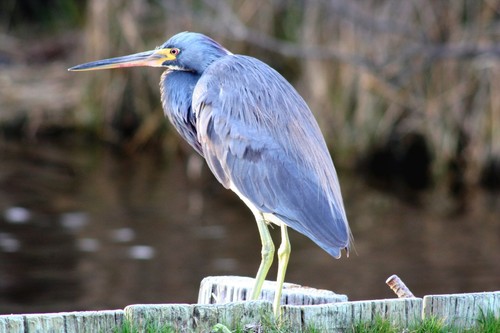
Tricolored Heron
61-76 cm (24-30 in) long, about 96 cm wingspan
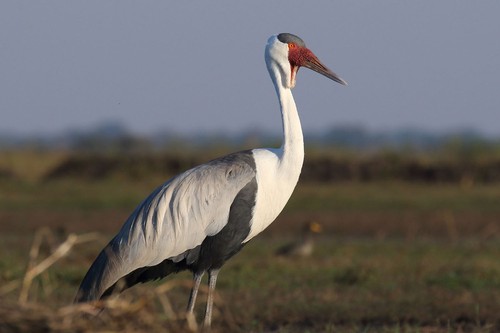
Wattled Crane
120-175 cm (47-69 in) tall, one of the tallest cranes, wingspan up to about 230 cm (7.5 ft)
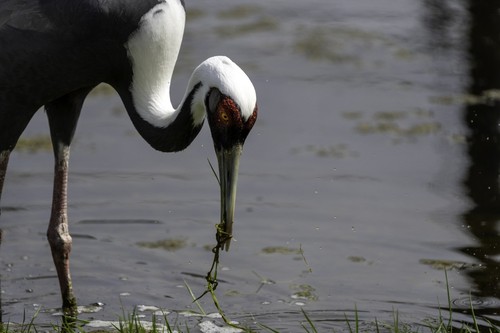
White-naped Crane
112-125 cm (44-49 in) long, 195-210 cm wingspan
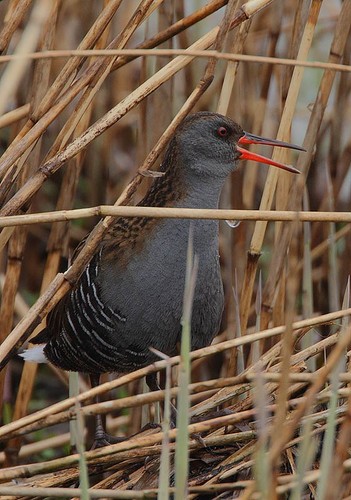
Water Rail
23-28 cm (9-11 in) long, wingspan 38-45 cm
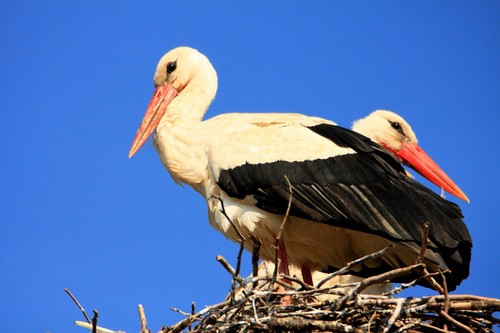
White Stork
100-125 cm (39-49 in) long, 155-215 cm wingspan
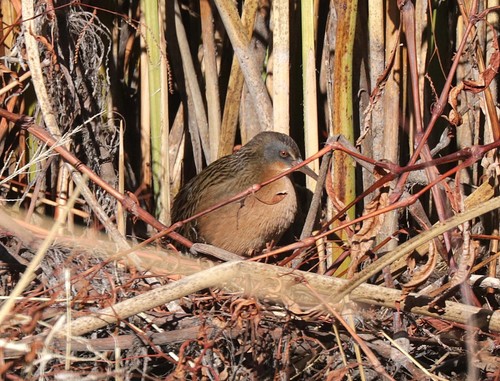
Virginia Rail
20-27 cm (8-11 in) long, wingspan 32-38 cm
Wattled Jacana
17-23 cm (7-9 in) long