
Chukar
Alectoris chukar
A bold, boldly barred Eurasian partridge introduced to the arid, rocky western United States, known for its distinctive black facial necklace and cackling call echoing across canyon terrain.
- Size
- 32-35 cm (13-14 in) long
- Habitat
- rocky, arid hillsides, canyons, and sagebrush steppe
- Type
- gamebird
Spotted a bird like this?
Identify any bird from a photo, free.
Overview
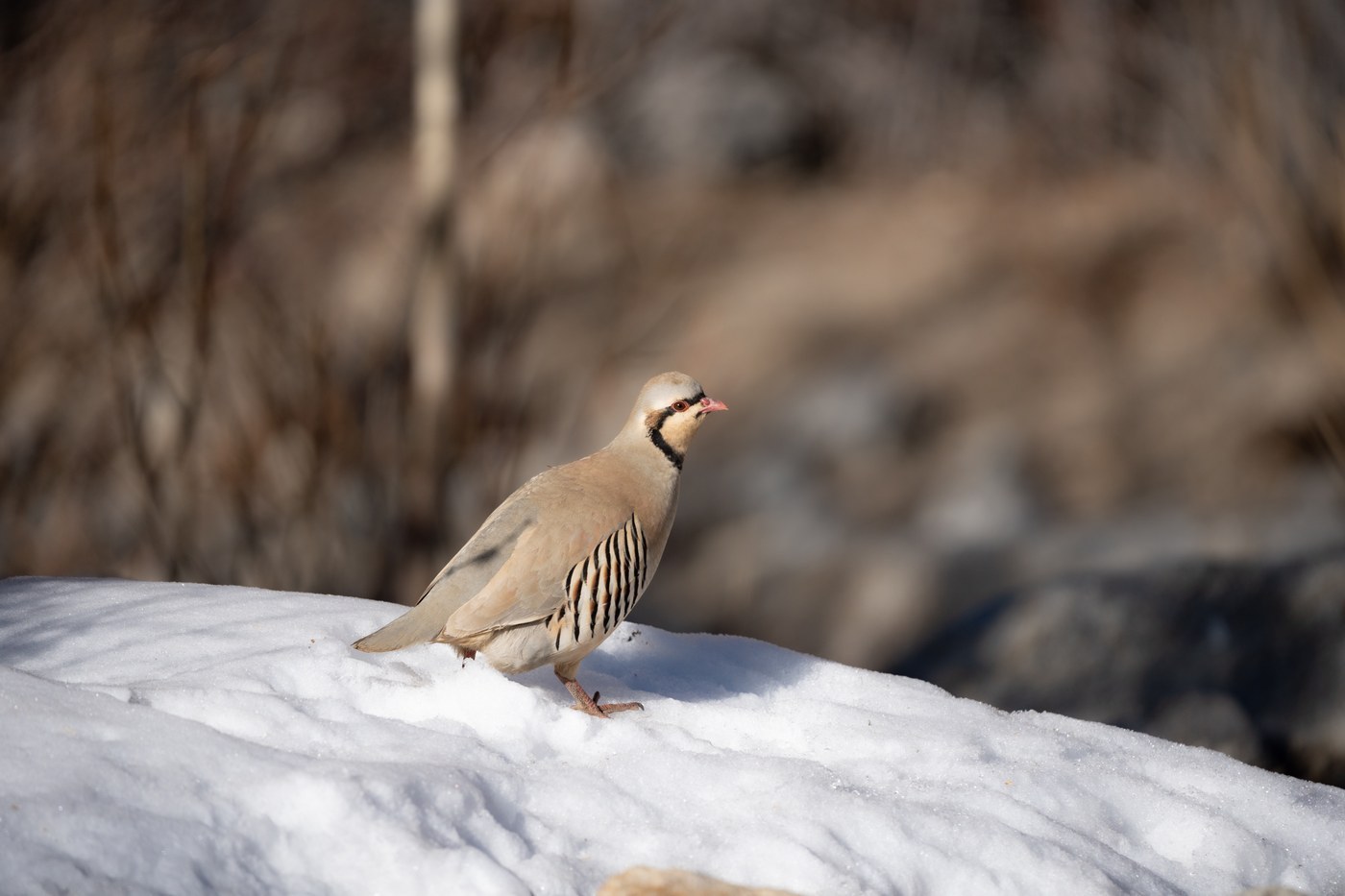
The Chukar is a plump, ground-dwelling partridge native to rocky, arid terrain from the Middle East to the Himalayas, widely introduced around the world including the arid mountains of the western United States, where it has become a well-established resident of steep, rocky rangeland. It is a handsome bird with soft gray-buff upperparts, a pinkish-buff belly, and a striking black line running from the forehead through the eyes and down around the throat, forming a bold "necklace" that sets off a pale gray-white throat and face. The flanks are boldly barred with black, white, and chestnut stripes.
How to identify it
Key field marks
- Bold black facial line running through the eye and around the throat like a necklace, framing a pale gray face and throat
- Soft gray-buff body with a pinkish wash on the belly
- Strongly barred black, white, and chestnut flank stripes
- Red bill and legs
Similar species
Gray Partridge lacks the black facial necklace and instead shows an orange-buff face without the throat outline; it also lacks the Chukar's bold flank barring pattern.
Habitat & range
Habitat and Range
Chukars favor steep, rocky, arid to semi-arid terrain, including canyon walls, talus slopes, and sagebrush- or cheatgrass-covered hillsides, usually staying within reach of water.
Range
Native from southeastern Europe through the Middle East to the Himalayas and western China, the species was introduced to the western United States (notably Nevada, Idaho, Oregon, Washington, Utah, and California) in the early-to-mid 20th century and has become well established in suitable rocky rangeland.
Migration
Chukars are non-migratory but may move locally, often climbing to feed and running or flying downhill to escape danger or reach water and cover.
Behavior & voice
Behavior
Chukars typically run rather than fly when disturbed, often uphill first before flushing and gliding rapidly downslope on set wings, a behavior well suited to their steep, rocky habitat.
Voice
The most familiar call is a loud, rhythmic "chukar-chukar-chukar" cackle, from which the species gets its name, often given by coveys at dawn and dusk and audible across canyon terrain.
Feeding
They feed on the ground on seeds, grass shoots, and insects, and are known to travel considerable distances to reach water sources in arid habitat.
Nesting and breeding
The female nests on the ground in a shallow, grass-lined scrape hidden among rocks or shrubs, typically laying 10-16 eggs.
Frequently asked questions
Is the Chukar native to North America?
No, it is native to rocky, arid regions from the Middle East to the Himalayas and was introduced to the western United States in the early-to-mid 20th century, where it is now well established.
How did the Chukar get its name?
The name comes from its loud, distinctive cackling call, often rendered as a repeated 'chukar-chukar-chukar.'
What habitat do Chukars prefer?
They favor steep, rocky, arid terrain such as canyon walls and talus slopes, often in sagebrush or cheatgrass rangeland, typically within range of water.
How can you identify a Chukar?
Look for a bold black line running through the eye and around the throat like a necklace, a pale gray face, a pinkish-buff belly, and strongly barred black, white, and chestnut flanks.
Chukar guides
In-depth guides for identifying, finding, and understanding Chukar.
Other birds you may enjoy
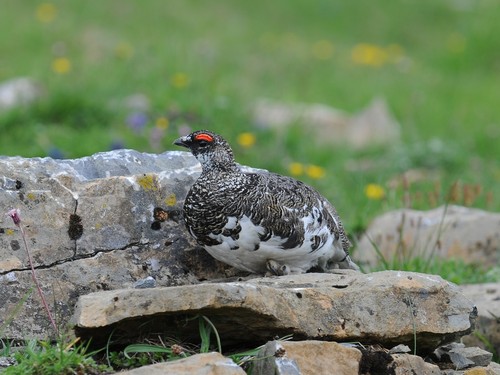
Rock Ptarmigan
34-36 cm (13-14 in) long
Congo Peafowl
Males about 64-70 cm long; females slightly smaller; no elaborate train
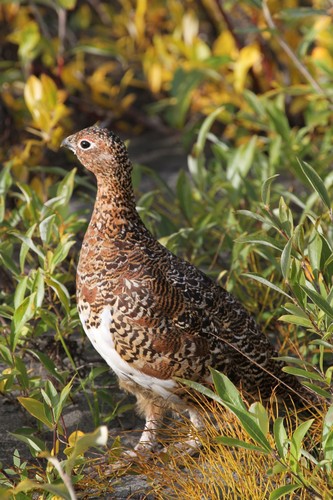
Willow Ptarmigan
37-42 cm (15-16.5 in) long
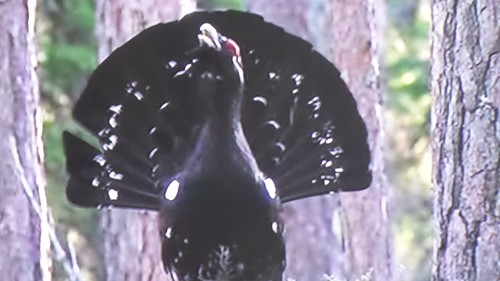
Western Capercaillie
male 74-90 cm (29-35 in), female 54-64 cm; male wingspan up to 125-130 cm
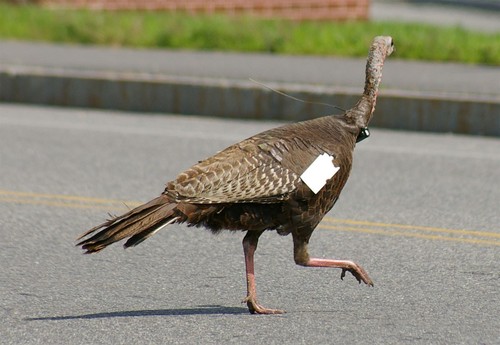
Wild Turkey
males 100-125 cm (39-49 in) long; females smaller, around 76-95 cm (30-37 in)
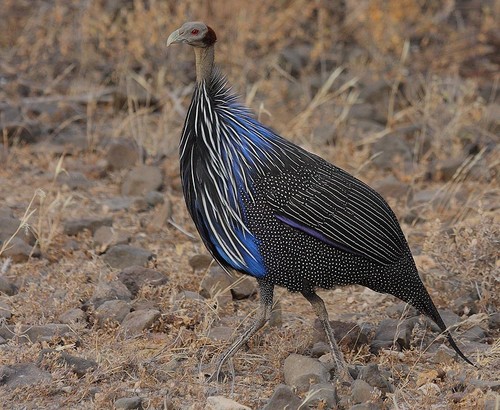
Vulturine Guineafowl
Length 61-71 cm, the largest guineafowl species, with a notably long neck and tail
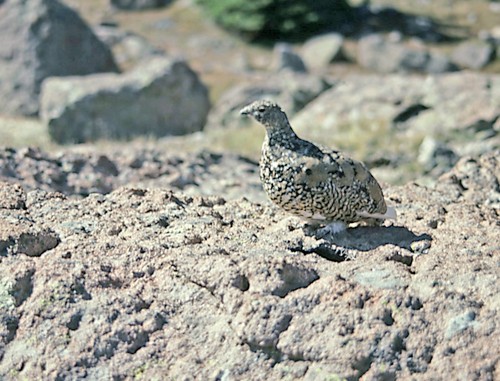
White-tailed Ptarmigan
30-33 cm (12-13 in) long; the smallest ptarmigan species
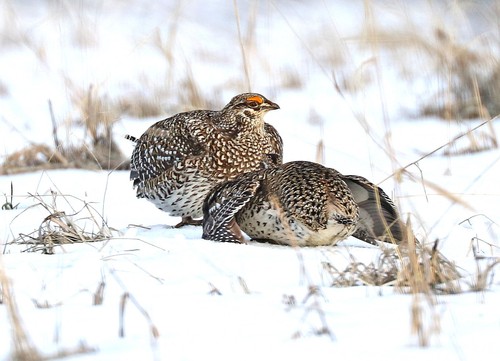
Sharp-tailed Grouse
38-48 cm (15-19 in) long
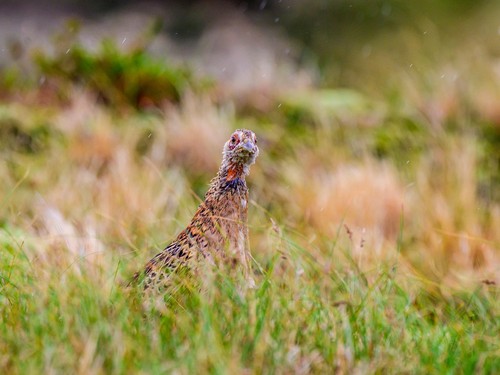
Ring-necked Pheasant
males 76-90 cm (30-35 in) long including a long tail; females smaller, 55-65 cm (22-26 in)
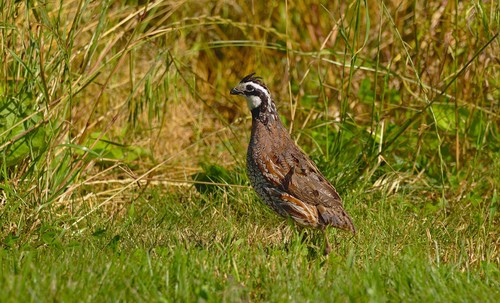
Northern Bobwhite
24-28 cm (9.5-11 in) long, 33-38 cm wingspan
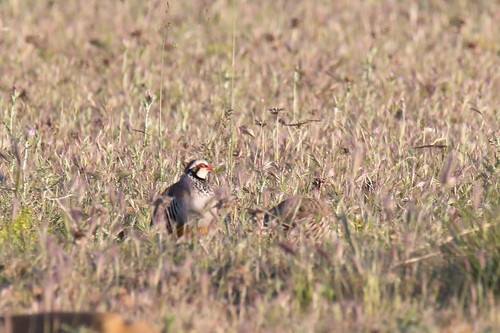
Red-legged Partridge
32-34 cm (13 in) long, 47-50 cm wingspan
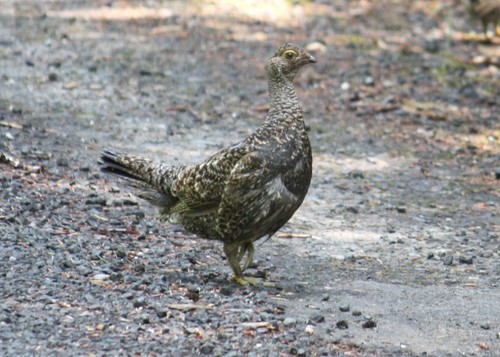
Sooty Grouse
43-48 cm (17-19 in) long; males larger than females