
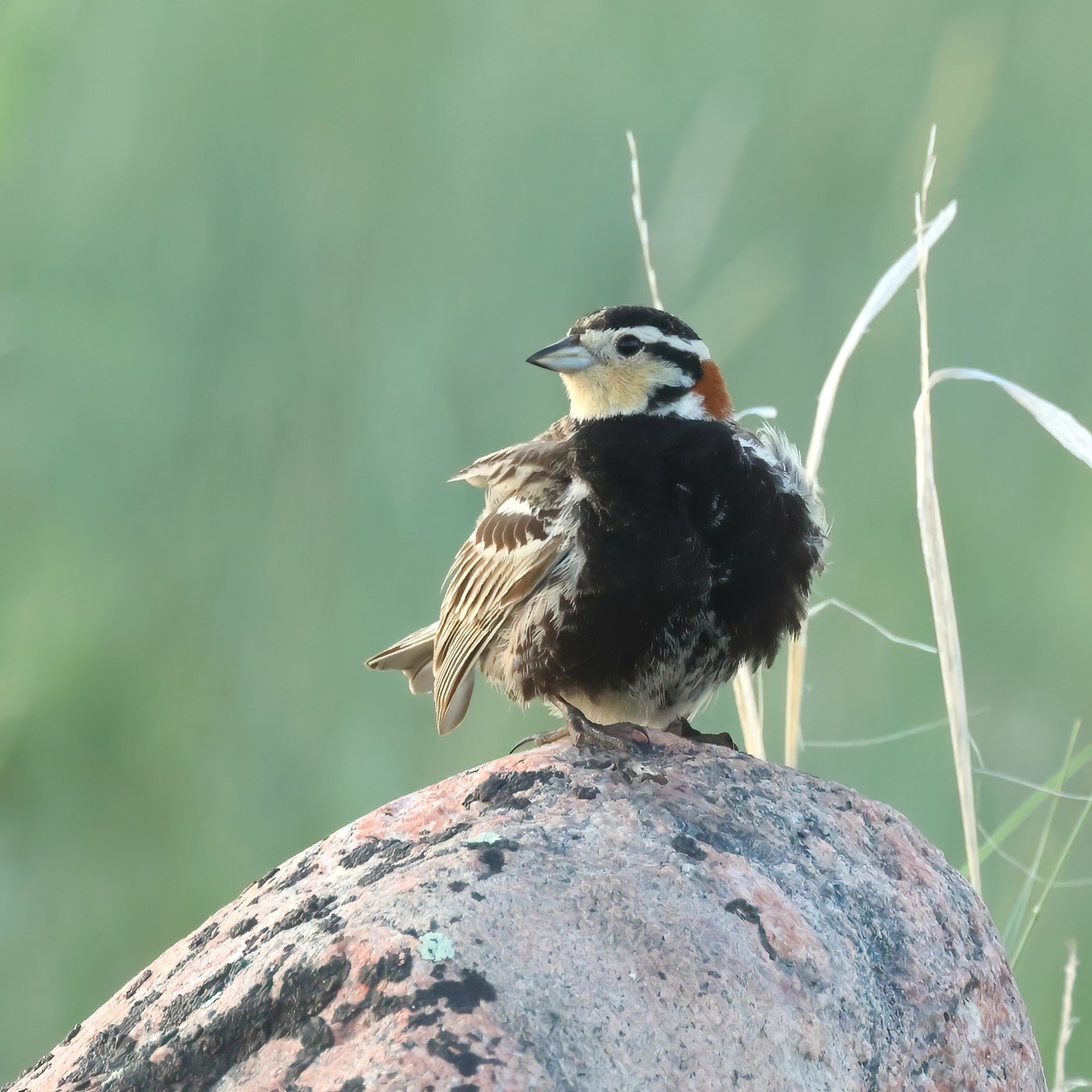
Chestnut-collared Longspur
Calcarius ornatus
A shortgrass prairie specialist whose breeding male shows black underparts, a chestnut collar, and a striking black-and-white tail pattern.
- Size
- 14-16 cm (5.5-6.3 in) long, about 26-28 cm (10-11 in) wingspan
- Habitat
- native shortgrass prairie
- Type
- songbird
Spotted a bird like this?
Identify any bird from a photo, free.
Overview
The Chestnut-collared Longspur is a small, ground-dwelling songbird tightly tied to native shortgrass prairie of the northern Great Plains, one of North America's most imperiled ecosystems. Its bold breeding plumage and distinctive tail pattern make it one of the more striking longspurs when seen well.
Breeding males show solidly black underparts, a rich chestnut band across the nape (the 'collar' of the name), and a buffy-yellow face, a dramatic combination against the pale grassland backdrop. In flight, both sexes reveal a distinctive tail pattern: mostly white with a black terminal band, useful for identification even on much plainer nonbreeding and female birds, which are streaky brown overall.
The species has declined significantly as native shortgrass prairie has been converted to cropland, and it remains a priority species for grassland bird conservation across its range.
How to identify it
Key Field Marks
- Breeding male: black underparts, chestnut collar across the nape, buffy-yellow face
- Female/winter: streaky brown overall, much plainer
- Tail pattern: mostly white with a black terminal band, visible in flight in all plumages
Similar Species
- McCown's/Thick-billed Longspur: shows a different tail pattern, with black forming an inverted-T or anchor shape rather than a simple terminal band, and a notably thicker bill
- Lapland Longspur: has a rustier nape and a dark ear patch rather than the black underparts and chestnut collar of breeding male Chestnut-collared
The tail pattern is often the quickest way to distinguish this species from other longspurs in flight, even when plumage details are hard to see.
Habitat & range
Chestnut-collared Longspurs breed in native shortgrass and mixed-grass prairie of the northern Great Plains, from southern Canada (Alberta, Saskatchewan, Manitoba) south through Montana and the Dakotas to Colorado and Kansas, favoring relatively short, sparse grass cover.
In winter, the species moves to shortgrass habitats of the southern Great Plains, Texas, and northern Mexico. Because it depends on intact native prairie with a particular grass height and structure, the species has declined substantially as native grassland has been plowed for agriculture across much of its breeding range.
Behavior & voice
Behavior
This species forages and nests on the ground within short grass, often walking or running rather than hopping, and can be inconspicuous except when males sing from low perches or in flight.
Voice
The song is a sweet, tinkling, warbling series of notes, often given during a brief flight display over the prairie.
Feeding
Diet includes seeds and insects gathered from the ground, with insects especially important during the breeding season.
Nesting and Breeding
The nest is a shallow, grass-lined cup built directly on the ground, often beside a small clump of grass or cow dung for slight cover. Clutches typically contain 3-5 pale eggs with dark markings.
Frequently asked questions
How do you identify a breeding male Chestnut-collared Longspur?
Look for black underparts, a chestnut band across the back of the neck, and a buffy-yellow face.
What does the Chestnut-collared Longspur's tail look like?
It is mostly white with a black terminal band, visible in flight and useful for identification even in plain female or winter plumage.
Where does the Chestnut-collared Longspur breed?
It breeds in native shortgrass and mixed-grass prairie of the northern Great Plains, from southern Canada south to Colorado and Kansas.
Why has the Chestnut-collared Longspur declined?
Conversion of native shortgrass prairie to cropland has significantly reduced suitable breeding habitat across its range.
How is the Chestnut-collared Longspur different from McCown's Longspur?
Chestnut-collared has a simpler tail pattern with a plain black terminal band, while McCown's (Thick-billed) Longspur shows a black inverted-T shape and a notably thicker bill.
Chestnut-collared Longspur guides
In-depth guides for identifying, finding, and understanding Chestnut-collared Longspur.
Other birds you may enjoy
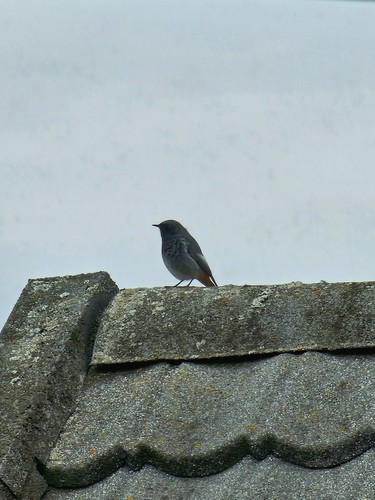
Black Redstart
13-14.5 cm (5.1-5.7 in) long, 23-26 cm wingspan
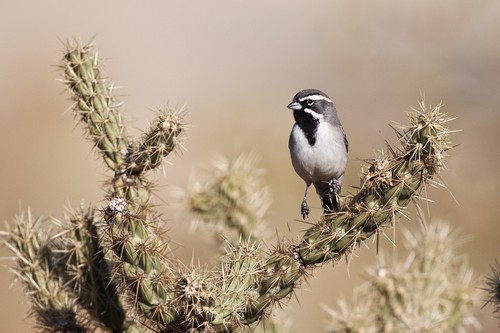
Black-throated Sparrow
12-14 cm (4.7-5.5 in) long, about 19-20 cm (7.5-8 in) wingspan
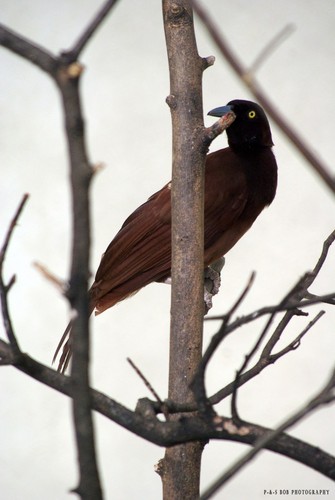
Greater Bird-of-paradise
Body about 43 cm; males with additional flank plumes up to 50 cm and long tail wires
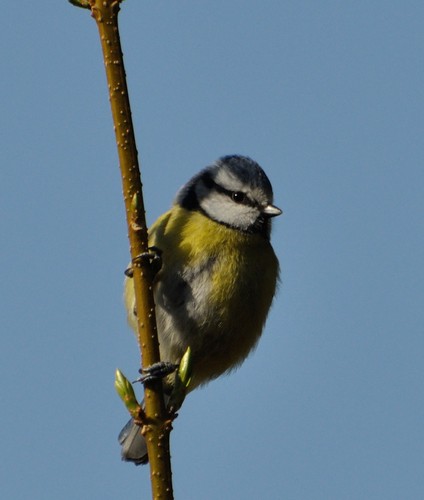
Blue Tit
11-12 cm (4.3-4.7 in) long, 17-20 cm wingspan

Red-billed Quelea
11.5–13 cm long, wingspan about 20–22 cm
White-plumed Antbird
13-14 cm (5-5.5 in) long
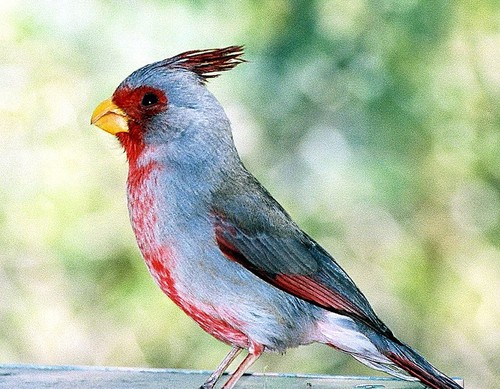
Pyrrhuloxia
19-22 cm (7.5-8.7 in) long, 30 cm wingspan
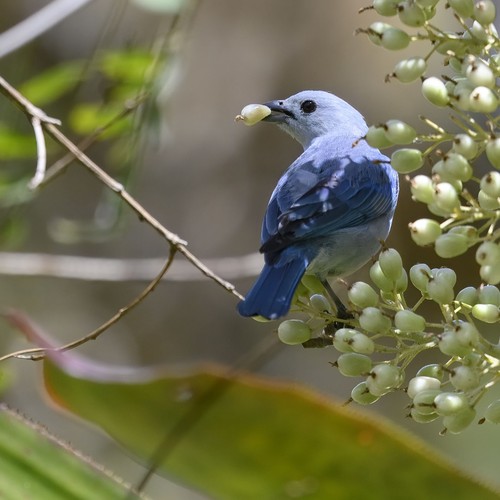
Blue-gray Tanager
16-18 cm (6-7 in) long
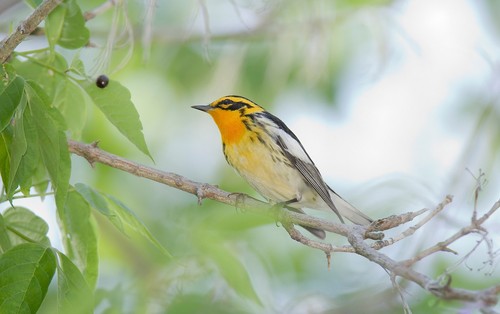
Blackburnian Warbler
11-13 cm (4.3-5.1 in) long, 20-22 cm wingspan
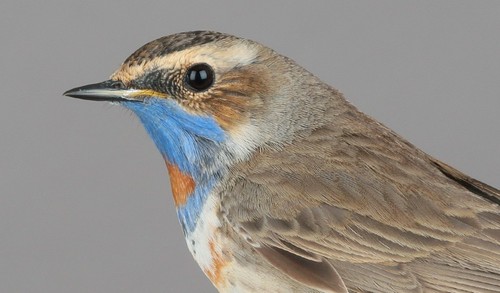
Bluethroat
13-14 cm (5.1-5.5 in) long, 20-22 cm wingspan
Eurasian Nuthatch
12-14.5 cm (4.7-5.7 in) long, 22.5-27 cm wingspan
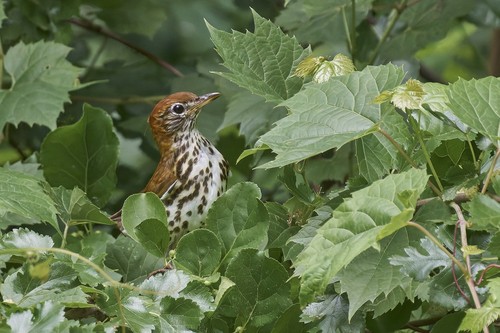
Wood Thrush
19-21 cm (7.5-8.3 in) long, about 33 cm (13 in) wingspan