
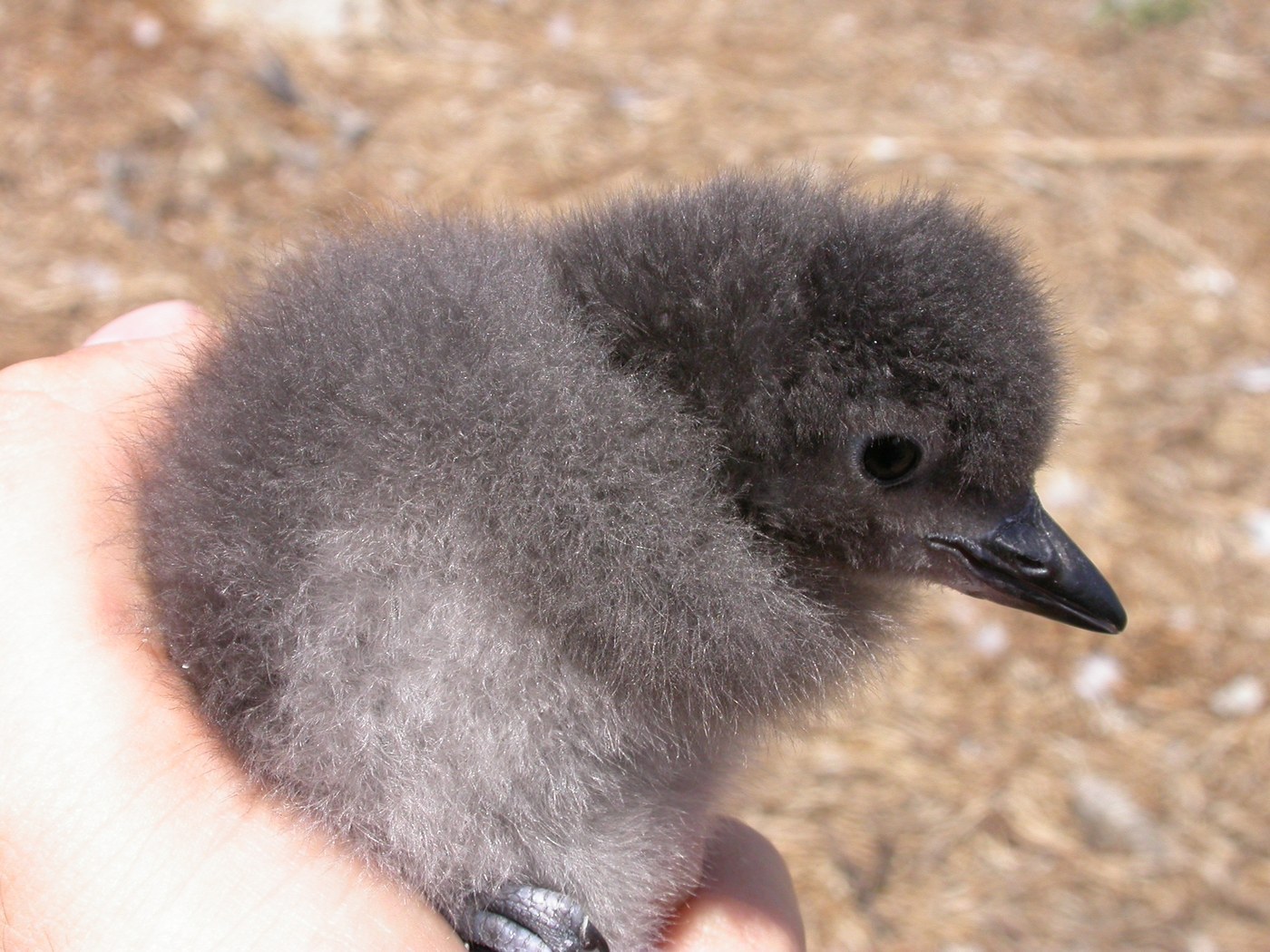
Cassin's Auklet
Ptychoramphus aleuticus
A small, plain sooty-gray auklet of the North Pacific that nests in burrows and forages mainly on krill and other tiny crustaceans.
- Size
- 20-25 cm (8-10 in) long, 37-42 cm wingspan
- Habitat
- North Pacific coastal waters, burrow-nesting islands
- Type
- seabird
Spotted a bird like this?
Identify any bird from a photo, free.
Overview
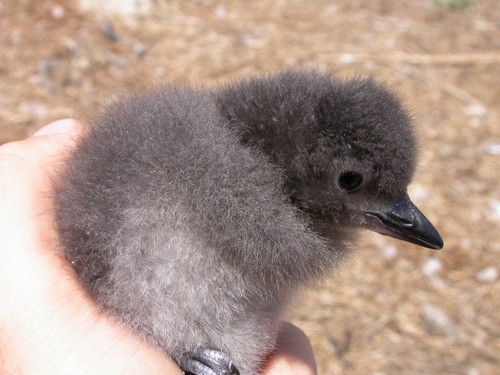
Cassin's Auklet is a small, unassuming seabird of the North Pacific, lacking the bold ornaments of many of its relatives and instead sporting a uniform sooty grey-brown plumage with a slightly paler belly. A small pale spot above the eye and a subtly pale-based bill are among the few distinguishing marks on an otherwise plain bird. Its stout body and short wings give it a compact, rounded silhouette both on the water and in flight.
Despite its plain appearance, Cassin's Auklet plays an outsized ecological role as one of the most numerous seabirds of the California Current and other North Pacific upwelling zones, where it forms large nesting colonies on offshore islands.
How to identify it
Key field marks
- Small, compact body with sooty grey-brown plumage
- Slightly paler grey belly
- Small pale spot above the eye
- Short, stubby bill with a pale spot near the base of the lower mandible
Similar species
- Rhinoceros Auklet is considerably larger with a distinctive bill horn in breeding season.
- Storm-petrels are superficially similar in size and dark coloring but have a very different flight style, with fluttering, erratic wingbeats compared to the auklet's direct, whirring flight.
- Juveniles closely resemble adults, making age generally difficult to determine in the field.
Habitat & range
Cassin's Auklets breed in burrows on offshore islands along the North Pacific coast of North America, from Baja California north through California's Farallon Islands, British Columbia, and into the Aleutian Islands of Alaska. They forage over productive upwelling zones, particularly the California Current, where cold, nutrient-rich waters support dense concentrations of krill and other zooplankton.
Most populations remain within the North Pacific year-round, though some dispersal occurs outside the breeding season as birds track shifting concentrations of their planktonic prey.
Behavior & voice
Behavior
Like many small auks, Cassin's Auklets visit their nesting burrows mainly at night to reduce the risk of predation by gulls, and forage during the day by diving and swimming underwater in pursuit of tiny prey.
Voice
A harsh, creaking or growling call is given at night around burrows; the species is quiet while foraging at sea.
Feeding
Krill and other zooplankton dominate the diet, supplemented by small fish, gathered during pursuit dives close to the surface or at moderate depths.
Nesting and breeding
Pairs nest in burrows dug into soil on offshore islands, sometimes raising two broods in a single season when food is abundant, an unusual trait among auks; both parents share incubation and chick-provisioning duties, visiting the burrow under cover of darkness.
Frequently asked questions
What does Cassin's Auklet eat?
Mostly krill and other zooplankton, supplemented by small fish, caught by diving and swimming underwater.
Where does Cassin's Auklet breed?
In burrows on offshore islands along the North Pacific coast, from Baja California through California, British Columbia, and into Alaska's Aleutian Islands.
Why is Cassin's Auklet important to North Pacific ecosystems?
It is one of the most numerous seabirds of productive upwelling zones like the California Current, making it a key indicator species for ocean food web health.
Can Cassin's Auklets raise more than one brood a year?
Yes, unusually among auks, pairs can sometimes raise two broods in a season when krill and other prey are abundant.
How can you identify a Cassin's Auklet?
Look for a small, plain sooty grey-brown seabird with a stubby bill and a small pale spot above the eye, lacking the bright ornaments of many relatives.
Cassin's Auklet guides
In-depth guides for identifying, finding, and understanding Cassin's Auklet.
Other birds you may enjoy
Peruvian Pelican
137-152 cm (54-60 in) long, up to 228 cm wingspan
Bonaparte's Gull
28-33 cm (11-13 in) long, 76-84 cm wingspan
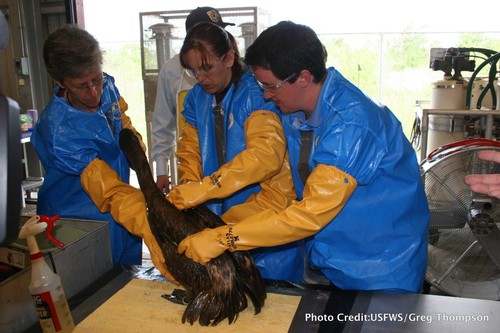
Brown Pelican
106-137 cm (42-54 in) long, 200-230 cm wingspan
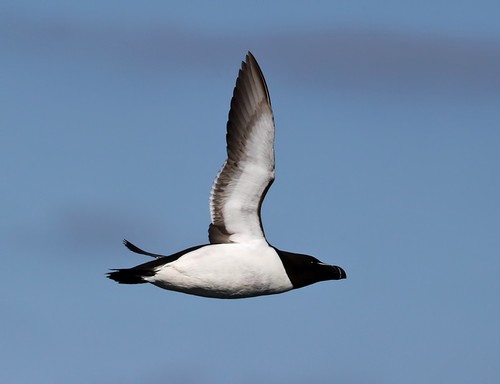
Razorbill
37-39 cm (15-15.5 in) long, 63-68 cm wingspan
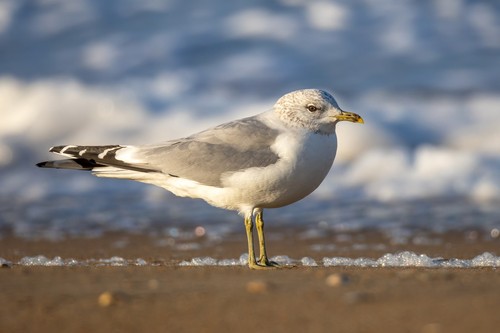
Common Gull
40-46 cm (16-18 in) long, 110-130 cm wingspan
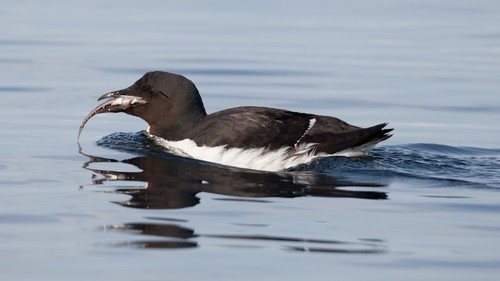
Thick-billed Murre
40-48 cm (16-19 in) long, 65-75 cm wingspan
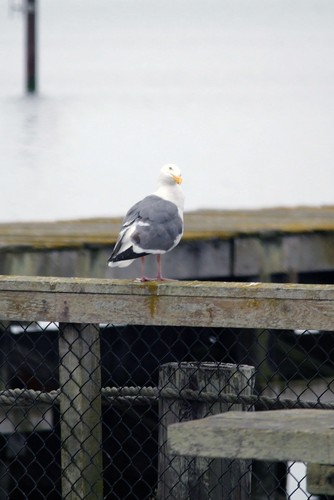
Western Gull
55-68 cm (22-27 in) long, 130-144 cm wingspan
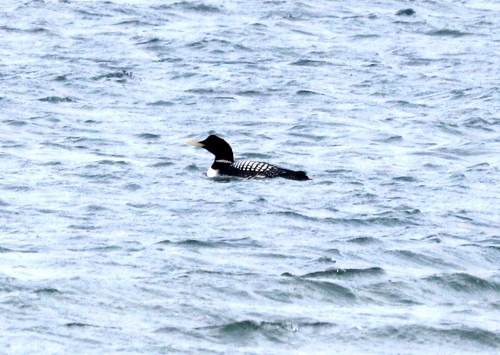
Yellow-billed Loon
76-97 cm (30-38 in) long, 135-152 cm wingspan
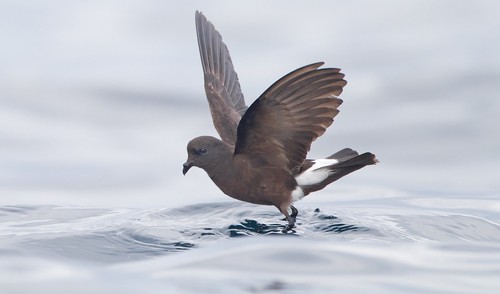
Wilson's Storm-Petrel
15-19 cm (6-7.5 in) long, wingspan 38-42 cm (15-16.5 in)
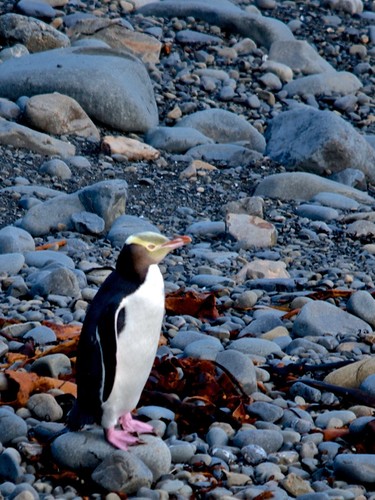
Yellow-eyed Penguin
62-79 cm (24-31 in) tall, 3-8.5 kg (6.6-18.7 lb)
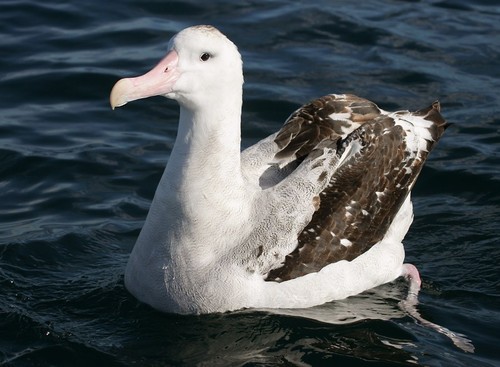
Wandering Albatross
107-135 cm (42-53 in) long, wingspan up to 3.5 m (11.5 ft)
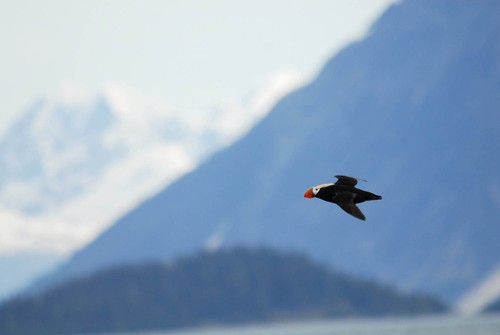
Tufted Puffin
35-41 cm (14-16 in) long, about 63-70 cm wingspan