
Cassin's Auklet Identification Guide
A small, plain, dusky-gray seabird of the Pacific coast, identified by its stocky shape, pale eye, and small dark bill with a pale spot.
Read the full Cassin's Auklet encyclopedia entry →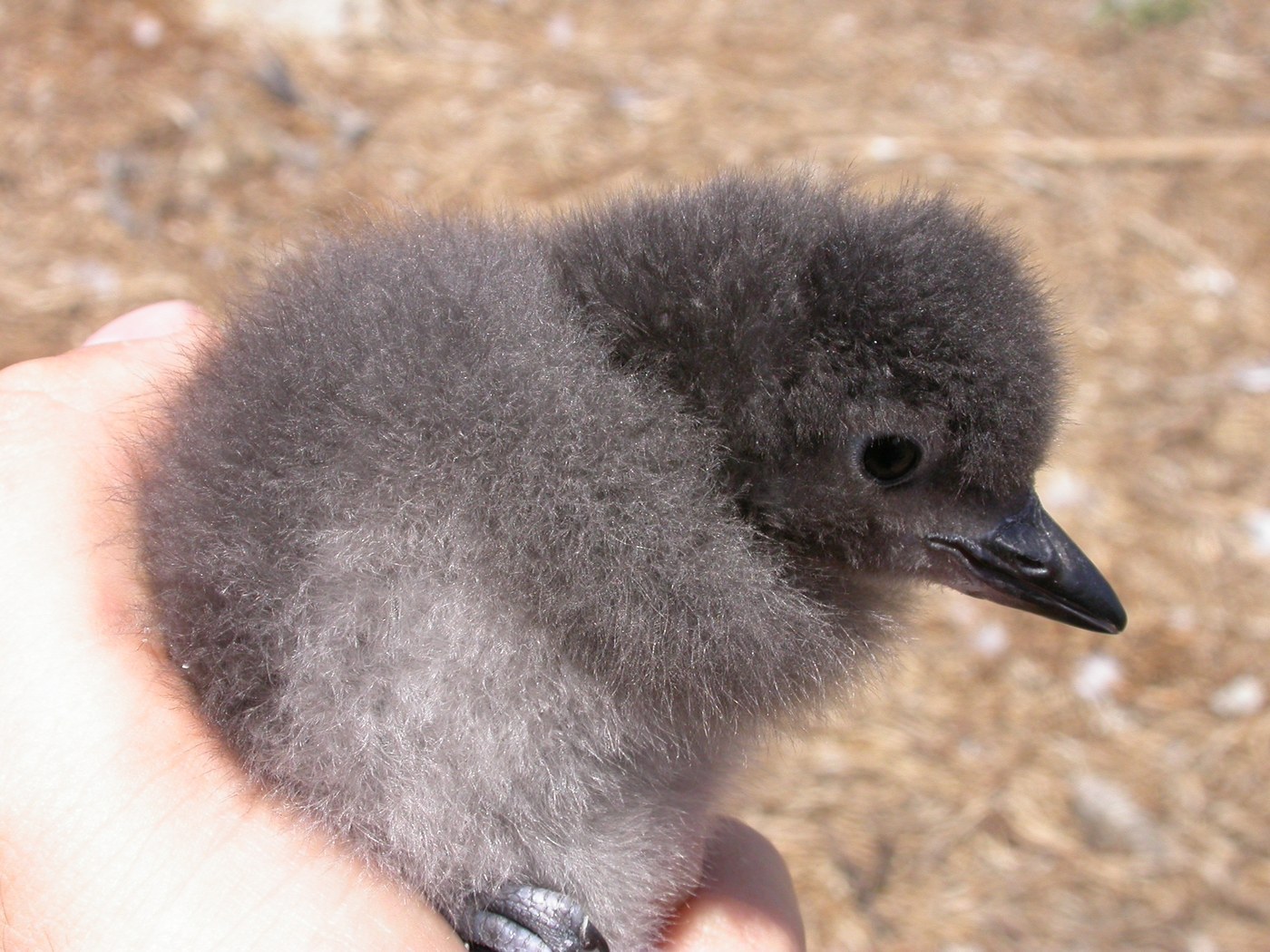
Key Field Marks
- Size & shape: A small, chunky alcid about 20–25 cm long, with a large head, short neck, and stubby wings — appears round and compact both on the water and in flight.
- Plumage: Uniformly sooty-gray to dark brownish-gray above, paler dingy gray below, with no bold pattern — one of the plainest of all North American seabirds.
- Bill: Small, dark, and stubby, with a small pale (whitish to bluish) spot near the base of the lower mandible, visible at close range.
- Eye: A pale, whitish to yellowish iris stands out against the dark head, a useful mark in good light or photographs.
- Behavior: Highly pelagic outside the breeding season; dives and swims underwater to catch krill and small fish, and flies with fast, whirring wingbeats low over the water.
Separating It From Similar Species
- Other small Pacific alcids like Marbled Murrelet and Ancient Murrelet show more contrasting plumage patterns (pale flanks, dark caps, or bold face patterns), whereas Cassin's Auklet is nearly uniform dark gray with no strong contrast.
- Least Auklet, found farther north/west, is smaller and stockier with a stubbier bill and typically shows some white in the underparts; ranges barely overlap.
- At sea, plain gray coloration, pale eye, and stocky silhouette are the best combination to rule out confusion with other small alcids.
Where & When to See It
- Habitat: Open ocean and offshore waters over the continental shelf; nests in burrows on remote offshore islands with soil suitable for digging.
- Range: Breeds on islands off the Pacific coast from the Aleutian Islands and British Columbia south to Baja California, with major colonies on islands such as the Farallones off central California.
- Season: Present year-round near breeding colonies, though most of the population disperses widely over open ocean outside the breeding season (roughly spring through summer at colonies).
Voice & Song Cues
- Almost entirely silent at sea; vocal activity occurs mainly at night at breeding colonies, where it gives a range of harsh, creaking, and croaking notes from burrows and in flight over the colony after dark.
- Because colonies are visited nocturnally, voice is rarely useful for at-sea identification — visual cues from boats are the primary method.
Frequently asked questions
What is the best way to identify Cassin's Auklet at sea?
Look for a small, chunky, uniformly dark gray seabird with a pale eye and a small dark bill showing a faint pale spot near the base, flying low with fast wingbeats.
Why is Cassin's Auklet hard to see at its breeding colonies?
It is almost entirely nocturnal at colonies, coming ashore to nesting burrows only after dark to avoid predators, so it is rarely observed on land during daylight.
Where does Cassin's Auklet breed?
It nests in burrows on remote offshore islands along the Pacific coast from the Aleutians south to Baja California, including large colonies on California's Farallon Islands.
How does Cassin's Auklet differ from other small alcids?
Unlike murrelets, which show contrasting plumage patterns, Cassin's Auklet is notably plain and uniformly dusky gray with little to no patterning.