
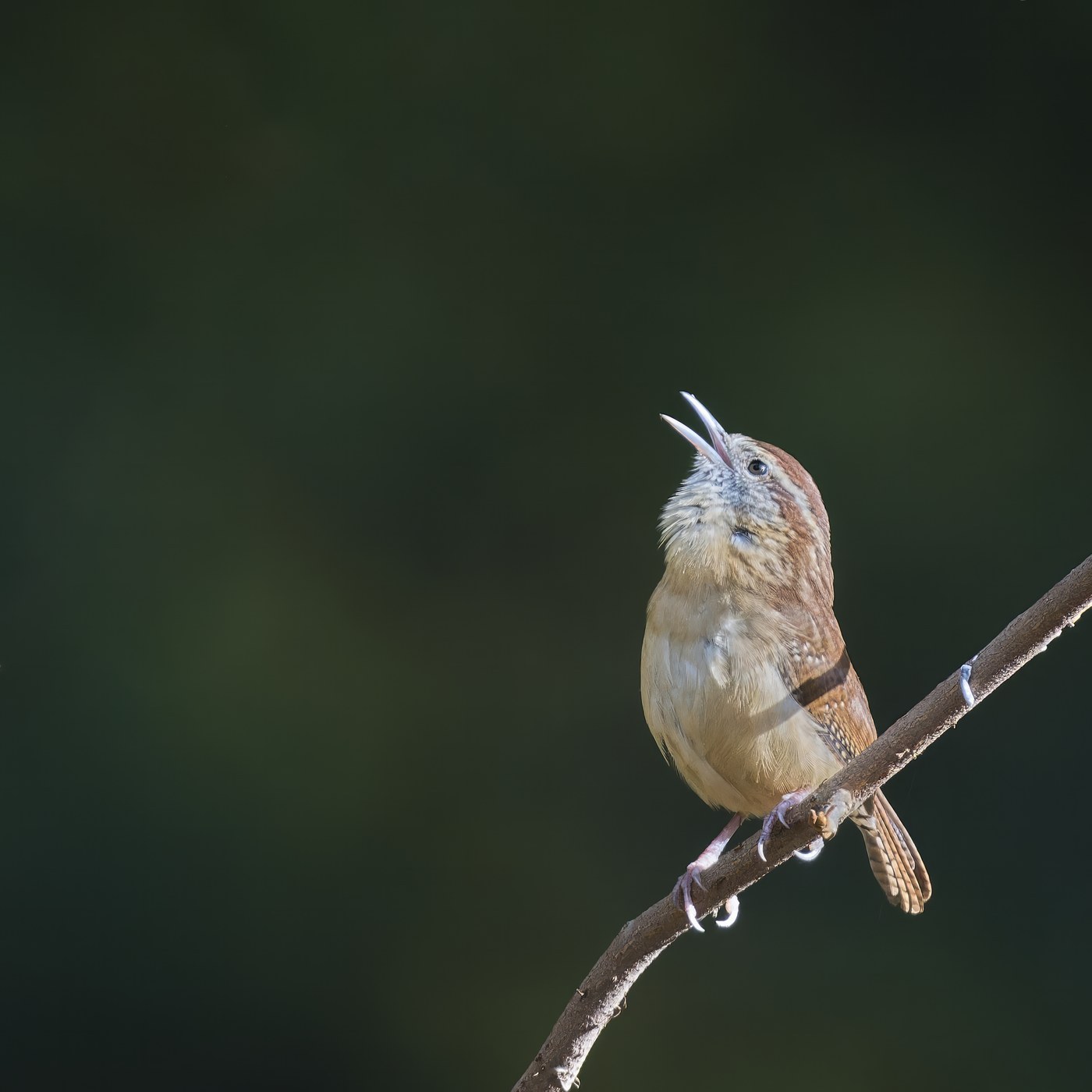
Carolina Wren
Thryothorus ludovicianus
A small, round, reddish-brown wren with a bold white eyebrow stripe and a surprisingly loud, ringing song for its size.
- Size
- 12-14 cm (4.75-5.5 in) long, 29 cm (11.5 in) wingspan
- Habitat
- dense understory, thickets, brush piles, and wooded gardens in the southeastern and eastern U.S.
- Type
- songbird
Spotted a bird like this?
Identify any bird from a photo, free.
Overview
The Carolina Wren is a small but boldly patterned bird, warm reddish-brown above with buffy-orange underparts and a striking white eyebrow stripe that gives it an expressive, alert look. It has a fairly long, slightly downcurved bill and often holds its short tail cocked upward, a posture typical of wrens.
Despite its small size, the Carolina Wren produces a remarkably loud, ringing song and is a common, vocal presence year-round in gardens and woodland edges across the southeastern and eastern United States.
How to identify it
Key Field Marks
- Warm reddish-brown upperparts and buffy-orange underparts
- Bold white eyebrow stripe (supercilium)
- Long, slightly downcurved bill
- Short tail often cocked upward
Similar Species
- House Wren: smaller, plainer grayish-brown overall, with a much fainter or absent eyebrow stripe and a thinner bill.
- Bewick's Wren: grayer-brown with a long white-edged tail and a white eyebrow stripe, but overall less warm/rufous in tone than Carolina Wren; ranges overlap only in parts of the south-central U.S.
- Winter Wren/House Wren: both notably smaller and duller, lacking the Carolina Wren's rich rufous tones and bold face pattern.
Habitat & range
Habitat
Carolina Wrens favor dense understory vegetation, thickets, brush piles, tangled vines, and wooded or shrubby residential gardens, staying low and close to cover.
Range
They are resident throughout the southeastern and eastern United States, extending into parts of the Midwest and, increasingly, into the Northeast as their range has expanded with warming winters.
Migration
Carolina Wrens are non-migratory residents, remaining on their territory year-round, but their populations can suffer significant declines after severe winter cold snaps in the northern part of their range.
Behavior & voice
Behavior
Carolina Wrens are active, curious, and vocal, often heard before they are seen as they forage low in dense vegetation, brush piles, and along the ground, frequently exploring nooks and crannies, including around houses and porches.
Voice
The song is a loud, ringing, repeated three-parted phrase often rendered as "tea-kettle, tea-kettle, tea-kettle"; both sexes call, and males sing persistently throughout the year, not just in the breeding season.
Feeding
They feed mainly on insects and spiders gleaned from leaf litter, bark, and dense vegetation, supplementing with small amounts of fruit and seeds, especially in winter.
Nesting & Breeding
Pairs build a bulky, domed nest with a side entrance in a wide variety of natural and artificial cavities, including tree hollows, dense brush, and items like hanging planters, mailboxes, or garage shelves. They typically lay 4-6 eggs and can raise multiple broods per year.
Frequently asked questions
Why is the Carolina Wren's song so loud for such a small bird?
Its loud, ringing song is produced with a specialized vocal organ (syrinx) and is used to defend territory year-round; despite its small body size, the song carries remarkably far through dense vegetation.
Do Carolina Wrens migrate?
No, they are non-migratory and remain in the same territory throughout the year, which makes them vulnerable to population declines during unusually harsh winters.
Where do Carolina Wrens build nests?
They build bulky, domed nests with a side entrance in a wide variety of cavities and nooks, including tree hollows, dense brush, and human-made structures like mailboxes, hanging planters, or garage shelves.
How can I tell a Carolina Wren from a House Wren?
Carolina Wrens are more richly colored, with warm rufous upperparts, buffy-orange underparts, and a bold white eyebrow stripe, while House Wrens are smaller, plainer grayish-brown, and lack a strong eyebrow stripe.
What do Carolina Wrens eat?
They mainly eat insects and spiders foraged from leaf litter and dense vegetation, with some fruit and seeds added to the diet, particularly in colder months.
Carolina Wren guides
In-depth guides for identifying, finding, and understanding Carolina Wren.
Carolina Wren identified by the community
Real birds identified with Bird Identifier.
Other birds you may enjoy

Black Redstart
13-14.5 cm (5.1-5.7 in) long, 23-26 cm wingspan

Black-throated Sparrow
12-14 cm (4.7-5.5 in) long, about 19-20 cm (7.5-8 in) wingspan

Greater Bird-of-paradise
Body about 43 cm; males with additional flank plumes up to 50 cm and long tail wires

Blue Tit
11-12 cm (4.3-4.7 in) long, 17-20 cm wingspan

Red-billed Quelea
11.5–13 cm long, wingspan about 20–22 cm
White-plumed Antbird
13-14 cm (5-5.5 in) long

Pyrrhuloxia
19-22 cm (7.5-8.7 in) long, 30 cm wingspan

Blue-gray Tanager
16-18 cm (6-7 in) long

Blackburnian Warbler
11-13 cm (4.3-5.1 in) long, 20-22 cm wingspan

Bluethroat
13-14 cm (5.1-5.5 in) long, 20-22 cm wingspan

Eurasian Nuthatch
12-14.5 cm (4.7-5.7 in) long, 22.5-27 cm wingspan

Wood Thrush
19-21 cm (7.5-8.3 in) long, about 33 cm (13 in) wingspan