
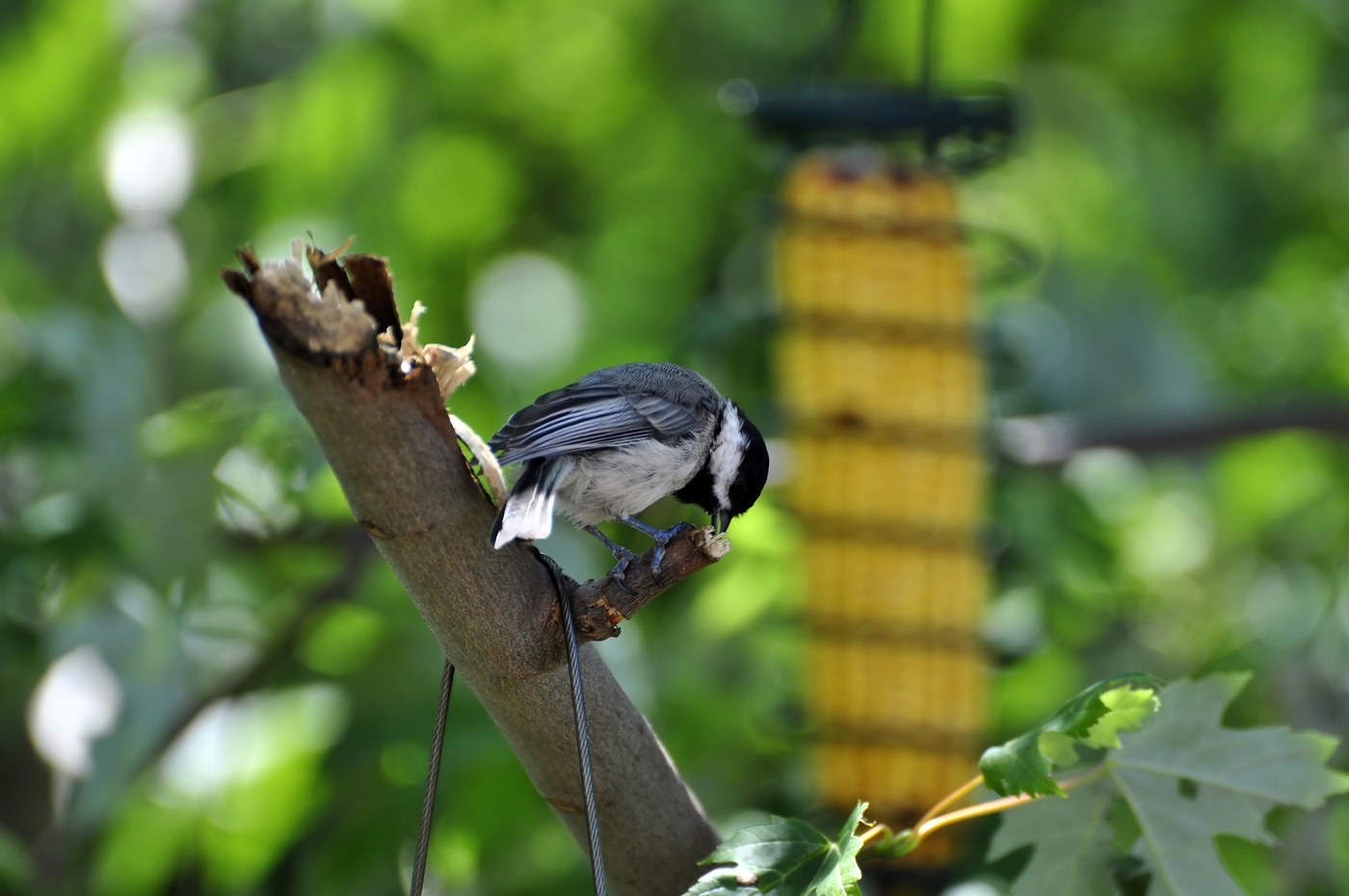
Carolina Chickadee
Poecile carolinensis
A small southeastern chickadee nearly identical to the Black-capped Chickadee, best told apart by its faster four-note song.
- Size
- 11.5-13 cm (4.5-5 in) long, 15-20 cm (6-8 in) wingspan
- Habitat
- deciduous forests, woodland edges, parks, and gardens in the southeastern U.S.
- Type
- songbird
Spotted a bird like this?
Identify any bird from a photo, free.
Overview
The Carolina Chickadee is a small songbird of the southeastern United States, closely resembling its northern relative the Black-capped Chickadee in both appearance and habits. It has a black cap and bib, white cheeks, a gray back, and pale underparts, with slightly less white edging on the wing feathers than the Black-capped Chickadee, giving a somewhat plainer-winged look, though this difference can be subtle in the field.
Carolina and Black-capped Chickadees meet and hybridize in a narrow contact zone through the mid-Atlantic and lower Midwest, where identification can be especially difficult and voice becomes the most reliable clue.
How to identify it
Key Field Marks
- Black cap and bib with white cheeks, similar to Black-capped Chickadee but slightly smaller
- Less contrasting white edging on wing feathers than Black-capped Chickadee
- Gray back and pale grayish-white underparts
- Compact body and short bill
Similar Species
- Black-capped Chickadee: nearly identical in plumage; Black-capped is very slightly larger with more white edging on the wing and a slower, two-note "fee-bee" song versus the Carolina's faster, four-note "fee-bee-fee-bay" song.
- Tufted Titmouse: shares similar habitat but has a crest and lacks the black cap and bib.
- Hybrids in the contact zone can show intermediate features and mixed or atypical songs, making voice alone unreliable there.
Habitat & range
Habitat
Carolina Chickadees inhabit deciduous and mixed forests, woodland edges, parks, and gardens, favoring areas with mature trees offering nesting cavities.
Range
They are found year-round across the southeastern United States, roughly from the mid-Atlantic and lower Midwest south to the Gulf Coast, overlapping and hybridizing with Black-capped Chickadees along a narrow zone farther north.
Migration
Carolina Chickadees are non-migratory residents, remaining in their territories throughout the year without seasonal movements.
Behavior & voice
Behavior
Like other chickadees, Carolina Chickadees are active, acrobatic foragers that often join mixed-species winter flocks with titmice, nuthatches, and warblers, and they readily visit backyard feeders.
Voice
The song is a faster four-note whistle often rendered as "fee-bee-fee-bay," higher and quicker than the Black-capped Chickadee's slower two-note song; the call is a similar but slightly faster and higher-pitched "chick-a-dee-dee-dee."
Feeding
They eat insects, spiders, seeds, and berries, gleaning actively among twigs and foliage, and they cache food for later use, similar to other chickadee species.
Nesting & Breeding
Carolina Chickadees nest in tree cavities, either self-excavated in soft dead wood or in nest boxes, lined with moss, fur, and plant material. They typically lay 5-8 eggs per clutch.
Frequently asked questions
How do you distinguish Carolina from Black-capped Chickadees?
The two species look almost identical, but the Carolina Chickadee's song is a faster four-note phrase compared to the Black-capped's slower two-note whistle, and Carolina Chickadees are found farther south, with a narrow hybrid zone where the ranges meet.
Do Carolina Chickadees migrate?
No, they are year-round residents and do not migrate, staying in the same general area throughout the year.
Where do Carolina Chickadees nest?
They nest in cavities in dead or decaying wood, either excavating their own or using natural holes and nest boxes, lined with soft material like moss and animal fur.
What do Carolina Chickadees eat?
Their diet includes insects, spiders, seeds, and berries, with insects especially important during the breeding season for feeding young.
Can Carolina and Black-capped Chickadees interbreed?
Yes, they hybridize in a narrow contact zone through the mid-Atlantic states and lower Midwest, producing birds with intermediate features and sometimes mixed songs.
Carolina Chickadee guides
In-depth guides for identifying, finding, and understanding Carolina Chickadee.
Other birds you may enjoy
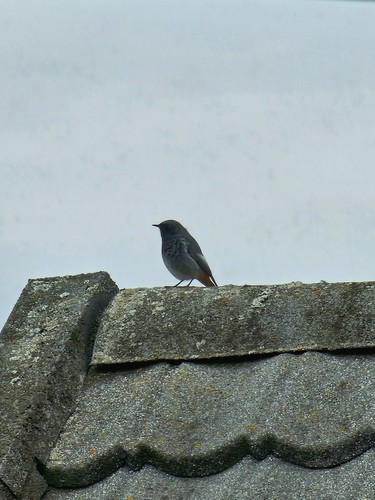
Black Redstart
13-14.5 cm (5.1-5.7 in) long, 23-26 cm wingspan
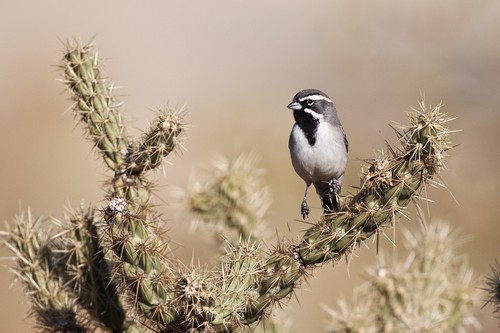
Black-throated Sparrow
12-14 cm (4.7-5.5 in) long, about 19-20 cm (7.5-8 in) wingspan
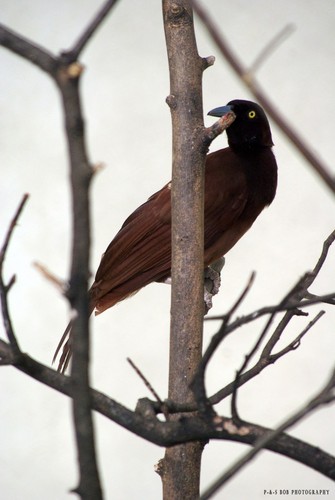
Greater Bird-of-paradise
Body about 43 cm; males with additional flank plumes up to 50 cm and long tail wires
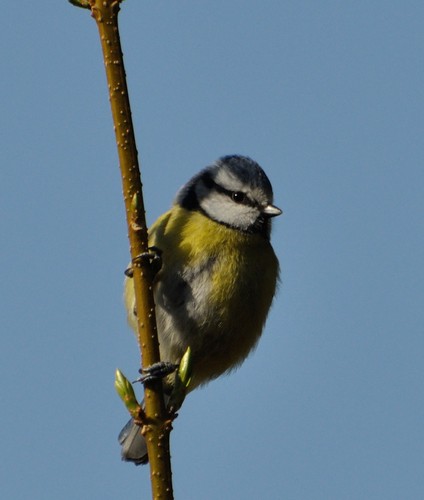
Blue Tit
11-12 cm (4.3-4.7 in) long, 17-20 cm wingspan

Red-billed Quelea
11.5–13 cm long, wingspan about 20–22 cm
White-plumed Antbird
13-14 cm (5-5.5 in) long
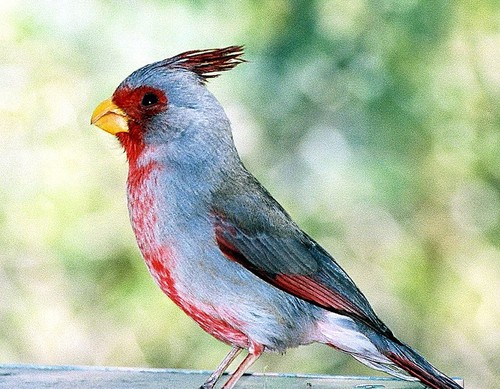
Pyrrhuloxia
19-22 cm (7.5-8.7 in) long, 30 cm wingspan
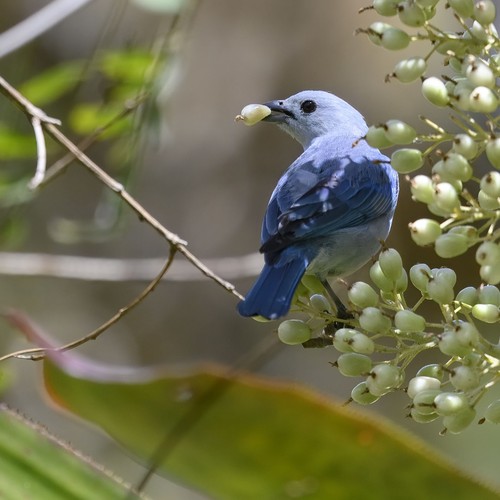
Blue-gray Tanager
16-18 cm (6-7 in) long
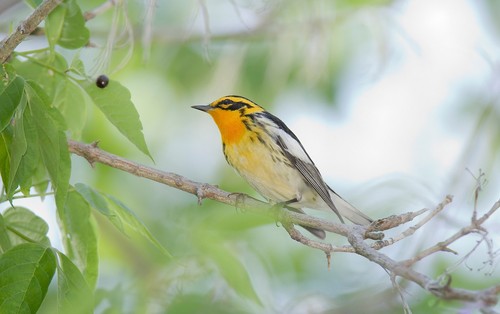
Blackburnian Warbler
11-13 cm (4.3-5.1 in) long, 20-22 cm wingspan
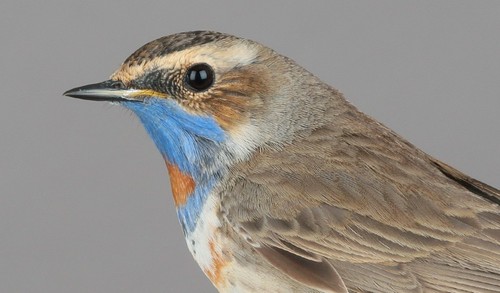
Bluethroat
13-14 cm (5.1-5.5 in) long, 20-22 cm wingspan
Eurasian Nuthatch
12-14.5 cm (4.7-5.7 in) long, 22.5-27 cm wingspan
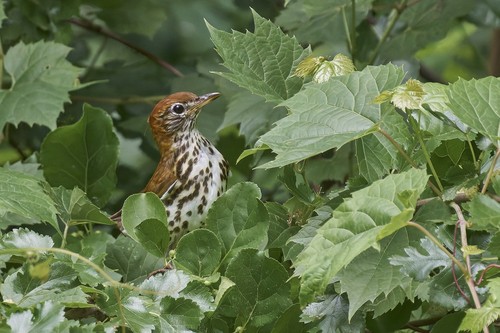
Wood Thrush
19-21 cm (7.5-8.3 in) long, about 33 cm (13 in) wingspan