
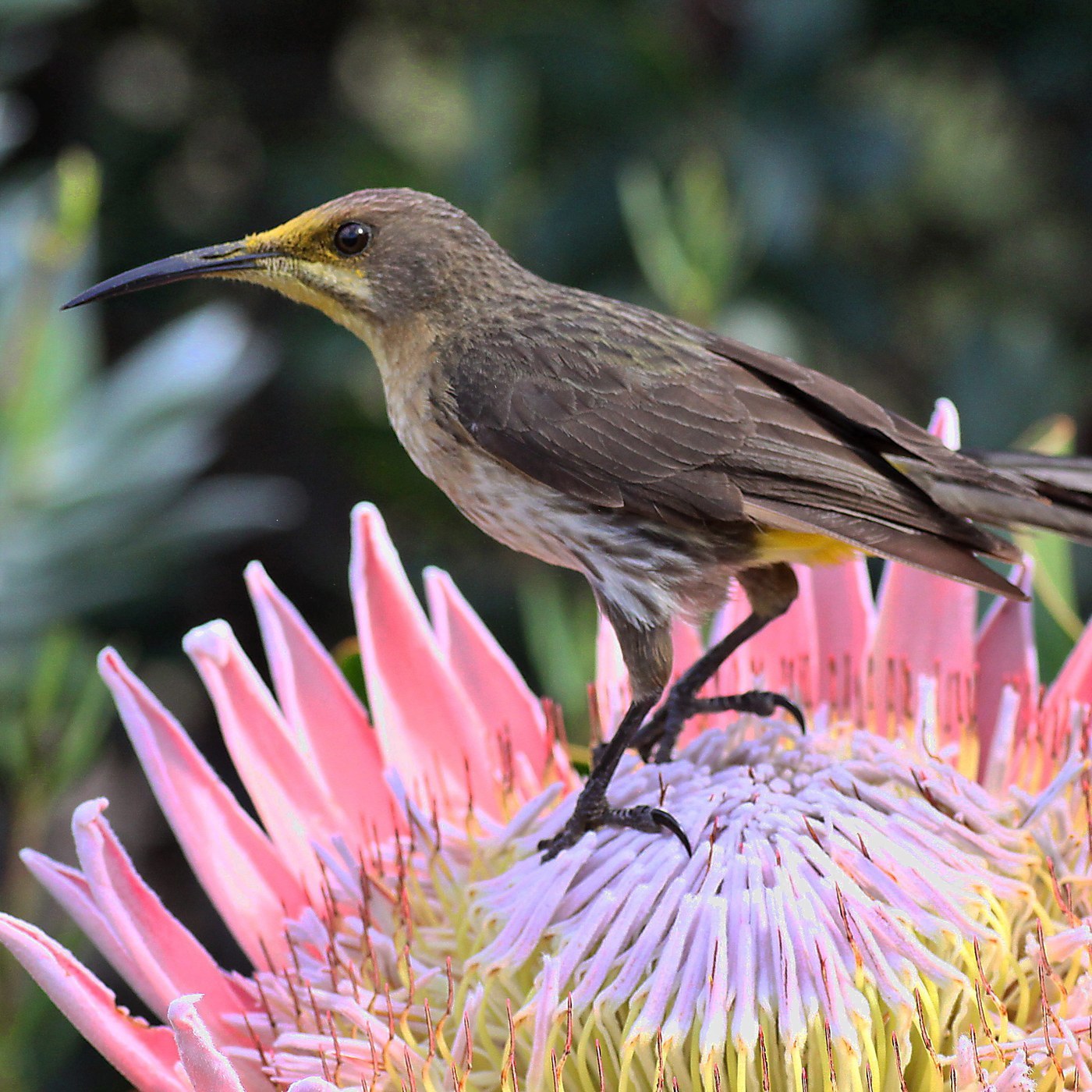
Cape Sugarbird
Promerops cafer
A fynbos-endemic South African songbird with an extremely long tail and curved bill, closely tied to Protea flowers for nectar.
- Size
- Males up to about 44 cm including a very long tail; females around 25 cm
- Habitat
- Fynbos shrubland in South Africa's Cape region, especially areas with Protea
- Type
- songbird
Spotted a bird like this?
Identify any bird from a photo, free.
Overview
The Cape Sugarbird is a distinctive songbird found only in the fynbos shrublands of South Africa's Cape region, best known for the male's extraordinarily long, wispy tail. It belongs to a tiny family, the sugarbirds (Promeropidae), found only in southern Africa.
Adults are streaky brown above with a warm cinnamon vent, a slightly curved bill adapted for nectar feeding, and a long, thin, downcurved bill. Males in breeding condition grow a tail far longer than the body, used in dramatic display flights, while females have a much shorter tail and are otherwise similarly patterned.
Cape Sugarbirds are intimately linked to the flowering cycle of Protea shrubs, the dominant and iconic plants of the fynbos, making them a symbol of this unique South African vegetation type.
How to identify it
Key field marks
- Long, thin, downcurved bill
- Streaky brown upperparts and warm cinnamon undertail
- Male's tail extremely long, often more than double the body length
- Frequently perched atop Protea flowerheads
- Chattering, scratchy song given from an exposed perch
Similar species
- Gurney's Sugarbird: the only other sugarbird species, found further north and east in South Africa and neighboring countries; Gurney's has a shorter tail and more rufous breast, with limited range overlap.
- Malachite Sunbird and other sunbirds: smaller, with iridescent plumage and a shorter, more sharply curved bill, and lacking the sugarbird's long streaky tail.
- Cape Rock Thrush: superficially similar in habitat but has a shorter tail, different bill shape, and blue-grey and orange plumage.
Habitat & range
Habitat
Cape Sugarbirds are a fynbos specialist, occurring almost exclusively in this shrubland habitat dominated by Protea, Erica, and restio plants, rarely straying far from stands of flowering Protea.
Range
Endemic to the Cape Floristic Region of South Africa, from the Cape Peninsula east along the coastal and mountain fynbos belt, with a smaller isolated population further north.
Migration
Largely sedentary, but individuals may move locally and seasonally to track the flowering of different Protea populations across the landscape.
Behavior & voice
Behavior
Cape Sugarbirds are active and conspicuous, perching prominently atop Protea flowerheads and making short, fluttering flights between shrubs. Males perform spectacular display flights, flicking their long tail while calling to attract mates and defend territory.
Voice
The song is a harsh, scratchy, chattering series of notes, often delivered from a high perch; calls include sharp chirps used in territorial disputes.
Feeding
They feed primarily on nectar from Protea and other fynbos flowers using their curved bill and brush-tipped tongue, and also catch insects and spiders, especially when feeding chicks.
Nesting and breeding
Breeding is timed to coincide with peak Protea flowering. The female builds a cup nest low in a shrub, often within a Protea bush, and does most of the incubation and chick care while the male defends the territory.
Frequently asked questions
What is special about the Cape Sugarbird's tail?
Breeding males grow an extremely long tail, often more than double their body length, used in display flights.
Where do Cape Sugarbirds live?
They are endemic to the fynbos shrublands of South Africa's Cape Floristic Region, especially areas with Protea flowers.
What do Cape Sugarbirds eat?
Mainly nectar from Protea and other fynbos flowers, supplemented with insects and spiders.
How is a Cape Sugarbird different from a sunbird?
It is larger with a longer, less iridescent, streaky brown plumage and a much longer tail, especially in males.
Are Cape Sugarbirds only found near Protea plants?
They are strongly associated with Protea for feeding and nesting, though they also use other fynbos flowers.
Cape Sugarbird guides
In-depth guides for identifying, finding, and understanding Cape Sugarbird.
Other birds you may enjoy
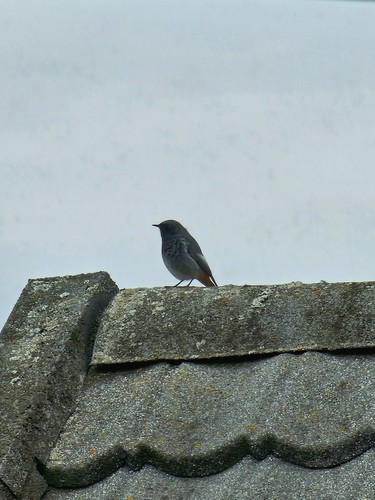
Black Redstart
13-14.5 cm (5.1-5.7 in) long, 23-26 cm wingspan
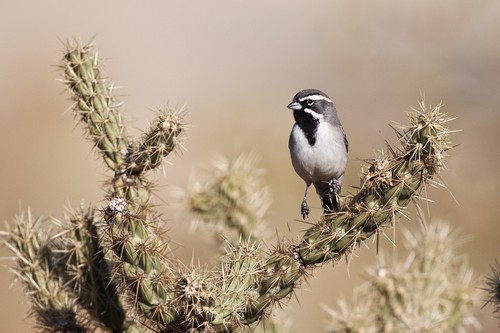
Black-throated Sparrow
12-14 cm (4.7-5.5 in) long, about 19-20 cm (7.5-8 in) wingspan
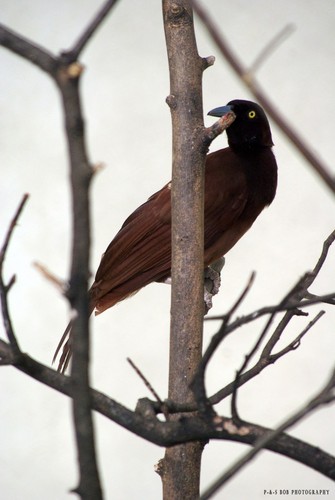
Greater Bird-of-paradise
Body about 43 cm; males with additional flank plumes up to 50 cm and long tail wires
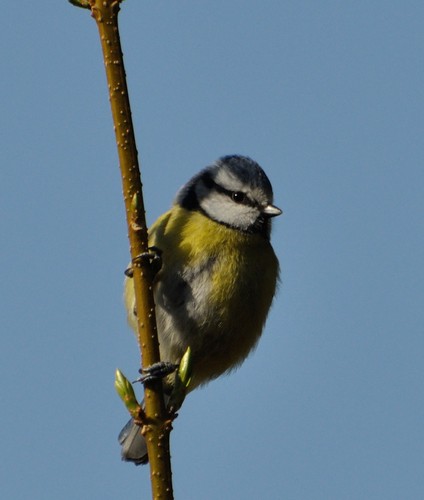
Blue Tit
11-12 cm (4.3-4.7 in) long, 17-20 cm wingspan
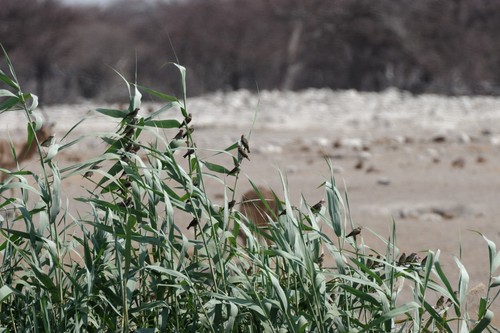
Red-billed Quelea
11.5–13 cm long, wingspan about 20–22 cm
White-plumed Antbird
13-14 cm (5-5.5 in) long
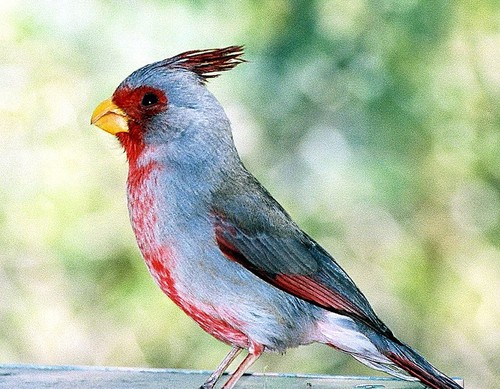
Pyrrhuloxia
19-22 cm (7.5-8.7 in) long, 30 cm wingspan
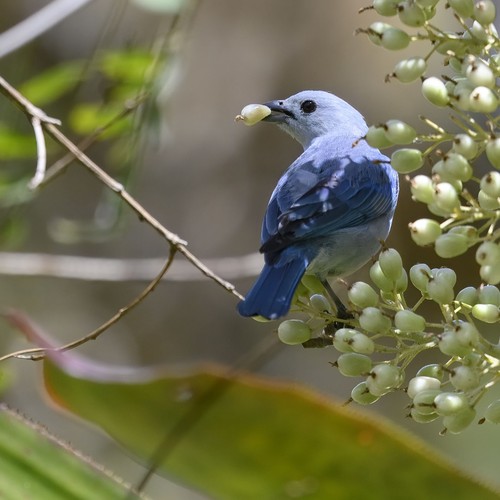
Blue-gray Tanager
16-18 cm (6-7 in) long
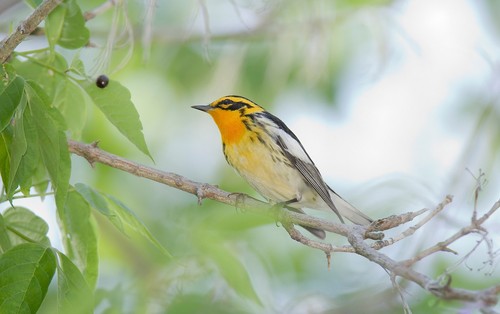
Blackburnian Warbler
11-13 cm (4.3-5.1 in) long, 20-22 cm wingspan
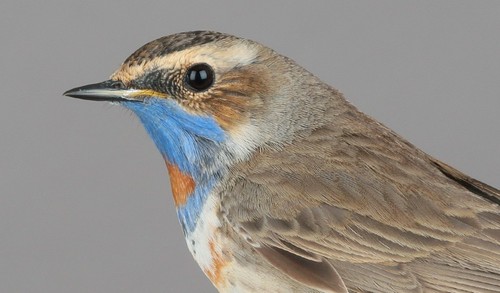
Bluethroat
13-14 cm (5.1-5.5 in) long, 20-22 cm wingspan
Eurasian Nuthatch
12-14.5 cm (4.7-5.7 in) long, 22.5-27 cm wingspan
Wood Thrush
19-21 cm (7.5-8.3 in) long, about 33 cm (13 in) wingspan