
Cape Sugarbird Identification Guide
A fynbos specialist with an extraordinarily long tail and curved bill, famous for its dependence on protea flowers in South Africa.
Read the full Cape Sugarbird encyclopedia entry →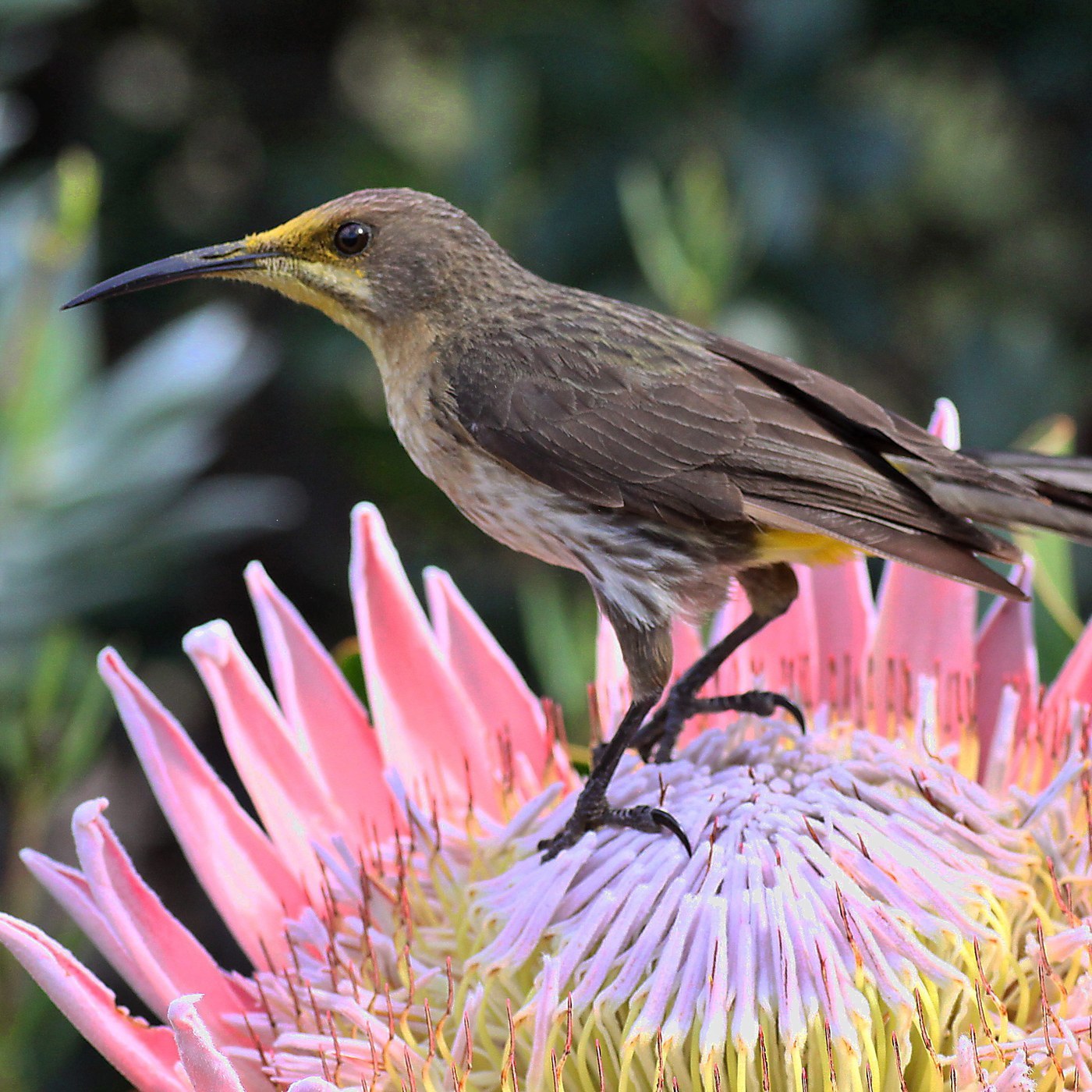
Key Field Marks
- Size & shape: A medium-sized nectar-feeding bird made distinctive by an exceptionally long, graduated tail (especially in males, where it can exceed the body length) and a long, slender, downcurved bill adapted for probing protea flowers.
- Plumage: Dull brown upperparts with streaking, a rufous-cinnamon patch on the lower breast/flanks, and a pale, streaked underside; overall cryptic coloring that blends with fynbos vegetation.
- Male vs female: Males have a dramatically longer tail than females, most obvious during breeding season display flights; females and non-breeding males have shorter, though still elongated, tails.
- Behavior: Perches conspicuously atop protea bushes to feed on nectar and sing; males perform bouncing, tail-swishing display flights above the fynbos to advertise territory; closely tied to flowering protea shrubs for both feeding and nesting.
Similar Species
- Gurney's Sugarbird: The only other sugarbird species, found further north and east (escarpment grassland/fynbos-like habitat in eastern South Africa/Eswatini/Mozambique) with limited range overlap; Gurney's has a more extensively rufous crown and less contrasting underparts. Range is the main separator.
- No sunbird or other nectar-feeder shares the sugarbird's combination of extremely long tail and streaky brown plumage, making adult males unmistakable within range.
Where & When to See
Endemic to the fynbos biome of South Africa's Cape Floristic Region, tightly associated with protea shrubs. Found year-round in fynbos reserves and protea-rich gardens, with numbers and activity peaking when proteas are in flower (varies by species but often autumn through spring). A signature bird of Cape mountain and coastal fynbos habitats such as Kirstenbosch and Table Mountain.
Voice
Song is a jumbled, scratchy, sputtering series of chirps and buzzy notes, often given from a high perch or during flight displays. Calls include harsh chattering and sharp contact notes typical of sugarbirds.
Frequently asked questions
What is the most distinctive feature of the Cape Sugarbird?
Its extremely long tail, especially in breeding males, combined with a long downcurved bill used to feed on protea flower nectar.
Where is the Cape Sugarbird found?
It is endemic to the fynbos vegetation of South Africa's Cape Floristic Region and is closely tied to protea shrubs.
How do you tell male and female Cape Sugarbirds apart?
Males have a much longer, more dramatic tail than females, especially noticeable during breeding-season display flights.
How is Cape Sugarbird different from Gurney's Sugarbird?
The two rarely overlap in range; Gurney's Sugarbird occurs further north and east and has a more extensively rufous crown with less underpart contrast.