
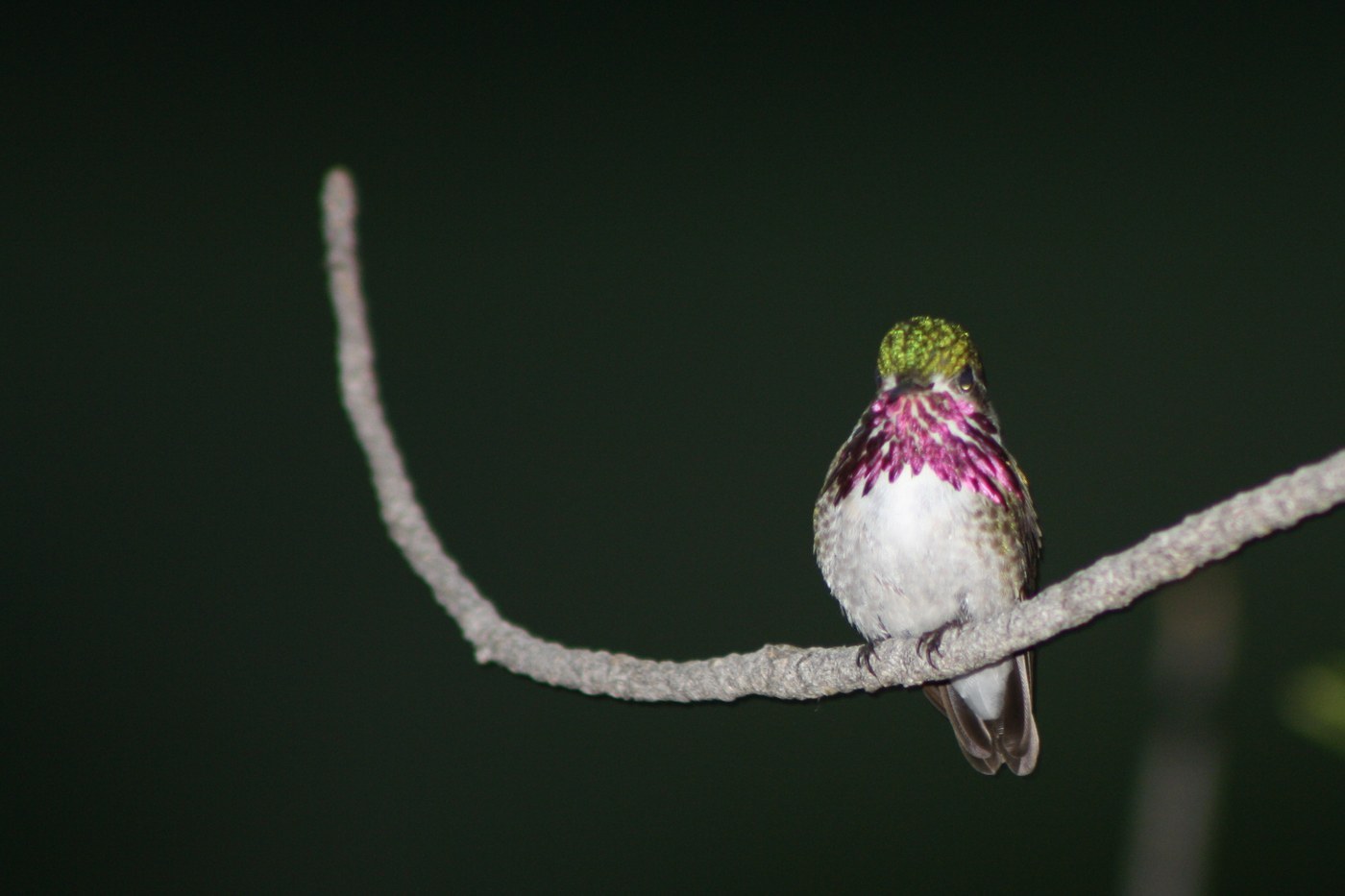
Calliope Hummingbird
Selasphorus calliope
The smallest breeding bird in the United States and Canada, best known for the male's streaked magenta throat rays.
- Size
- 7-8 cm (3 in) long, weighing about 2.5-3 g
- Habitat
- mountain meadows, open coniferous forest, and shrubby slopes
- Type
- hummingbird
Spotted a bird like this?
Identify any bird from a photo, free.
Overview
The Calliope Hummingbird holds the title of smallest bird species that breeds in the United States and Canada, weighing barely more than a coin. Adult males have a green back and crown, whitish underparts, and a striking gorget made of magenta-pink streaks radiating over a white throat, rather than a solid patch of color. Females and immatures lack the colorful throat, instead showing a green back, a peachy or buffy wash on the flanks, and fine dark spotting on the throat.
Despite its diminutive size, the Calliope Hummingbird makes an impressive long-distance migration each year between the mountains of the American West and central Mexico.
How to identify it
Key Field Marks
- Very small size, noticeably smaller and shorter-tailed than other western hummingbirds
- Male: distinctive streaked magenta rays on a whitish throat, rather than a solid gorget
- Female: green back, peachy flanks, spotted throat
- Short tail that does not extend past the wingtips at rest, giving a stubby-bodied look
Similar Species
- Broad-tailed Hummingbird males have a solid rose-magenta gorget, not streaked, and are noticeably larger.
- Rufous and Allen's Hummingbird males show orange, not magenta, throats.
- Female Calliopes are best told from other small female hummingbirds by their tiny size and short tail.
Habitat & range
Habitat
Calliope Hummingbirds breed in mountain meadows, willow and alder thickets along streams, and open montane forest, typically at moderate to high elevations.
Range
They breed in the mountains of the western United States and southwestern Canada, from British Columbia and Alberta south through the Rockies, Cascades, and Sierra Nevada.
Migration
This species undertakes a long migration relative to its tiny size, wintering primarily in the pine-oak highlands of central Mexico, often following a different route in spring than in fall to track blooming flowers.
Behavior & voice
Behavior
Males defend flowering territories and perform steep, U-shaped display dives, punctuated by a buzzy popping sound produced by the tail feathers at the bottom of the dive.
Voice
Calls include soft, high chip notes; the species does not have a musical song.
Feeding
They feed on nectar from a variety of wildflowers, including paintbrush and penstemon, and take small insects in flight to meet their high metabolic demands.
Nesting
Females build a tiny, well-camouflaged cup nest, often on a downward-sloping conifer branch, sometimes reusing the same site across multiple years.
Frequently asked questions
Is the Calliope Hummingbird the smallest bird in North America?
It is the smallest bird species that breeds in the United States and Canada, though a few other hummingbirds found only in Mexico and further south are slightly smaller.
How is the male Calliope Hummingbird's throat different from other hummingbirds?
Instead of a solid patch of iridescent color, its gorget is made of individual magenta streaks or rays over a white throat, giving it a distinctive streaked look.
How far do Calliope Hummingbirds migrate?
They travel thousands of miles each year between breeding grounds in the mountains of the western U.S. and Canada and wintering areas in central Mexico, an impressive distance for such a tiny bird.
Where do Calliope Hummingbirds build their nests?
Females typically build small camouflaged nests on downward-angled conifer branches in mountain meadows and forest edges.
Calliope Hummingbird guides
In-depth guides for identifying, finding, and understanding Calliope Hummingbird.
Other birds you may enjoy
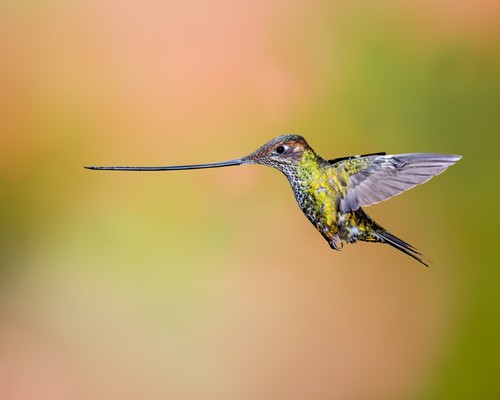
Sword-billed Hummingbird
Body about 13-15 cm (5-6 in) including a bill up to 10 cm long, the longest bill relative to body size of any bird
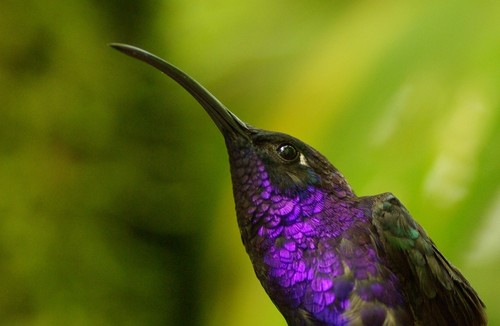
Violet Sabrewing
14-15 cm (5.5-6 in) long
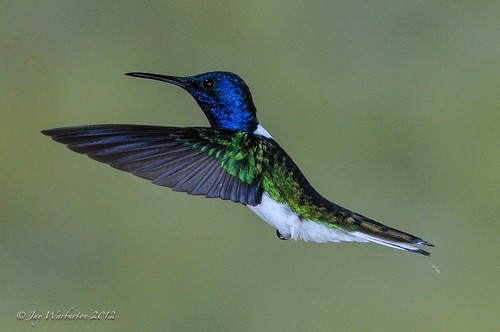
White-necked Jacobin
11-12 cm (4.3-4.7 in) long
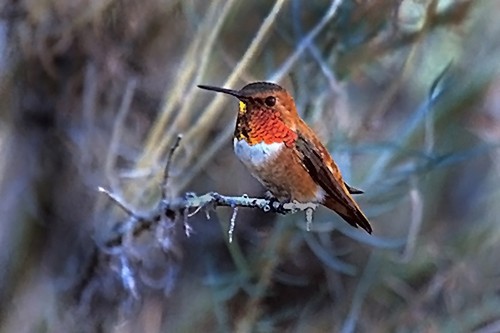
Rufous Hummingbird
8-9 cm (3-3.5 in) long, 11 cm wingspan
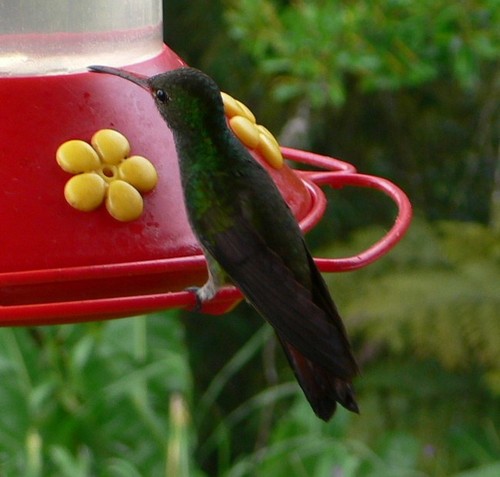
Rufous-tailed Hummingbird
10-11.5 cm (4-4.5 in) long
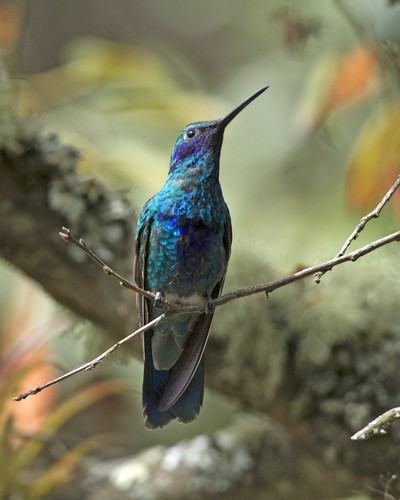
Sparkling Violetear
13-14 cm (5-5.5 in) long including bill
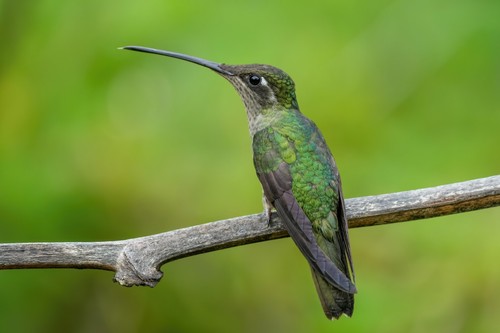
Rivoli's Hummingbird
11-14 cm (4.5-5.5 in) long, 17-18 cm wingspan
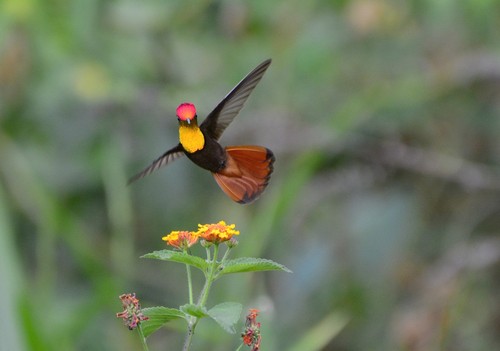
Ruby-topaz Hummingbird
7.5-9 cm (3-3.5 in) long
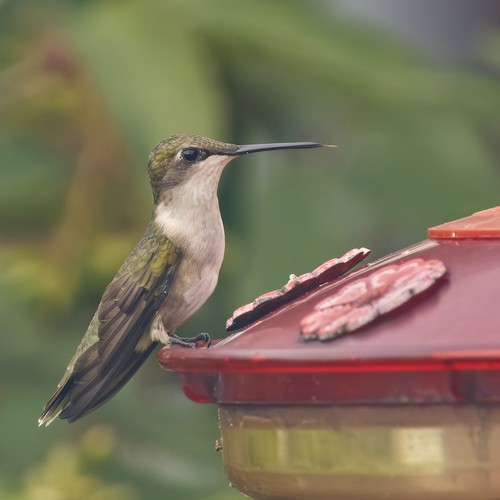
Ruby-throated Hummingbird
7-9 cm (3-3.5 in) long, 8-11 cm wingspan
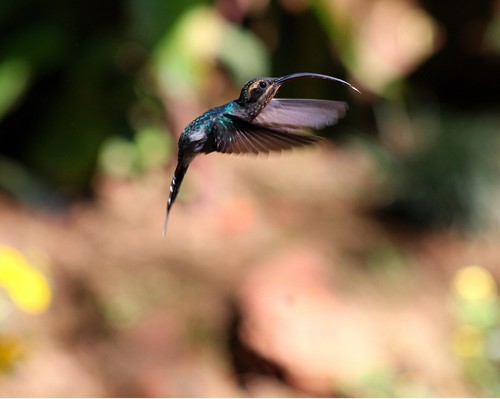
Green Hermit
15-16 cm (6-6.3 in) long including elongated central tail feathers
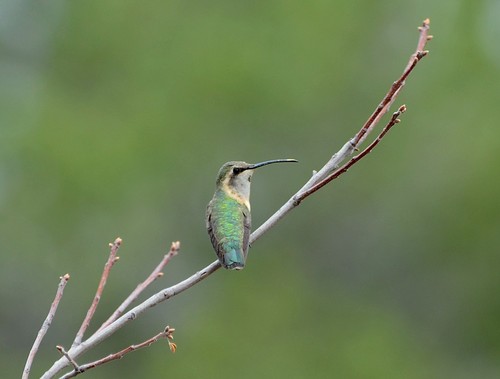
Lucifer Hummingbird
8.5-9.5 cm (3.5 in) long, 11 cm wingspan
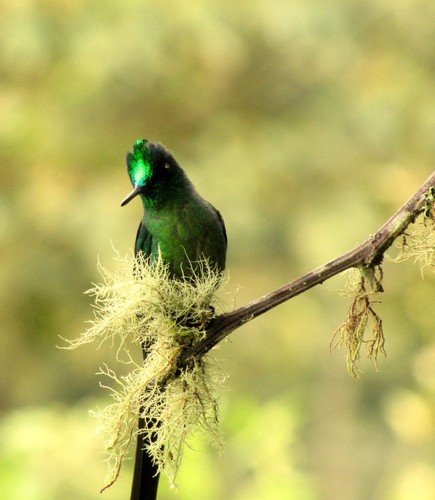
Long-tailed Sylph
males 18-19 cm (7-7.5 in) including tail; females 9-10 cm (3.5-4 in)