
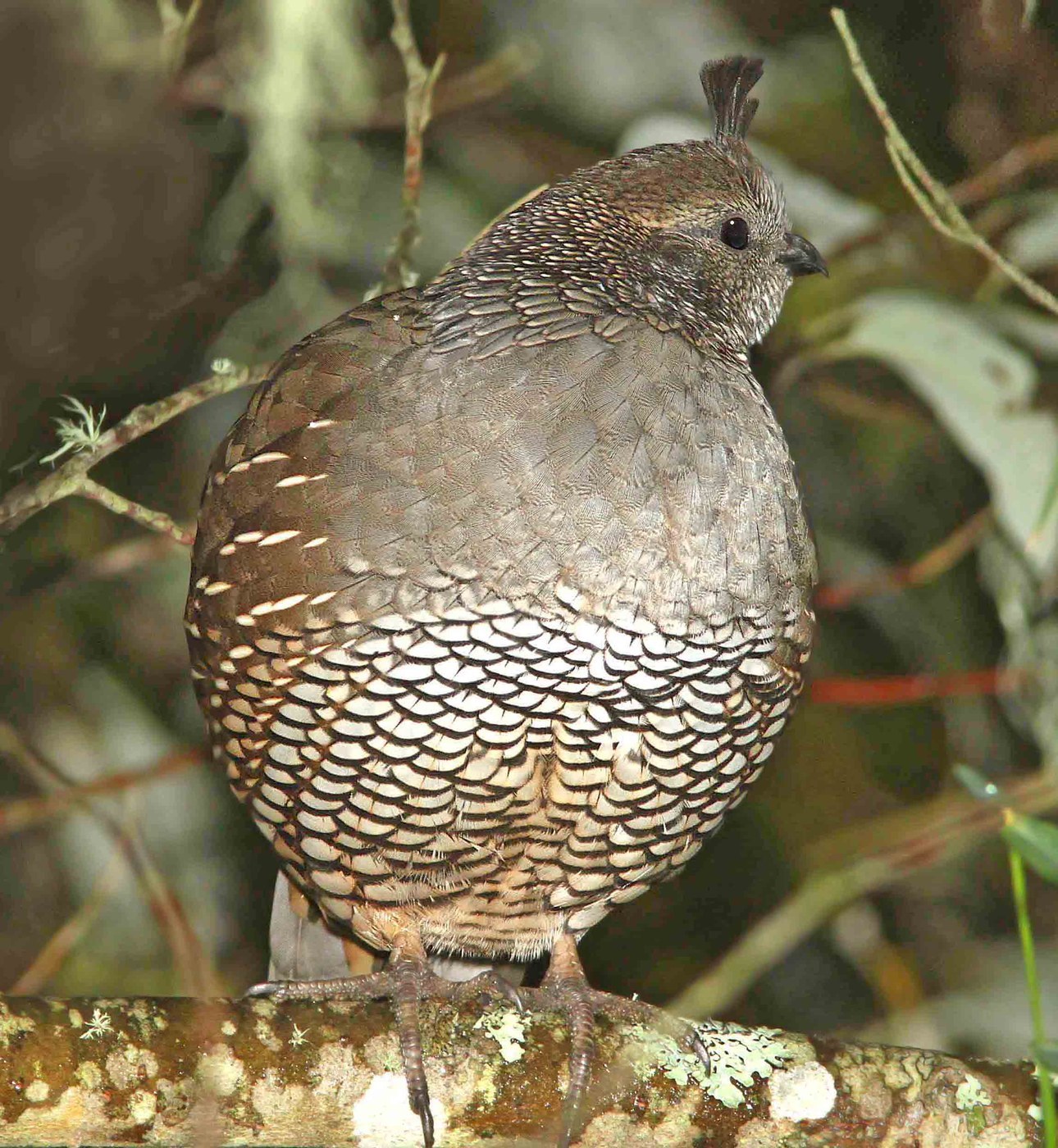
California Quail
Callipepla californica
California's state bird, a plump, sociable quail with a distinctive forward-drooping black head plume.
- Size
- 24-28 cm (9.5-11 in) long, 33-38 cm wingspan
- Habitat
- chaparral, scrub, oak woodland edges, and urban parks
- Type
- gamebird
Spotted a bird like this?
Identify any bird from a photo, free.
Overview
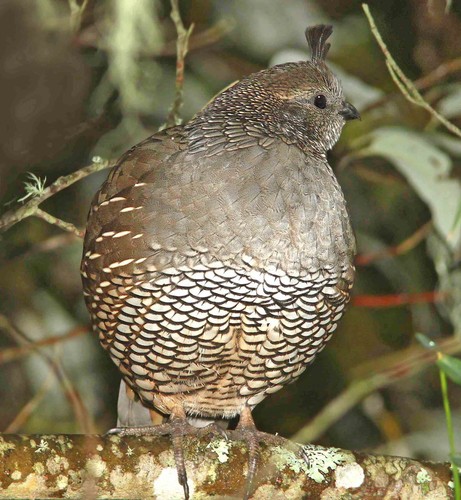
The California Quail is a familiar and beloved bird of the West Coast, easily recognized by the single, forward-curving black plume nodding from the top of its head. Males have a bold black face outlined in white, a bluish-gray chest, and a warm brown back, with the belly finely scaled in black and white. Females are more subdued in soft grayish-brown tones, with a smaller plume, but share the same overall shape and scaled belly pattern. Highly social, California Quail are usually seen in tight groups, running rather than flying when disturbed.
How to identify it
Key Field Marks
- Distinctive forward-drooping black plume (topknot) atop the head
- Male: bold black face bordered in white, bluish-gray chest, scaled black-and-white belly
- Female: plainer grayish-brown overall with a shorter plume
- Plump, round body and short tail
Similar Species
- Gambel's Quail looks similar but has a plain buffy belly without scaling, and males have chestnut side patches with white streaks.
- Scaled Quail has a white, bushy crest rather than a single curved plume, and a scaled pattern that covers the whole body.
Habitat & range
Habitat
California Quail favor chaparral, coastal scrub, oak woodland edges, agricultural areas, and increasingly, parks and gardens with dense shrubby cover.
Range
They are native to California and adjacent parts of Oregon, Nevada, and Baja California, and have been successfully introduced to other parts of the western United States, Hawaii, and beyond.
Migration
California Quail are nonmigratory, remaining resident year-round, though coveys may move short distances seasonally in search of food and water.
Behavior & voice
Behavior
Highly social, California Quail typically forage and roost in coveys of a dozen or more birds, running quickly through underbrush and preferring to escape danger on foot before flushing explosively into short flight as a last resort.
Voice
The well-known assembly call, often rendered as "chi-CA-go," is used to gather scattered covey members; a variety of other clucks and contact calls are also given.
Feeding
They forage on the ground for seeds, leaves, berries, and insects, often scratching through leaf litter and typically staying close to dense cover for quick escape.
Nesting
A shallow, grass-lined scrape is built on the ground, usually hidden beneath a shrub or other dense vegetation, and pairs may raise a single large brood each season.
Frequently asked questions
Is the California Quail the state bird of California?
Yes, the California Quail has been the official state bird of California since 1931.
What is the plume on a California Quail's head for?
The forward-curving black head plume, made of overlapping feathers, is used in visual displays and helps distinguish the species at a glance, though its exact function in signaling is still debated by researchers.
How is a California Quail different from a Gambel's Quail?
California Quail have a scaled black-and-white belly pattern, while Gambel's Quail have a plain buffy belly; their ranges also differ, with California Quail found along the West Coast and Gambel's in the desert Southwest.
Do California Quail fly much?
They prefer to run from danger and typically only fly short distances in an explosive burst when startled at close range, generally staying near dense protective cover.
California Quail guides
In-depth guides for identifying, finding, and understanding California Quail.
Other birds you may enjoy
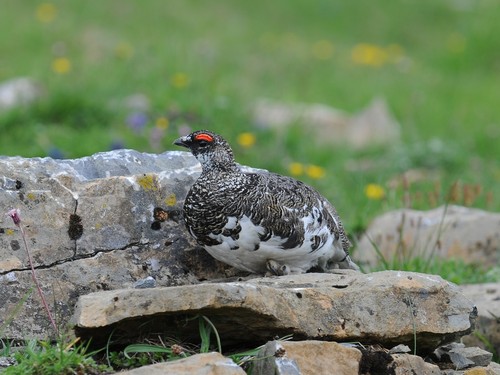
Rock Ptarmigan
34-36 cm (13-14 in) long
Congo Peafowl
Males about 64-70 cm long; females slightly smaller; no elaborate train
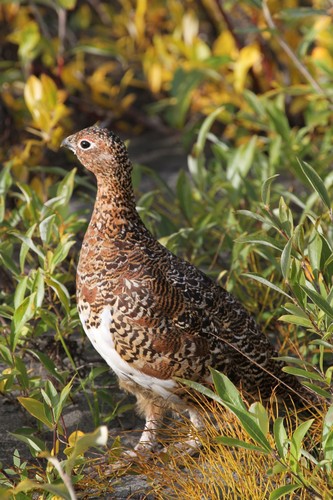
Willow Ptarmigan
37-42 cm (15-16.5 in) long
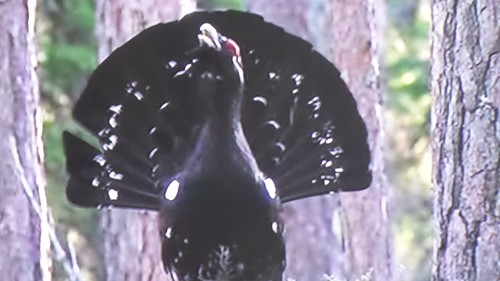
Western Capercaillie
male 74-90 cm (29-35 in), female 54-64 cm; male wingspan up to 125-130 cm
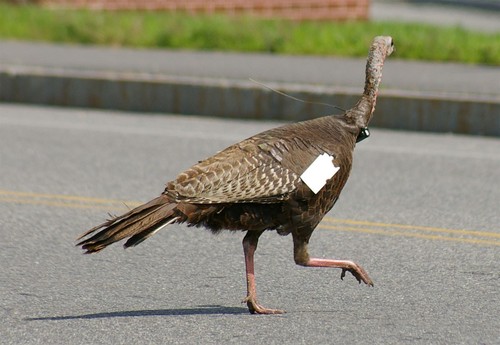
Wild Turkey
males 100-125 cm (39-49 in) long; females smaller, around 76-95 cm (30-37 in)
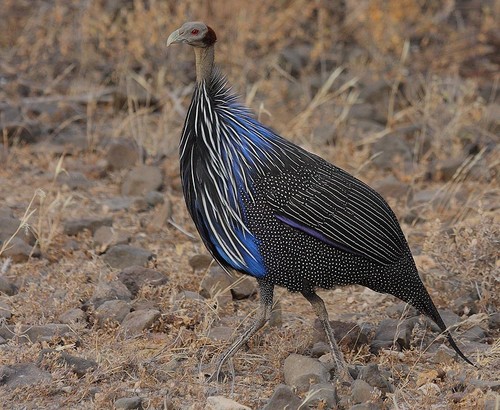
Vulturine Guineafowl
Length 61-71 cm, the largest guineafowl species, with a notably long neck and tail
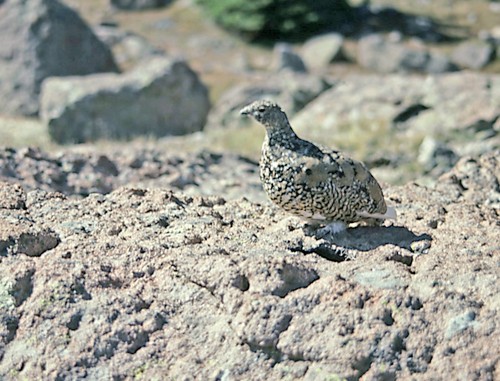
White-tailed Ptarmigan
30-33 cm (12-13 in) long; the smallest ptarmigan species
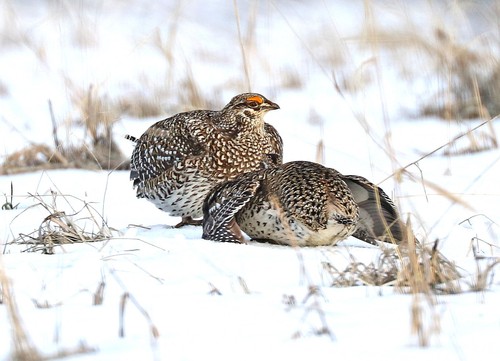
Sharp-tailed Grouse
38-48 cm (15-19 in) long
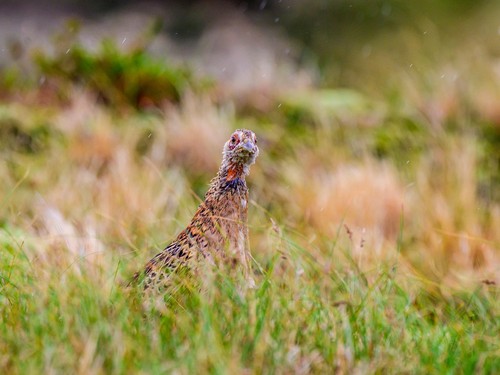
Ring-necked Pheasant
males 76-90 cm (30-35 in) long including a long tail; females smaller, 55-65 cm (22-26 in)
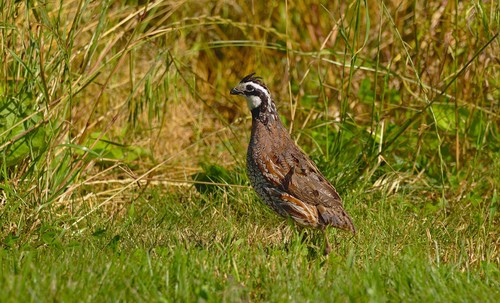
Northern Bobwhite
24-28 cm (9.5-11 in) long, 33-38 cm wingspan
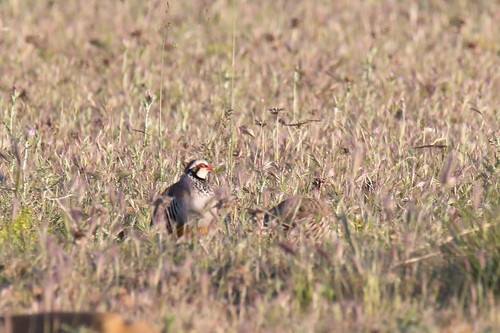
Red-legged Partridge
32-34 cm (13 in) long, 47-50 cm wingspan
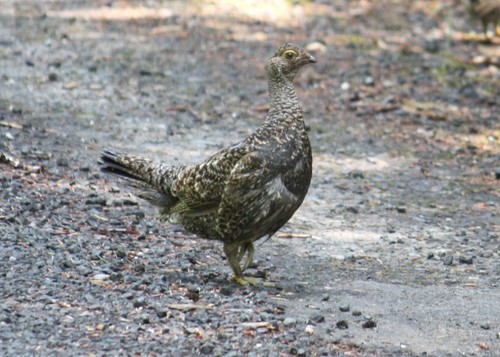
Sooty Grouse
43-48 cm (17-19 in) long; males larger than females