
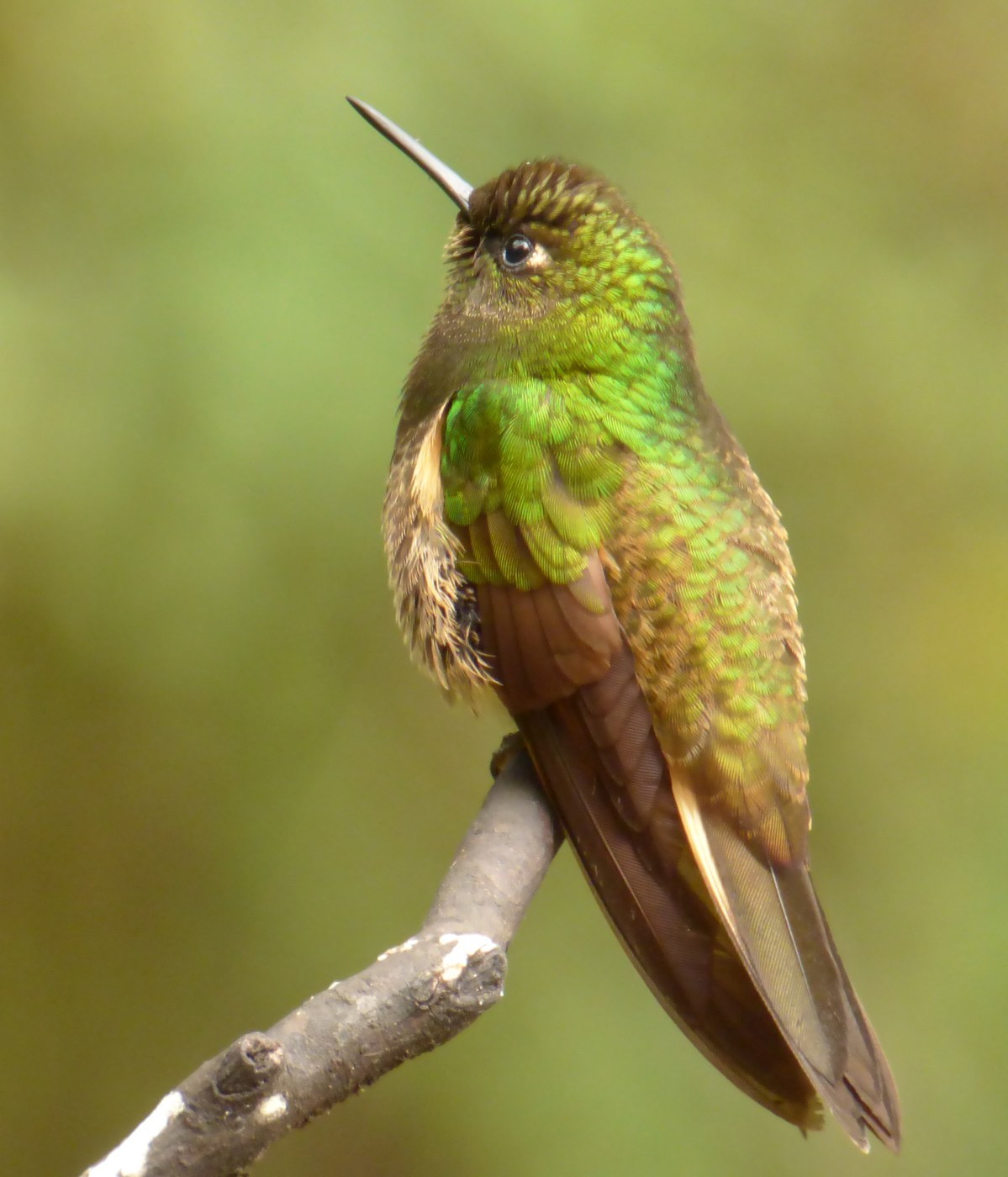
Buff-tailed Coronet
Boissonneaua flavescens
An Andean hummingbird with green body plumage and a bold buffy-orange patch flashing in the wings and tail during flight.
- Size
- 11-12 cm (4.3-4.7 in) long
- Habitat
- montane forest edge and cloud forest
- Type
- hummingbird
Spotted a bird like this?
Identify any bird from a photo, free.
Overview
The Buff-tailed Coronet is a medium-sized Andean hummingbird, predominantly green above and below, with a striking buffy-orange to cinnamon patch across the wing coverts and tail that becomes especially conspicuous when the bird spreads its wings or tail in flight. At rest, the buffy tones are more subdued, but a flash of warm color is often the first clue to its identity as it moves between flowers.
A common and confiding species in Andean cloud forest, it often visits flowering shrubs and feeders at forest lodges, sometimes hovering with the tail flared to reveal the bold buff patches.
How to identify it
Key field marks
- Green body plumage overall
- Bold buffy-orange to cinnamon patch on the wing coverts and outer tail, conspicuous in flight
- Straight, medium-length black bill
- Buff patches most visible when the wings or tail are spread
Similar species
- Chestnut-breasted Coronet has a chestnut breast band and different wing pattern.
- Velvet-purple Coronet shows extensive dark purple plumage, quite different from the largely green Buff-tailed Coronet.
Habitat & range
Habitat
Inhabits montane forest edge, cloud forest, and adjacent secondary growth.
Range
Found along the Andes of Colombia, Ecuador, and northern Peru, with an isolated population in Venezuela.
Migration
Mostly resident, with local altitudinal movement in response to flowering.
Behavior & voice
Behavior
Active and often confiding, readily visiting flowering shrubs and hummingbird feeders at forest edges and lodges; can be territorial at good nectar sources.
Voice
A series of high, thin chipping and buzzy notes typical of many Andean hummingbirds.
Feeding
Feeds on nectar from a variety of flowering plants and shrubs, and catches small insects in flight.
Nesting
Builds a small cup nest of plant fibers and moss; the female incubates the typical clutch of 2 white eggs alone.
Frequently asked questions
How do you identify a Buff-tailed Coronet?
Look for a green-bodied hummingbird with a bold buffy-orange patch on the wings and tail, most visible when it spreads its wings or tail in flight.
What does a Buff-tailed Coronet eat?
Mainly nectar from flowering shrubs and trees, supplemented with small insects caught in flight.
Where does the Buff-tailed Coronet live?
In montane forest edge and cloud forest along the Andes of Colombia, Ecuador, and northern Peru.
Is the Buff-tailed Coronet easy to see?
Yes, it is a fairly common and confiding species that regularly visits flowering shrubs and hummingbird feeders at Andean forest lodges.
Buff-tailed Coronet guides
In-depth guides for identifying, finding, and understanding Buff-tailed Coronet.
Other birds you may enjoy
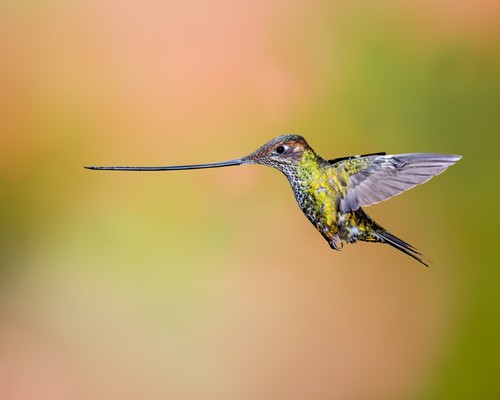
Sword-billed Hummingbird
Body about 13-15 cm (5-6 in) including a bill up to 10 cm long, the longest bill relative to body size of any bird
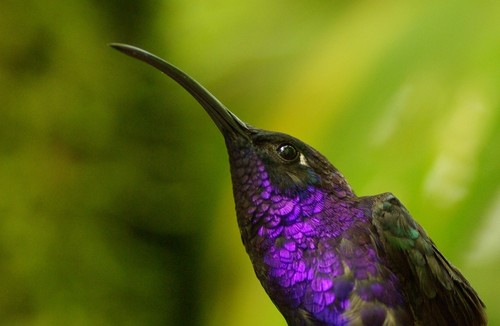
Violet Sabrewing
14-15 cm (5.5-6 in) long
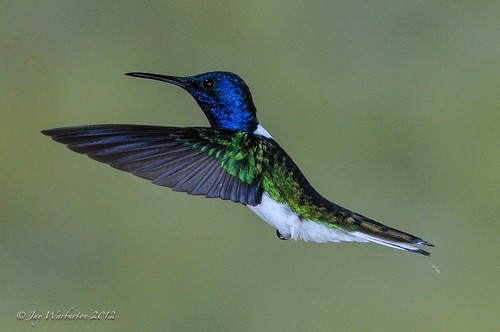
White-necked Jacobin
11-12 cm (4.3-4.7 in) long
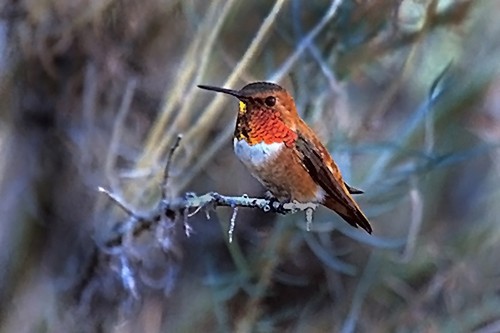
Rufous Hummingbird
8-9 cm (3-3.5 in) long, 11 cm wingspan
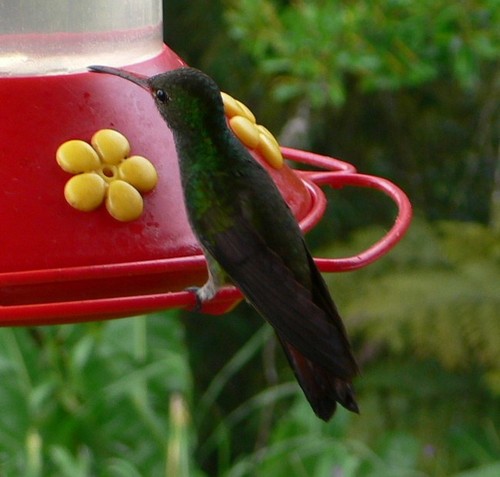
Rufous-tailed Hummingbird
10-11.5 cm (4-4.5 in) long
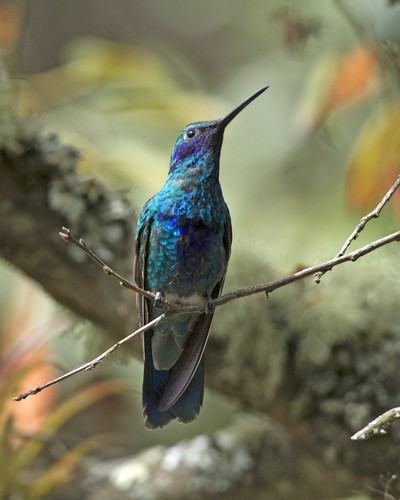
Sparkling Violetear
13-14 cm (5-5.5 in) long including bill
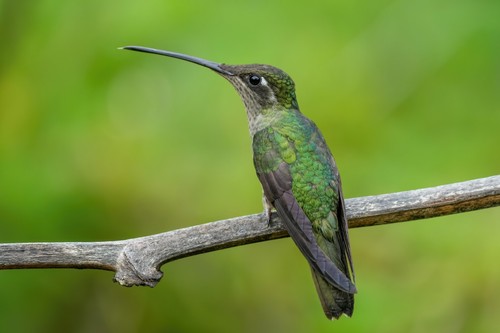
Rivoli's Hummingbird
11-14 cm (4.5-5.5 in) long, 17-18 cm wingspan
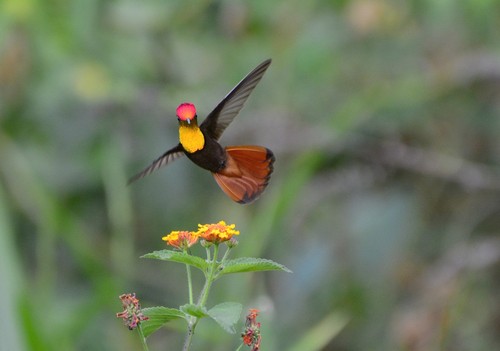
Ruby-topaz Hummingbird
7.5-9 cm (3-3.5 in) long
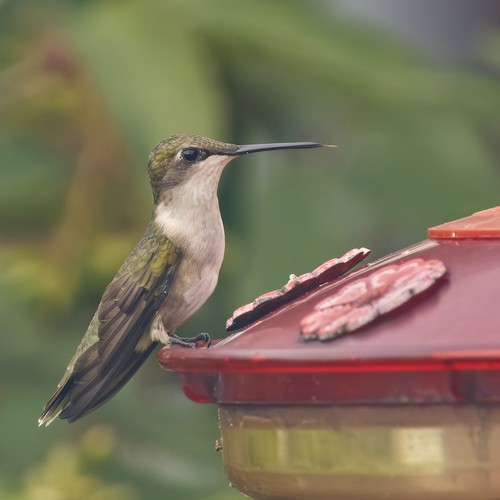
Ruby-throated Hummingbird
7-9 cm (3-3.5 in) long, 8-11 cm wingspan
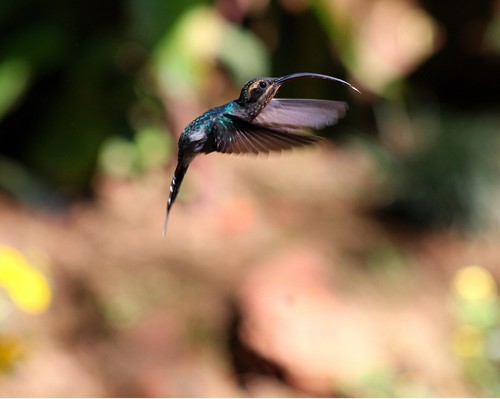
Green Hermit
15-16 cm (6-6.3 in) long including elongated central tail feathers
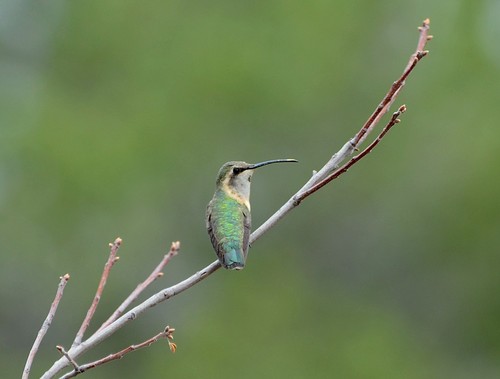
Lucifer Hummingbird
8.5-9.5 cm (3.5 in) long, 11 cm wingspan
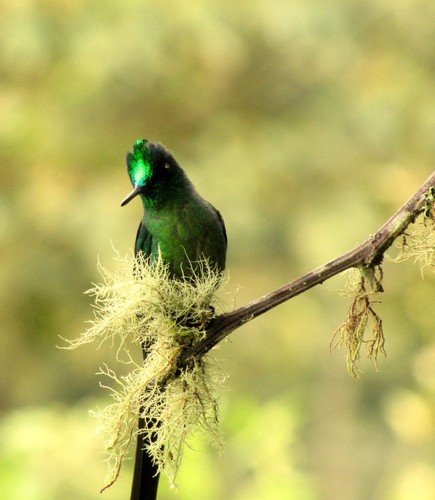
Long-tailed Sylph
males 18-19 cm (7-7.5 in) including tail; females 9-10 cm (3.5-4 in)