
Buff-tailed Coronet Identification Guide
An Andean cloud-forest hummingbird with a bronzy-green body, a buffy tail base, and bright cinnamon-buff underwing patches that flash in flight.
Read the full Buff-tailed Coronet encyclopedia entry →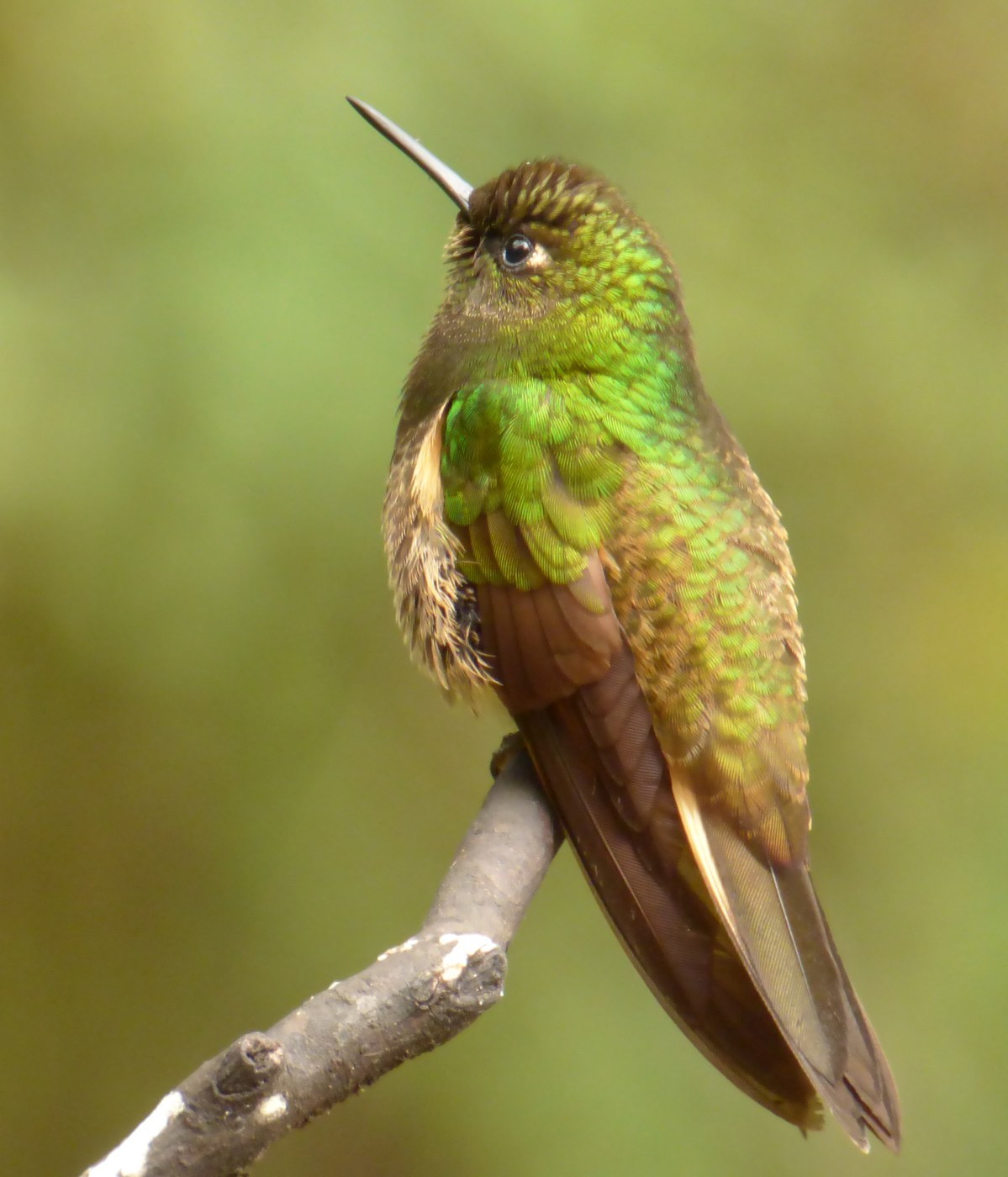
Key Field Marks
- Medium-sized hummingbird, roughly 11–12 cm (4.5 in), with a fairly short, straight black bill.
- Bronze-green to coppery-green plumage overall, appearing dark in poor light but glittering green-bronze in good light.
- Tail is mostly buffy-cinnamon at the base with darker (blackish or bronze) tips, giving a two-toned look.
- Bold buffy-white or cinnamon patches at the base of the underwing (the "wing flash"), very conspicuous in flight or when the bird spreads its wings while feeding or displaying.
- Sexes are similar, though females may show slightly duller overall color.
Separating It From Similar Species
- Other coronets (Velvet-purple Coronet, Chestnut-breasted Coronet): Velvet-purple Coronet is much darker with deep purple-blue tones and lacks the buffy tail; Chestnut-breasted Coronet shows a solid chestnut breast patch, unlike the plainer bronze-green underparts of Buff-tailed Coronet.
- Fawn-breasted Brilliant and similar Andean hummingbirds: lack the distinctive pale underwing flash and buffy tail base combination.
- The bold cinnamon-buff underwing patch, visible especially when the bird hovers or flares its wings at a flower, is one of the fastest ways to confirm this species in mixed hummingbird flocks at feeders.
Habitat, Range & Season
- Found along the Andes from Colombia south through Ecuador into northern Peru.
- Inhabits humid montane (cloud) forest edges, secondary growth, and forest clearings, typically between about 1,200 and 2,500 meters elevation.
- Resident year-round within its elevational range; some local altitudinal movement may occur with flowering seasons.
- A regular visitor to hummingbird feeders at Andean lodges, often in good numbers alongside other hummingbird species.
Voice
- Calls include sharp, dry chipping and twittering notes, typically given during chases and interactions at flowers or feeders.
- Not known for an elaborate song; vocalizations are mostly short contact and aggression calls.
Frequently asked questions
What is the best field mark for Buff-tailed Coronet?
Look for bronze-green overall plumage with a buffy-cinnamon tail base and bold pale cinnamon patches at the base of the underwings, best seen when the bird hovers or spreads its wings.
Where does the Buff-tailed Coronet live?
It occurs in Andean cloud forest from Colombia through Ecuador to northern Peru, generally between about 1,200 and 2,500 meters elevation.
How do you tell Buff-tailed Coronet from Velvet-purple Coronet?
Velvet-purple Coronet is much darker overall with rich purple-blue tones and lacks the buffy tail base, while Buff-tailed Coronet is bronze-green with a clearly two-toned buffy-and-dark tail.
Is Buff-tailed Coronet easy to see?
Yes, it regularly visits hummingbird feeders at cloud-forest lodges within its range, making it one of the more reliably observed Andean hummingbirds.