
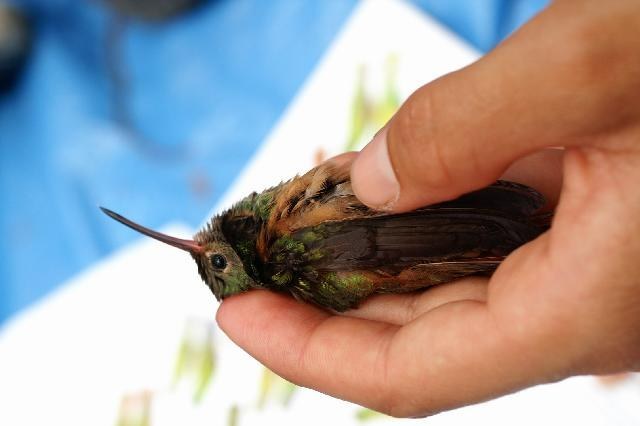
Buff-bellied Hummingbird
Amazilia yucatanensis
A Gulf Coast hummingbird with a warm buffy belly, rufous tail, and a red bill tipped in black.
- Size
- 9.5-11 cm (4-4.5 in) long, 14 cm wingspan
- Habitat
- subtropical scrub, woodland edges, and coastal thickets
- Type
- hummingbird
Spotted a bird like this?
Identify any bird from a photo, free.
Overview
The Buff-bellied Hummingbird is the characteristic hummingbird of the far southern Texas Gulf Coast, where it can be found year-round in brushy habitats. Both sexes look similar, with an iridescent green throat and chest, a warm buff to cinnamon-colored belly, a rufous tail, and a bright red bill with a black tip. This combination of colors, along with its year-round presence in a region where most other hummingbirds are only seasonal visitors, makes it a distinctive and locally cherished species.
How to identify it
Key Field Marks
- Iridescent green throat and upper chest
- Buffy to cinnamon-colored belly
- Rufous (reddish-brown) tail, conspicuous in flight
- Red bill with a black tip
Similar Species
- Rufous and Allen's Hummingbird females also show rufous in the tail but lack the buffy belly and red bill.
- Broad-billed Hummingbird has a red bill but a blue throat in males and gray, not buffy, underparts.
- Its year-round presence on the south Texas coast, combined with the buffy belly, is usually diagnostic within its range.
Habitat & range
Habitat
Buff-bellied Hummingbirds favor subtropical woodland edges, brushy thickets, citrus groves, and residential gardens along the coast.
Range
In the United States they are largely resident along the southern Texas Gulf Coast, with their core range extending through the Yucatan Peninsula and eastern Mexico.
Migration
Unlike most U.S. hummingbirds, this species shows relatively little migratory movement, though some individuals wander northeastward along the Gulf Coast in fall and winter, occasionally reaching other southeastern states.
Behavior & voice
Behavior
Buff-bellied Hummingbirds are territorial around flowering shrubs and feeders and can be seen year-round in their core Texas range, unlike most other hummingbirds that pass through only seasonally.
Voice
Calls include sharp, dry chip and buzzy chattering notes given during territorial disputes.
Feeding
They feed on nectar from native shrubs such as Turk's cap and coral bean, as well as garden flowers and feeders, and take small insects for protein.
Nesting
Females build a small cup nest of plant fibers and spider silk in a shrub or low tree, and the species can nest across an extended season given its mild, subtropical habitat.
Frequently asked questions
Where can you find a Buff-bellied Hummingbird in the United States?
It is found mainly along the southernmost Texas Gulf Coast, particularly the Rio Grande Valley, where it is present year-round.
How do you tell a Buff-bellied Hummingbird from other hummingbirds?
Look for the combination of a green throat, warm buffy belly, rufous tail, and red bill with a black tip.
Does the Buff-bellied Hummingbird migrate?
It is largely nonmigratory in its core Texas range, though some individuals wander along the Gulf Coast and occasionally show up farther east in winter.
What do Buff-bellied Hummingbirds eat?
They feed primarily on nectar from native and garden flowers, along with small insects caught in flight or gleaned from vegetation.
Buff-bellied Hummingbird guides
In-depth guides for identifying, finding, and understanding Buff-bellied Hummingbird.
Other birds you may enjoy
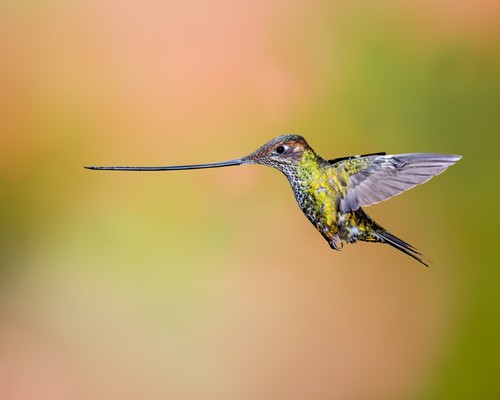
Sword-billed Hummingbird
Body about 13-15 cm (5-6 in) including a bill up to 10 cm long, the longest bill relative to body size of any bird

Violet Sabrewing
14-15 cm (5.5-6 in) long
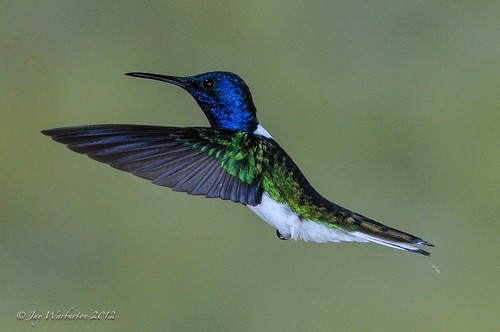
White-necked Jacobin
11-12 cm (4.3-4.7 in) long
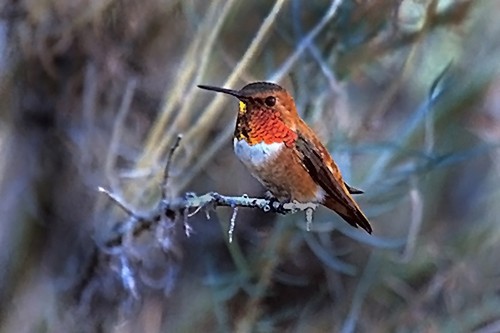
Rufous Hummingbird
8-9 cm (3-3.5 in) long, 11 cm wingspan
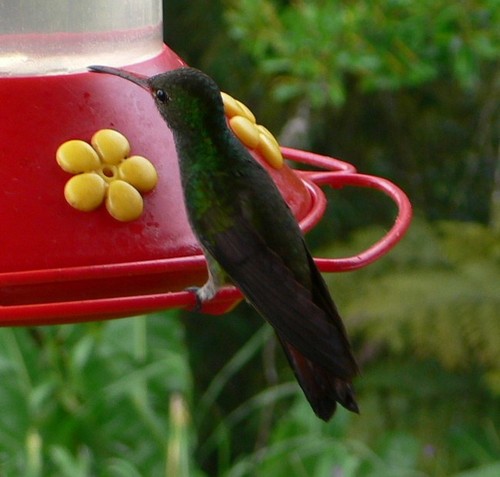
Rufous-tailed Hummingbird
10-11.5 cm (4-4.5 in) long
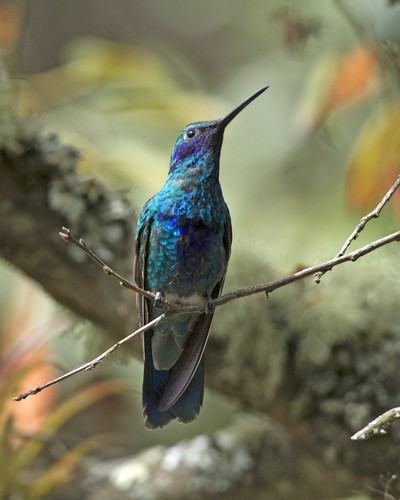
Sparkling Violetear
13-14 cm (5-5.5 in) long including bill
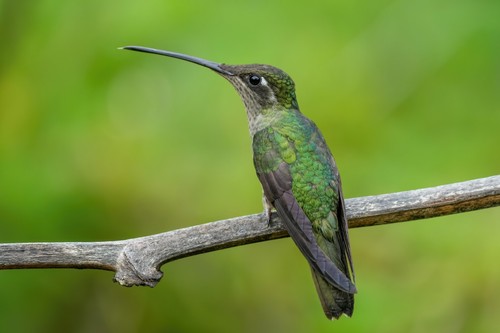
Rivoli's Hummingbird
11-14 cm (4.5-5.5 in) long, 17-18 cm wingspan
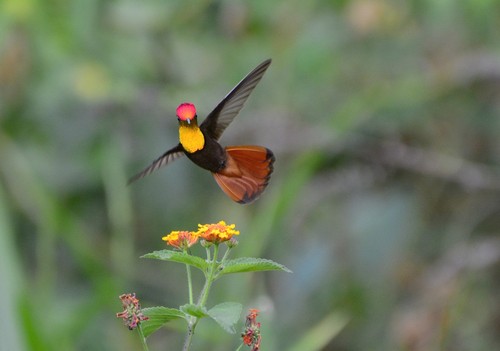
Ruby-topaz Hummingbird
7.5-9 cm (3-3.5 in) long
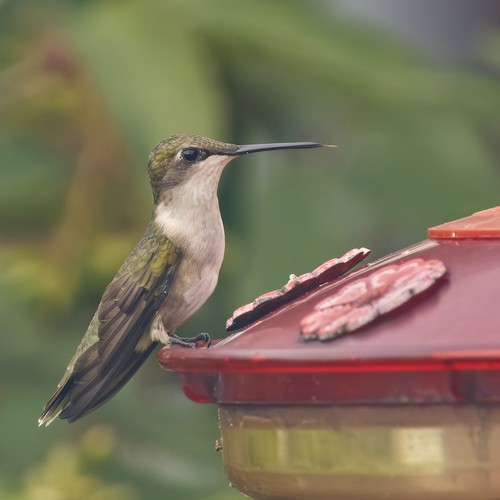
Ruby-throated Hummingbird
7-9 cm (3-3.5 in) long, 8-11 cm wingspan
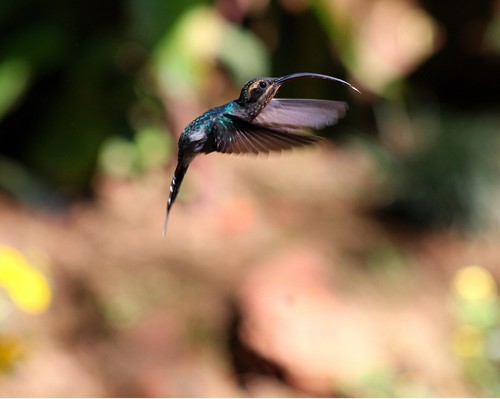
Green Hermit
15-16 cm (6-6.3 in) long including elongated central tail feathers
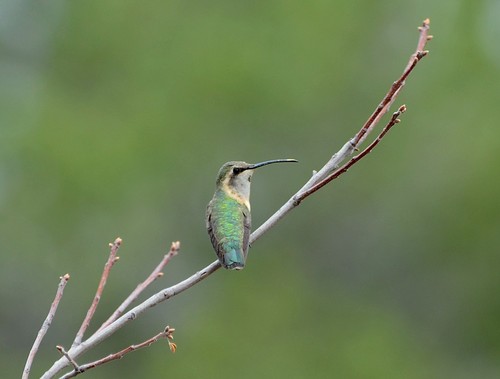
Lucifer Hummingbird
8.5-9.5 cm (3.5 in) long, 11 cm wingspan
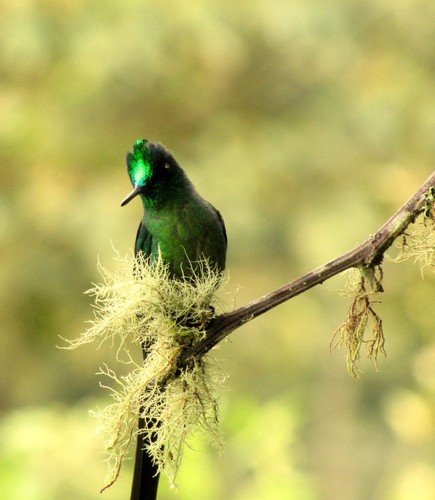
Long-tailed Sylph
males 18-19 cm (7-7.5 in) including tail; females 9-10 cm (3.5-4 in)