
Buff-bellied Hummingbird Identification Guide
A south Texas hummingbird specialty with an emerald throat, warm cinnamon-buff belly, a red bill with a black tip, and a rich rufous tail.
Read the full Buff-bellied Hummingbird encyclopedia entry →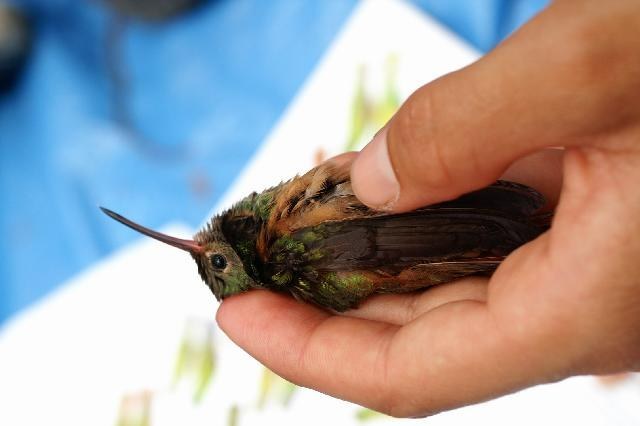
Key Field Marks
- Medium-large hummingbird, about 10 cm (4 in) long, with a fairly straight, mostly red bill that has a dark or black tip.
- Iridescent emerald-green throat, crown, and upper back — the throat is not strongly differentiated as a "gorget" the way many other hummingbirds show, giving an overall green-throated look in both sexes.
- Warm buffy-cinnamon wash across the belly, the field mark that gives the species its name.
- Rufous-chestnut tail, most visible in flight or when the tail is fanned.
- Sexes look similar, unlike many hummingbirds where males and females differ strongly.
Separating It From Similar Species
- Buff-bellied vs. Rufous-tailed Hummingbird: very similar and closely related; ranges do not normally overlap in the US (Rufous-tailed is a Middle/South American species), so location is the main clue.
- Berylline Hummingbird: shows rufous in the wings as well as the tail, and lacks the strong buffy belly wash.
- Buff-bellied vs. immature Ruby-throated/Black-chinned Hummingbird: those species lack the red-based bill and rich rufous tail; Buff-bellied's red-and-black bill and cinnamon belly are the quickest distinguishing combination.
- The red bill with a black tip, paired with a rufous tail and buffy belly, is essentially unique among regularly occurring US hummingbirds.
Habitat, Range & Season
- The only hummingbird regularly breeding along the Gulf Coast of South Texas, especially the Lower Rio Grande Valley.
- Found in brushy woodland edges, resacas, citrus groves, and well-planted gardens with flowering shrubs and feeders.
- Present year-round in South Texas in small numbers, with some individuals wandering along the Gulf Coast (including winter records in Louisiana and Florida) outside the breeding range.
- Visits hummingbird feeders readily, especially in winter when natural nectar sources are scarcer.
Voice
- Calls include a sharp, dry "chip" or "tik," often given repeatedly, plus a scratchy chattering when agitated or interacting with other hummingbirds.
- Song is a thin, insect-like series of squeaky notes, not commonly heard away from the breeding season.
Frequently asked questions
What makes the Buff-bellied Hummingbird identifiable?
The combination of a mostly red bill with a black tip, an emerald-green throat and back, a warm buffy-cinnamon belly, and a rufous-chestnut tail is distinctive among US hummingbirds.
Where is the best place to see a Buff-bellied Hummingbird?
South Texas, particularly the Lower Rio Grande Valley, is the core US range; it also shows up occasionally along the Gulf Coast in winter, including Louisiana and Florida.
Do male and female Buff-bellied Hummingbirds look different?
No — unlike many hummingbird species, the sexes look quite similar, both showing the green throat, buffy belly, and rufous tail.
Is the Buff-bellied Hummingbird present in Texas year-round?
Yes, it is largely resident in South Texas, though it can be seen more widely along the Gulf Coast in the non-breeding season.