
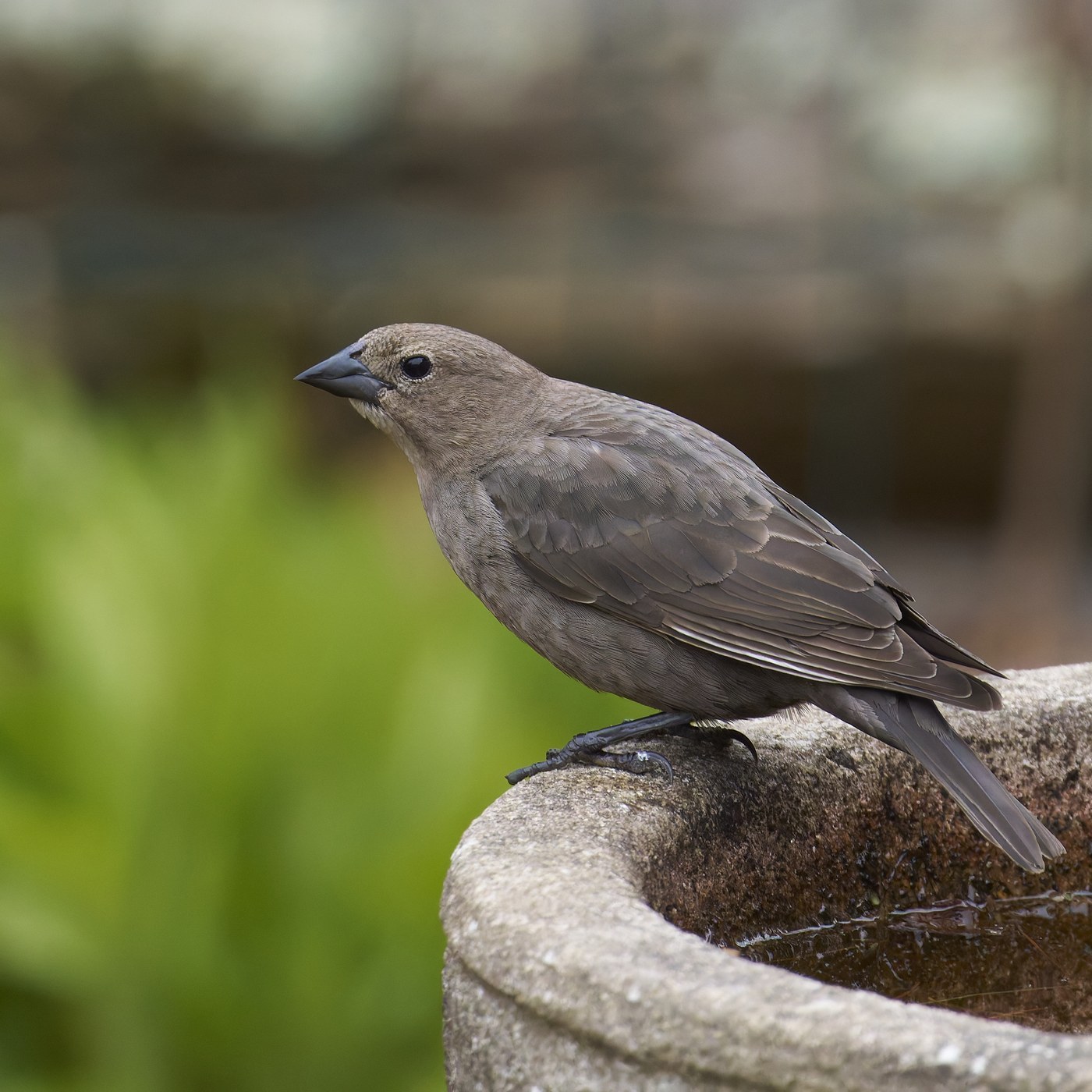
Brown-headed Cowbird
Molothrus ater
A brood-parasitic blackbird whose glossy brown head contrasts with the male's black body, famous for laying eggs in other birds' nests.
- Size
- 16-22 cm (6.3-8.7 in) long, 36 cm wingspan
- Habitat
- grasslands, farmland, woodland edges, and suburban yards
- Type
- songbird
Spotted a bird like this?
Identify any bird from a photo, free.
Overview
The Brown-headed Cowbird is a small, stocky blackbird best known for its unusual breeding strategy: it builds no nest of its own and instead lays its eggs in the nests of other songbird species, leaving the host parents to incubate and raise its young. Males are glossy black overall with a warm chocolate-brown head and a short, finch-like conical bill suited to eating seeds and grain.
Females look quite different, being a plain grayish-brown all over with faint streaking on the underparts, and can be easily overlooked among sparrows. Juveniles resemble females but show fine scaly streaking.
How to identify it
Key field marks
- Male: glossy black body with a contrasting brown head and a short, thick, pointed bill
- Female: plain gray-brown overall, faintly streaked below, with the same short conical bill
- Short tail and a distinctive habit of walking with the head bobbing
Similar species
- Male cowbirds can suggest a small grackle at a glance but lack a long keeled tail and are much smaller and stockier.
- Female cowbirds are often confused with female blackbirds or sparrows, but their plain, unstreaked gray-brown plumage and short conical bill help separate them.
Habitat & range
Brown-headed Cowbirds are found across nearly all of North America, from southern Canada to Mexico, in open and edge habitats including grasslands, farmland, pastures, woodland edges, and suburban areas. Historically tied to bison herds on the Great Plains, the species expanded enormously with the clearing of forests and spread of agriculture and livestock.
Most northern populations are migratory, moving south in large mixed flocks with other blackbirds for the winter, while southern populations may be resident.
Behavior & voice
Cowbirds often forage on the ground in open areas, sometimes near livestock (a habit inherited from their historical association with bison, which stirred up insects as they grazed). They walk rather than hop, picking seeds and insects from the ground and short vegetation.
The male's song is a liquid, bubbling gurgle followed by a high whistle, often given while puffing out the body and spreading the wings and tail in display. Rather than building a nest, females seek out the active nests of other songbird species (over 200 host species have been recorded) and lay a single egg in each, sometimes removing a host egg. Cowbird eggs often hatch first and the chicks grow quickly, frequently outcompeting the host's own young for food.
Frequently asked questions
Why do Brown-headed Cowbirds lay eggs in other birds' nests?
Cowbirds are obligate brood parasites, meaning they never build their own nest; instead, females lay eggs in the nests of other songbird species, which then raise the cowbird chick as their own.
How do you identify a Brown-headed Cowbird?
Males show a glossy black body with a contrasting brown head and a short, thick, seed-eating bill; females are plain gray-brown with light streaking below and the same short conical bill.
What does a Brown-headed Cowbird sound like?
Males give a liquid, bubbling gurgle followed by a thin, high whistle, often while displaying with puffed feathers.
Do Brown-headed Cowbirds harm other bird populations?
Their brood parasitism can reduce nesting success for some host species, particularly rare or small-range songbirds, though most common host species have coexisted with cowbirds for a very long time.
Where do Brown-headed Cowbirds live?
Across nearly all of North America in open habitats such as grasslands, farmland, and woodland edges; northern birds migrate south for winter.
Brown-headed Cowbird guides
In-depth guides for identifying, finding, and understanding Brown-headed Cowbird.
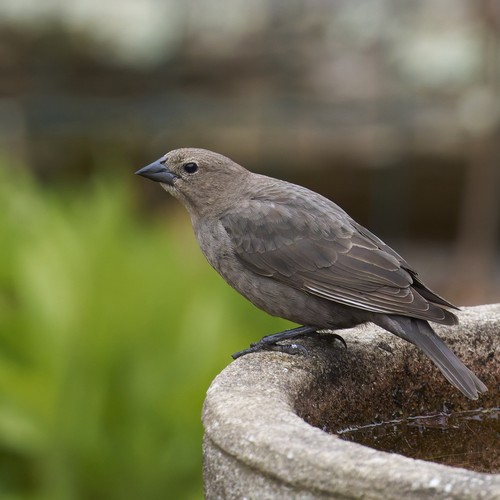
Brown-headed Cowbird identified by the community
Real birds identified with Bird Identifier.
Other birds you may enjoy

Black Redstart
13-14.5 cm (5.1-5.7 in) long, 23-26 cm wingspan

Black-throated Sparrow
12-14 cm (4.7-5.5 in) long, about 19-20 cm (7.5-8 in) wingspan

Greater Bird-of-paradise
Body about 43 cm; males with additional flank plumes up to 50 cm and long tail wires

Blue Tit
11-12 cm (4.3-4.7 in) long, 17-20 cm wingspan

Red-billed Quelea
11.5–13 cm long, wingspan about 20–22 cm
White-plumed Antbird
13-14 cm (5-5.5 in) long

Pyrrhuloxia
19-22 cm (7.5-8.7 in) long, 30 cm wingspan

Blue-gray Tanager
16-18 cm (6-7 in) long

Blackburnian Warbler
11-13 cm (4.3-5.1 in) long, 20-22 cm wingspan

Bluethroat
13-14 cm (5.1-5.5 in) long, 20-22 cm wingspan

Eurasian Nuthatch
12-14.5 cm (4.7-5.7 in) long, 22.5-27 cm wingspan

Wood Thrush
19-21 cm (7.5-8.3 in) long, about 33 cm (13 in) wingspan