Brown-headed Cowbird Identification Guide
North America's most widespread brood-parasitic blackbird, with males showing a contrasting brown head against a glossy black body.
Read the full Brown-headed Cowbird encyclopedia entry →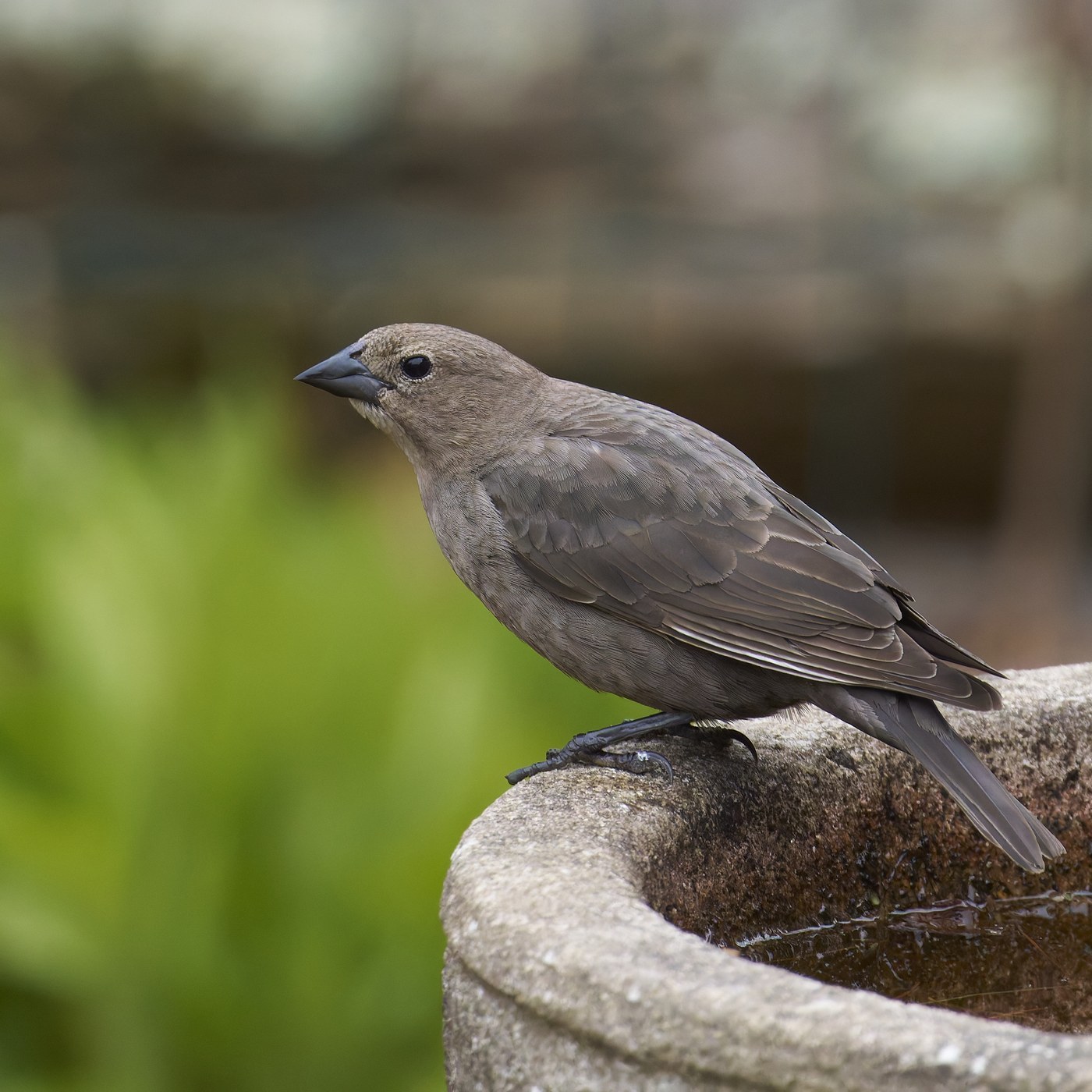
Key Field Marks
- Small blackbird with a short, conical, finch-like bill — a useful shape clue that separates cowbirds from other blackbirds.
- Adult male: glossy black body with an iridescent sheen, contrasting with a distinctly brown head and neck; dark eyes.
- Adult female: plain gray-brown overall with faint, diffuse streaking on the underparts and a pale throat; overall drab and nondescript compared to the male.
- Juvenile: similar to female but with more distinct streaking below and pale feather edges giving a scaly look.
Separating It From Similar Species
- Bronzed Cowbird: male is uniformly bronze-black with no head/body contrast and has red eyes, unlike Brown-headed Cowbird's dark eyes and two-toned head/body pattern.
- Female Brewer's Blackbird / Rusty Blackbird: both have thinner, more pointed bills than the stubby conical bill of a female cowbird, and lack the pale throat.
- European Starling: shorter-tailed with a longer, more pointed yellow (breeding) or dark (nonbreeding) bill, and speckled plumage in winter.
- The stubby, sparrow-like bill combined with plain gray-brown coloring is the best clue for identifying nondescript female and juvenile cowbirds.
Habitat, Range & Season
- Common and widespread across nearly all of North America in open country, agricultural fields, woodland edges, suburban yards, and bird feeders.
- Historically associated with grazing bison herds; now thrives alongside cattle and in fragmented, edge-heavy landscapes.
- Present year-round across much of its range, with northern populations migrating south in winter; often forms large mixed flocks with other blackbirds and starlings outside the breeding season.
Voice & Behavior
- Male song is a liquid, gurgling series often rendered as "glug-glug-gleee," accompanied by a bowing, wing-spread display.
- Also gives a high, thin whistle and rattling chatter calls, especially in flight.
- A well-known brood parasite, laying eggs in the nests of over 100 other bird species and leaving all parental care to the host.
Frequently asked questions
How do you identify a female Brown-headed Cowbird?
Look for a plain grayish-brown bird with a short, stubby, finch-like bill, a pale throat, and only faint streaking below — it lacks any bold pattern.
How do you tell a Brown-headed Cowbird from a Bronzed Cowbird?
Brown-headed Cowbird males have a brown head contrasting with a black body and dark eyes, while Bronzed Cowbird males are uniformly bronze-black with red eyes.
Why is the Brown-headed Cowbird called a brood parasite?
Females lay their eggs in the nests of other bird species, which then raise the cowbird chicks, often at the expense of their own young.
What does a Brown-headed Cowbird sound like?
Males give a liquid, gurgling song often described as 'glug-glug-gleee,' along with high whistles and rattling flight calls.
Brown-headed Cowbird identified by the community
Recent Brown-headed Cowbird sightings identified with Bird Identifier.