
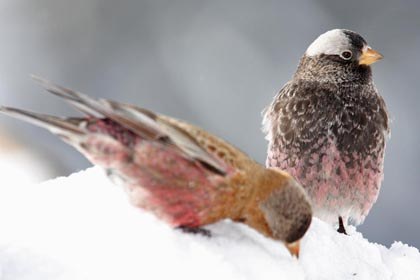
Brown-capped Rosy-Finch
Leucosticte australis
A stocky pink-tinged finch of the highest Rocky Mountain peaks, found nowhere else on Earth.
- Size
- 14-16 cm (5.5-6.3 in) long, about 30-34 cm wingspan
- Habitat
- alpine tundra, rocky slopes, cliffs, and snowfields above treeline in the southern Rocky Mountains
- Type
- songbird
Spotted a bird like this?
Identify any bird from a photo, free.
Overview
The Brown-capped Rosy-Finch is a hardy, high-altitude specialist restricted almost entirely to the alpine zone of the southern Rocky Mountains, mainly in Colorado and adjacent southern Wyoming and northern New Mexico. It is a chunky, sparrow-sized finch with warm brown body plumage, a pale gray-brown crown patch (giving it the "brown-capped" name), and pink to rosy wash on the wings, rump, and belly that becomes more vivid in breeding males.
Of the three North American rosy-finch species, the Brown-capped is the only one lacking any gray on the head other than a faint cap, appearing overall the warmest brown-toned of the group. Females are duller and browner than males, with less extensive pink. This species tolerates some of the harshest breeding conditions of any North American songbird, nesting on cliff ledges and rocky crevices at elevations often above 3,600 meters (12,000 feet).
How to identify it
Key Field Marks
- Chunky finch with a short, conical, dark bill (yellow in winter)
- Warm chocolate-brown body overall
- Pale gray-brown crown patch bordered by darker brown
- Rosy-pink wash on wings, rump, and belly, brightest in adult males
- Black forehead in breeding males
Similar Species
- Gray-crowned Rosy-Finch: shows a broad, contrasting gray crown patch and gray on the nape/cheek, versus the Brown-capped's subtler, all-brown head.
- Black Rosy-Finch: overall blackish body plumage rather than warm brown, with a similar limited gray crown patch.
- Range and elevation are the best clues: Brown-capped Rosy-Finch is essentially confined to the Colorado Rockies and immediately adjacent high peaks, while the other two rosy-finches breed farther north and west.
Habitat & range
Habitat
Brown-capped Rosy-Finches breed almost exclusively above treeline in alpine tundra, talus slopes, and permanent snowfields, nesting in rock crevices, cliff faces, and abandoned mine shafts. They are often seen foraging along the edges of retreating snow patches where wind-blown insects accumulate.
Range
This species has one of the most restricted breeding ranges of any North American bird, confined to the high peaks of central and southern Colorado, with smaller numbers in adjacent northern New Mexico and southern Wyoming.
Migration
Movements are largely altitudinal rather than long-distance migration. In winter, flocks descend to lower elevations, foothills, and mountain towns, sometimes visiting feeders, and often join mixed flocks with Gray-crowned and Black Rosy-Finches.
Behavior & voice
Behavior
Rosy-finches are highly social outside the breeding season, forming large mixed-species flocks that forage together on open ground, snowbanks, and rocky slopes. They walk and hop while foraging rather than hopping exclusively, gleaning seeds and insects from the surface.
Voice
The call is a soft, husky "chew" or "chirp," often given in flight by flocking birds; the song is a simple, high-pitched warbling series, seldom heard away from breeding cliffs.
Feeding
Diet shifts seasonally from mostly insects (particularly wind-deposited insects trapped on snow and ice) during the breeding season to seeds of alpine plants and weeds in winter.
Nesting
Nests are built in rock crevices, cliff ledges, or old buildings, constructed of grass, moss, and lichen lined with fine grass and feathers. Females typically lay 3-5 eggs and incubate alone, while both parents feed the young.
Frequently asked questions
Where can I see a Brown-capped Rosy-Finch?
Look above treeline on Colorado's highest peaks in summer, such as around Rocky Mountain National Park and Mount Evans, or at lower-elevation feeders in mountain towns during winter.
How is it different from other rosy-finches?
It lacks the broad gray crown patch of the Gray-crowned Rosy-Finch and the blackish body of the Black Rosy-Finch, appearing overall warm brown with only a subtle pale cap.
Why does it live so high up?
It has adapted to forage on insects blown onto alpine snowfields and to nest in rock crevices largely free from predators and competition at extreme elevation.
Does it migrate far?
No, it mostly makes short altitudinal movements, descending from alpine breeding grounds to nearby foothills and valleys in winter rather than undertaking long migrations.
What does it eat?
Mainly seeds of alpine and weedy plants, supplemented heavily by insects, especially those that become stranded and chilled on snow and ice.
Brown-capped Rosy-Finch guides
In-depth guides for identifying, finding, and understanding Brown-capped Rosy-Finch.
Other birds you may enjoy
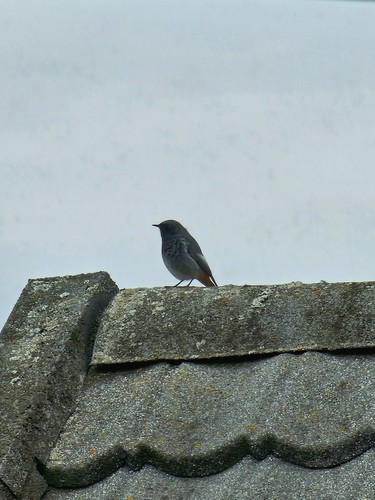
Black Redstart
13-14.5 cm (5.1-5.7 in) long, 23-26 cm wingspan
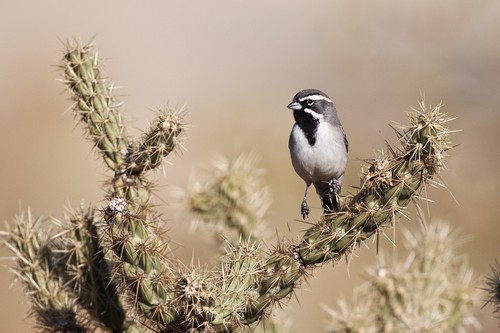
Black-throated Sparrow
12-14 cm (4.7-5.5 in) long, about 19-20 cm (7.5-8 in) wingspan
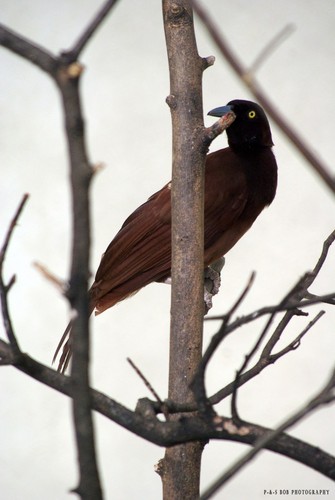
Greater Bird-of-paradise
Body about 43 cm; males with additional flank plumes up to 50 cm and long tail wires
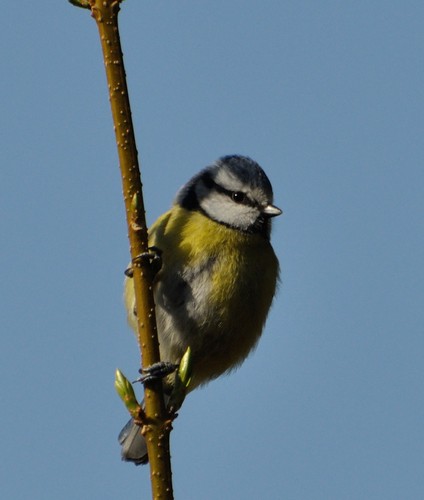
Blue Tit
11-12 cm (4.3-4.7 in) long, 17-20 cm wingspan
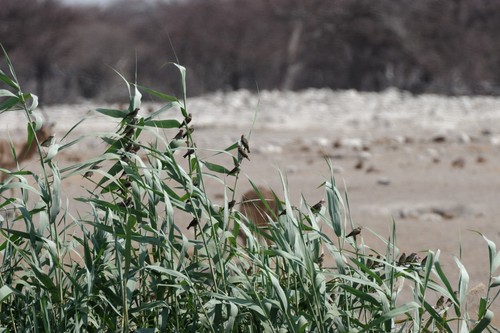
Red-billed Quelea
11.5–13 cm long, wingspan about 20–22 cm
White-plumed Antbird
13-14 cm (5-5.5 in) long
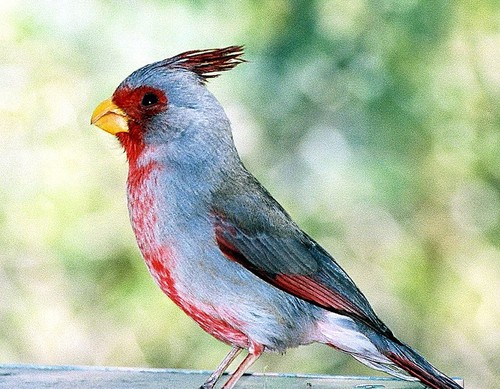
Pyrrhuloxia
19-22 cm (7.5-8.7 in) long, 30 cm wingspan
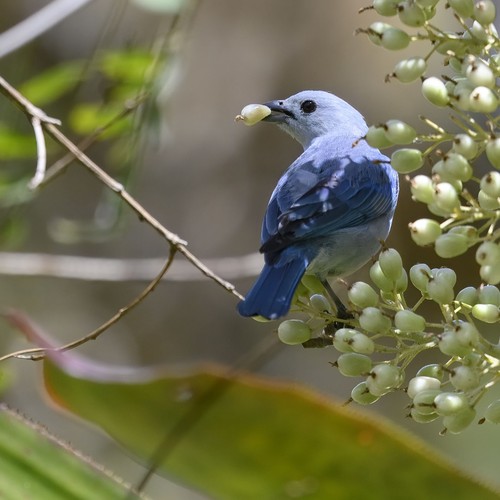
Blue-gray Tanager
16-18 cm (6-7 in) long
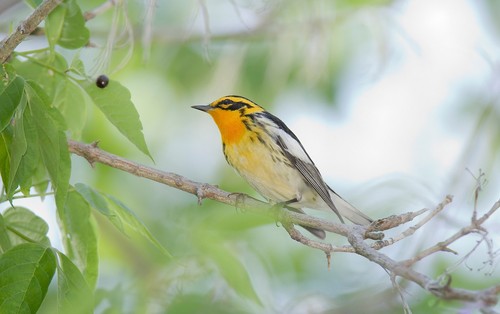
Blackburnian Warbler
11-13 cm (4.3-5.1 in) long, 20-22 cm wingspan
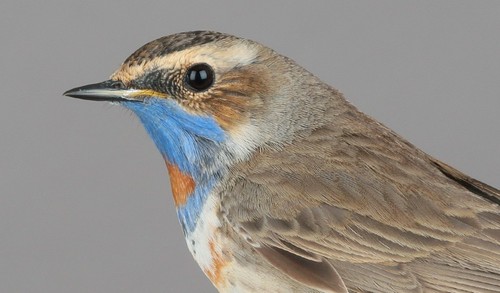
Bluethroat
13-14 cm (5.1-5.5 in) long, 20-22 cm wingspan
Eurasian Nuthatch
12-14.5 cm (4.7-5.7 in) long, 22.5-27 cm wingspan
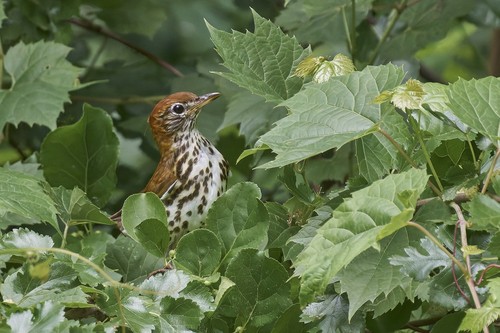
Wood Thrush
19-21 cm (7.5-8.3 in) long, about 33 cm (13 in) wingspan