
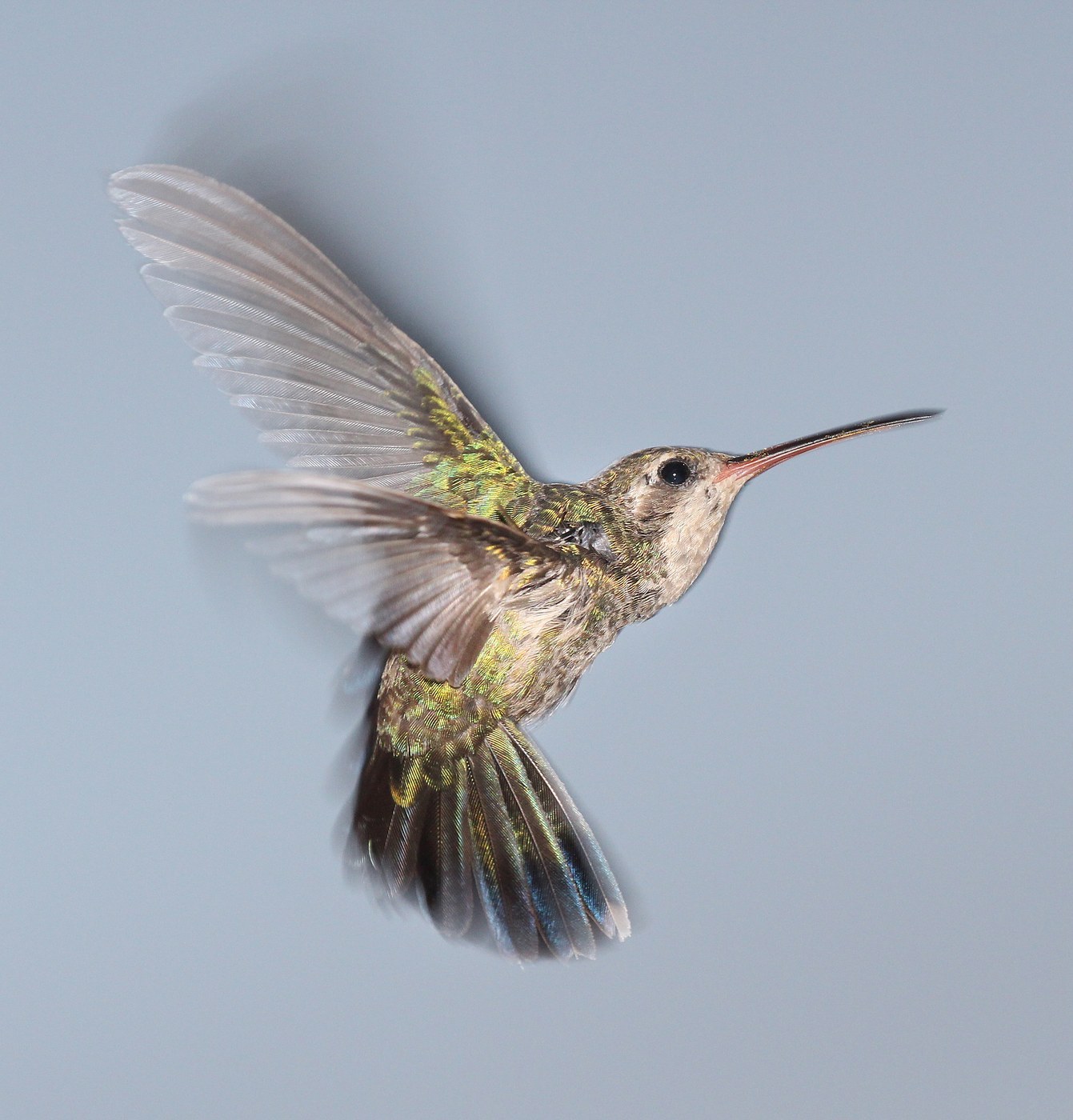
Broad-billed Hummingbird
Cynanthus latirostris
A jewel-toned hummingbird of southwestern canyons, easily recognized by its bright red bill with a black tip.
- Size
- 8.5-10 cm (3.5-4 in) long, 13 cm wingspan
- Habitat
- desert canyons, streamside woodland, and mountain foothills
- Type
- hummingbird
Spotted a bird like this?
Identify any bird from a photo, free.
Overview
The Broad-billed Hummingbird brings a splash of color to canyon streams and desert washes of the American Southwest and Mexico. Adult males are richly colored, with a deep iridescent blue throat, emerald green body, and a notched, blue-black tail, all set off by a bright coral-red bill tipped in black. Females are duller, with a green back, pale gray underparts, a whitish stripe behind the eye, and the same distinctive red-based bill.
The combination of the bright bill color and, in males, the deep sapphire throat, makes this one of the more readily identifiable hummingbirds within its range.
How to identify it
Key Field Marks
- Bright red bill with a contrasting black tip, present in both sexes
- Male: iridescent blue throat, green body, dark forked/notched tail
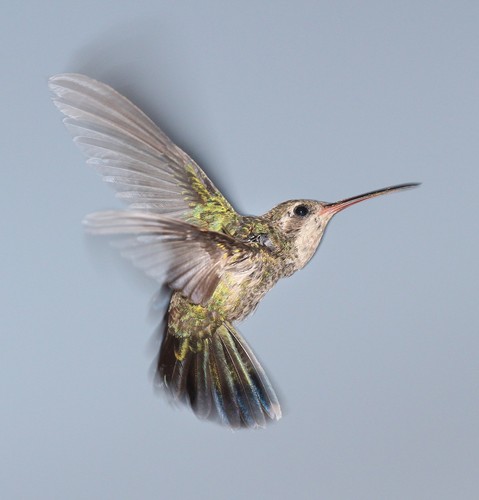
- Female: green back, gray underparts, pale eye stripe, red-based bill
- Tail often held slightly cocked or flicked side to side
Similar Species
- White-eared Hummingbird also has a red bill but shows a bold white stripe behind the eye and a purple crown in males.
- Blue-throated Mountain-gem is much larger with broad white tail corners and lacks the red bill.
- Female Broad-billeds are best told from similar females by the red-based bill and pale eye stripe.
Habitat & range
Habitat
This species favors shaded canyons with running water, streamside sycamore and cottonwood groves, and adjacent desert scrub in foothill and lower mountain elevations.
Range
It breeds mainly in southeastern Arizona, southwestern New Mexico, and western Texas, ranging south through much of Mexico.
Migration
Most Broad-billed Hummingbirds migrate south into Mexico for the winter, though small numbers regularly overwinter in the warmer canyons of southeastern Arizona.
Behavior & voice
Behavior
Males are territorial around good nectar sources and perform display flights to attract mates, often perching conspicuously on bare twigs between feeding bouts.
Voice
Calls include a dry, chattering rattle and sharp chip notes given during chases and territorial disputes.
Feeding
They feed on nectar from a variety of tubular desert and canyon flowers and supplement their diet with small insects caught in flight or picked from vegetation.
Nesting
Females build a compact cup nest of plant fibers and spider silk, typically low in a shrub or small tree near water, and raise the young without help from the male.
Frequently asked questions
What is the easiest way to identify a Broad-billed Hummingbird?
Look for the bright red bill with a black tip, present in both sexes, combined with the male's deep blue throat and green body.
Where are Broad-billed Hummingbirds found in the United States?
They occur mainly in canyons and streamside habitats of southeastern Arizona, southwestern New Mexico, and far western Texas.
How can you tell a female Broad-billed Hummingbird from other female hummingbirds?
Look for the red-based bill with a black tip and a pale stripe behind the eye, features that most similar female hummingbirds lack.
Do Broad-billed Hummingbirds stay in the U.S. year-round?
Most migrate to Mexico for winter, but a small number regularly remain in sheltered canyons of southeastern Arizona through the colder months.
Broad-billed Hummingbird guides
In-depth guides for identifying, finding, and understanding Broad-billed Hummingbird.
Other birds you may enjoy
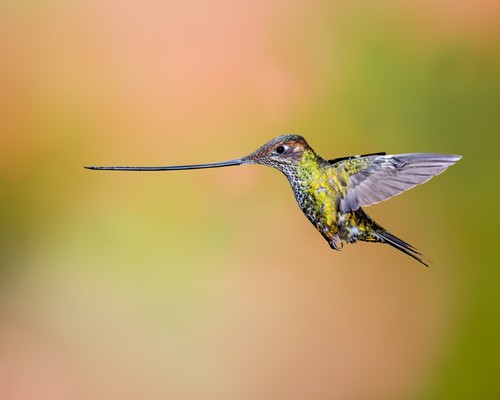
Sword-billed Hummingbird
Body about 13-15 cm (5-6 in) including a bill up to 10 cm long, the longest bill relative to body size of any bird
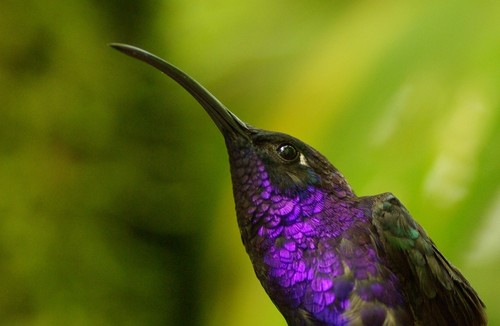
Violet Sabrewing
14-15 cm (5.5-6 in) long
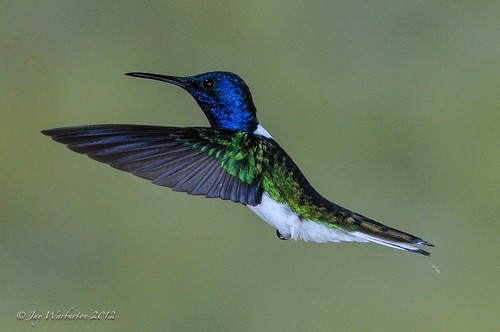
White-necked Jacobin
11-12 cm (4.3-4.7 in) long
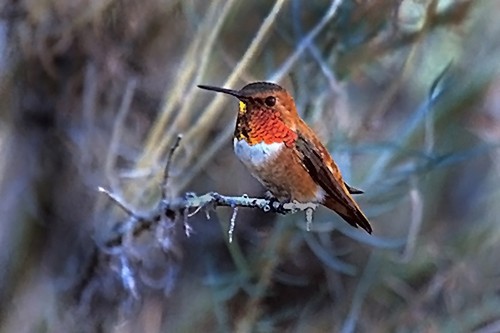
Rufous Hummingbird
8-9 cm (3-3.5 in) long, 11 cm wingspan
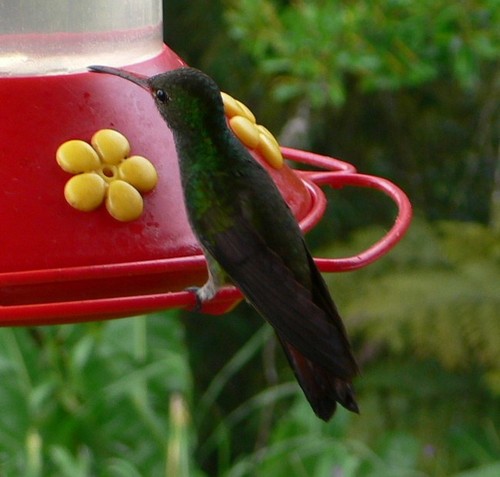
Rufous-tailed Hummingbird
10-11.5 cm (4-4.5 in) long
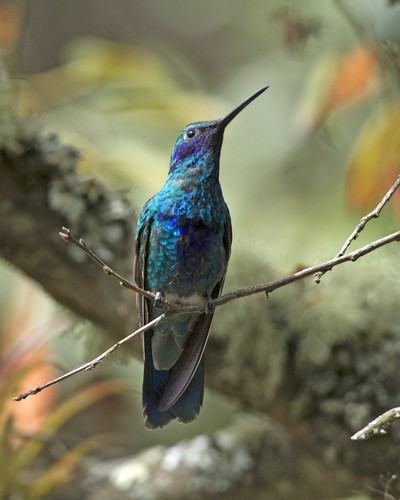
Sparkling Violetear
13-14 cm (5-5.5 in) long including bill
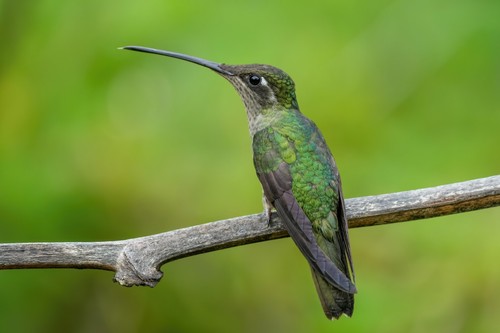
Rivoli's Hummingbird
11-14 cm (4.5-5.5 in) long, 17-18 cm wingspan
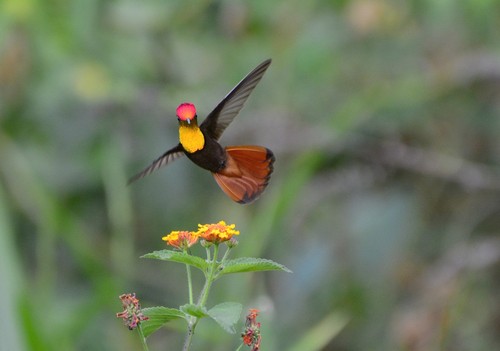
Ruby-topaz Hummingbird
7.5-9 cm (3-3.5 in) long
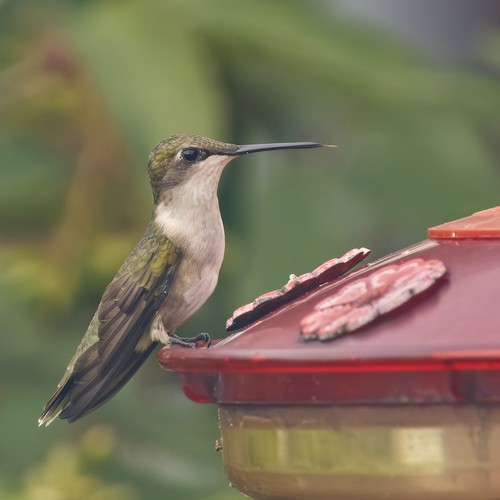
Ruby-throated Hummingbird
7-9 cm (3-3.5 in) long, 8-11 cm wingspan
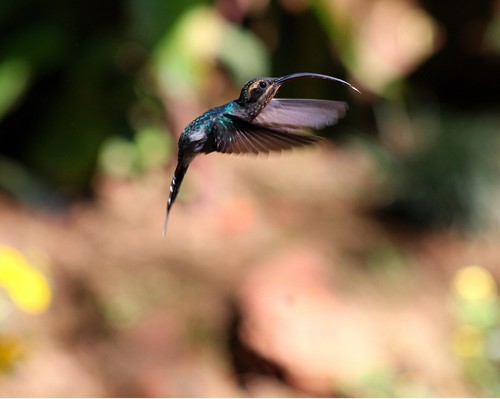
Green Hermit
15-16 cm (6-6.3 in) long including elongated central tail feathers
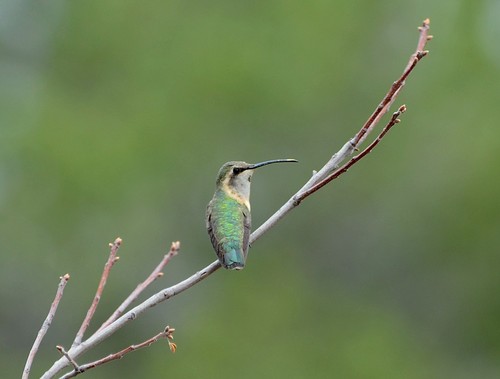
Lucifer Hummingbird
8.5-9.5 cm (3.5 in) long, 11 cm wingspan
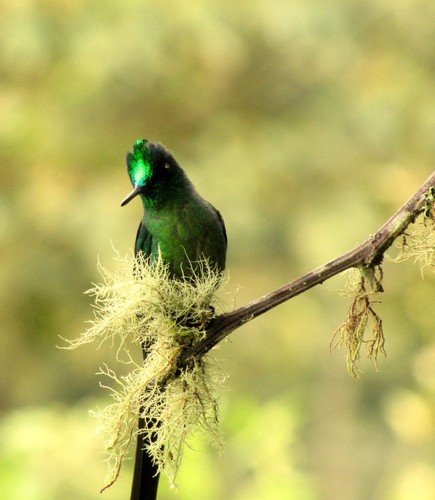
Long-tailed Sylph
males 18-19 cm (7-7.5 in) including tail; females 9-10 cm (3.5-4 in)