
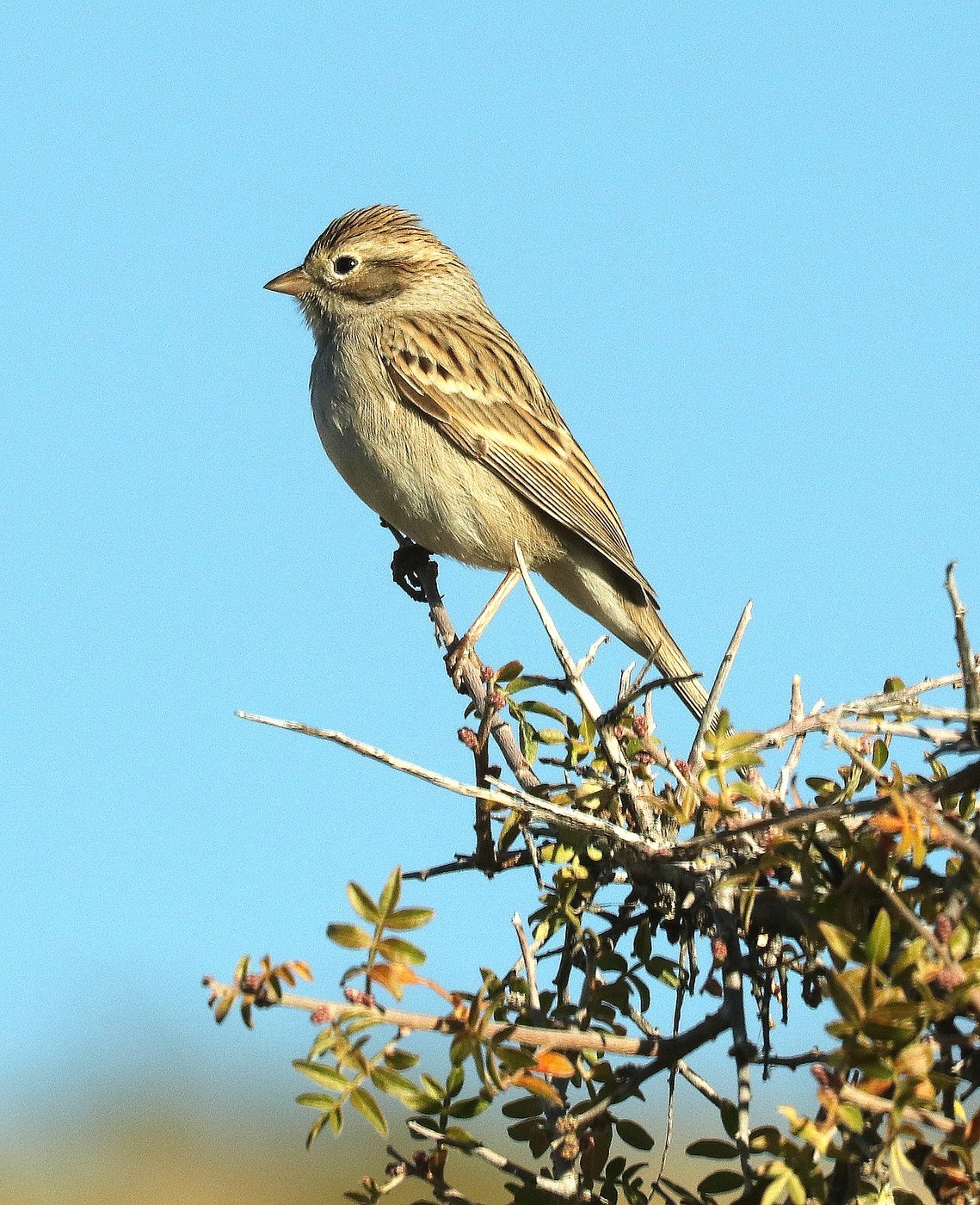
Brewer's Sparrow
Spizella breweri
A famously plain, pale grayish sparrow of sagebrush country best known for its long, buzzy, canary-like trilling song.
- Size
- 12-14 cm (4.7-5.5 in) long, about 19 cm (7.5 in) wingspan
- Habitat
- sagebrush flats and arid shrub-steppe of the interior West
- Type
- songbird
Spotted a bird like this?
Identify any bird from a photo, free.
Overview
The Brewer's Sparrow is often cited as North America's plainest sparrow, a small pale bird so lacking in bold markings that birders joke it is defined by what it lacks rather than what it has. It is a true sagebrush obligate, spending nearly its entire life among the silvery shrubs of the Great Basin and surrounding arid West.
Overall coloring is soft grayish-brown above with fine dark streaking on the crown and back, and plain buffy-white underparts without streaking. The face is subtly patterned with a thin, pale eye-ring and a faint dark whisker mark, but nothing on the bird jumps out at a glance. The tail is notably long and notched, often flicked as the bird forages low in shrubs.
Despite its understated looks, the Brewer's Sparrow has one of the most impressive voices of any American sparrow, delivering a long, cascading, insect-like trill that can run for many seconds without pause.
How to identify it
Key Field Marks
- Small, slim sparrow with an overall soft gray-brown wash and no strong contrasting colors
- Fine, blurry streaking on the crown and back; underparts plain and unstreaked
- Thin whitish eye-ring and a faint, indistinct facial pattern
- Long, notched tail, frequently flicked while foraging
- Small conical bill, pinkish-gray
Similar Species
- Clay-colored Sparrow: shows a more contrasting face with a gray nape, whiter supercilium, and a crisper brown ear patch bordered dark
- Chipping Sparrow (nonbreeding): shows a rustier cap and a distinct black eyeline
- Sagebrush and Bell's Sparrow: larger, longer-tailed, with a gray head, white eye-ring, and dark central breast spot, plus a habit of running on the ground with tail cocked
Because plumage differences are so subtle, the buzzy, jumbled, ascending-and-descending trill song is often the most reliable way to confirm identification in the field.
Habitat & range
Brewer's Sparrows breed almost exclusively in sagebrush steppe and other arid shrub-dominated flats across the Great Basin and interior West, from eastern Washington and Oregon through Idaho, Nevada, Utah, and Wyoming, south into California, Arizona, and New Mexico. The species has an especially tight association with big sagebrush (Artemisia tridentata), and its distribution closely tracks the extent of healthy sagebrush stands.
In winter, most birds move south into desert scrub of the southwestern United States and Mexico, often joining mixed flocks with other sparrows in creosote bush or mesquite desert. Because of its dependence on sagebrush, the species has suffered one of the steepest population declines of any North American songbird as sagebrush habitat is lost to agriculture, development, invasive grasses, and wildfire.
Behavior & voice
Behavior
Brewer's Sparrows forage low in and beneath shrubs, hopping along the ground and gleaning seeds and insects from foliage and soil. They are less conspicuous than many sparrows, tending to stay low and move quietly through cover except when singing.
Voice
The song is remarkable: a long, complex, buzzy series of trills and twitters at varying pitches and speeds, often compared to a canary or to bubbling water. Songs can last ten seconds or more, far longer than most sparrow songs, and are frequently given from the top of a low sagebrush.
Feeding
Diet shifts seasonally, with more insects taken during the breeding season to feed nestlings, and a greater reliance on grass and forb seeds in fall and winter.
Nesting and Breeding
Nests are built low in sagebrush or other shrubs, a loose cup of grasses and plant fibers lined with fine material. Females typically lay 2-4 pale blue-green eggs with fine spotting, and pairs may raise more than one brood in a season.
Frequently asked questions
Where do Brewer's Sparrows live?
They breed in sagebrush steppe across the Great Basin and interior West and winter in desert scrub of the southwestern US and Mexico.
How can I identify a Brewer's Sparrow?
Look for a small, plain grayish-brown sparrow with fine streaking above, unstreaked buffy underparts, and a thin eye-ring; the long, buzzy, canary-like trilling song is the best confirmation.
Why is the Brewer's Sparrow considered so plain?
It lacks the bold facial patterns, wing bars, or breast streaking found on most sparrows, giving it an unusually uniform, understated appearance.
Is the Brewer's Sparrow declining?
Yes, populations have declined steeply over recent decades due to loss and degradation of sagebrush habitat.
What does a Brewer's Sparrow eat?
It eats seeds and insects, taking more insects during the breeding season and more seeds in fall and winter.
Brewer's Sparrow guides
In-depth guides for identifying, finding, and understanding Brewer's Sparrow.
Other birds you may enjoy
Black Redstart
13-14.5 cm (5.1-5.7 in) long, 23-26 cm wingspan
Black-throated Sparrow
12-14 cm (4.7-5.5 in) long, about 19-20 cm (7.5-8 in) wingspan
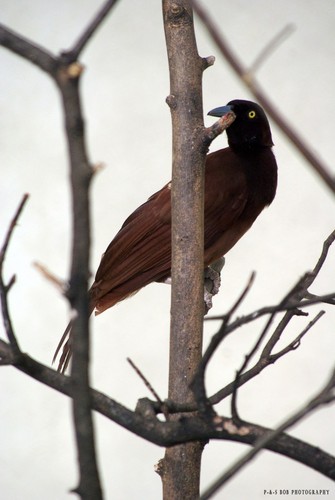
Greater Bird-of-paradise
Body about 43 cm; males with additional flank plumes up to 50 cm and long tail wires
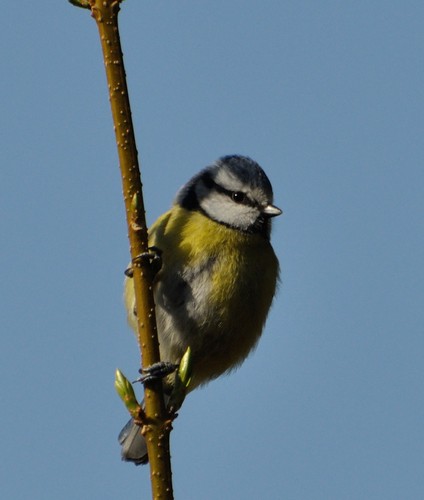
Blue Tit
11-12 cm (4.3-4.7 in) long, 17-20 cm wingspan
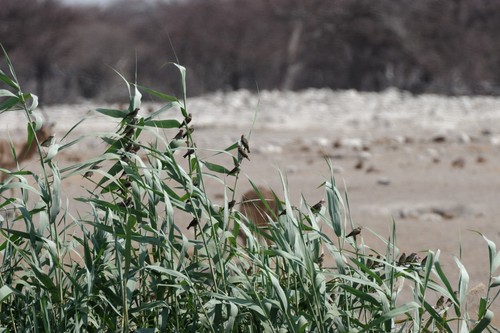
Red-billed Quelea
11.5–13 cm long, wingspan about 20–22 cm
White-plumed Antbird
13-14 cm (5-5.5 in) long
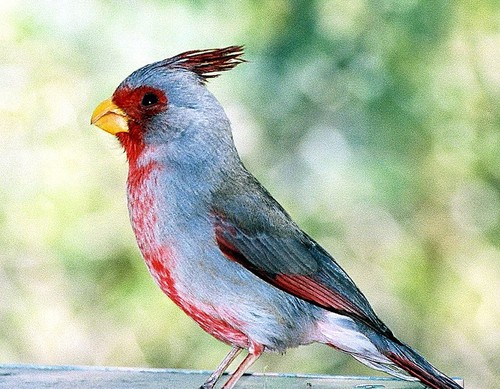
Pyrrhuloxia
19-22 cm (7.5-8.7 in) long, 30 cm wingspan
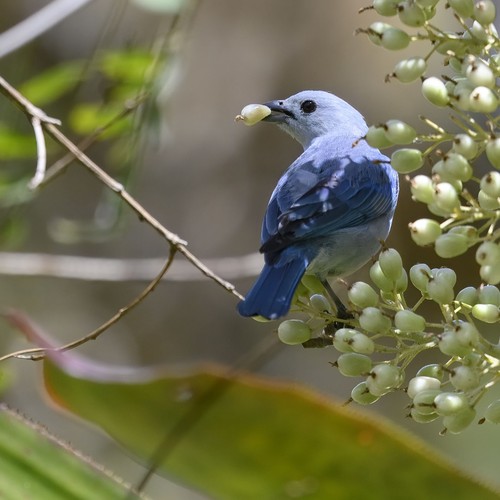
Blue-gray Tanager
16-18 cm (6-7 in) long
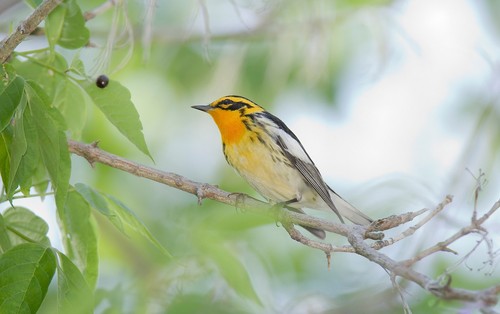
Blackburnian Warbler
11-13 cm (4.3-5.1 in) long, 20-22 cm wingspan
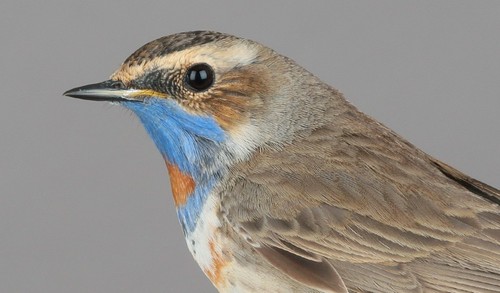
Bluethroat
13-14 cm (5.1-5.5 in) long, 20-22 cm wingspan
Eurasian Nuthatch
12-14.5 cm (4.7-5.7 in) long, 22.5-27 cm wingspan
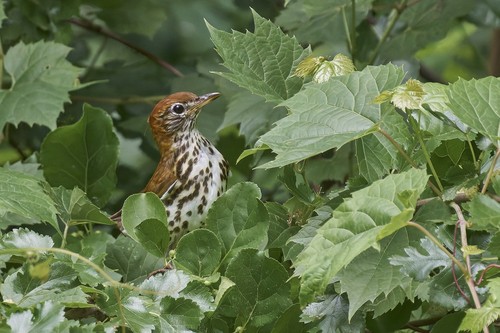
Wood Thrush
19-21 cm (7.5-8.3 in) long, about 33 cm (13 in) wingspan