
Brewer's Sparrow Identification Guide
A pale, plain sagebrush-obligate sparrow best identified by its long, jumbled, buzzy trilling song rather than its subtle, nondescript plumage.
Read the full Brewer's Sparrow encyclopedia entry →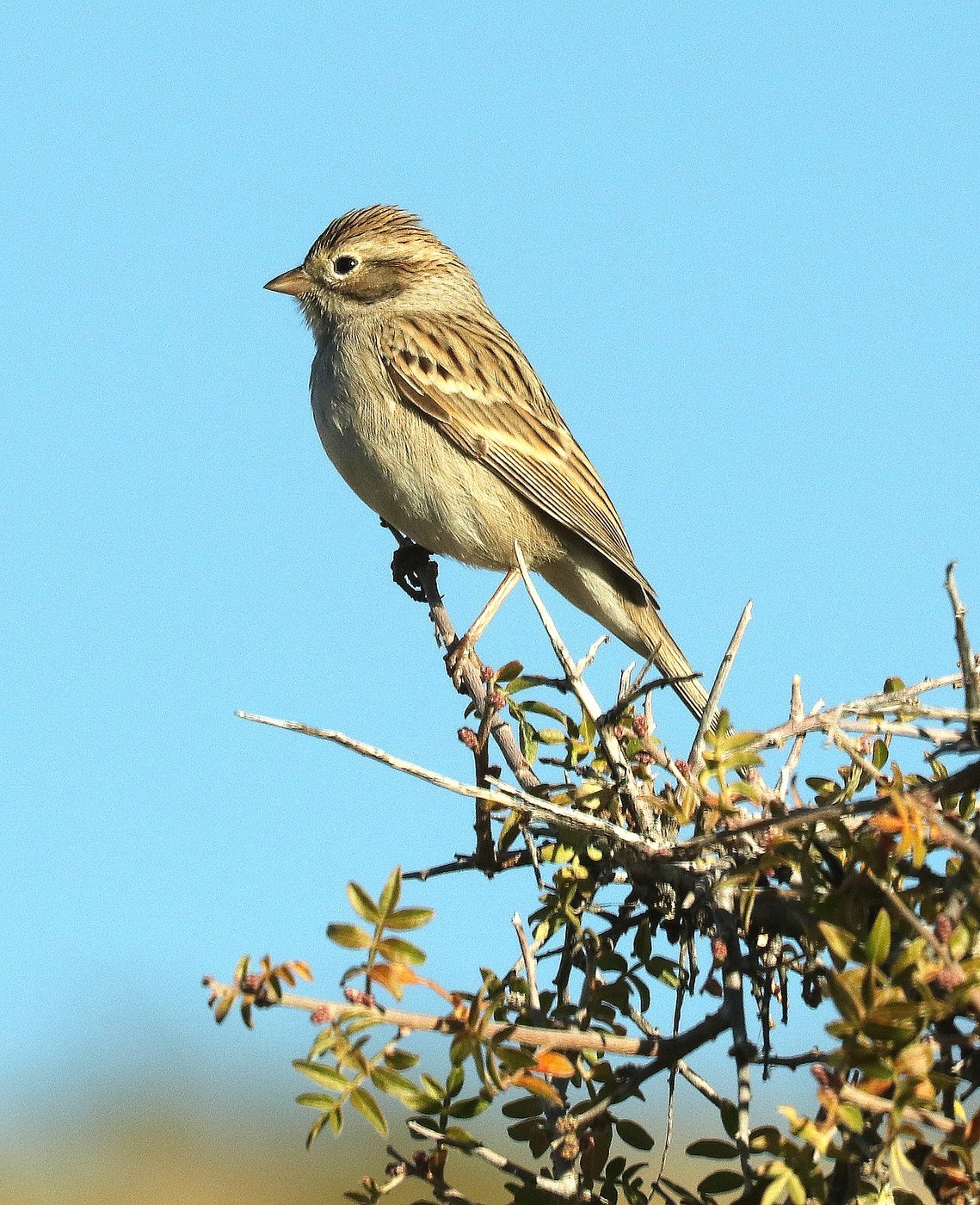
Key Field Marks
- Size & shape: A small sparrow, about 13 cm, with a small bill, fairly long notched tail, and slim proportions.
- Plumage: Pale grayish-brown overall with fine, even streaking on the crown (extending onto the nape) and back; underparts are plain buffy-gray with no breast streaking.
- Face: Subtle and plain, with a thin pale eyering and a faint eyeline, lacking bold facial contrast — often called the most nondescript of North American sparrows.
Separating from Similar Species
- Clay-colored Sparrow: Shows a grayer, unstreaked nape contrasting with a more strongly patterned face (bolder facial stripes); Brewer's Sparrow has fine streaking that continues onto the nape and a plainer, less contrasty face.
- Chipping Sparrow (nonbreeding): Shows a more defined rufous cap (fall/winter birds duller) and stronger black eyeline; Brewer's lacks a distinct cap and has finer, more diffuse streaking overall.
- Because plumage differences among these three species are subtle, song and habitat are often the most reliable clues in the field.
Habitat, Range & Season
- A sagebrush-steppe obligate across the interior western United States and southwestern Canada, strongly tied to large expanses of sagebrush.
- Breeds in this habitat spring through summer; winters in desert scrub and grasslands of the southwestern US and Mexico.
- Population declines are closely tied to loss of sagebrush habitat, making this species a key indicator of sagebrush ecosystem health.
Voice & Song
- The song is the single best identification tool: a long, complex, jumbled series of buzzes and trills at varying pitches and speeds, often lasting several seconds and unlike any other sparrow's song.
- Calls include soft, thin "tsip" notes.
- Males sing persistently from low sagebrush perches through the breeding season, making the song an excellent way to confirm presence even when the bird itself is hard to see.
Frequently asked questions
What is the best way to identify Brewer's Sparrow?
Its song is the most reliable clue: a long, jumbled series of buzzy trills at changing pitches, unlike the plumage, which is famously plain and hard to distinguish from similar sparrows.
How do I separate Brewer's Sparrow from Clay-colored Sparrow?
Brewer's Sparrow shows fine streaking that extends onto the nape and a plainer face, while Clay-colored Sparrow has a clean gray, unstreaked nape and a more strongly patterned face.
What habitat does Brewer's Sparrow require?
It is a sagebrush-steppe specialist, breeding almost exclusively in large expanses of sagebrush across the interior western US and southwestern Canada.
Why is Brewer's Sparrow considered a conservation concern?
Because it depends heavily on intact sagebrush habitat, and its populations have declined significantly as sagebrush steppe has been lost or degraded.