
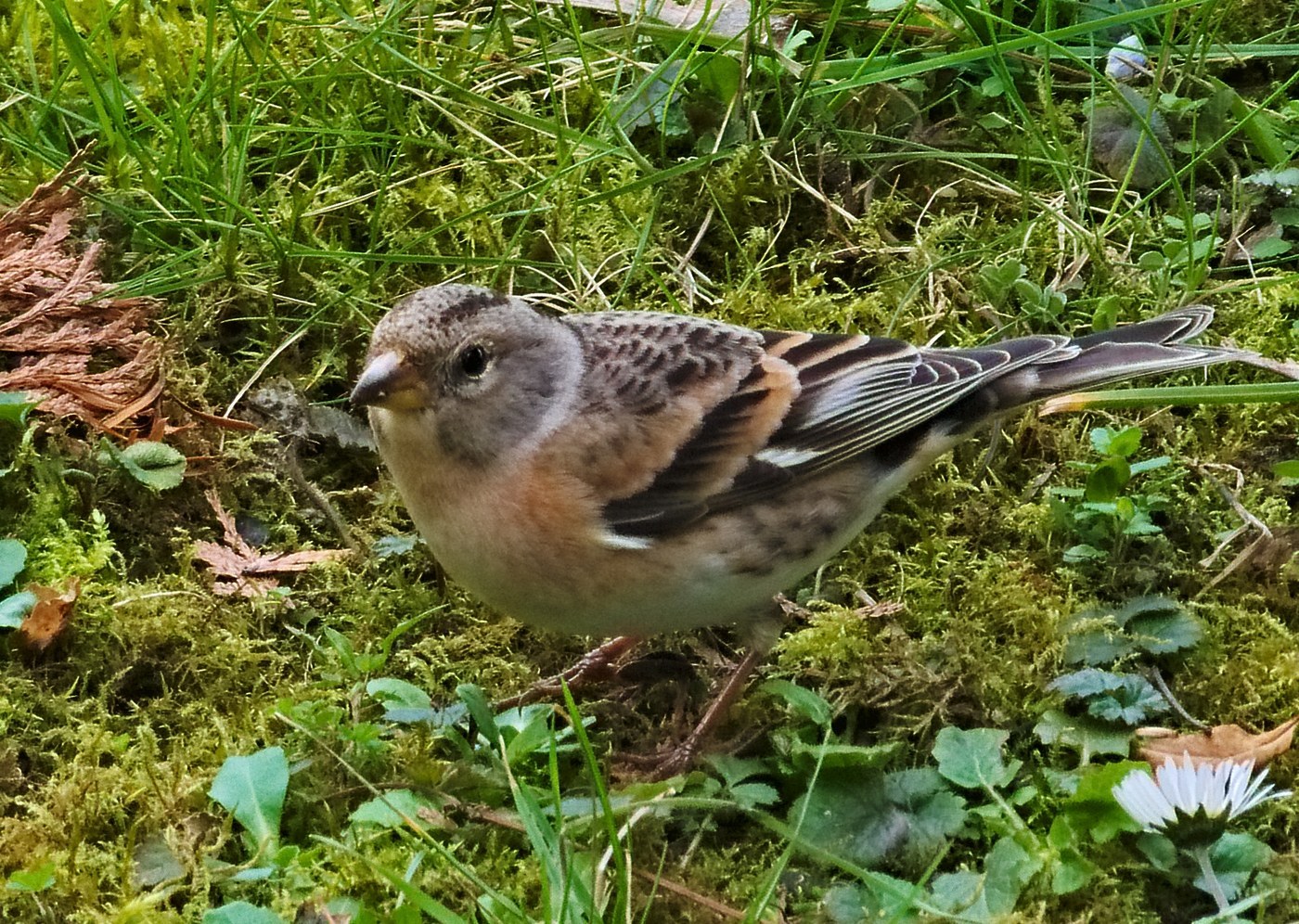
Brambling
Fringilla montifringilla
A striking orange, black, and white finch of the northern taiga that winters in flocks, often alongside chaffinches, feasting on beech mast.
- Size
- 14-16 cm (5.5-6.5 in) long, 25-26 cm wingspan
- Habitat
- breeds in northern birch and coniferous forest (taiga); winters in farmland, beech woods, and open country
- Type
- songbird
Spotted a bird like this?
Identify any bird from a photo, free.
Overview
The Brambling is the northern counterpart of the familiar Chaffinch, breeding in the birch and conifer forests of the far north and moving south each winter in variable numbers, sometimes forming enormous flocks where beech mast is abundant.
Appearance
Breeding males are strikingly patterned, with a glossy black head and back, a bright orange breast and shoulder patches, and a contrasting white rump conspicuous in flight. Females and winter males are more subdued, with a mottled brownish-black head and back, but retain the diagnostic orange breast tones and white rump.
How to identify it
Key Field Marks
- White rump, prominent in flight — the single best distinguishing feature
- Orange shoulder patches and breast (bright in males, duller and more restricted in females)
- Black head and mantle in breeding males, mottled brown-black outside the breeding season
- Forked tail, black in the center
Similar Species
Most easily confused with the Chaffinch, with which it often flocks. Chaffinch has a greenish (not white) rump, a blue-grey nape and crown, and lacks the strong orange breast tones. The white rump of the Brambling is visible at a glance in flight and is the most reliable way to separate the two even in mixed, fast-moving flocks.
Habitat & range
Habitat and Range
Bramblings breed across the birch and coniferous forest belt of northern Europe and Siberia, from Scandinavia eastward. Outside the breeding season they range widely across temperate Europe, favoring farmland stubble, open woodland edges, and especially beech woods, where fallen beech mast is a critical winter food source.
Migration
The species is a strong migrant, and the size of wintering flocks in any given area varies enormously from year to year depending on the beech mast crop; in "mast years" flocks of many thousands can gather at favored sites, while in poor years birds disperse more thinly or move further south.
Behavior & voice
Behavior
Outside the breeding season Bramblings are highly gregarious, often forming large mixed flocks with Chaffinches that forage on the ground beneath beech trees or in stubble fields, then explode into flight together when disturbed.
Voice
The flight call is a distinctive, nasal "tsweek" or wheezy "chwerp," quite different from the Chaffinch's calls. The breeding song, given by males on the northern breeding grounds, is a simple, drawn-out, wheezing buzz.
Nesting and Breeding
Nests are built in birch or conifer trees, a neat cup of moss, lichen, and grass camouflaged on the outside to match the bark. Females lay 5-7 eggs and incubate them for about 11-12 days; this stage of the life cycle is rarely observed away from the remote northern breeding grounds.
Frequently asked questions
How can I tell a Brambling from a Chaffinch?
The white rump of the Brambling, clearly visible in flight, is the most reliable field mark; Chaffinches show a greenish rump and have a blue-grey crown and nape rather than the Brambling's black or mottled head.
Why do Brambling numbers vary so much from winter to winter?
Wintering flocks track the beech mast crop, so numbers in a given region can be huge in years of abundant beech seed and much lower when the crop fails.
Do Bramblings breed outside the Arctic and subarctic?
No, they are a northern specialist, breeding almost exclusively in birch and coniferous taiga forest across Scandinavia and Siberia.
What do Bramblings eat in winter?
Primarily beech mast and other tree and weed seeds, though they will also take insects and invertebrates when available.
Brambling guides
In-depth guides for identifying, finding, and understanding Brambling.
Other birds you may enjoy
Black Redstart
13-14.5 cm (5.1-5.7 in) long, 23-26 cm wingspan
Black-throated Sparrow
12-14 cm (4.7-5.5 in) long, about 19-20 cm (7.5-8 in) wingspan
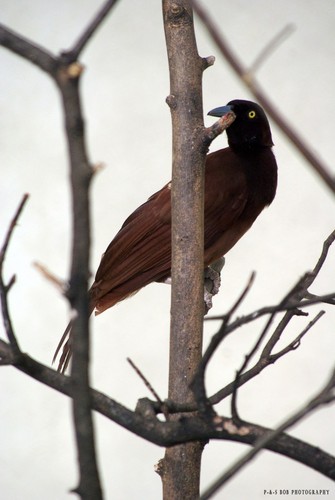
Greater Bird-of-paradise
Body about 43 cm; males with additional flank plumes up to 50 cm and long tail wires
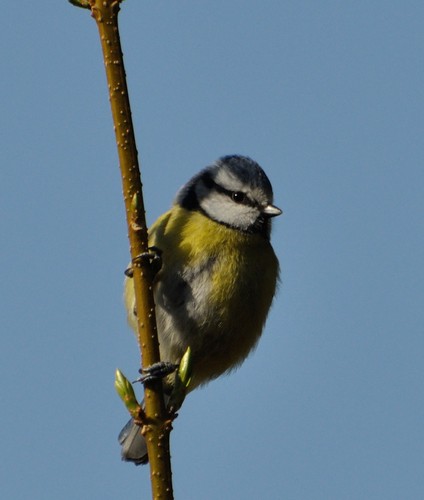
Blue Tit
11-12 cm (4.3-4.7 in) long, 17-20 cm wingspan
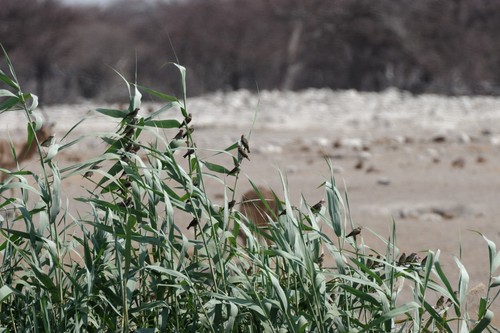
Red-billed Quelea
11.5–13 cm long, wingspan about 20–22 cm
White-plumed Antbird
13-14 cm (5-5.5 in) long
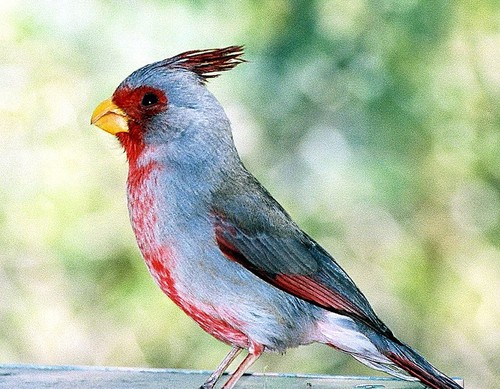
Pyrrhuloxia
19-22 cm (7.5-8.7 in) long, 30 cm wingspan
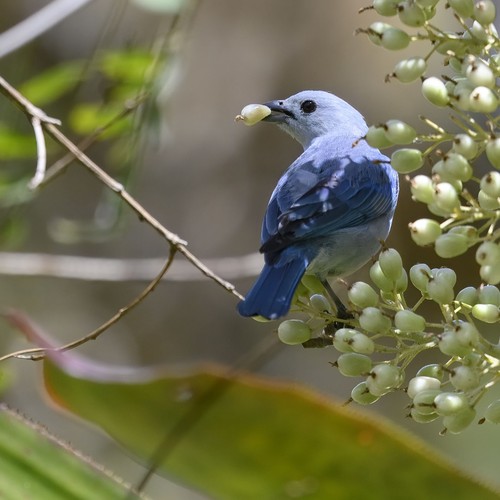
Blue-gray Tanager
16-18 cm (6-7 in) long
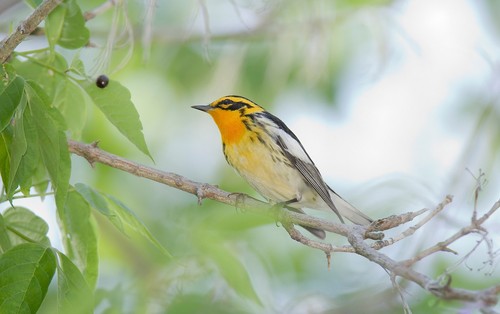
Blackburnian Warbler
11-13 cm (4.3-5.1 in) long, 20-22 cm wingspan
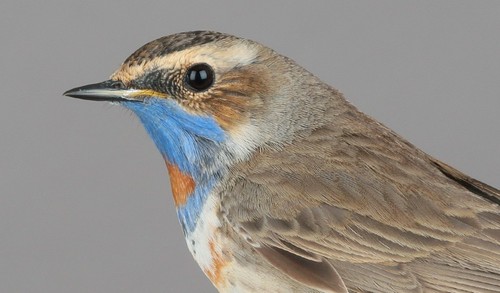
Bluethroat
13-14 cm (5.1-5.5 in) long, 20-22 cm wingspan
Eurasian Nuthatch
12-14.5 cm (4.7-5.7 in) long, 22.5-27 cm wingspan
Wood Thrush
19-21 cm (7.5-8.3 in) long, about 33 cm (13 in) wingspan