
Brambling Identification Guide
A colorful Eurasian finch and rare North American vagrant, best identified by its bright orange shoulder patch and gleaming white rump in flight.
Read the full Brambling encyclopedia entry →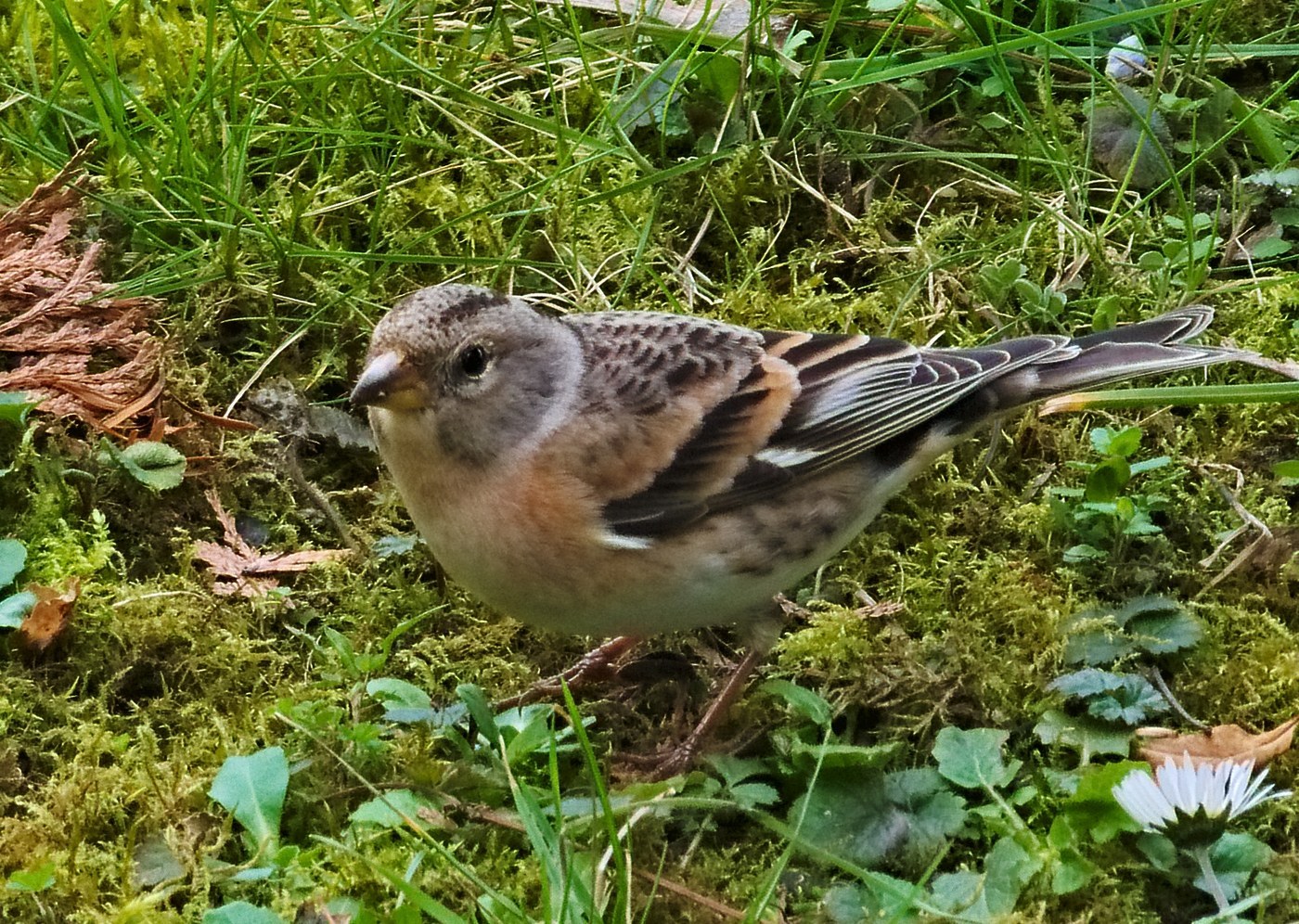
Key Field Marks
- Size & shape: A chunky finch about 14–16 cm long, structurally similar to a Chaffinch with a notched tail and stout, conical bill.
- Breeding male: Glossy black head and back, bright orange breast and shoulder patches, white belly, and orange-buff wing bars.
- Female / nonbreeding male: Duller, with a grayish-brown head and back, but retaining an orange wash on the breast and orange shoulder patch.
- In flight: The bright white rump is the single best mark, gleaming conspicuously as the bird flies away — visible in all plumages.
Separating from Similar Species
- Chaffinch: The most similar species. Chaffinch shows an olive-green rump (not white) and a blue-gray nape in males, versus the Brambling's black head/back and white rump.
- Other winter finches: The combination of orange shoulder patch, orange breast wash, and white rump is unique among regularly occurring winter finches; no similarly patterned species overlaps regularly in North America.
- Bill color shifts seasonally from yellow with a black tip in winter to all-black in breeding condition, useful for aging/timing but not for species ID.
Habitat, Range & Season
- Breeds across the birch and mixed conifer forests of northern Europe and Asia.
- Winters in flocks in farmland, beech woods (feeding heavily on beechmast), and increasingly at bird feeders across temperate Europe and Asia.
- A rare but regular vagrant to North America, chiefly Alaska and the Pacific Northwest, with scattered records elsewhere, typically in fall and winter — check feeders and mixed finch flocks during cold-weather irruptions.
Voice
- Flight call is a distinctive, nasal, buzzy "zweee" or "tsweek," quite different from Chaffinch's sharper calls.
- Also gives a hard "chuck-chuck" contact note, often heard from flocks feeding on the ground.
- Song (rarely heard away from breeding grounds) is a simple, wheezy, buzzing note repeated slowly.
Frequently asked questions
What is the single best field mark for Brambling?
The clean white rump, visible in flight in all plumages and ages, contrasting with Chaffinch's olive-green rump.
Where might I see a Brambling in North America?
It is a rare but regular vagrant, most often found in Alaska and the Pacific Northwest, typically mixed in with flocks of other finches or sparrows at feeders in fall and winter.
How do male and female Bramblings differ?
Breeding males have a glossy black head and back with a bright orange breast; females and nonbreeding birds are duller grayish-brown but still show the orange breast wash and white rump.
What does a Brambling sound like in flight?
A distinctive nasal, buzzy "zweee" call, quite different from the sharper flight calls of Chaffinch or House Finch.