
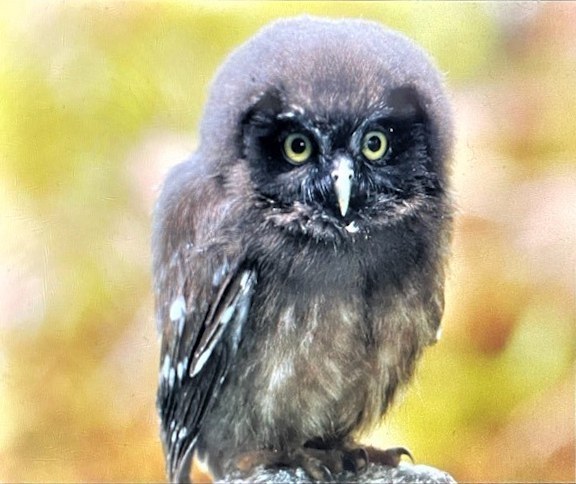
Boreal Owl
Aegolius funereus
A small, elusive owl of northern boreal forests with a squarish facial disc and a soft, high-pitched song heard mostly on cold winter nights.
- Size
- 22-27 cm (8.7-10.6 in) long, 50-62 cm wingspan
- Habitat
- dense northern coniferous and boreal forests
- Type
- owl
Spotted a bird like this?
Identify any bird from a photo, free.
Overview
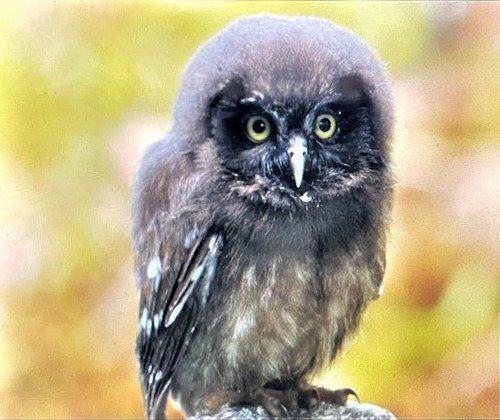
The Boreal Owl is a small, chunky owl of the far northern forests, rarely seen due to its strictly nocturnal habits and preference for dense, remote spruce and fir woodland. It has a large, squarish facial disc bordered in black, bright yellow eyes, and a white-spotted forehead that gives it a look of perpetual surprise.
Plumage is chocolate-brown above with crisp white spotting, and the underparts are white with rich brown streaking. Its stocky build and short tail distinguish it from more slender owls.
Because it inhabits remote taiga and boreal forest and calls mainly on cold winter nights, the Boreal Owl remains one of the least frequently observed owls in North America.
How to identify it
Key Field Marks
- Large, square-ish facial disc with a black border and white-flecked forehead
- Chocolate-brown upperparts with bold white spotting
- Yellow eyes; short tail relative to body
- Stocky, compact shape compared to slimmer owls
Similar Species
- Northern Saw-whet Owl is smaller and more reddish-brown with a less distinctly bordered facial disc and a different, monotonous tooting song.
- Northern Hawk Owl is larger, longer-tailed, and diurnal, with a falcon-like flight and habit of perching in the open, unlike the strictly nocturnal, forest-dwelling Boreal Owl.
Habitat & range
Boreal Owls inhabit dense boreal and subalpine coniferous forest across the northern reaches of North America, Europe, and Asia, favoring mature spruce-fir stands with old woodpecker cavities for nesting. In North America they occur from Alaska and Canada south into high-elevation forests of the northern Rocky Mountains.
Most populations are largely sedentary, though in years of prey scarcity some individuals move irregularly south or to lower elevations, occasionally producing notable winter irruptions.
Behavior & voice
Behavior
Strictly nocturnal and highly secretive, Boreal Owls roost by day in dense conifer cover and are rarely detected except by their distinctive winter song. They are solitary outside the breeding season.
Voice
The male's advertising song, given mainly on cold late-winter nights, is a rapid, rising series of soft, hollow whistled notes, often compared to a winnowing or bouncing-ball rhythm, audible over long distances in still air.
Feeding
Voles and other small mammals make up the bulk of the diet, hunted by watching from a perch in darkness and dropping silently onto prey detected largely by hearing.
Nesting & Breeding
Boreal Owls nest in cavities excavated by large woodpeckers such as flickers or Pileated Woodpeckers, and readily use nest boxes. Clutches typically contain 3-6 eggs, and females may mate with more than one male in years of abundant prey, a rare trait among owls.
Frequently asked questions
Why are Boreal Owls rarely seen?
They live in remote, dense boreal forest, are strictly nocturnal, and roost hidden in thick conifer cover by day, making them difficult to detect outside of their winter singing period.
What does a Boreal Owl sound like?
Males give a rapid, rising series of soft, hollow whistles, often likened to a winnowing or bouncing-ball rhythm, mainly on cold nights in late winter.
Where do Boreal Owls nest?
They nest in tree cavities, especially those excavated by large woodpeckers, and will also use artificial nest boxes.
How does a Boreal Owl differ from a Northern Saw-whet Owl?
The Boreal Owl is slightly larger and grayer-brown with a more sharply black-bordered facial disc, while the Saw-whet Owl is smaller, warmer reddish-brown, and gives a monotonous single-note tooting song.
Boreal Owl guides
In-depth guides for identifying, finding, and understanding Boreal Owl.
Other birds you may enjoy
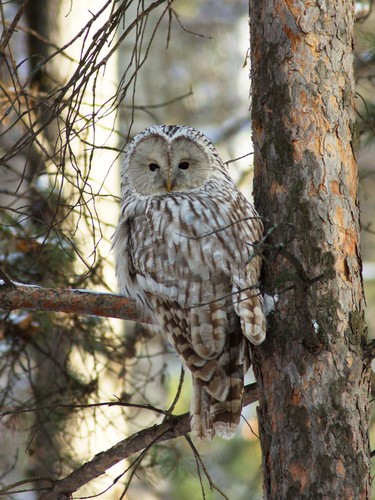
Ural Owl
50-62 cm long, wingspan about 1.0-1.3 m
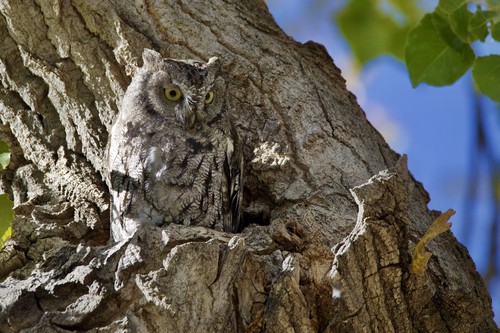
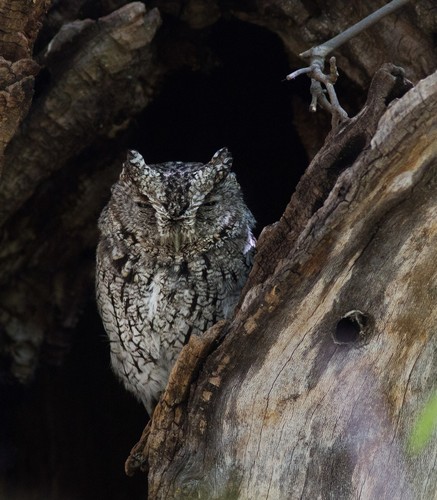
Western Screech-Owl
19-25 cm (7.5-10 in) long, about 55 cm (21.5 in) wingspan
Whiskered Screech-Owl
17-19 cm (6.7-7.5 in) long, 43 cm wingspan
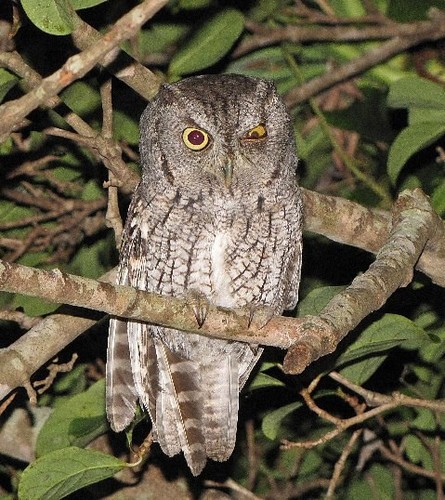
Tawny Owl
37-43 cm (15-17 in) long, 81-96 cm wingspan
Screech Owl
16-25 cm long, wingspan about 46-61 cm
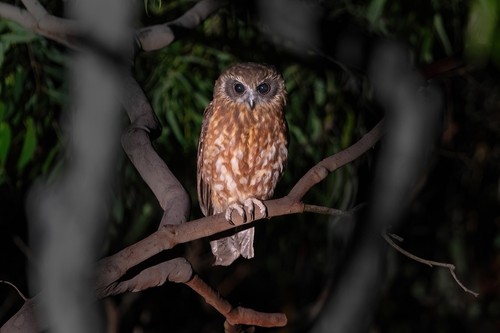
Southern Boobook
27-36 cm (11-14 in) long
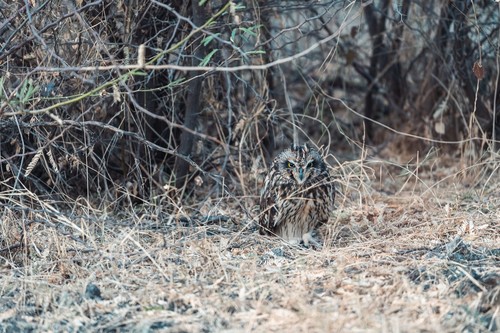
Short-eared Owl
34-42 cm (13-17 in) long, 85-110 cm wingspan
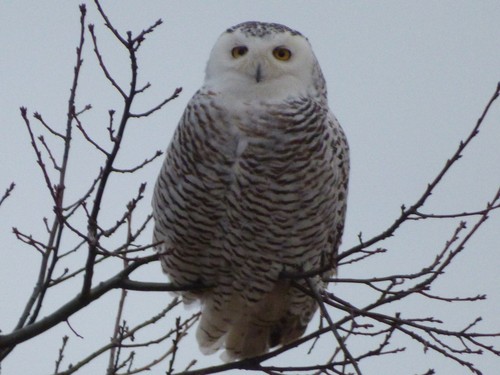
Snowy Owl
52-71 cm (20-28 in) long, 125-150 cm (49-59 in) wingspan
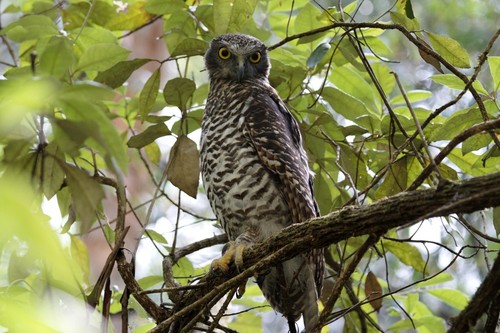
Powerful Owl
60-65 cm (24-26 in) long, 112-135 cm (44-53 in) wingspan
Northern Saw-whet Owl
18-21 cm (7-8.5 in) long, 42-56 cm (17-22 in) wingspan
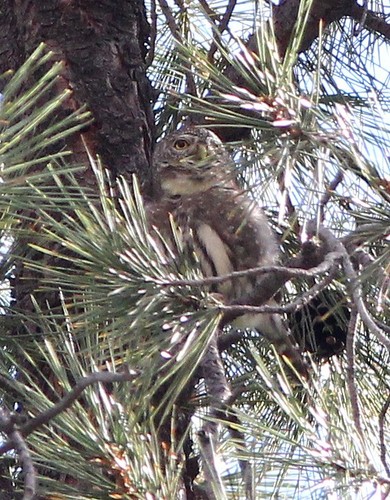
Northern Pygmy-Owl
16-18 cm (6.3-7.1 in) long, 35-39 cm wingspan
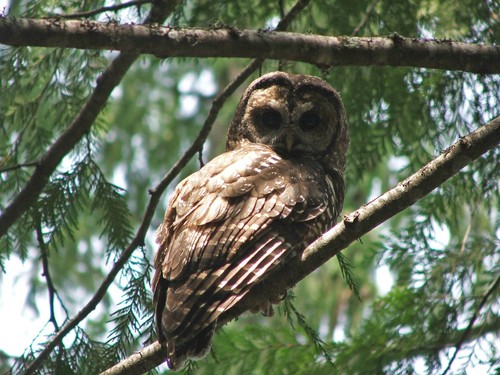
Spotted Owl
43-48 cm (17-19 in) long, 100-114 cm wingspan