
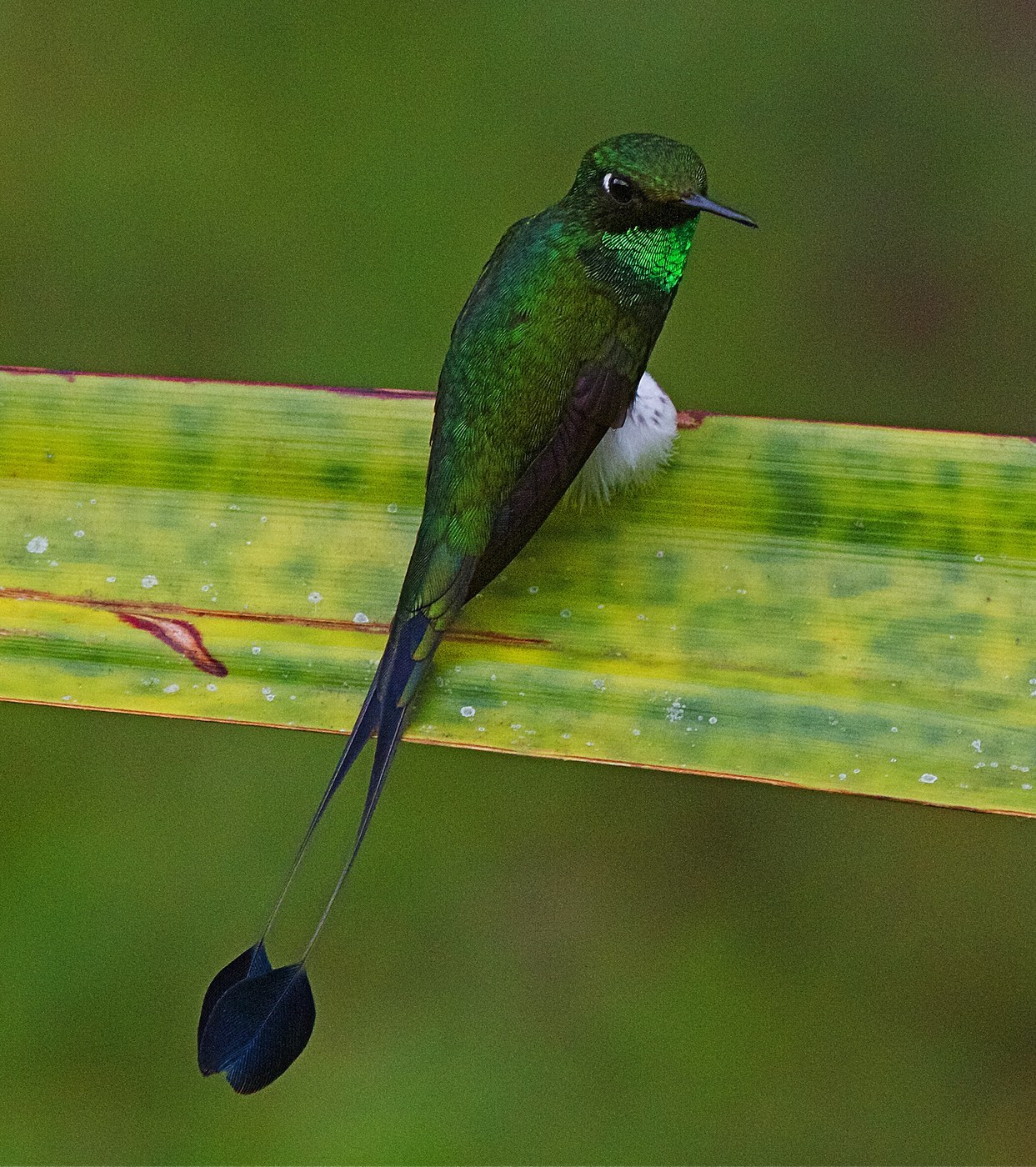
Booted Racket-tail
Ocreatus underwoodii
A tiny Andean hummingbird with fluffy white leg puffs ("boots") and, in males, long wire-thin tail streamers tipped with tiny racket-shaped flags.
- Size
- males 15-18 cm (6-7 in) including tail; females 6-7 cm (2.4-2.8 in)
- Habitat
- montane forest edge, secondary growth, and gardens
- Type
- hummingbird
Spotted a bird like this?
Identify any bird from a photo, free.
Overview
The Booted Racket-tail is a small, charming hummingbird of the Andes, instantly recognizable by the fluffy white or buffy feather tufts on its legs, resembling little boots. Males take the ornamentation further with a pair of extremely long, thin, wire-like tail feathers that cross and end in small racket-shaped flags, trailing well behind the body and adding dramatically to the bird's apparent length.
The body plumage is green, sometimes with a violet-blue throat patch depending on subspecies, while females lack the racket tail, instead showing a shorter, more conventional tail and whitish underparts. Despite the elaborate tail ornament, males remain highly maneuverable fliers, readily visiting flowering shrubs at forest edges and gardens.
How to identify it
Key field marks
- Fluffy white or buffy leg tufts ("boots") present in both sexes
- Males: long, thin, wire-like tail streamers ending in small racket-shaped tips
- Green body plumage, sometimes with a violet-blue throat
- Females: shorter, unadorned tail and pale underparts
- Very small overall body size
Similar species
- No other Andean hummingbird combines the leg boots with racket-tipped tail streamers in males, making adult males essentially unmistakable.
- Females can be confused with other small green hummingbirds but the leg tufts remain a useful identifying feature.
Habitat & range
Habitat
Inhabits montane forest edge, secondary growth, shrubby clearings, and gardens.
Range
Found along the Andes from Venezuela and Colombia south through Ecuador, Peru, and into Bolivia, generally between about 1,000 and 2,500 m elevation.
Migration
Mostly resident, with some local altitudinal movement.
Behavior & voice
Behavior
Active and agile, males display the tail streamers while chasing rivals and courting females at flowering shrubs; often seen singly, darting quickly between feeding sites.
Voice
High-pitched, thin chipping and buzzy notes, typical of small hummingbirds, though not especially loud or distinctive.
Feeding
Feeds on nectar from a variety of flowering shrubs and trees, and catches small insects in brief aerial sallies.
Nesting
Builds a tiny cup nest of plant down and moss; the female incubates the typical clutch of 2 white eggs alone.
Frequently asked questions
What are the 'boots' on a Booted Racket-tail?
They are fluffy white or buffy feather tufts covering the legs, present in both sexes, and give the species its common name.
How do you identify a Booted Racket-tail?
Look for a tiny green hummingbird with fluffy leg tufts; adult males also have long, thin tail streamers tipped with small racket-shaped flags.
What does a Booted Racket-tail eat?
Mainly nectar from flowering shrubs and trees, along with small insects caught in flight.
Where does the Booted Racket-tail live?
In montane forest edge and gardens along the Andes from Venezuela and Colombia to Peru and Bolivia.
Booted Racket-tail guides
In-depth guides for identifying, finding, and understanding Booted Racket-tail.
Other birds you may enjoy
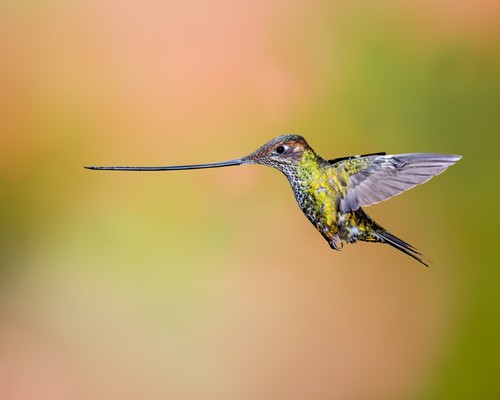
Sword-billed Hummingbird
Body about 13-15 cm (5-6 in) including a bill up to 10 cm long, the longest bill relative to body size of any bird
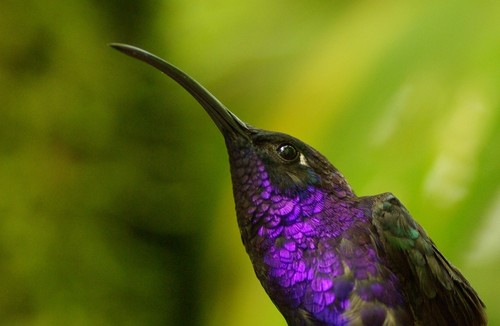
Violet Sabrewing
14-15 cm (5.5-6 in) long
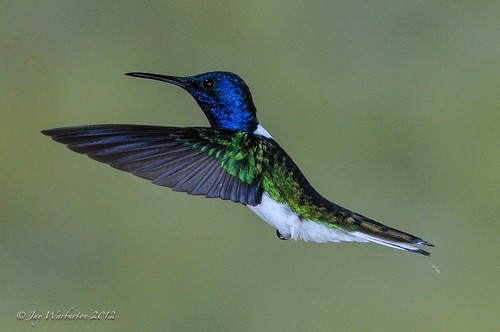
White-necked Jacobin
11-12 cm (4.3-4.7 in) long
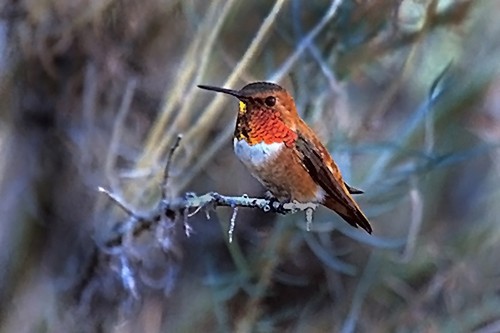
Rufous Hummingbird
8-9 cm (3-3.5 in) long, 11 cm wingspan
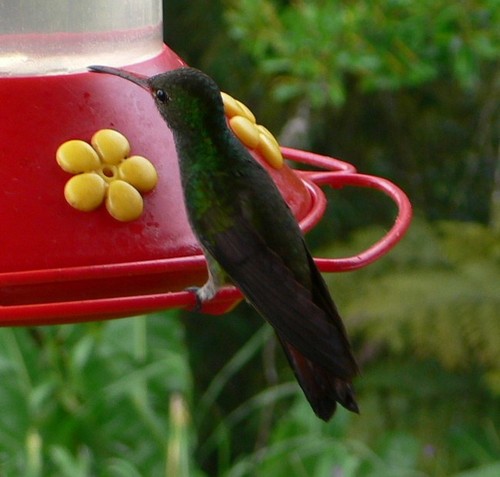
Rufous-tailed Hummingbird
10-11.5 cm (4-4.5 in) long
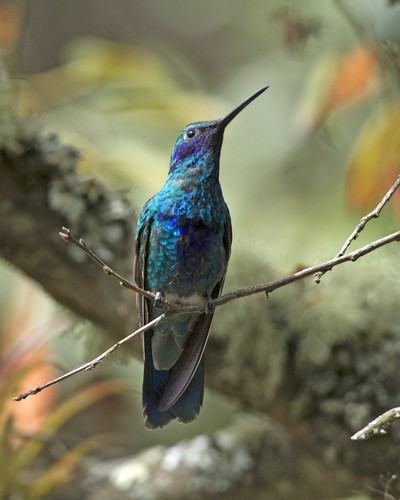
Sparkling Violetear
13-14 cm (5-5.5 in) long including bill
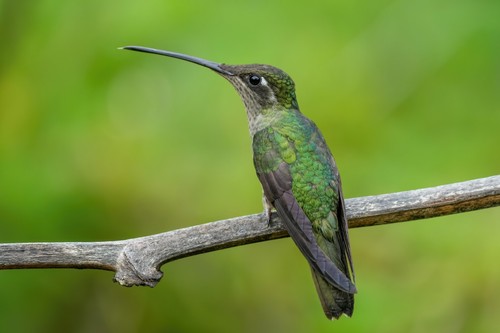
Rivoli's Hummingbird
11-14 cm (4.5-5.5 in) long, 17-18 cm wingspan
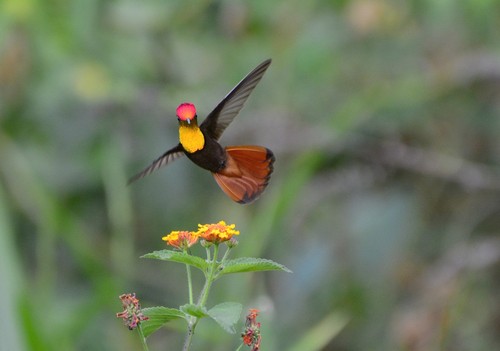
Ruby-topaz Hummingbird
7.5-9 cm (3-3.5 in) long
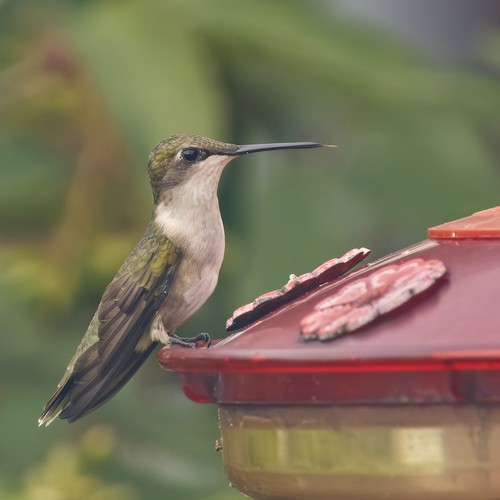
Ruby-throated Hummingbird
7-9 cm (3-3.5 in) long, 8-11 cm wingspan
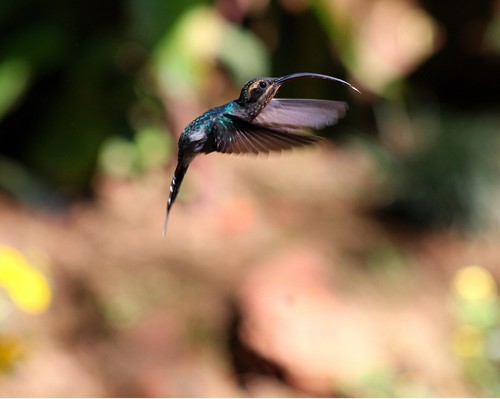
Green Hermit
15-16 cm (6-6.3 in) long including elongated central tail feathers
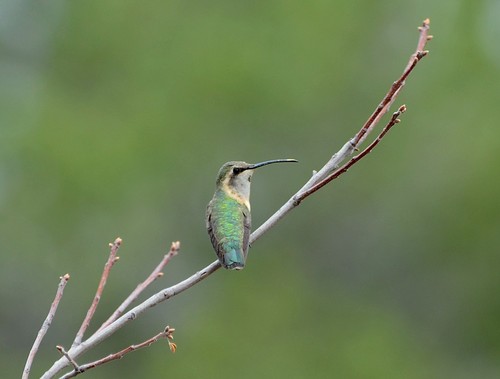
Lucifer Hummingbird
8.5-9.5 cm (3.5 in) long, 11 cm wingspan
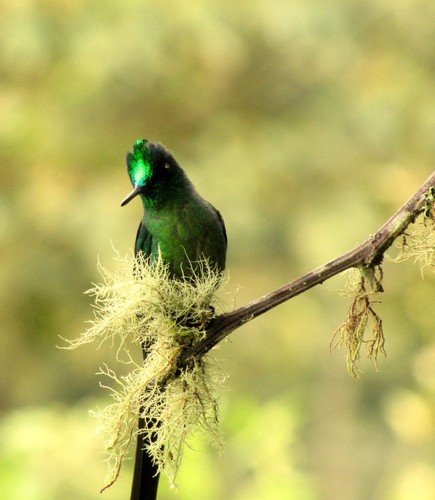
Long-tailed Sylph
males 18-19 cm (7-7.5 in) including tail; females 9-10 cm (3.5-4 in)