
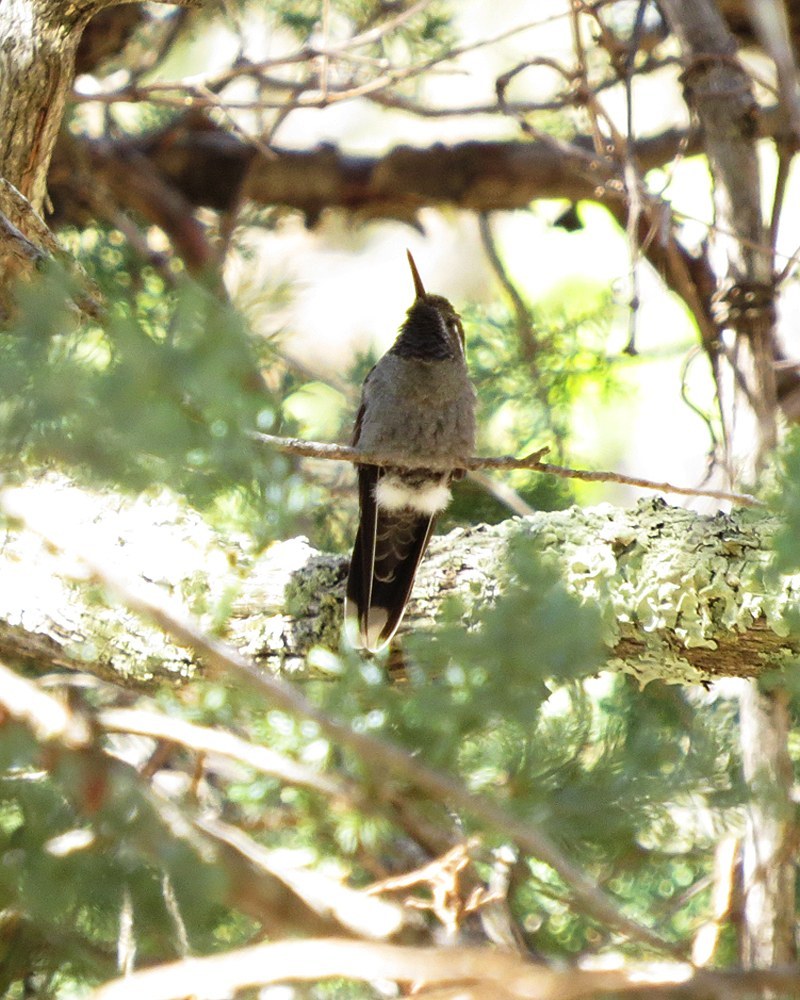
Blue-throated Mountain-gem
Lampornis clemenciae
One of the largest North American hummingbirds, identified by its bold white facial stripes and broad white-cornered tail.
- Size
- 12-13 cm (4.5-5 in) long, 18 cm wingspan
- Habitat
- shaded mountain canyons and streamside forest
- Type
- hummingbird
Spotted a bird like this?
Identify any bird from a photo, free.
Overview
The Blue-throated Mountain-gem, formerly called the Blue-throated Hummingbird, is among the largest and most striking hummingbirds found in the United States. Both sexes share a gray-green body, bold white stripes above and below the eye, and a broad, dark tail with prominent white corners that flash conspicuously in flight. Adult males have an iridescent blue throat patch that can look dark or brilliantly colored depending on the angle of light, while females have a paler, less iridescent throat.
Its large size, loud voice, and preference for shaded, water-loving forest set it apart from the smaller, more sun-loving hummingbirds that share its range.
How to identify it
Key Field Marks
- Large size with a gray-green body and long, straight black bill
- Bold white stripe above the eye and another below, framing the face
- Broad tail with large white corner patches, easily seen in flight or when the tail is fanned
- Male: iridescent blue throat patch; female: paler, less colorful throat
Similar Species
- Rivoli's Hummingbird is similarly large but lacks the bold white facial stripes and white-cornered tail.
- Broad-billed Hummingbird is much smaller with a red-based bill, unlike the all-dark bill of the Blue-throated Mountain-gem.
Habitat & range
Habitat
This species favors shaded, humid canyons with running water, often nesting under rock overhangs, bridges, or building eaves near streams within forested mountains.
Range
In the United States it occurs in the mountains of southeastern Arizona, southwestern New Mexico, and the Chisos Mountains of west Texas, with its range extending south through the highlands of Mexico.
Migration
Most U.S. populations are present from spring through fall and withdraw into Mexico for the winter, though it is resident year-round farther south.
Behavior & voice
Behavior
Blue-throated Mountain-gems are vocal and assertive, often heard before they are seen as they defend favored nectar sources from other hummingbirds.
Voice
The species gives a loud, distinctive, high-pitched "seek" call, repeated frequently and far-carrying through canyon habitat.
Feeding
They feed on nectar from a variety of canyon wildflowers and are frequent visitors to hummingbird feeders, supplementing their diet with small insects.
Nesting
Females build an unusually large, deep nest of moss and plant fibers bound with spider silk, often attached to a rock face, root mass, or man-made structure sheltered from rain, and may reuse or build atop the same nest site in later years.
Frequently asked questions
How do you identify a Blue-throated Mountain-gem?
Look for a large hummingbird with bold white stripes above and below the eye and a broad tail with large white corner patches, both present in males and females.
Why was the Blue-throated Hummingbird renamed Blue-throated Mountain-gem?
The name change reflects its placement within the mountain-gem group of hummingbirds and helps distinguish it from other blue-throated species in its family.
Where do Blue-throated Mountain-gems build their nests?
They typically attach large, deep nests to rock overhangs, cliff faces, or sheltered structures near streams in shaded mountain canyons.
What sound does a Blue-throated Mountain-gem make?
It gives a loud, sharp, repeated "seek" call that often carries well through canyon habitat before the bird itself is spotted.
Blue-throated Mountain-gem guides
In-depth guides for identifying, finding, and understanding Blue-throated Mountain-gem.
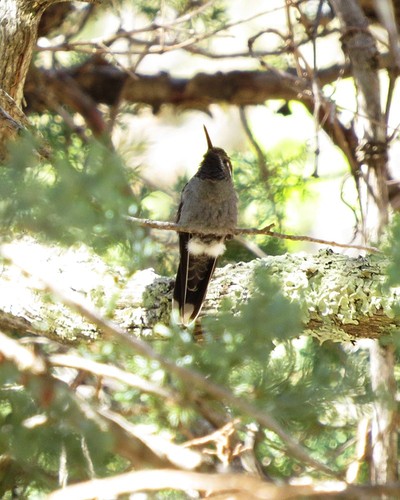
Other birds you may enjoy
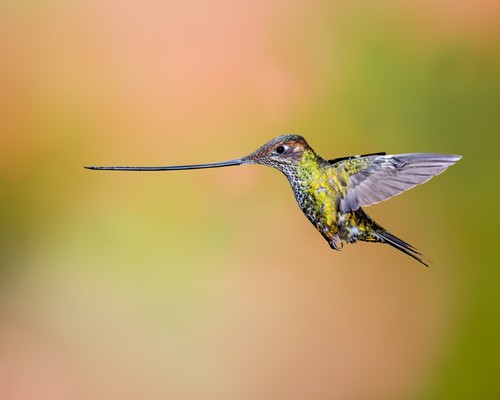
Sword-billed Hummingbird
Body about 13-15 cm (5-6 in) including a bill up to 10 cm long, the longest bill relative to body size of any bird
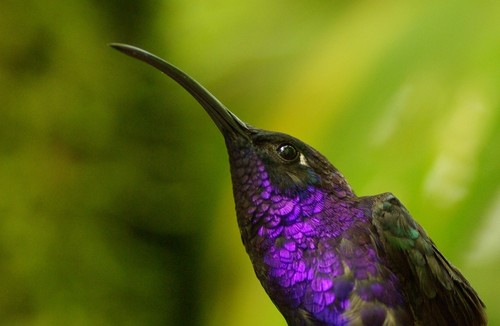
Violet Sabrewing
14-15 cm (5.5-6 in) long
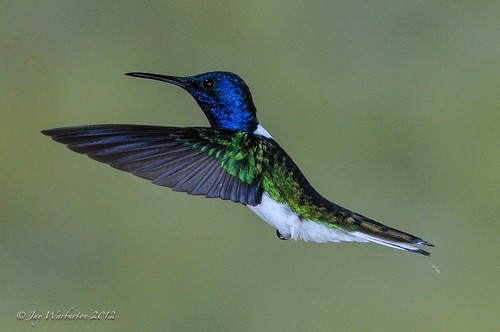
White-necked Jacobin
11-12 cm (4.3-4.7 in) long
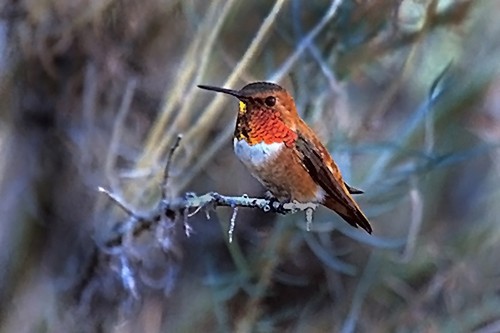
Rufous Hummingbird
8-9 cm (3-3.5 in) long, 11 cm wingspan
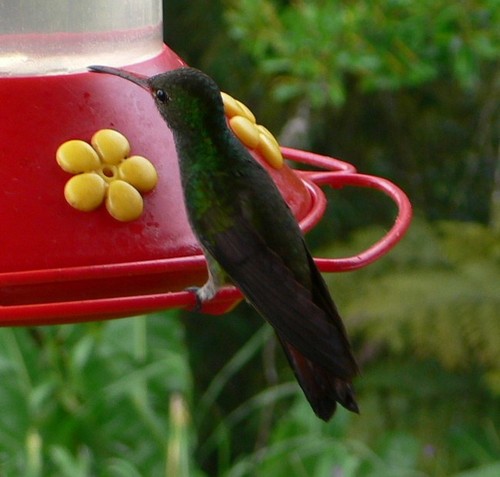
Rufous-tailed Hummingbird
10-11.5 cm (4-4.5 in) long
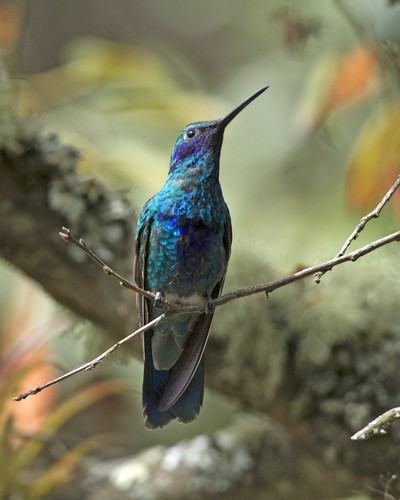
Sparkling Violetear
13-14 cm (5-5.5 in) long including bill
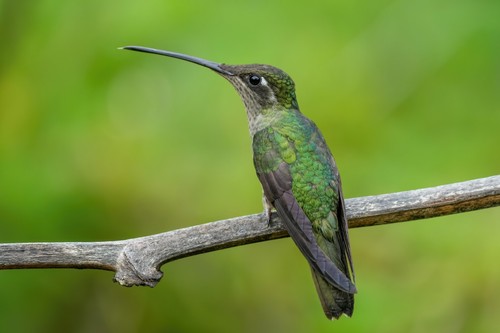
Rivoli's Hummingbird
11-14 cm (4.5-5.5 in) long, 17-18 cm wingspan

Ruby-topaz Hummingbird
7.5-9 cm (3-3.5 in) long
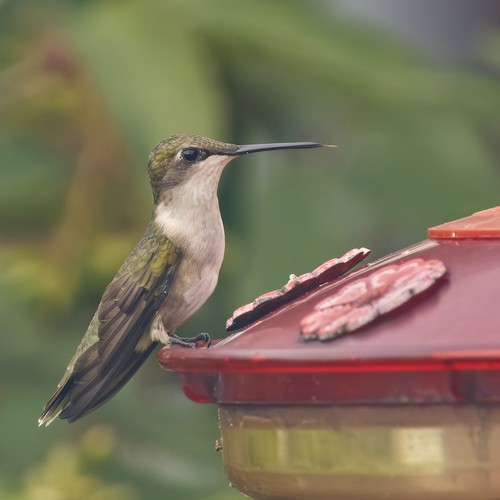
Ruby-throated Hummingbird
7-9 cm (3-3.5 in) long, 8-11 cm wingspan
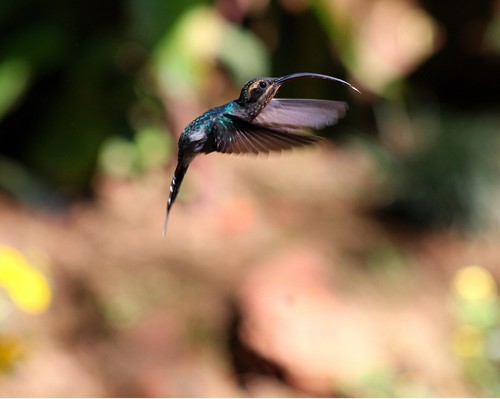
Green Hermit
15-16 cm (6-6.3 in) long including elongated central tail feathers
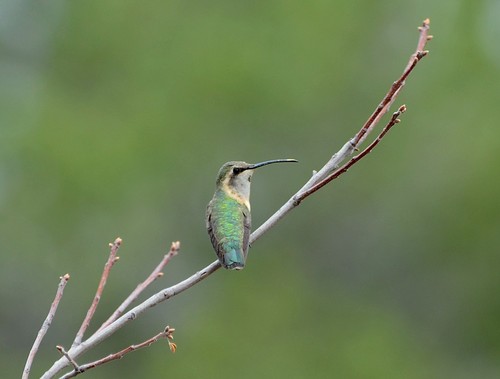
Lucifer Hummingbird
8.5-9.5 cm (3.5 in) long, 11 cm wingspan
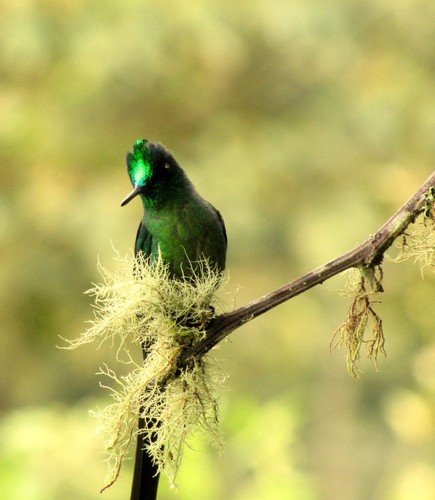
Long-tailed Sylph
males 18-19 cm (7-7.5 in) including tail; females 9-10 cm (3.5-4 in)